
Headlines
Russia’s Putin Announces ‘Military Operation’ in Ukraine

- /home/rhoncare/pointblank.ng/wp-content/plugins/mvp-social-buttons/mvp-social-buttons.php on line 27
https://pointblank.ng/wp-content/uploads/2022/02/Putin-1000x600.jpg&description=Russia’s Putin Announces ‘Military Operation’ in Ukraine', 'pinterestShare', 'width=750,height=350'); return false;" title="Pin This Post">
- Share
- Tweet /home/rhoncare/pointblank.ng/wp-content/plugins/mvp-social-buttons/mvp-social-buttons.php on line 69
https://pointblank.ng/wp-content/uploads/2022/02/Putin-1000x600.jpg&description=Russia’s Putin Announces ‘Military Operation’ in Ukraine', 'pinterestShare', 'width=750,height=350'); return false;" title="Pin This Post">
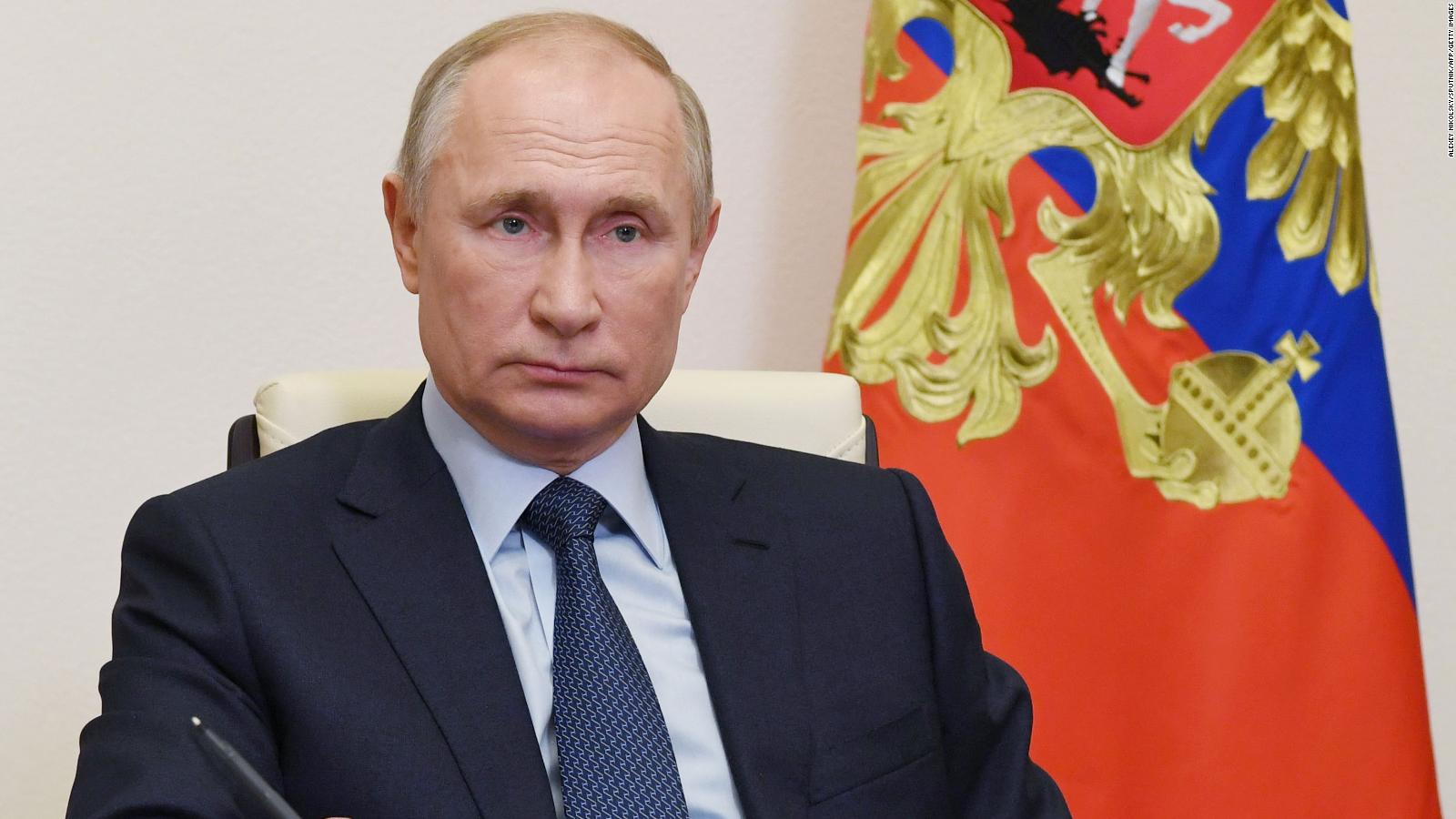
Russian President Vladimir Putin announced a military operation in Ukraine on Thursday with explosions heard soon after in the capital and other parts of the country, prompting outrage from Joe Biden who warned of a “catastrophic loss of life”.
Weeks of intense diplomacy and the imposition of Western sanctions failed to deter Putin, who had massed between 150,000 and 200,000 troops along the borders of Ukraine.
“I have made the decision of a military operation,” Putin said in a surprise television announcement shortly before 6:00am (0300 GMT) in Moscow.
He also called on Ukrainian soldiers to lay down their arms, claiming he wanted a “demilitarisation” of the former Soviet state but not its occupation.
An AFP reporter in Kyiv heard explosions within about 30 minutes of Putin’s announcement. Explosions were also heard in the eastern city of Mariupol, according to AFP.
US President Biden announced he would address the nation Thursday on “consequences” for Russia and said the world would “hold Russia accountable” for its actions.
He said a Russian attack would cause “catastrophic loss of life and human suffering”.
Putin’s announcement statement came after the Kremlin said rebel leaders in eastern Ukraine had asked Moscow for military help against Kyiv.
In response, Ukraine’s President Volodymyr Zelensky made an emotional late-night appeal to Russians not to support a “major war in Europe”.
Speaking Russian, Zelensky said that the people of Russia are being lied to about Ukraine and that the possibility of war also “depends on you”.
“Who can stop (the war)? People. These people are among you, I am sure,” he said.
Zelensky said he had tried to call Putin but there was “no answer, only silence”, adding that Moscow now had around 200,000 soldiers near Ukraine’s borders.
Earlier on Wednesday the separatist leaders of Donetsk and Lugansk sent separate letters to Putin, asking him to “help them repel Ukraine’s aggression”, Putin’s spokesman Dmitry Peskov said.
The two letters were published by Russian state media and were both dated February 22.
Their appeals came after Putin recognised their independence and signed friendship treaties with them that include defence deals.
– ‘Moment of peril’ –
Putin has defied a barrage of international criticism over the crisis, with some Western leaders saying he was no longer rational.
His announcement of the military operation came ahead of a last-ditch summit involving European Union leaders in Brussels planned for Thursday.
The 27-nation bloc had also imposed sanctions on Russia’s defence minister Sergei Shoigu and high-ranking figures including the commanders of Russia’s army, navy and air force, another part of the wave of Western punishment after Putin sought to rewrite Ukraine’s borders.
The United Nations Security Council met late Wednesday for its second emergency session in three days over the crisis, with a personal plea there by UN Secretary-General Antonio Guterres to Putin going unheeded.
“President Putin, stop your troops from attacking Ukraine, give peace a chance, too many people have already died,” Guterres said.
The US ambassador to the United Nations, Linda Thomas-Greenfield, warned that an all-out Russian invasion could displace five million people, triggering a new European refugee crisis.
Before Putin’s announcement, Ukraine had urged its approximately three million citizens living in Russia to leave.
“We are united in believing that the future of European security is being decided right now, here in our home, in Ukraine,” President Zelensky said during a joint media appearance with the visiting leaders of Poland and Lithuania.
Western capitals said Russia had amassed 150,000 troops in combat formations on Ukraine’s borders with Russia, Belarus and Russian-occupied Crimea and on warships in the Black Sea.
Ukraine has around 200,000 military personnel and Wednesday’s call up could see up to 250,000 reservists aged between 18 and 60 receive their mobilisation papers.
Moscow’s total forces are much larger — around a million active-duty personnel — and have been modernised and re-armed in recent years.
– High cost of war –
But Ukraine has received advanced anti-tank weapons and some drones from NATO members. More have been promised as the allies try to deter a Russian attack or at least make it costly.
Shelling had intensified in recent days between Ukrainian forces and Russia-backed separatists — a Ukrainian soldier was killed on Wednesday, the sixth in four days — and civilians living near the front were fearful.
Dmitry Maksimenko, a 27-year-old coal miner from government-held Krasnogorivka, told AFP that he was shocked when his wife came to tell him that Putin had recognised the two Russian-backed separatist enclaves.
“She said: ‘Have you heard the news?’. How could I have known? There’s no electricity, never mind internet. I don’t know what is going to happen next, but to be honest, I’m afraid,” he said.
In a Russian village around 50 kilometres (30 miles) from the border, AFP reporters saw military equipment including rocket launchers, howitzers and fuel tanks mounted on trains stretching for hundreds of metres.
Russia has long demanded that Ukraine be forbidden from ever joining the NATO alliance and that US troops pull out from Eastern Europe.
Speaking to journalists, Putin on Tuesday set out a number of stringent conditions if the West wanted to de-escalate the crisis, saying Ukraine should drop its NATO ambition and become neutral.
Washington Wednesday announced sanctions on the Nord Stream 2 gas pipeline, which Germany had earlier effectively suspended by halting certification.
Australia, Britain, Japan and the European Union have all also announced sanctions.
AFP


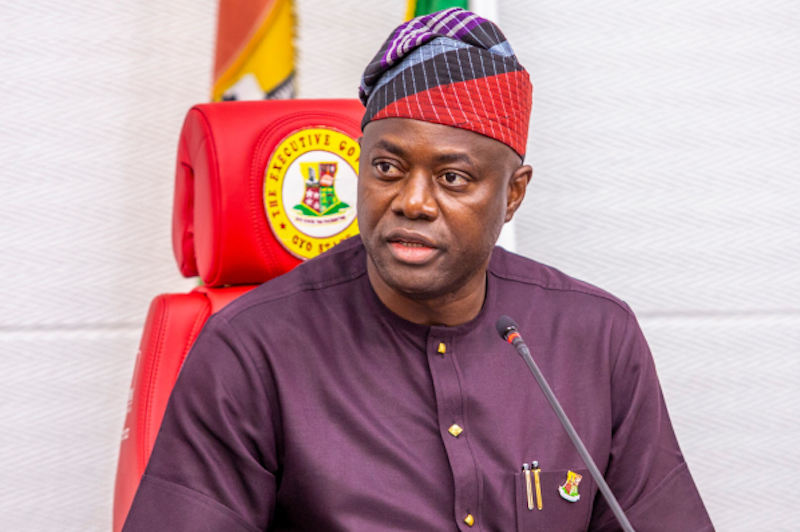
The Allied Peoples Movement (APM) presidential candidate, Seyi Makinde, on Thursday, criticised President Bola Tinubu’s “Emi Lokan” slogan ahead of the 2027 presidential election.
Makinde said Nigerians do not need “turn-by-turn nepotism”, arguing that voters should be free to decide who becomes the country’s next president in 2027.
The Oyo State governor spoke during the APM’s town hall meeting in Akure, Ondo State.
Makinde asked: “How can someone say ‘Eemi lokan’ in a country like Nigeria? You were given the opportunity. If you recall the 1999 presidential election, the South-West voted massively for Baba Olu Falae, but the rest of Nigerians voted for Baba Obasanjo. So, this is not an issue that only the South-West can resolve; it is an issue we must address collectively as Nigerians.
“We do not want ‘turn-by-turn nepotism’, nor do we want a situation where people say, ‘I will vote for projects because it is my turn’. You will not finish those projects, and when it becomes someone else’s turn, they will do the same thing. We will end up with a Nigeria where we cannot get value for the resources belonging to Nigerians.
“The Reset Nigeria agenda is about building a country where infrastructure development supports economic growth and addresses the concerns of young people and women.
“Once we fix our economy, no zone will be left behind, and no demographic group will be left behind.”
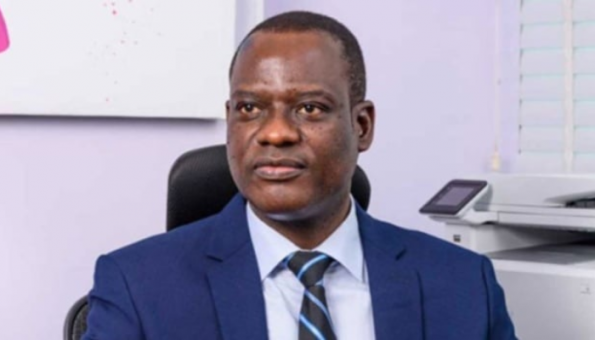
Minister of Finance and Coordinating Minister of the Economy, Taiwo Oyedele, has denied saying the Federal government will introduce a fuel tax when the economy stabilises and income levels improve.
In a post on X on Tuesday, Oyedele said his remarks during an interview with ARISE News was misrepresented, insisting that a “fuel tax is not on the table.”
However, during the interview with Rotus Odiri, ARISE News Business Correspondent, on the sidelines of the 2026 International Monetary Fund and World Bank annual meetings in Bangkok, Thailand, Oyedele said the tax would come when income levels improve enough for Nigerians to accommodate it.
He said taxes account for between 20 and 80 percent of pump prices in some countries, while many African countries impose between six and 10 different taxes on fuel products.
He said introducing fuel tax while petrol was still subsidised would have been counterproductive because government would effectively be paying the tax itself.
According to him, imposing the tax immediately after removal of petrol subsidy would be insensitive to Nigerians.
“The objective should be that instead of trying to suppress prices, which hasn’t worked for us, it hasn’t worked for any country in the world, not one. Instead of trying to suppress prices, think about how to grow income faster than prices rise,” Oyedele said.
“That’s how you bring prosperity and grow the middle class and that is exactly what we are doing as led by Mr. President himself.
“At the appropriate time, when the economy has stabilizes and income level will be able to accommodate it, those taxes will come. Not because we want to impose taxes,” he added.
In his Tuesday post, the minister reiterated that introducing a fuel tax at this time would be insensitive following removal of petrol subsidy, describing reports that government will introduce the levy when the economy stabilises as “fake news.”
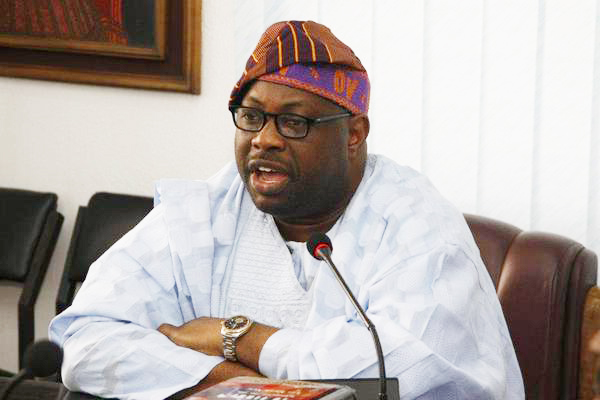
A chieftain of the African Democratic Congress (ADC), and Deputy Director of the Presidential Campaign Council, Chief Dele Momodu, has described former Vice-President Atiku Abubakar as the most nationally formidable and experienced among the leading contenders for the 2027 presidential election.
Momodu said Atiku’s experience at the national level distinguishes him from President Bola Tinubu and former Anambra State Governor, Peter Obi.
He stated this on Wednesday during an interview on Eagle 102.5 FM, Ilese-Ijebu, in Abeokuta.
“If you look at the antecedents of the three major candidates, between Atiku Abubakar and Peter Obi, you will see that Atiku is the most experienced. He has managed our country at the highest level,” he said.
Momodu traced Atiku’s political journey to the 1992 Social Democratic Party (SDP), presidential primary where he contested against late MKO Abiola and stepped down for him.
He said Atiku accepted the outcome without crisis even after he was not picked as Abiola’s running mate, describing it as a mark of true democratic temperament.
“He is the only one who started from around 1992, contested the SDP primary against Abiola and stepped down with uncommon equanimity. He did not make any noise,” Momodu said.
He noted that Atiku was among the founders of the Peoples Democratic Party, PDP, and served as Vice-President from 1999 to 2007.
Comparing Atiku with Obi, Momodu argued that while Obi’s best was demonstrated in Anambra, Atiku’s was at the presidency level managing the national economy.
“Peter Obi has tried his best in Anambra, while Atiku’s best is at the level of vice president controlling the economy of Nigeria. The difference is clear. He has matured in experience and exposure,” he said.
Momodu also said President Tinubu’s experience was largely limited to Lagos.
“What I’m trying to say is that Tinubu’s experience was limited to Lagos, and that is why when he became president, he thought Nigeria was Lagos. And he has found out now that Nigeria is not Lagos,” he said.
He argued that the current economic hardship under the present administration did not show prosperity, insisting Atiku remained better positioned to lead the country.
“Well, we are yet to see that prosperity, and if yesterday would determine today and tomorrow, it is obvious that Tinubu should retire now and let someone else do it,” Momodu added.
DailyPost


