
Opinion
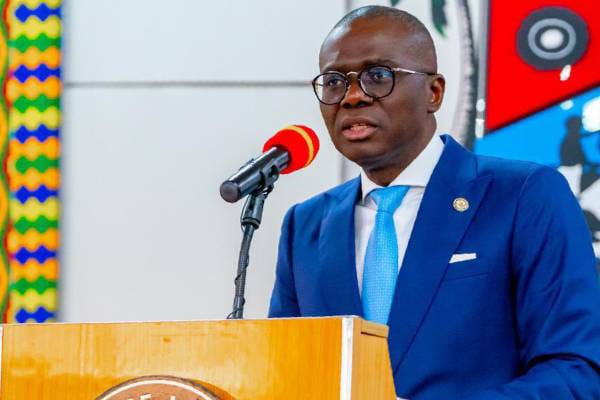
Sanwo-Olu: Governing Lagos Intentionally

By Oluwaseyi Adedotun
Behind the evolving admirable Lagos, is an intentional governor, Mr. Babajide Sanwo-Olu, who leaves nothing to chance. Oluwaseyi Adedotun writes.
When Governor Babajide Sanwo-Olu assumed leadership of Lagos State, he inherited a sprawling urban engine with immense potential and equally complex challenges.
Yet, what has distinguished his leadership is not merely the scale of projects delivered, but the intentionality behind them – the disciplined alignment of vision, policy and institutions toward a deliberate, integrated and sustainable transformation of Lagos.
From his first day in office, Sanwo-Olu understood that Lagos offers no grace period. Governance demanded real-time problem-solving, visible leadership and strategic foresight.
This lived experience shaped a philosophy that blends hands-on action with long-term planning. It also ensures that policies are not isolated interventions but interconnected levers of development.
Under Sanwo-Olu, intentional governance means that no policy stands alone. It also moves the governance from the pedestal of reactionary to proactiveness.
Transformation efforts in social service delivery like Transport, Education, Art, Culture and Entertainment, Health, Agriculture, Housing, Human Capital and Security and Enterprise Development, are deliberately designed to reinforce one another.
Sustainability is embedded into the architecture of governance, so that projects, institutions and reforms endure beyond electoral cycles.
This philosophy is expressed through the administration’s strategic blueprint – the THEMES Agenda, which integrates Transportation and Traffic Management, Health and Environment, Education and Technology, Making Lagos a 21st-Century Economy, Entertainment and Tourism, and Security and Governance, expanded into THEMES+ to embed social inclusion, gender equity and youth empowerment.
Through this framework, Lagos is governed as a living system, where infrastructure powers commerce, education fuels enterprise, culture propels tourism, health safeguards productivity, housing anchors dignity, and governance ensures sustainability.
Specifically, Transportation, the first pillar of THEMES, best illustrates intentional governance in action. Lagos has moved from reactive traffic management to a strategic, multimodal mobility ecosystem integrating rail, road and waterways into a single economic enabler.
The Blue Line from Marina to Mile 2 and the Red Line from Ebute Metta to Badagry have carried millions of commuters, slashing travel times, easing congestion and unlocking new commercial corridors.
It is judicious to conclude that planning for the Green Line and the Fourth Mainland Bridge is not simply about moving vehicles; it is about deliberately reshaping Lagos’ economic geography, reducing logistics costs and integrating dense mainland communities with island business districts.
Sanwo-Olu’s intentionality is also in display in transport investments, which are not incidental, as road infrastructure is intentionally designed to feed the rail system and open up communities that were hitherto disconnected.
The Opebi-Odo-Iyaláro-Ojota Link Road and Bridge, popularly known as the Opebi-Mende Link Road, also exemplifies this intentionality. It created a critical east-west connector, where none existed, linking residential and commercial districts, shortening travel times and unlocking new economic activity.
Across the state, road reconstruction in Alimosho, Ifako-Ijaiye, Amuwo-Odofin and Badagry axis deliberately complement rail investments.
Same as the rail-grade separation bridges in Ebute Metta, Yaba, Mushin, Oshodi, Ikeja and Agege. They were embedded in a design that saves lives, unlocks micro-economic hubs and stimulates inclusive commerce.
In Sanwo-Olu’s Lagos, with the intentionality deployed in its design, transport is not just a civic service; it is a strategic tool for productivity, trade and national competitiveness, with link roads ensuring that connectivity is universal, and not exclusive.
Health policy formulation and execution reflects the same intentional integration. The revitalisation of health infrastructure, including the historic Massey Street Children’s Hospital, demonstrates a deliberate commitment to safeguarding the most vulnerable and at the same time strengthening Lagos’ human capital pipeline.
Massey is not merely a hospital project; first of its kind in size, it is a strategic investment in child survival, maternal health and long-term productivity.
Alongside the Lagos State Health Insurance Scheme, “Ilera Eko”, health insurance expansion and modernised general hospitals, Lagos is building a health system that protects livelihoods, reduces catastrophic health spending and anchors economic growth on a healthy population.
Education has also been intentionally reshaped to produce economically empowered citizens, not just certificate holders.
The reintroduction of the Comprehensive Secondary School model and the expansion of technical and vocational education through the Lagos State Technical and Vocational Education Board, reflect a deliberate shift toward skills-based learning.
By establishing comprehensive schools where students graduate with industry-relevant competencies, Lagos is deepening its MSME, manufacturing, technology and creative ecosystems.
The intentional approach of Sanwo-Olu to governance is packaging education as economic policy – a multiplier that converts classrooms into engines of national productivity.
In arts, culture and entertainment, the global recognition as one of six Arts destinations for 2026, by Artsy is not an accident. Cultural renaissance, creatives and entertainment sit at the heart of Sanwo-Olu’s economic strategy.
From Day One, the creative sector was positioned as a driver of jobs, tourism, global branding and urban identity.
Several Festivals of Arts, Culture and Entertainment, instituted are well calculated initiatives by the administration, now yielding results in the form of job creation, revenue generation and promotion of commerce and trade among others.
Cultural Festivals such as Adamu Orisa (Eyo) and the Door of Return, etc, are tools targeted at revitalised cultural institutions and offer deliberate support for entertainment and tourism.
Through deliberate effort at preserving the cultural identity of Lagos, Sanwo-Olu’s policies have transformed Lagos into a year-round destination.
In 2026, Lagos will take its place on the world’s art itinerary following its naming by Artsy as one of the top global art destinations, alongside Venice, Sydney and Doha.
With ART X Lagos, the Lagos Biennial and the permanent home of the Àkéte Collection and Museum of Modern and Contemporary Art, this global recognition is not accidental; it is the product of intentional governance, a model that treats culture as economic infrastructure and identity as a strategic asset.
In agriculture and food security, Sanwo-Olu’s intentionality is equally evident. The Produce for Lagos agreement with Niger State is a regional economic strategy, not a standalone project.
With a ₦500 billion agro-investment window, Lagos is poised to effectively sustain security, affordability and availability, while also empowering farmers beyond its borders.
Multi-level food hubs now create jobs across the edibles value chain, proving that Lagos’s policies are locally relevant yet nationally transformative.
Housing is treated as both economic and social infrastructure. With over 12,000 housing units delivered across the state, the administration has intentionally linked shelter to productivity, reducing commuting burdens, stabilising communities and enabling inclusive growth.
These are not isolated estates. They are integrated developments with premeditation connection to transport, services and jobs. Sanwo-Olu’s intentional manner of governance is reinforcing the fact that housing is central to achieving the Greater Lagos ambition of a 21 Century Mega City.
Likewise, Security under Sanwo-Olu is pursued as an economic enabler. Through institutional coordination, technology deployment and community partnership, Lagos has strengthened safety and public confidence.
Notably, the state has recorded only a single case of bank robbery in the last seven years, a powerful indicator of deliberate, intelligence-driven security governance.
Through the instrumentality of the Lagos State Security Trust Fund (LSSSTF), the Sanwo-Olu-led administration has sustained its pragmatic approach to security, by providing logistic and motivational support to all security outfits in the state.
Sanwo-Olu’s policies are the type that adopt responsibility, not because it is under its constitutional obligations, but because it prioritises humanity over administrative bottlenecks and political correctness.
Lagos State Government, through the Fund has donated hundreds of vehicles, boots and other logistics to the Nigeria Police Force, the Nigeria Security Civil Defence Corp (NSCDC), the Military and other Federal Government-owned security organisations.
The Rapid Response Squad (RRS), a police regiment dedicated to security requests from members of the public, and the Special Environmental Task Force, a mixed uniform squad ensures enforcement of environmental laws.
Social safety is equally intentional. Programmes such as EkoCares demonstrate that inclusion is not charity but a strategy to stabilise society, protect demand and sustain growth.
Through skills acquisition centres, enterprise development programmes and targeted financial support, Lagos has intentionally deepened its MSME ecosystem, especially for women and youth.
In the 2024/2025 cohort alone, 5,309 graduates completed training across 211 skills acquisition centres, while more than 30,000 Lagosians have been trained over the past five to six years.
These are productivity interventions that reduce unemployment, strengthen social stability and expand Nigeria’s economic base.
Sanwo-Olu’s leadership is defined by visibility and service. His administration measures success not by policy documents but by lived realities, resilience, opportunity and the daily experience of Lagosians.
He engages communities, adapts constantly to the city’s complexity and leads with purpose. When asked how he wishes to be remembered, he says simply: “As a leader who gave his all, helped people advance personally and economically, and left Lagos better than he met it.”
Under his stewardship, Lagos has emerged as a global economic heavyweight, with a city GDP estimated at US$259.75 billion (PPP), placing it among Africa’s largest urban economies.
National commendations, including from President Bola Tinubu for landmark rail and infrastructure projects, affirm that Lagos’ trajectory contributes meaningfully to Nigeria’s broader development goals.
What defines Sanwo-Olu’s Lagos is intentional governance in action: integration, sustainability and strategic foresight.
From multimodal transport that fuels commerce, to skills-driven education that creates tomorrow’s workforce; from regional agriculture partnerships that secure food systems, to culturally anchored growth that positions Lagos on the global stage; from health infrastructure that protects human capital, to housing that restores dignity; and from security that stabilises society, to enterprise support that expands opportunity, policies are vehicles for transformation.



By Tolulope A. Adegoke, PhD
“Leadership for our age is measured not by the height of the throne, but by the depth of its roots in integrity, the breadth of its embrace of collective talent, and the courage to cultivate systems that bear fruit for generations yet unseen” – Tolulope A. Adegoke, PhD.
Leadership today is at a crossroad. Around the world, in our communities, and within our organizations, old ways of leading are straining under new pressures. This isn’t just a theoretical discussion; it’s about the quality of our daily lives, the success of our businesses, and the future of our nations. Let’s walk through the current trends, understand their very real impacts, and then explore practical, hands-on solutions that can unlock a better future for everyone.
Part 1: The Leadership Landscape – Where We Stand
The Global Picture: Beyond the Solo Leader
The image of the all-powerful, decisive leader at the top of a pyramid is fading. Today, effective leadership looks different. It’s more about empathy and service than authority. People expect their leaders—in companies and governments—to be authentic, to listen, and to foster teams where everyone feels safe to contribute. Furthermore, leadership is now tightly linked to purpose and responsibility. It’s no longer just about profits or power; stakeholders demand action on climate, fair treatment of workers, and ethical governance. Leaders must also be tech-savvy guides, helping their people navigate constant digital change while dealing with unpredictable global events that disrupt even the best-laid plans.
Africa’s Dynamic Challenge: Youth and Promise
Africa’s story is one of incredible potential meeting stubborn challenges. The continent is young, energetic, and full of innovative spirit. Yet, this tremendous asset often feels untapped. Too frequently, a gap exists between this rising generation and established leadership structures, leading to frustration. While the African Continental Free Trade Area (AfCFTA) presents a historic chance for economic unity, it requires leaders who think beyond their own borders. At the same time, democratic progress sometimes stalls, with leaders clinging to power. The most pragmatic leaders are those who engage with the vibrant informal economy—the hustlers, market traders, and artisans—who form the backbone of daily life and hold the key to inclusive growth.
Nigeria’s Pressing Reality: Crisis and Resilience
In Nigeria, the leadership experience often feels like moving from one emergency to the next. Attention is consumed by immediate crises—security threats, economic swings, infrastructure breakdowns—making long-term planning difficult. This has triggered a profound loss of confidence, visibly seen in the “Japa” phenomenon, where skilled professionals leave seeking stability and opportunity abroad. This brain drain is a direct critique of the system. Politics remains deeply influenced by ethnic and regional loyalties, which can overshadow competence and national vision. Yet, in the face of these trials, a remarkable spirit of entrepreneurial resilience shines through. Nigeria’s business people and tech innovators are daily solving problems and creating value, often compensating for wider systemic failures.
Part 2: The Real-World Impact – How This Affects Us All
These trends are not abstract; they touch lives, businesses, and countries in tangible ways.
· On Everyday People: When leadership is perceived as self-serving or ineffective, trust evaporates. People feel anxious about the future and disconnected from their leaders. This can manifest as cynicism, social unrest, or the difficult decision to emigrate. The struggle to find good jobs, feel secure, and build a future becomes harder, deepening inequalities.
· On Companies and Organizations: Businesses operate in a tough space. They face a war for talent, competing to retain skilled employees who have global options. They must also navigate unpredictable policies, provide their own power and security, and balance profitability with rising demands for social responsibility. The burden of operating in a challenging environment increases costs and risk.
· On Nations: Countries plagued by poor governance face a competitiveness crisis. They struggle to attract the kind of long-term investment that builds economies. Policy becomes unstable, changing with political winds, which scares off investors and stalls development. Ultimately, this can destabilize not just one nation but entire regions, as problems like insecurity and migration spill across borders.
Part 3: A Practical Pathway Forward – Building Leadership That Delivers
The situation is complex, but it is not hopeless. Turning things around requires deliberate, concrete actions focused on systems, not just individuals.
1. Fortify Institutions with Transparency and Merit.
We must build systems so strong that they work regardless of who is in charge.
· Action: Legally protect key institutions—the electoral body, the civil service, the courts—from political interference. Appointments must be based on proven competence and integrity, not connections.
· Action: Implement technology-driven transparency. Let citizens track government budgets and projects in real time through public online portals. Sunshine is the best disinfectant.
2. Bridge the Gap Between Leaders and the Led.
Leadership must become a conversation, not a monologue.
· Action: Create mandatory Youth Advisory Councils at all levels of government and in large corporations. Give young people a formal platform to contribute ideas and hold leaders accountable on issues like education, digital innovation, and job creation.
· Action: Leaders must adopt regular, unscripted “town hall” meetings and use simple digital platforms to explain decisions and gather feedback directly from citizens and employees.
3. Channel Entrepreneurship into National Solutions.
Harness the proven problem-solving power of the private sector.
· Action: Establish Public-Private Impact Partnerships. For example, the government can partner with tech companies to roll out digital identity systems or with agribusinesses to build modern farm-to-market logistics. Clear rules and shared goals are key.
· Action: Launch National Challenge Funds that invite entrepreneurs and researchers to compete to solve specific national problems, like local clean energy solutions or affordable healthcare diagnostics, with funding and market access as the prize.
4. Redeploy Nigeria’s Greatest Export: Its Diaspora.
Turn the brain drain into a brain gain.
· Action: Create a Diaspora Knowledge & Investment Bureau. This agency would actively connect Nigerians abroad with opportunities to mentor, invest in startups, or take up short-term expert roles in Nigerian institutions, transferring vital skills and capital.
· Action: Offer tangible incentives, like tax breaks or matching funds, for diaspora-led investments in critical sectors like healthcare, renewable energy, and vocational training.
5. Cultivate a New Mindset in Every Citizen.
Ultimately, the culture of leadership starts with us.
· Action: Integrate ethics, civic responsibility, and critical thinking into the core curriculum of every school. Leadership development begins in the classroom.
· Action: Celebrate and reward “Local Champions”—the honest councilor, the community organizer, the business owner who trains apprentices. We must honor integrity and service in our everyday circles to reshape our collective expectations.
Conclusion: The Work of Building Together
The challenge before us is not to find a single heroic leader. It is to participate in building a better system of leadership. This means championing institutions that work, demanding transparency in our spaces, mentoring someone younger, and holding ourselves to high ethical standards in our own roles.
For Nigeria and Africa, the possibility of a brighter future is not a dream; it is a choice. It is the choice to move from complaining about leaders to building leadership. It is the choice to value competence over connection, to seek common ground over division, and to invest in the long-term health of our community. This work is hard and requires patience, but by taking these practical steps—starting today and in our own spheres—we lay the foundation for a tomorrow defined by promise, stability, and shared success. The power to deliver that possibility lies not in one person’s hands, but in our collective will to act.
Dr. Tolulope A. Adegoke, AMBP-UN is a globally recognized scholar-practitioner and thought leader at the nexus of security, governance, and strategic leadership. His mission is dedicated to advancing ethical governance, strategic human capital development, and resilient nation-building, and global peace. He can be reached via: tolulopeadegoke01@gmail.com, globalstageimpacts@gmail.com
By Henry Ukazu
Dear Destiny Friends,
Did you know that life is full of different currencies? Yes, just like different countries have their unique currencies, different human beings, governments, schools, organizations and institutions have unique currencies that not only work for them, but also set them apart from others. Anyone with the intent to work with any of them therefore, must be prepared to present their currency, and speak in the language they understand.
Currencies in this context are not limited to medium of exchange as in money, but includes every gesture and body language that propel acknowledgement, connectivity and acceptance when in deals with another party.
Let’s take a case study of the United States of America; their trading currency is dollars, and some of the characteristics that made them unique are:
Core Values and Freedoms: The U.S. is built on principles of individual rights, religious freedom, and limited government, enshrined in the Constitution.
The “American Dream“: Is a pervasive culture of opportunity that allows for upward mobility and the ability to pursue personal success regardless of background.
Innovation and Entrepreneurship: A leading global hub for technology, invention, and business, from Silicon Valley to space exploration.
Diversity and Inclusion: A “melting pot” that blends cultures, ideas, and people from around the world into a unique national identity.
All these are currencies that make the United States the greatest country on earth. If any progressive mind can tap into any of these principles, they stand a greater chance of succeeding in America if they work hard and play by the rules.
The same principle is applicable in any country, government school, organization and institution. Every school, institution, organization and human being have core values and principles which can be likened to currencies. It is these core values that make them unique.
When the word currency is mentioned, it’s easy for one to think of money, but currency does not relate only to money. There are many qualities that one may have that’s more than money. For instance, good health, values, character, and principles are some qualities money can’t buy. It’s only small minds who think highly of money.
As a matter of fact, there are individuals who can sell their soul for money. These sets of people don’t really have conscience because they are merely concerned about themselves. They might have the mindset of use what you must get what you don’t have. When you contrast such a mindset with people with values, you will discover that the difference is clear, because these great minds are big on legacy. They stand for the right ideology even if it means for them to stand alone. This is the kind of currency I am talking about.
Some of the social currencies that uninformed minds are not aware of are knowledge, good health, God, relationship, access, internet, and skill. These are powerful currencies resourceful people use to thrive globally. Some might have money, but that same money can’t get access to certain groups of people, while some people might not have money, but they have access to certain people and if they successfully use their “currency” they can use it as an exchange of value to get money from rich people.
The same principle is applicable in relationships. As a matter of fact, I strongly feel apart from God, the strongest currency one can have is relationship. One might have education with good grades, money, and social currency, but lack how to establish and nurture a good relationship with people.
In social networking, the maxim is who do you know? But in advanced networking, the rule has changed to who knows you because you might know President Trump or Elon Musk, but do they know you? Do you know that who you know might open the door for you, but who knows you will give you a seat at the table. That’s the hallmark of a relationship. According to Robin Sharma “The business of business is relationships; but the business of life the business of life is human connection”.
The internet is also a social currency. The internet is called the fifth estate for a reason. In this 21st century, the internet has made us understand that the world is a global village. You can literally connect with anyone via social media. It’s sad to see people on social media but find it difficult to use it to advance their cause and careers in addition to connecting with the right people.
In all honesty, I am a big fan of social media because it has enabled me to connect with great people all over the world. I use my social media pages as a platform to share what I do and I have been privileged to connect with some great people. Like, I always say, why be local when you can be global?
Let’s analyze the four main currencies: Time, Energy, Attention and Money. (TEAM)
Time: Your most finite resource; it cannot be earned back, so how you spend your hours defines your life
Energy: The driving force for action, encompassing physical, mental, and emotional fuel for creativity and resilience
Attention: Where you focus your mind, determines what grows and flourishes in your life amidst distractions.
Money: A tangible means of exchange for goods, services, and opportunities, but its value depends on how it serves your goals.
In conclusion, just like everyone is unique and blessed with several gifts/talents, we are blessed with one form of currency which we can use to attract people into our life. So, quit looking outside and start looking inside. When you figure your currency, you’ll not only be attractive, you’ll become one of the most highly sought after person when you have developed your talent. So, I will conclude by asking you, what currency do you have?
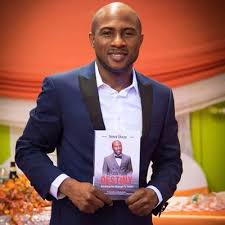
Henry Ukazu writes from New York. He works with the New York City Department of Correction as the Legal Coordinator. He’s the founder of Gloemi. He’s a Transformative Human Capacity and Mindset coach. He is also a public speaker, youth advocate, creative writer and author of Design Your Destiny Design and Unleash Your Destiny . He can be reached via info@gloemi.com
By Tolulope A. Adegoke, PhD
“Leadership is not a soft skill, but the world’s hardest currency. Its quality is the ultimate, measurable predictor of prosperity for peoples, corporates, and nations.”– Tolulope A. Adegoke, PhD.
Why the Soft Skill of Leadership Is Actually the World’s Hardest Currency—And How Econometrics Proves It
You’ve seen the headlines: “Nigeria’s Economy Grapples with Inflation.” “Startup Secures $50M Amid Industry Downturn.” “African Continental Free Trade Area Poised to Reshape Global Commerce.”
Behind these narratives lies a single, often unmeasured variable that dictates success or failure: Leadership.
We discuss leadership in terms of charisma, vision, and inspiration. But what if we could measure its impact with the same precision we use for inflation, GDP growth, or corporate ROI? What if we could prove, with data, that effective leadership isn’t just a “soft skill” but the most powerful economic lever we possess?
Welcome to the emerging field of The Econometrics of Leadership. This isn’t a theoretical exercise. It’s a data-driven framework showing that for nations like Nigeria, for corporations across Africa, and for a world in flux, the quality of leadership is the ultimate predictor of prosperity.
1. Beyond the Gut Feeling: Leadership as a Quantifiable Input
Economists have long used models to understand growth. Traditional formulas focus on Capital (K), Labor (L), and Technology (A). Yet, these models often fall short in explaining why two countries with similar resources have wildly different outcomes.
The missing variable? Leadership Quality (LQ).
Imagine a new national production function:
Y = A(LQ) • f(K, L, H, LQ)
Here’s the breakthrough: Total Factor Productivity (A)—the magic sauce of economies—is itself dependent on Leadership Quality. Good leadership doesn’t just add a factor; it multiplies the efficiency of every other factor.
· How do we measure LQ? We use proxies:
o For Nations: Worldwide Governance Indicators (Government Effectiveness, Rule of Law), Policy Consistency Scores, Corruption Perceptions Index.
o For Companies: Employee Engagement Scores (eNPS), Governance Ratings, Innovation Spend Efficiency.
o For Societies: Trust in Institutions surveys, Social Cohesion metrics.
This shift allows us to move from asking, “Is our leader good?” to analyzing, “How did a 10% improvement in our governance score correlate with a change in FDI inflows?”
2. The Transmission Channels: How Leadership Ripples Through Reality
Leadership’s impact flows through specific, measurable channels.
A. For People: The Human Capital Channel
Your life chances are shaped by leadership long before you enter the job market.
· The Channel: Public Leadership → Education/Healthcare Policy Quality → Your Skills & Health (Human Capital) → Your Lifetime Productivity & Earnings.
· The Data: Studies robustly link higher governance scores to higher Human Development Index (HDI) outcomes. Poor leadership creates a brain drain tax, systematically depleting a nation’s most valuable asset: its people. In your workplace, competent leadership directly correlates with your engagement, mental well-being, and career trajectory.
B. For Corporations: The Value Creation Channel
A company’s market valuation is a bet on its present and future leadership.
· The Channel: Strategic Leadership Decisions → Operational Efficiency & Innovation Rate → Profit Margins & Market Share → Stock Price & Cost of Capital.
· The Data: Financial econometrics research ties CEO characteristics and board structures to firm performance. A bold, strategic pivot shows up as a structural break in a company’s stock performance time-series. Conversely, poor governance increases a firm’s risk premium, making borrowing more expensive—a direct, quantifiable cost of weak leadership.
C. For Nations: The Institutional Trust Channel
A nation’s prosperity is built on its institutions, and institutions are built by leadership.
· The Channel: Political Leadership → Quality of Institutions (Property Rights, Judicial Independence) → Level & Quality of Investment → Sustainable GDP Growth.
· The Data: Cross-country analyses confirm that nations with stronger leadership proxies (control of corruption, regulatory quality) experience higher long-term growth. Leadership failure is a leading indicator of crisis, visible in econometric models as currency collapse, hyperinflation, or capital flight.
3. The Nigerian & African Imperative: Where the Leadership Dividend is Largest
The potential return on investment (ROI) from improved leadership is astronomically high in Africa. Nigeria, as the continent’s largest economy, is the critical test case.
The Nigerian Paradox: Immense potential, persistently under-realized. Challenges in power, security, and infrastructure are not just technical problems—they are symptoms of a long-term leadership deficit. Econometrically, they act as persistent drag coefficients on growth.
The Required Strategic Pivot: The move needed is from an Extractive Leadership Model (concentrating benefits for a few) to an Inclusive Leadership Model (creating systems that benefit the many). This is measurable:
· In Fiscal Policy: Tracking Public Investment Efficiency—how many quality roads or reliable power plants are delivered per Naira spent.
· In Monetary Policy: Measuring Central Bank Credibility and its effect on stabilizing inflation expectations.
· In Society: Quantifying gains in Social Trust that reduce the pervasive “risk tax” in every transaction.
The Continental Opportunity: Africa’s demographic boom is the 21st century’s great story waiting to be written. The ending—boom or bust—depends overwhelmingly on the leadership variable. Initiatives like the AfCFTA are leadership in action. Their success will be measurable in future econometric studies on trade creation and industrial growth.
4. A World of Interdependence: Leadership as a Global Public Good
In our connected world, leadership (or its absence) in one nation creates spillover effects everywhere.
· Global Public Goods: Leadership on climate action, pandemic preparedness, and financial stability are global public goods. Their provision can be modeled to show trillions in averted climate costs or faster global recovery rates from crises.
· The Geopolitical Risk Factor: Leadership decisions feed directly into Geopolitical Risk Indices, which move global oil prices, disrupt supply chains, and redirect investment flows overnight. The leadership variable in one capital becomes a shock variable in economic models worldwide.
5. The Call to Action: Investing in the Leadership Production Function
The conclusion is clear. We must stop treating leadership as an intangible art and start recognizing it as a critical, measurable form of capital.
We need to:
1. Measure it Systematically with the rigor of a national census.
2. Analyze it Rigorously using causal inference models to isolate its true impact.
3. Cultivate it Strategically by investing in institutions, meritocratic systems, and development programs that raise the LQ of our future leaders.
For Nigeria, for Africa, and for a world facing complex challenges, this isn’t just an academic idea. It’s the most important strategic investment we can make. The “Leadership Dividend”—the peace, prosperity, and progress it unlocks—is the highest possible return any society can earn.
The Econometrics of Leadership reveals that Leadership Quality (LQ) is the critical multiplier in the production function of modern society. It is the variable that determines the return on all other investments in human, corporate, and national capital.
Dr. Tolulope A. Adegoke is a Distinguished Ambassador For World Peace (AMBP-UN); Nigeria @65 Leaders of Distinction (2025); Recipient, Nigerian Role Models Award (2024); African Leadership Par Excellence Award (2024). He can be reached via: tolulopeadegoke01@gmail.com, globalstageimpacts@gmail.com


