
Metro
See 10 Reasons You Should Have Sex Regularly


- /home/rhoncare/pointblank.ng/wp-content/plugins/mvp-social-buttons/mvp-social-buttons.php on line 27
https://pointblank.ng/wp-content/uploads/2019/05/Sexless-1000x600.jpeg&description=See 10 Reasons You Should Have Sex Regularly', 'pinterestShare', 'width=750,height=350'); return false;" title="Pin This Post">
- Share
- Tweet /home/rhoncare/pointblank.ng/wp-content/plugins/mvp-social-buttons/mvp-social-buttons.php on line 69
https://pointblank.ng/wp-content/uploads/2019/05/Sexless-1000x600.jpeg&description=See 10 Reasons You Should Have Sex Regularly', 'pinterestShare', 'width=750,height=350'); return false;" title="Pin This Post">
Tope Omogbolagun
Sex is undeniably pleasurable. However, sex-related issues are among common reasons for disagreements among couples. Some partners don’t view sex as vital hence their failure to value its benefits to their wellbeing. Experts have noted that couples should handle sex matter well so they don’t become knotty in the bedroom.
Couples can learn from the 10 benefits of regular sex below to ignite their sex lives.
- Sex makes you hate your job less
Researchers have linked loving one’s job to having a good sex life. They said that good sex life can make one enjoy one’s less. The research published in the Journal of Management stated that good sex would not only stop one from hating one’s job, but also make one love one’s job more.
Oregon State University researchers asked 159 married employees to complete two surveys every day for two weeks. The participants noted how many times they had sex between the end of their work shift and the next morning. Then, in the afternoon, they answered questions about how happy and engaged they felt at their jobs.
People who had sex the night before work were more likely to immerse themselves at their jobs and enjoy their time in the office the next day than those who didn’t make time for sex, the researchers found.
The researcher said, “ This might happen because sex produces a significant ‘morning positive effect.’ Meaning all of the good feelings associated with sex mainly stemming from feel-good chemicals like oxytocin and dopamine carried over and produced a nice mood boost the next day, too.”
- Sex lowers your cancer risk
According to a study from the Boston University of Public Health, frequent ejaculation lowers prostate cancer risk in men, Health24.com stated.
Researchers surveyed nearly 32,000 men about their ejaculation frequency and followed them up for 18 years. They found that men between age 20 and 29 were 19 per cent less likely to be diagnosed with prostate cancer if they ejaculated 21 times or more each month compared to guys who didn’t ejaculate as often.
The benefit was even greater for older men; men 40 to 49 who met the same ejaculation standards saw a two-per cent reduction in their prostate cancer risk.
The study authors said frequent ejaculation might play a part in clearing out any cancer-causing infections that could develop within one’s prostate. It boosts the immune system and lowers the risk of prostate and breast cancer.
- Sex helps you sleep better
Suffering from insomnia? Don’t overwork yourself. Sex increases one’s heart rate which then helps the body to relax. Feel-good hormones are released during sex, in turn, promoting better sleep and rest. This is one of the major benefits of sex in marriage.
Sex has also been linked to good sleep by some medical experts. One of such is a men’s health sleep advisor, Dr Chirstopher Winter, who said orgasm helped one to sleep better.
He said, “Sex primes you for the perfect snooze by making you feel super relaxed, thanks to oxytocin’s stress-reducing effects. But oxytocin isn’t the only hormone that floods your system after orgasm. Your body also releases a hormone called prolactin, which suppresses dopamine, a neurotransmitter that helps you feel awake.
“Also, if you are having sex in the dark, your body will think it’s time for bed. So that sparks the release of melatonin, a hormone that makes you feel sleepy and tells your body it’s time to rest. The combination of those three hormones makes you sleep in no time.”
- Frequent sex may protect your heart
After following more than 100 men for an average of 16 years, researchers found that men who had sex two to three times per week had a significantly lower rate of cardiovascular disease than men who only had sex a few times a month or less, according to a study published in the American Journal of Cardiology.
There are some theories as to why that could be, according to the researchers. For one, sex contributes to the physical activity needed to protect one’s heart, Healthline.com stated.
The American Heart Association recommended 150 minutes of moderate exercise per week, so regular outdoor exercise should be done in addition to what one does in the bedroom. Besides, it noted that if one was having frequent sex, one would more likely to be in an intimate relationship.
The researchers, however, put a caveat to this, saying if a person had cardiovascular problems in the past, such person should probably wait to have sex until their heart issues returned to normal.
“Talk to your doctor before you do the deed, especially if you are on medication,’’ the researcher added.
A supportive partner makes for a happier heart– physically and emotionally by easing your stress levels. That’s a win for your ticker. Too much stress can cause a heart attack or stroke by increasing the amount of inflammation in your body, a research from Harvard Medical School found.
- Sex helps your penis perform better
A study published in the American Journal of Medicine stated that having sex keeps manhood strong. It stated that men don’t have to use the weapon often to notice the benefits.
In a five-year Finnish survey of nearly 1,000 men aged 55 to 75 years old, those who had sex once a week were half as likely to develop erectile dysfunction than men who did less often.
Supporting this study, a medical doctor, Juha Koskimäki, said, “An erection delivers crucial amounts of oxygen to your penis. Low oxygen levels can cause scar tissue to develop, which can make it difficult to get hard. But if you’re going through a dry spell, remember that other factors you’re in control of – like smoking and inactivity also raise your erectile dysfunction.’’
- Sex makes you happier
It’s normal to be excited and happy after orgasm but that’s not all to it. There are also scientific reasons why one experiences bliss after having great sex.
Scientists explained that the body is flooded with oxytocin, a stress-reducing hormone a few minutes after one climaxes. “This makes one feel relaxed, happy, and closer to one’s partner afterward,’’ the scientist added.
A sex researcher at Indiana University, Dr Debby Herbenick, said, “Since your oxytocin levels stabilise 10 minutes after you orgasm, try cuddling post-coitus to keep the good vibes going. Oxytocin can be released not only during intercourse but also during close touching.”
Also, a lead researcher of a Canadian study on how sex makes one happier, Dr Robin Milhausen, said, “Not cuddling is the biggest mistake you make in bed, the woman is more likely to find the experience pleasurable if you spend six to 10 minutes cuddling with her afterward. She also gets a rush of oxytocin after orgasming, which makes her crave more affection. Simply playing with her hair, rubbing her back or resting her head on your chest can help her get that.”
- Sex makes you look younger
A clinical neuropsychologist at the Royal Edinburgh Hospital, Dr David Weeks, said his extensive research had found older men and women with an active love lives looked five to seven years younger than their actual age.
He said, “But you don’t have to be at it every night to enjoy youth-enhancing effects. In fact, during my 10-year study, I found the quality was as important as quantity, with the anti-ageing benefits stronger if the sex was classed as loving.”
- Sex might relieve your headache
An orgasm might act as a natural pain-reliever, according to a 2013 German study. Your brain is bombarded with endorphins; neurotransmitters that produce a feeling of pleasure and pain relief-during sex, so researchers wanted to find out if having sex while one’s head was aching might ease the pain.
As published in Health24.com, they surveyed nearly 300 people with migraines and more than 60 with cluster headaches who had sex during an episode and found that 60 per cent of migraine sufferers and 37 per cent with cluster headaches said they felt better afterward.
- Sex makes your relationship better
It is often believed that sex makes relationships last longer but there’s more to mentioning it on the surface. A study from the University of Toronto Mississauga said having sex once a week kept lovers happy.
The research stated that having sex more than once wouldn’t make one happier so sex once in a week is what one needed to make one relationship more lively, healthier and better.
Also, a study published in the Association for Psychological Science, said all the happy feelings experienced after sex could last up to 48 hours for couples, which keeps their bond going strong long after the completion of the session.
- Sex burns kilojoules
A biostatistician at the University of Alabama at Birmingham, David Allison, found that the average person burnt a mere 21 calories during average sex session. He discovered that sex lasted six minutes on average, noting that the energy output equated to a paltry 20 or so calories, about the same as walking.
However, if done with enough gusto, sex could still count as ‘significant exercise’, the Quebec researchers said, reporting in the journal Plos One.
“The level of intensity that is exerted from sexual activity could be higher than that of walking at (4.8km/h) but less than that of jogging at (8km/h),” the researchers wrote in the study.
The researchers, from the University of Quebec at Montreal, looked at 21 heterosexual couples aged between 18 and 35. The average recorded session lasted 24.7 minutes – the shortest being 10 and the longest 57 minutes. During four sex sessions at home, couples wore a SenseWear armband that tracked their energy expenditure. They also answered questions on how tired they were afterwards, how much effort they put in and how much they enjoyed it.
Participants previously underwent a half-hour treadmill test so the researches could measure how many calories they burned during exertion-and then compared the readings from the armband worn during sex. Men, for example, burned 9.2 calories per minute on the treadmill – but 4.2 in the bedroom. For women, this fell to 7.1 calories while jogging.


Metro
International Day of the Girl-Child: Pad Me A Girl Foundation Holds Menstrual Health Outreach in Ogun
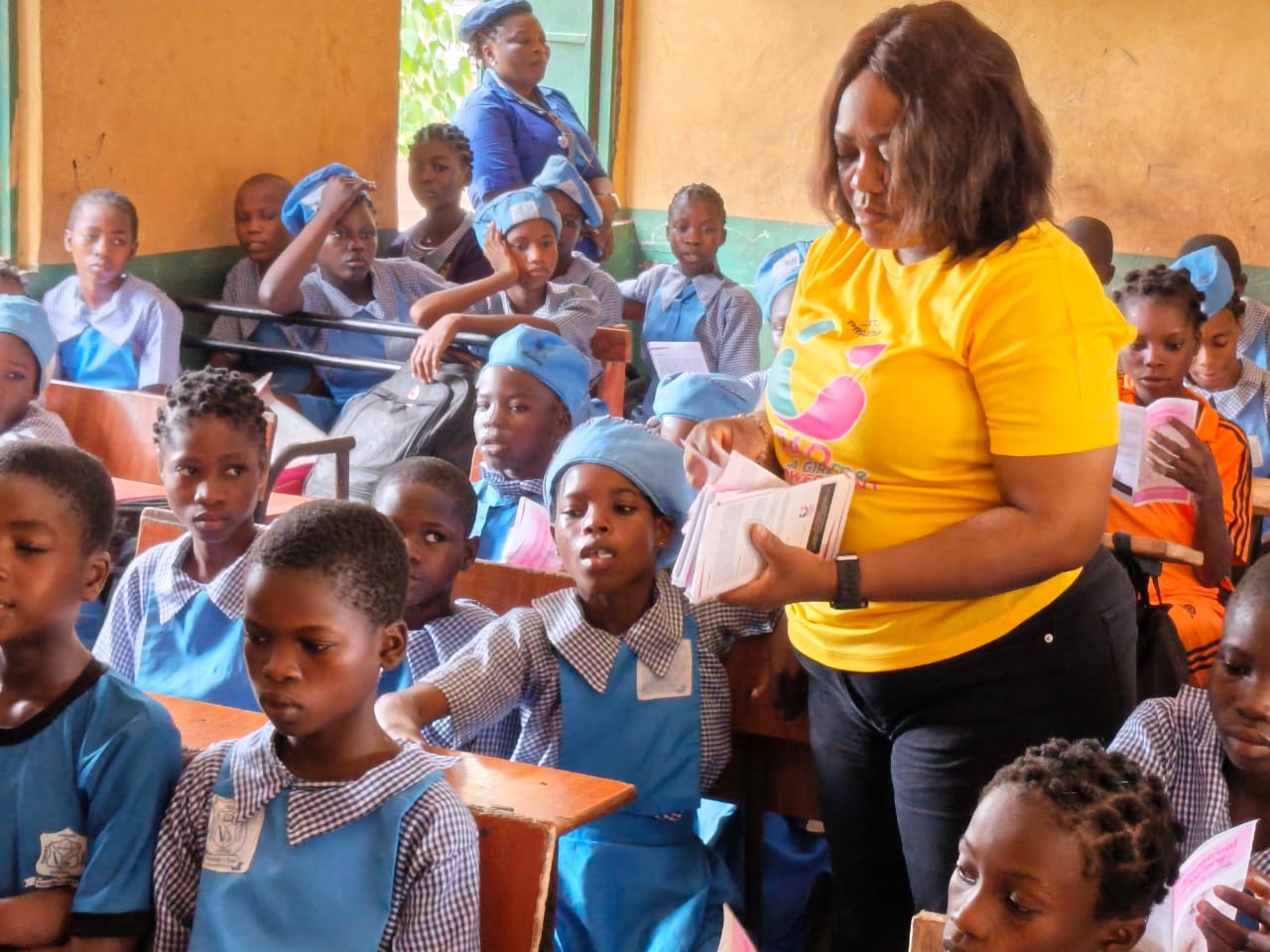
The Pad Me A Girl Empowerment Foundation has taken its menstrual health campaign to Igbesa High School (Junior), in Ado-Odo/Ota Local Government Area of Ogun State, providing free sanitary pads, menstrual hygiene pamphlets, exercise books and pens to over 100 schoolgirls to promote menstrual health, dignity and education.
The outreach, held on Wednesday, October 21, commemorated the 2026 International Day of the Girl Child, whose global theme is “End Child Marriage and Invest in Girls’ Rights!”
The programme brought together girls from Junior Secondary School (JSS) 1 to 3 who participate in the school’s reading clubs for mentorship, reading activities and menstrual health education.
It was convened by Oyelami Yetunde Anuoluwapo and Blessing Kappo, teachers and Teach For Nigeria Fellows at the school, following an appeal for sanitary products, learning materials and health education support. The Foundation’s founder, Theresa Moses, responded by providing the requested items and facilitating an interactive session on menstrual hygiene management.
Speaking at the event, Moses said she was inspired by the girls’ determination and aspirations, stressing the need for sustained investment in their health, education and future.
“Invest in girls and Nigeria will rise. Every girl deserves dignity, education and the right to dream beyond child marriage. That is why we are here; to ensure no girl misses school because of her period,” she said.
She emphasised that access to menstrual hygiene products and accurate information helps girls manage their periods confidently and participate fully in school activities.
In a letter of appreciation, Oyelami and Kappo described the outreach as impactful and inspiring, noting that it enhanced the girls’ understanding of menstrual health, hygiene and self-confidence. They also said the support would help promote the students’ hygiene, school attendance and dignity.
“You did not just give pads; you gave our girls confidence and hope,” the teachers wrote on behalf of the school community, expressing gratitude to the Foundation and hope for future collaboration.
Mrs Amarachi Eze, Assistant Divisional Commissioner of the Nigerian Girl Guides Association, Ado-Odo/Ota, Ogun State Branch, also commended the Foundation for supporting the girls’ hygiene needs and development.
“We sincerely appreciate the Management of Pad Me A Girl Foundation for joining hands with the Association in supporting our girls on hygiene management. May God Almighty continue to uplift your foundation. Thanks for joining hands in the development of girls in our schools. Bravo,” she said.
The Foundation’s Media Coordinator, Mr Oluwatosin Simon Faleye, called on corporate organisations, non-governmental organisations and well-meaning Nigerians to support initiatives that address period poverty and help girls remain in school.
“For over a year, we have been committed to ending period poverty and keeping girls in school. We call on corporate organisations and well-meaning Nigerians to support this cause for the betterment of Nigeria,” Faleye said.
The celebration also featured a student drama presentation highlighting the effects of child marriage, alongside reading and mentorship activities designed to encourage the girls to understand their rights, value their education and pursue their aspirations.
The Foundation also acknowledged the continued support of its sponsors and partners, including Access Bank, Pro Star Sports International, BL Consulting, Vita Baites Foods, Checkers, Senator Ireti Kingibe, representing the Federal Capital Territory (FCT) in the 10th Nigerian National Assembly, the Senate Committee on Women Affairs (SCOWAS), as well as individuals and media organisations whose contributions have supported its broader mission of ending period poverty, promoting menstrual health education and empowering girls and women.
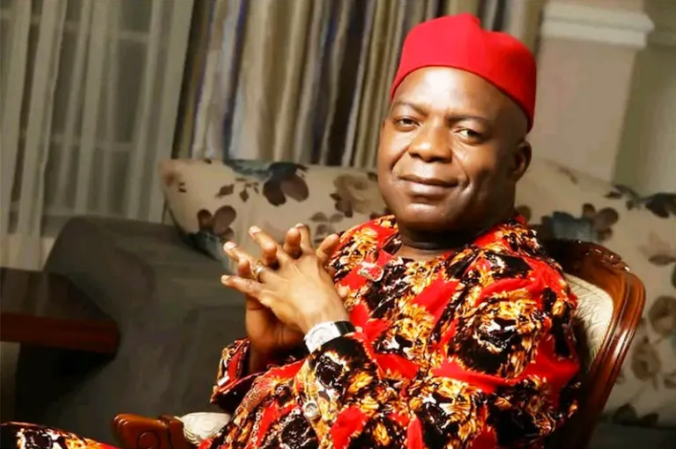
Abia State governor, Alex Otti, is set to flag off the reconstruction of Uratta Road and Old Express Road in Aba, two major routes which poor condition has disrupted transportation, commercial activities and access to residential communities for years.
The governor’s media aide, Ferdinand Ekeoma, in a statement on Wednesday, said that work on the roads has begun ahead of the scheduled official flag-off.
The two roads are considered important to Aba’s commercial and industrial activities, with Uratta Road connecting several adjoining streets to Port Harcourt Road and Old Express Road. At the same time, Old Express Road serves as a key route within the city’s industrial layout.
Ekeoma said the roads had suffered neglect for more than 24 years, leaving some sections impassable and forcing residents and businesses to contend with difficult transportation conditions.
According to the statement, Uratta Road provides access to more than 100 adjoining streets. Its poor condition has affected residents, traders and small-scale manufacturers who depend on the road to transport goods and access their businesses.
The statement said the road had become waterlogged and overgrown with weeds, discouraging commercial motorcycle and tricycle operators from using it.
Similarly, the deterioration of Old Express Road forced heavy-duty truck operators, fabric merchants, spare-parts dealers and small businesses to use longer routes, increasing transportation costs and affecting productivity.
The government said the road reconstruction is part of its broader effort to restore Aba’s infrastructure and strengthen the city’s commercial base.
Aba, one of southeastern Nigeria’s major commercial centres, hosts manufacturing clusters, markets, and small and medium-sized enterprises that depend heavily on functional roads to move raw materials and finished products.
The government said the reconstruction would improve market access, reduce transportation costs, facilitate the movement of goods, and support businesses operating along the affected corridors.
Ekeoma cited the reconstruction of Port Harcourt Road as an example of the administration’s infrastructure programme, noting that improved road access encouraged shops to reopen, attracted manufacturing activities and increased property rents along the corridor.
The government also said the new projects would complement other road interventions in Aba, including works on Ohanku and Obohia roads, as part of efforts to improve connectivity within the commercial city.
Beyond road construction, the administration said its projects include drainage systems, solar-powered streetlights, and pedestrian walkways, which it described as necessary to improve safety, accessibility, and flood resilience.
Ekeoma said Governor Otti views infrastructure development as an economic strategy rather than merely a construction programme, arguing that better roads would help businesses operate more efficiently and create employment opportunities.
He also quoted the governor as saying at an earlier church event that his administration is shifting attention from basic infrastructure improvements to healthcare, education, technology and industrialisation.
The governor, a former bank chief executive, was elected in 2023 on the Labour Party platform, defeating candidates from the major established parties in a state historically dominated by the Peoples’ Democratic Party.
Otti has remained in the Labour Party despite the defection of its 2023 presidential candidate, Peter Obi.
His administration has made rehabilitating Aba roads and public infrastructure central to its governance agenda, presenting the city’s recovery as essential to reviving economic activity across Abia State.

MILO Nigeria, in partnership with former Nigerian national team captain and MILO Brand Ambassador Ahmed Musa, has concluded the inaugural MILO × Ahmed Musa Sports Clinic and Tournament in Kano, providing 2,500 young footballers with professional coaching, mentorship and competitive football experience.
Over two weeks, participants took part in 10 coaching sessions and competed in matches under the guidance of Ahmed Musa and experienced coaches. The programme combined practical football training with lessons in teamwork, discipline, resilience and confidence, equipping participants with skills and values that extend beyond the pitch.
The initiative culminated in a tournament at the Ahmed Musa Sports Complex in Kano, where Khamis Football Academy emerged as champions of the inaugural edition. Participants also received cash prizes, certificates and football equipment.
Speaking on the initiative, Gilbert Tweneboah-Koduah, Category Lead, MILO, said: “At MILO, we believe sport is a powerful platform for young people to discover their abilities, build confidence and develop values that extend beyond the field of play. Our partnership with Ahmed Musa brings together MILO’s longstanding commitment to sports development and the experience of an athlete whose journey from grassroots football to the highest level of the game can inspire the next generation. By combining his experience with structured coaching and competition, this programme has given young footballers in Kano an opportunity to develop their skills, learn from experienced professionals and better understand the commitment required to pursue their aspirations.”
For the participants, the clinic offered an opportunity to learn from an athlete whose football journey began in northern Nigeria and progressed to the highest levels of the sport, making his experience a source of inspiration for aspiring players.
Commenting on the partnership, Ahmed Musa said: “Nigeria has incredible football talent, but talent alone is not enough. Young players need good coaching, regular competition and people who will guide them. I am proud to partner with MILO and share some of what football has taught me. My message to these players is simple: keep training, listen to your coaches and work hard every day to improve.”
Musa also called for greater investment in grassroots football, emphasizing the importance of giving young players access to quality coaching, structured development and regular competitive opportunities.
The MILO × Ahmed Musa Sports Clinic and Tournament builds on MILO’s longstanding commitment to youth development through sports in Nigeria. Through its school-based and grassroots sporting initiatives, MILO continues to create opportunities for young people to participate in sports, develop their abilities and embrace values that can support them both on and off the pitch.


