
Headlines
Senate Backs Down on Push to Sack Magaji As CAC Registrar-General


- /home/rhoncare/pointblank.ng/wp-content/plugins/mvp-social-buttons/mvp-social-buttons.php on line 27
https://pointblank.ng/wp-content/uploads/2026/03/HUSSAINI-ISHAQ-MAGAJI.webp&description=Senate Backs Down on Push to Sack Magaji As CAC Registrar-General', 'pinterestShare', 'width=750,height=350'); return false;" title="Pin This Post">
- Share
- Tweet /home/rhoncare/pointblank.ng/wp-content/plugins/mvp-social-buttons/mvp-social-buttons.php on line 69
https://pointblank.ng/wp-content/uploads/2026/03/HUSSAINI-ISHAQ-MAGAJI.webp&description=Senate Backs Down on Push to Sack Magaji As CAC Registrar-General', 'pinterestShare', 'width=750,height=350'); return false;" title="Pin This Post">
The Senate Committee on Finance, on Monday, rescinded its resolution seeking to remove the Registrar-General of Corporate Affairs Commission (CAC) Mr. Hussaini Ishaq Magaji (SAN), from office.
The committee, which is chaired by Senator Sani Musa, had on Thursday last week called on President Bola Tinubu to sack Magaji for ignoring parliamentary invitations to give an account of the operations of his agency.
But, at its resumed sitting in Abuja on Monday, the committee reversed itself after Magaji showed up, expressing remorse for his actions and apologising to the lawmakers.
It was the Chairman of Senate Committee on Customs, Senator Jibrin Isa (Kogi-East), who came to Magaji’s rescue by moving a motion, urging the committee to rescind the earlier resolution.
He was seconded by Katsina-North senator Nasir Musa Zango Daura.
However, before he got a reprieve, Musa criticised Magaji over his conduct, noting that he had no regard for the Legislature.
He stated, “This committee is not happy with you for your persistent refusal to appear before it in the past or sending junior officers to it. That’s not acceptable.
“The constitution grants us oversight powers over all revenue-generating agencies. At our last sitting, the committee recommended your removal, but you appeared shortly after our pronouncement.
“We want an explanation.”
Magaji immediately apologised for his behaviour, pleading that such would not be repeated again.
He blamed the development on communication breakdown, which he would address by establishing a liaison office at the National Assembly to improve interactions between the two sides.
“Mr Chairman, I sincerely apologise to the committee. I was returning from Lagos and asked my team to inform the committee ahead of time. Unfortunately, I arrived late.
“We have now created a dedicated liaison office to handle interactions with the National Assembly. I assure you this will not happen again. I take full responsibility and hold this committee in high esteem,” he added.
His show of remorse led to the withdrawal of the resolution with a warning not to ignore legislative invitations next time.
During last Thursday’s sitting, the committee had accused Magaji of failing to honour the Senate’s invitations to account for the finances of his agency.
“He refused on so many occasions to honour our invitation to appear before this committee.
“We have issues with the reconciliation of the revenue of CAC.
Each time we invite him, he gives us excuses,” Musa said as the committee passed the resolution.
A former Governor of Abia State, Senator Orji Uzor Kalu, had moved the motion for his removal.


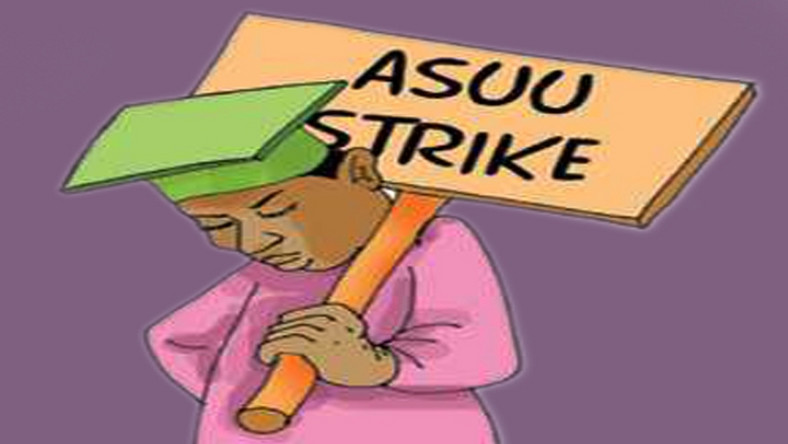
The Academic Staff Union of Universities (ASUU) has warned that Nigeria’s public universities could face another nationwide strike unless the Federal and State governments urgently address outstanding salary, welfare, and implementation issues affecting university lecturers.
The warning, it said, followed an emergency National Executive Council (NEC) meeting held at the union’s National Secretariat at the University of Abuja on September 5, 2026.
The union said that at the centre of the dispute are the non- or haphazard implementation of the December 2025 Federal Government-ASUU agreement, three-and-a-half months of withheld salaries dating from the previous administration, unremitted third-party deductions and concerns over university autonomy.
ASUU President, Christopher Piwuna, said the union would not accept responsibility for any disruption of academic activities if the outstanding issues were not resolved.
“Except for recent attempts by the Federal Ministry of Education to defray outstanding salaries for Federal Universities of Agriculture, there have been no concerted efforts to address our concerns and worries on a sustainable basis,” said the union.
“Each month, lecturers have been forced to be at daggers drawn with their vice-chancellors over uncertainty of when and what part of their salaries would be paid. This time, the union’s message to the nation is clear: Unless immediate and concrete steps are taken to FULLY and COMPREHENSIVELY address issues bordering the welfare and well-being of Nigerian academics, ASUU-NEC will not accept any blame for calling out its members on a nationwide strike action within the shortest time possible,” he stated.
The union said the unresolved issues are already creating industrial tensions in universities, with some state university branches moving towards strike action
ASUU commended states including Bauchi, Ekiti, Ogun, Benue, Yobe, Adamawa, Kebbi, Katsina and Borno, where implementation of the 2025 Agreement has commenced. It also noted pledges to begin implementation in Kano, Edo, Plateau, Taraba, Gombe and Bayelsa in September or October.
The union said universities concerned had been notified of the commencement of strike actions unless satisfactory progress was recorded.
There have been a series of industrial disputes in recent weeks.
ASUU chapters at the University of Medical Sciences, Ondo, and Plateau State University had declared indefinite strikes over unresolved demands, including implementation of the 2025 agreement and payment of arrears.
At Sule Lamido University, Kafin Hausa, the ASUU branch also announced a two-week warning strike beginning September 15 over unresolved issues with the Jigawa State Government, with a warning that the action could escalate into a total and indefinite strike.
ASUU stated that three-and-a-half months of the seven-and-a-half months of salaries withheld during the Buhari administration remain unpaid.
The union acknowledged that President Bola Tinubu’s government had paid four months but said the outstanding balance continued to impose financial and psychological hardship on lecturers.
It also said the value of the withheld income had fallen by more than 50 per cent since 2022.
“It will do this government a lot of good to restore the full confidence of lecturers in the nation-building project, for which Nigerian scholars are critical pillars and pivots. We state for the umpteenth time that the lecturers have done the work for which they are being punished.
“They did it at huge cost to their physical and psycho-social well-being. Some lost their lives in the process, and many are now managing life-threatening ailments. For healing and restoration in the Nigerian University System (NUS), we think the withheld salaries of lecturers should be released without further delay. As for us in ASUU, we shall not give up until our cries get an empathetic attention in the appropriate quarters,” its president stated.
The union further said pension contributions, cooperative society deductions and union check-off dues deducted from lecturers’ salaries, running into billions of naira, had not been appropriately remitted for several months.
ASUU said the issue of third-party deductions had produced only limited progress in its engagements with government and warned that it was prepared to call out its members if the matter was not resolved.
The warning comes even as the Federal Government announced steps towards implementing part of the 2025 agreement.
On September 9, the government said it had released funds for the full payment of the Consolidated Academic Tools Allowance to academic staff in federal universities, polytechnics and colleges of education for January to August 2026.
The Education Minister, Tunji Alausa, said the payment was being implemented in line with the 2025 FGN-ASUU Agreement.
ASUU, however, said other core elements of the agreement remained unresolved.
But the union warned that the situation could push more universities into industrial action and called on students, parents, labour leaders, the media and other Nigerians to intervene before the crisis escalates.
“In no mistaken terms, ASUU posits that the non- or haphazard implementation of the 2025 FGN-ASUU Agreement by federal and state governments is a recipe for industrial crisis in Nigeria’s public universities,” its president stated. “In the same vein, withholding the three-and-a-half months’ salaries and third-party deductions by the government is an ill wind for lasting peace on our campuses. We call on students, parents, media practitioners, labour leaders and other patriotic Nigerians to come into the brewing crisis before it gets out of hand.
“ASUU cannot guarantee an uninterrupted academic calendar at the expense of the existential needs of our members. We shall not watch helplessly while red-tapism incrementally frustrates and destroys what is left of the academic profession and universities in Nigeria.”
ASUU said its latest position is not an immediate declaration of a nationwide strike, but a warning that its suspended industrial action could be activated if the government fails to respond satisfactorily.
The union said its doors remained open to negotiations with the Federal and State governments, but maintained that the welfare of lecturers could not continue to be separated from the stability of Nigeria’s university system.

A former head coach of the Super Eagles, Austin Eguavoen, has been appointed to lead Nigeria’s Super Falcons on a temporary basis as the search for a permanent manager continues.
His immediate assignment is navigating the 2028 Olympic Games second-round qualifying tie against Comoros this October.
Eguavoen brings top-tier experience to the role, having previously guided the Super Eagles to a bronze medal at the 2006 Africa Cup of Nations in Egypt.
Joining the interim technical crew is Nasarawa Amazons head coach Christopher Danjuma, who recently led the Falconets at the 2024 FIFA U-20 Women’s World Cup.
Former Super Falcons defender Ayisat Yusuf – who earned 68 caps and featured at the 2008 Beijing Olympics – also joins as an assistant coach, alongside veteran goalkeeper trainer Olatunji Baruwa.
The 10-time African champions will kick off their campaign against Comoros, who advanced after a staggering 30-0 aggregate win over Sudan.
Both legs of the fixture will take place at the Remo Stars Stadium in Ikenne-Remo on October 9 and 13, 2026.
To secure one of Africa’s two spots at the Los Angeles 2028 Games, Nigeria must navigate four two-legged knockout rounds.
Should they beat Comoros, the Super Falcons will move on to the third round in early 2027 to face either Morocco or the Democratic Republic of Congo. Subsequent rounds are set for late 2027, where potential clashes against sides like Cameroon, South Africa, or Zambia loom in the final stretch.
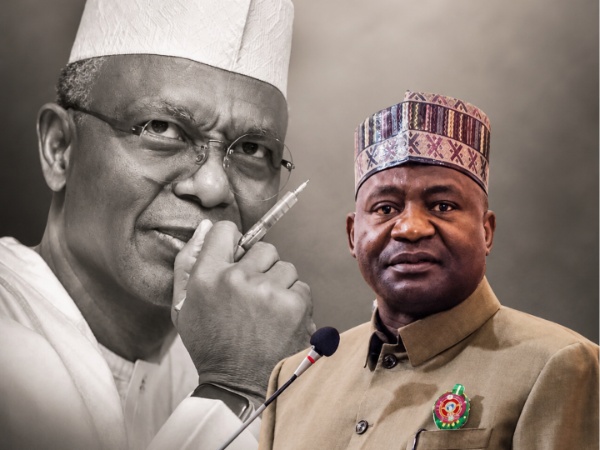
The Minister of Defence, Gen. Christopher Musa, has accused a former Governor of Kaduna State, Nasir El-Rufai, of deliberately planning the killing of people in Southern Kaduna.
Musa made the allegation while fielding questions on Channels Television’s Politics Today programme on Thursday.
The minister said El-Rufai’s administration created deep divisions in Kaduna State, alleging that the situation made it difficult for residents from Southern Kaduna to live freely in the northern part of the State and vice versa.
According to him, the administration of the current governor, Uba Sani, has made deliberate efforts to restore unity and rebuild trust among residents of the State.
“We know how it was when El-Rufai was there; it was toxic,” Musa said.
“El-Rufai did a lot of terrible things in Kaduna State. He divided the country, the State, into two. In that, if you are from the South, you cannot go to the North and live. Those ones from the North were moving to the South.
“Governor Sani within one year has been able to dissolve all that. You see, now everybody is free, everybody has a say. It’s not 100%. Let me tell you, it’s not 100%, but you can see that he’s making deliberate effort in uniting the state.”
Speaking on the feelings of people in Southern Kaduna towards the former governor, Musa said the people remained deeply pained over killings recorded in the area during El-Rufai’s tenure.
He alleged that El-Rufai deliberately planned the killing of people in the region.
“Well, I don’t know if unhappy is an issue. I think if there’s anything worse than unhappy, we can never be happy with somebody who has deliberately planned for the killing of our people,” Musa said.
“I mean, when you look at it, if you look at his videos, you know, his speeches, he was very proud of what he did.
“He told us he paid bandits. He told us he did this, he did that. He didn’t hide it. He was that arrogant to come out and tell people that this was what he did.”
The Defence Minister said residents of Southern Kaduna were still traumatised by the killings that occurred during the period, adding that the security situation in the area had improved under the current administration.
“The Southern Kaduna people are still very pained. Of course, definitely. I mean, if you look at the number of killings that was done there and what is going on now, you can’t compare at all,” he said.
Musa further accused El-Rufai of denying some people opportunities during his administration and alleged that the former governor’s policies affected even people from his own part of the state.
“I can tell you what he has done to people living in Kaduna from his own area. He did a lot of things that I’m sure even him is not proud of,” he added.
The minister, however, called on Nigerians to reject politicians who exploit religion, ethnicity and other differences to divide the country.
“We should get politicians that want to unite Nigeria. For me, any individual who is using either religion, tribe, creed, or anything to divide the state can never be a friend; can never be somebody we look up to,” Musa said.
“We shouldn’t have those kind of ones in government. Anybody who is using religion or tribe or whatever to divide Nigeria is an enemy of the State.”


