Headlines
Senate Justifies N125bn NASS Budget, Says Its Reward for Hardwork
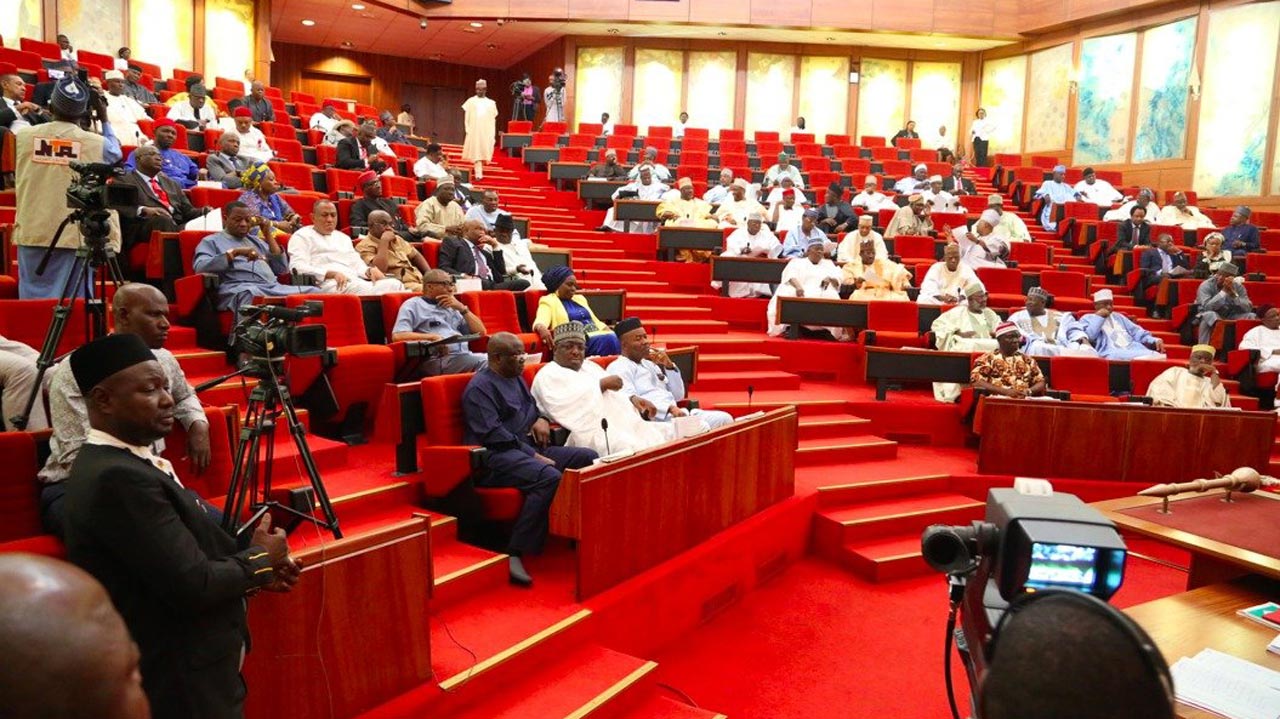
The Senate has justified the N125 billion proposed by President Muhammadu Buhari as the National Assembly budget for the 2020 fiscal year.
“The National Assembly has a lot of staff to take care of in both chambers. The number of committees is large too because of the volume of work. So, there is no way we can operate with a small budget,” said spokesman of the Senate, Adedayo Adeyeye, in an interview with The Guardian.
His comment came as Italy’s parliament voted to cut down the number of legislators in both houses. While the Senate will now have 200 lawmakers from 315, the chamber of deputies will have 400 as against 630.
“The bulk of this money is spent on issues that promote legislative operations. Unfortunately, many people believe that legislators take the largest chunk of the money. Our salaries are open for public scrutiny,” Adeyeye said.
“The truth is: it is either we want to have a working and effective National Assembly that is properly funded or we do not. Running the system in the National Assembly is very expensive.”
The spokesman, however, failed to provide details on how the N125 billion would be spent, declaring that he was yet to get the specifics.
The National Assembly has in the past come under intense criticism over its failure to release the details of its budget.
Also, the Senate has reintroduced a bill seeking to establish the National Assembly Budget and Research Office (NABRO).
The Eighth Senate passed the bill on May 3, 2019. Buhari, however, did not assent to it. The proposed office, among other functions, will report yearly to the Senate and House of Representatives all items funded in the preceding financial year for which no appropriation was made by the National Assembly, and all items contained in the Appropriation Act in the preceding financial year but which were not funded by the Federal Government.
Lawmakers, meanwhile, continued debate on the 2020 budget yesterday with Senator Emmanuel Bwacha saying the document does not reflect Nigeria’s readiness to diversify its economy. He also accused his colleagues of being insincere in their handling of the budget.
“I’m saying this because, since 1999, budget implementation has not reached 70 per cent. This is very worrisome. We are discussing the 2020 budget estimates. Is it fair to say that we have a 2019 budget, which has not been implemented? As we speak now, nothing has been done. We have the 2019 Appropriation Act and we are discussing the 2020 budget proposal.
“Oversight functions have become a ritual. We have to take it seriously as a parliament. We refused to address this aspect of our shortcomings. We are only prepared to speak from both sides of our mouths. We need to walk the talk if we really want to achieve significant growth in our economy,” he said.
Senator Christopher Ekpeyong said the planned increase in VAT was incompatible with the budget. He explained: “If you increase the VAT to 7.5 per cent today for an investor or a contractor, he will pay educational tax of one per cent, he will pay ITF of one per cent, he will pay NITTF of one per cent, and some times, he goes behind to pay some percentage to the ruling party.
“These taxes are not mentioned. What is the result of the product the man will sell? For that reason, I am not in support of the VAT increase because already the VAT not mentioned is over 9 per cent and if you now add this to this, you will be having 10.5 per cent as VAT in the country.”
Similarly, the vice-chairman, Senate Committee on Tertiary Institutions and TETFund, Ojang Sandy Onor, described Buhari’s attribution of low receipts in VAT to the general election as a cover-up. According to him, the real reason is that the economy is not performing well.
He said: ‘If yesterday when VAT was five per cent we experienced lower levels of economic activities, today that VAT is 7.5 per cent, we risk not having economic activities at all, and the consequences are dangerous.”
But Senator Ajibola Basiru who seemed to support the proposal gave the reason for the lack of full implementation of the 2019 budget. “The budget was not fully implemented because it was passed and signed into law towards the end of the Eighth National Assembly. What struck me is that the revenue projections and infrastructure show a 70 per cent deficit in the 2019 budget, and in 2020, it has already been highlighted that N2.18 trillion will be the proposed deficit,’’ he stated.
“People are looking at the allocation to key sectors and the revenue to fund the projects. For instance, when you talk of the N256 billion being allocated to Works, I have it on good authority that what is even required to take care of the outstanding in the Ministry of Works and Housing is in excess of N500 billion. Yet, many people are hailing the N256 billion allocated for Works, describing it as huge. We should also be looking at the aspect of progressive taxation.”
The Guardian
Headlines
Dele Momodu Proposes Atiku/Obi Ticket As ‘Best Bet’ to Unseat Tinubu in 2027
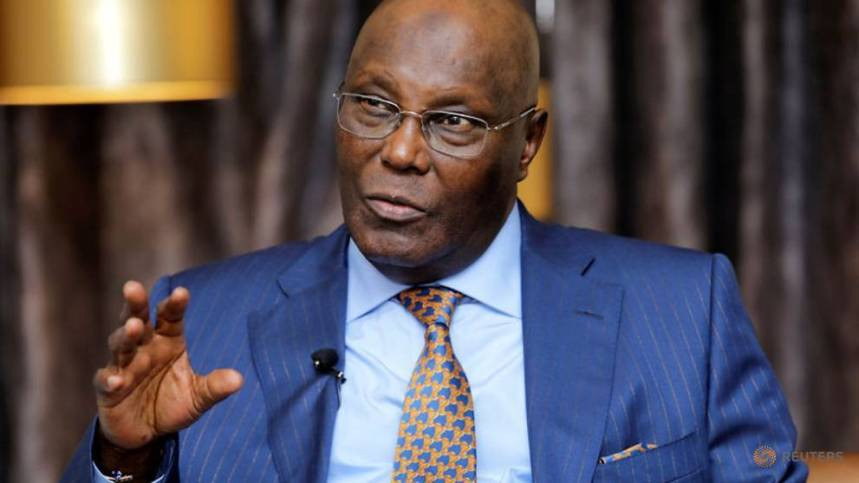
Veteran journalist and chieftain of the African Democratic Congress (ADC), Chief Dele Momodu, has declared that a joint presidential ticket between Atiku Abubakar and Peter Obi represents the strongest strategy for the opposition to defeat the ruling All Progressives Congress in the 2027 general elections.
Speaking on Politics Today on Channels Television, Momodu said the emerging ADC coalition is gaining momentum as a credible alternative to President Bola Tinubu’s administration, which he accused of promoting “one-man rule” and weakening democratic institutions.
Momodu argued that an Atiku–Obi ticket offers both experience and electoral appeal, noting that both politicians already command significant national followings from previous elections. He recalled their collaboration in 2019, adding that Obi’s performance in the 2023 presidential election provides a ready base of supporters that can be consolidated.
According to him, the coalition is further strengthened by the involvement of political heavyweights such as Rabiu Kwankwaso and Rotimi Amaechi, making it a formidable opposition alliance.
“The candidates who placed second, third, and even fourth are aligning. That naturally builds a strong challenge,” Momodu said, suggesting that this development could unsettle the APC ahead of 2027.
He also accused the Tinubu administration of centralising power and undermining democratic processes, claiming that key institutions—including the legislature and electoral system—are increasingly influenced by the executive arm of government. He warned that such a trend poses risks to Nigeria’s democracy.
Momodu further alleged that opposition parties face systemic obstacles, including difficulties in accessing venues, legal pressures, and institutional interference. He argued that these challenges have made opposition unity not just strategic, but necessary.
Dismissing concerns about possible cracks within the ADC coalition, Momodu described such fears as speculative, insisting that current political realities have effectively forced major opposition figures to work together.
Headlines
Supreme Court Fixes April 22 for Hearing in ADC Leadership Crisis
The Supreme Court has scheduled hearing for April 22 in the appeal filed by the National Chairman of the African Democratic Congress (ADC), Senator David Mark, in relation to the leadership dispute in the party.
Mark’s appeal is against the March 12 judgment of the Court of Appeal, which dismissed his appeal against the September 4, 2025 ruling by Justice Emeka Nwite of the Federal High Court in Abuja refusing to grant some injunctive reliefs contained in an ex-parte application filed by a chieftain of the party, Nafiu Bala Gombe.
A five-member panel of the Supreme Court, led by Justice Mohammed Garba chose the date on Tuesday after granting accelerated hearing in the appeal marked: SC/CV/180/2026.
The court ordered Mark’s lawyer, Jibril Okutepa (SAN) to file the appellant’s brief and serve on Wednesday.
It ordered the respondents to each file and serve on the appellant, a respondent’s brief within three days of being served with the appellant’s brief.
The appellant, according to the court, is to file a reply brief, if needs be, within one day of being served with the respondents’ briefs.
Headlines
Amid Denials, ADC Reportedly Secures Rainbow Event Centre As Venue for National Convention
Baring any last minute change, the leadership of the African Democratic Congress (ADC) under Senator David Mark and Rauf Aregbesola as National chairman and National Secretary respectively will hold the party’s National convention at the National Rainbow Event Centre in Garki on Tuesday, 14 April 2026.
The African Democratic Congress (ADC) has being denied two venues without any cogent reasons despite early arrangements, according to sources.
First, it was alleged that the Abuja Transcorp Hilton Hotels, which was initially approached, turned down the ADC request to use it’s facility.
The ADC, having sensed sabotage, has kept the Rainbow Event Center under rap as it’s definite venue.
The last National Executive Committee (NEC) of the party was held at the same venue.
Located adjacent the Nigerian Police Force Headquarters, the event centre will host the second NEC meeting of the ADC and it’s forthcoming national convention.
According to The Guardian’ report, the ADC leadership has communicated the venue to state chapters with the caveat not to escalate it.
The ADC is in a battle of survival against the Independent National Electoral Commission (INEC) and has approached the Supreme Court for intervention.
The INEC national chairman Prof Joash Amupitan has suspended recognition of the David Mark-led ADC rendering a leadership vacuum in the party.
INEC said it’s decision was on the basis of an Appeal Court pronouncement that ordered statusquo ante-bellum be maintained.
Reports say that why the venue is being quietly decorated moderately for the event, the ADC intends to fully move in the early hours of Tuesday.
The Guardian