
Headlines
SERAP Sues NNPCL Over ‘Failure to Account for ₦5.9bn Rebranding Cost’


- /home/rhoncare/pointblank.ng/wp-content/plugins/mvp-social-buttons/mvp-social-buttons.php on line 27
https://pointblank.ng/wp-content/uploads/2019/04/NNPC.png&description=SERAP Sues NNPCL Over ‘Failure to Account for ₦5.9bn Rebranding Cost’', 'pinterestShare', 'width=750,height=350'); return false;" title="Pin This Post">
- Share
- Tweet /home/rhoncare/pointblank.ng/wp-content/plugins/mvp-social-buttons/mvp-social-buttons.php on line 69
https://pointblank.ng/wp-content/uploads/2019/04/NNPC.png&description=SERAP Sues NNPCL Over ‘Failure to Account for ₦5.9bn Rebranding Cost’', 'pinterestShare', 'width=750,height=350'); return false;" title="Pin This Post">
The Socio-Economic Rights and Accountability Project (SERAP) has filed a lawsuit against the Nigerian National Petroleum Company Limited (NNPCL) “over its failure to account for approximately ₦5.9 billion reportedly spent on the incorporation, transition, and rebranding of NNPC into NNPCL.”
The NNPC reportedly paid N2.9 billion for incorporation expenses from petroleum product proceeds, while the National Petroleum Investment Management Services (NAPIMS) also charged N2.9 billion to crude oil revenue for the same purpose, bringing the total amount spent on the rebranding of NNPC to NNPCL to ₦5.9 billion.
In the suit number FHC/ABJ/CS/1248/2026, filed last week at the Federal High Court in Abuja, SERAP is seeking “an order of mandamus to direct and compel the NNPCL to account for about ₦5.9 billion allegedly spent on the rebranding of the NNPC to the NNPCL.”
SERAP is asking the court to “direct and compel the NNPCL to provide a comprehensive reconciliation statement detailing the specific financial transactions relating to the ₦5.9 billion expenditure, including the identities of the contractors involved, and how the funds were utilized for the rebranding of NNPC to NNPCL.”
SERAP is also asking the court to “direct and compel the NNPCL to disclose the names and official positions of the government officials who authorized and approved the release and expenditure of the ₦5.9 billion reportedly spent on the rebranding of NNPC to NNPCL, and to clarify whether the expenditure complied with applicable procurement laws and due-process requirements.”
In the suit, SERAP is arguing that: “There is a legitimate public interest in the disclosure of the details sought. The NNPCL has a legal responsibility to explain whether the ₦5.9 billion expenditure represents value for money, constitutes lawful spending of public funds, and complies with applicable due process requirements.”
SERAP is also arguing that, “There ought to be full transparency and accountability regarding the reported ₦5.9 billion spent on rebranding NNPC to NNPCL. Nigerians have the right to know who approved the expenditure, who received the funds, the nature of the services rendered, and whether due process and procurement requirements were strictly followed.”
According to SERAP, “the disclosure of the identities of the officials involved and the processes followed in approving the expenditure would enable the public to assess whether the expenditure was properly authorized, represented value for money, and was undertaken in accordance with due process and procurement requirements.”
“Given the size of the reported expenditure and the importance of transparency in the management of public resources within the petroleum sector, there is an urgent need for a prompt, thorough, and transparent disclosure of the details surrounding the spending of the funds.”
The suit filed on behalf of SERAP by its lawyers, Oluwakemi Agunbiade, Kehinde Oyewumi, and Andrew Nwankwo, read in part: “The alleged spending of the ₦5.9 billion suggests a grave violation of the public trust and the provisions of the Nigerian Constitution 1999 [as amended], national anticorruption laws, and the country’s international anticorruption obligations.”
“The failure to account for the spending of the ₦5.9 billion on rebranding from NNPC to NNPCL reflects a failure of NNPCL accountability more generally and is directly linked to the institution’s continuing failure to uphold transparency and accountability principles.”
“The refusal or failure of the NNPCL to provide a detailed account of the expenditure undermines the right of access to information concerning the management of public resources.”
“Senate Committee on Public Accounts reportedly raised serious concerns regarding the expenditure of the ₦5.9 billion described as incorporation and transition expenses allegedly incurred during the process of transforming the NNPC into the NNPCL.”
“The Committee described the spending of the ₦5.9 billion as excessive, unjustifiable, and deserving of further explanation, investigation, and legislative scrutiny in the public interest.”
“The transformation of the national oil company from the NNPC into the NNPCL occurred following the enactment of the Petroleum Industry Act (PIA) 2021, which required the corporation to become a commercially oriented limited liability company fully owned by the federal government.”
“Section 13 of the Nigerian Constitution 1999 [as amended] requires all public institutions including the NNPCL to conform to and apply the provisions of Chapter II of the Constitution, while Section 15(5) mandates the public institutions to abolish all corrupt practices and abuse of power.”
“Similarly, Section 16 of the Constitution requires the public institutions to ensure that the material resources of the nation are harnessed and distributed as best as possible to serve the common good.”
“Articles 5 and 9 of the UN Convention against Corruption require Nigeria to ensure transparency and proper management of public funds.”
“Article 21 of the African Charter on Human and Peoples’ Rights recognizes the right of peoples to freely dispose of their natural resources and provides that the misappropriation of such resources shall give rise to the right of the people to recovery and compensation.”


A United States-based policy advisory and lobbying firm, Von Batten-Montague-York, has alleged that Nigeria’s President, Bola Tinubu, spent millions of dollars to prevent the release of records of his alleged drug trafficking case.
Von Batten-Montague-York made this allegation in a post on its verified X handle late Tuesday.
According to the firm, Tinubu’s claim that he was not attempting to block the release of the records is contradictory to the action of his own legal team in the ongoing Freedom of Information Act (FOIA) case.
It accused Tinubu of having petitioned the court and consulted with the Federal Bureau of Investigation (FBI) and Drug Enforcement Administration, DEA, as part of efforts to prevent the records from being released.
“Despite claiming innocence, Tinubu has spent millions of dollars to ensure that his drug trafficking records are never released.
“The description of the underlying matter is merely a civil case. The involvement of US law-enforcement agencies in the records dispute demonstrated that the matter involved sensitive investigative material,” the firm said.
The latest allegation from the firm came against the backdrop of the ongoing legal battle over the release of records held by the US Department of Justice, DOJ, FBI and DEA, concerning historical investigations involving Tinubu.
United States District judge, Beryl Howell, had granted Donald Trump-appointed attorney, Jeanine Pirro, additional days to release the alleged drug-trafficking records.
Tinubu had joined the request of the US Department of Justice for a 10-day extension to respond to a motion seeking the release of records relating to allegations of drug trafficking.
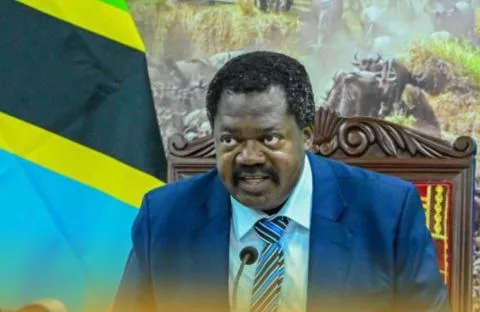
Born on December 24, 1971, in the Mbeya Region, Dr Emmanuel John Nchimbi grew up in a family rooted in public service. His father, Mzee John Nchimbi, hailing from Songea District, served as an Assistant Commissioner of Police (ACP) and Regional Police Commander for Mtwara.
Beyond his law enforcement career, the elder Nchimbi was actively involved in politics, serving two terms as a National Executive Committee (NEC) member for Chama Cha Mapinduzi (CCM) through the armed forces wing and later as a CCM regional secretary.
Dr Nchimbi began his primary education at Oysterbay Primary School in Dar es Salaam from 1980 to 1986. He pursued his O-Level studies at Uru Secondary School (Form I to III) from 1987 to 1989 before transferring to Sangu Secondary School, where he completed Form IV in 1990.
He then moved to Forest Hill Secondary School in Mbeya for his A-Level education between 1991 and 1993.
Advancing to higher education, Dr Nchimbi earned an Advanced Diploma in Administration from the Institute of Development Management (IDM) Mzumbe in Morogoro between 1994 and 1997.
Upon graduating, his political trajectory accelerated rapidly: he was elected as a member of CCM’s National Executive Committee (NEC), and by 1998, he was elected Chairman of the CCM Youth Wing (Umoja wa Vijana wa Chama cha Mapinduzi – UVCCM).
Alongside his rising political responsibilities, Dr Nchimbi built a professional background in public service and academia. He worked at the National Environment Management Council (NEMC) from 1998 to 2003.
During this period, he pursued further studies, obtaining a Master of Business Administration (MBA) specialising in Banking and Finance from Mzumbe University between 2001 and 2003. He was later appointed District Commissioner for Bunda (2003–2005) and went on to complete a Doctorate (PhD) at Mzumbe University between 2008 and 2011.
He served in that capacity until October 2006, when he was reshuffled to serve as Deputy Minister for Labour, Employment, and Youth Development until February 2008. He subsequently served as Deputy Minister for Defence and National Service until November 2010.
Source: The Star
Headlines
Tinubu Orders Arrest, Suspension of Three Perm Secs As ICPC Uncovers Another Fake Govt Agency

President Bola Tinubu on Friday ordered the immediate arrest and suspension of three federal Permanent Secretaries over their alleged involvement in the operation of another fake agency uncovered by the Independent Corrupt Practices and Other Related Offences Commission (ICPC).
ICPC Chairman, Dr Musa Adamu Aliyu, who disclosed this to newsmen after briefing President Tinubu on the latest findings from the commission’s ongoing investigation into fictitious agencies and weaknesses in public sector processes named the affected Permanent Secretaries to include M S Danjuma, Engr Nadungu Gagare, and Richard Pheelangwah.
The Commision’s latest discovery is coming barely few weeks after exposing the fictitious Presidential Foreign Intervention Promotion Council (PFIPC).
According to Aliyu, the newly uncovered entity, operating as National Brands Development and Made-in-Nigeria Special Project Office, had allegedly secured office accommodation within the premises of the Office of the Secretary to the Government of the Federation (OSGF) without authorisation from the President.
The discovery, he said, was made during the broader investigation into the PFIPC, which President Tinubu had directed the ICPC to undertake.
The fake agency, according to ICPC boss, was promoted by Prince George Buchi Nwabueze, who allegedly operated under several variations of his name, including George Nathan Nwabueze, Honourable George Buchi Nwabueze, Prince George Buchi Nwabueze and George Buchi Nwabueze.
Aliyu disclosed that the commission was engaging relevant officials in the Office of the Secretary to the Government of the Federation to establish how the purported agency came to operate from government premises and to obtain other vital information required for the investigation.
“I have briefed Mr President comprehensively on these new developments. ICPC will continue with its investigation,” he said.
Following the fresh findings, Aliyu said President Tinubu had directed the immediate arrest of Prince George Buchi Nwabueze, as well as the immediate suspension of the three named permanent secretaries.
The commission is expected to establish the roles played by the suspended officials and other individuals in the emergence and operation of the purported agency.
Aliyu said the latest discovery underscored the need for tighter controls and greater scrutiny of government institutions and internal administrative processes.
He commended President Tinubu for ordering a wider policy audit of federal agencies and government processes, describing the initiative as a proactive measure to strengthen the governance system.
His said: “President Bola Tinubu must be commended for the proactive step of directing the policy audit of MDAs and internal government processes towards strengthening government governance system.”
The latest development has widened the scope of the ICPC’s investigation into the proliferation of fictitious government entities and alleged exploitation of official structures by individuals seeking to create the impression of government authority.
The commission’s investigation into the PFIPC was initiated after the purported agency came under scrutiny, with the President subsequently directing the ICPC to unravel those behind its operations and determine whether public officials facilitated its activities.
With the discovery of another purported agency operating from government premises, the ICPC probe is now expected to examine broader institutional weaknesses that may have enabled unauthorised entities to gain access to federal government facilities and present themselves as legitimate government bodies.


