
Headlines
Shiroro Attack: Buhari Mourns Slain Soldiers, Vows to Punish Perpetrators, Rescue Captives


- /home/rhoncare/pointblank.ng/wp-content/plugins/mvp-social-buttons/mvp-social-buttons.php on line 27
https://pointblank.ng/wp-content/uploads/2019/05/Buhari-4-1000x600.jpg&description=Shiroro Attack: Buhari Mourns Slain Soldiers, Vows to Punish Perpetrators, Rescue Captives', 'pinterestShare', 'width=750,height=350'); return false;" title="Pin This Post">
- Share
- Tweet /home/rhoncare/pointblank.ng/wp-content/plugins/mvp-social-buttons/mvp-social-buttons.php on line 69
https://pointblank.ng/wp-content/uploads/2019/05/Buhari-4-1000x600.jpg&description=Shiroro Attack: Buhari Mourns Slain Soldiers, Vows to Punish Perpetrators, Rescue Captives', 'pinterestShare', 'width=750,height=350'); return false;" title="Pin This Post">
President Muhammadu Buhari, on Friday, said his government would do everything possible to ensure the return of those abducted in an attack on a mining site in Shiroro Local Government Area of Niger State.
This was as he described the attack as a direct assault on Nigeria which will not be allowed to go unpunished.
In a statement signed on Friday by his Senior Special Assistant on Media and Publicity, Garba Shehu, the President also paid tributes to the military personnel who lost their lives repelling the attack saying their effort will not be in vain.
The statement is titled ‘President Buhari: Attack on Shiroro is an attack on Nigeria herself. it will not go unpunished.’
Reacting to the incident, Buhari said, “We honour our security forces, and particularly those brave souls who have given their lives fighting against the evil that is terrorism. They constitute the best that Nigeria has to offer and we remember each of them.
“Sadly, Nigeria’s fight against terrorism continues. It is a battle that is taking its toll on all of us. But we shall not relent, nor shall we surrender.
“We say it again that we have reduced Boko Haram to a shell of its former self. But terrorists are parasites. They thrive when the world is suffering.
“This atrocity only serves to further strengthen us against them. Nigeria is united in obliterating these demons. Each day we grow closer to that goal. When they lash out during times of global suffering it is the act of a cornered animal, an act of desperation.
“As always, their goal is the same: to sow fear and division amongst us. We will not let them.
“Instead let us pray for the families and loved ones of those who sacrificed their lives in the fight against evil, and let us pray for the safe and speedy return of those abducted. We will do everything possible to ensure their return.
“And to the sadists, I say this: we are coming. No matter what rock you crawl under, what hole you sink into, what lie you hide behind, we are coming and we will find you. Shiroro will see justice. Nigeria will know peace,” the President assured.
The Punch


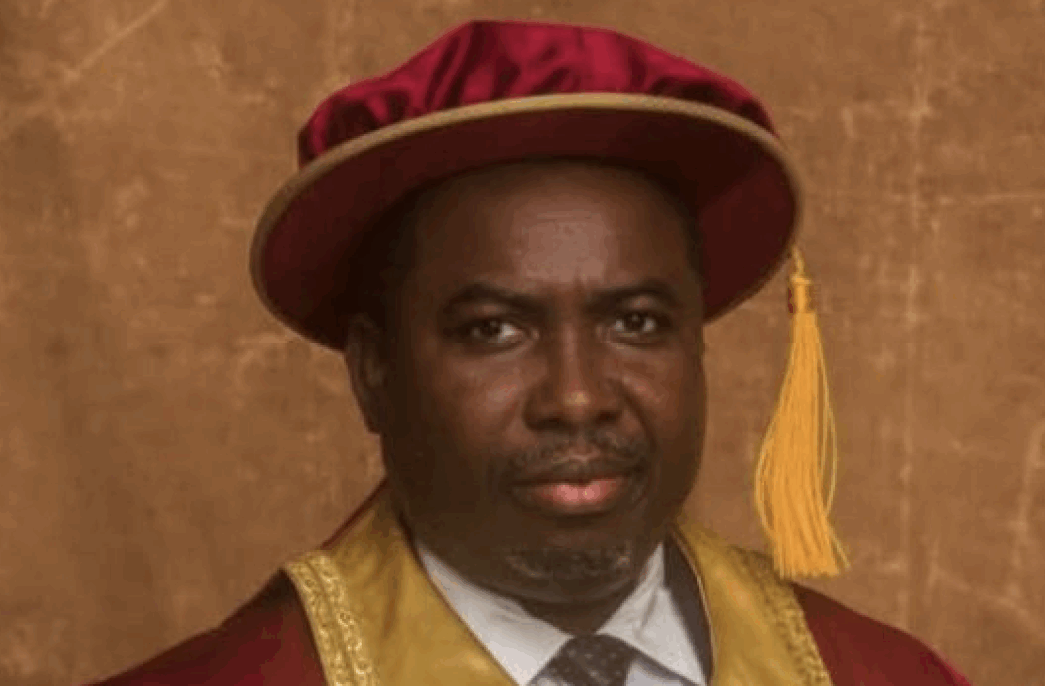
Chairman of the Independent National Electoral Commission (INEC), Prof. Joash Amupitan, has assured political parties and Nigerians that the commission will not favour any candidate in the 2027 general elections.
Prof. Joash Amupitan gave the assurance on Tuesday at the formal signing of the First National Peace Accord to commit candidates and political parties to issue-based campaigns for the 2027 general election.
The event was organised by the National Peace Committee in partnership with The Kukah Centre.
Amupitan said INEC has no interest in determining who wins or loses the election, stressing that its responsibility was to provide a transparent, credible and level playing field for all contestants.
“Let me state unequivocally that INEC has no interest in who wins or loses any election. The Commission does not have a candidate, nor does it favour any political platform.
“Our only interest is a lawful, transparent, credible, and inclusive process. We will act as an uncompromising, impartial umpire, ensuring a level playing field for all contestants,” Amupitan said.
He pledged that the commission would remain an “uncompromising, impartial umpire,” committed to ensuring a lawful, transparent, credible and inclusive electoral process.
The INEC chairman also urged political parties and candidates to ensure that the 2027 campaigns focused on issues affecting Nigerians rather than personal attacks, character assassination and inflammatory rhetoric.
He said the signing of the Peace Accord was particularly significant as campaigns for the presidential and National Assembly elections are scheduled to commence on Wednesday, August 19, 2026.
Amupitan said the timing of the accord provided an opportunity for political actors to establish the ethical boundaries of the electoral contest before campaigns officially begin.
He described electoral contests in a constitutional democracy as “competitive job interviews before the electorate,” stressing that Nigerians deserved substantive debates on the country’s challenges.
He urged candidates to present clear and measurable programmes on economic growth, national security, infrastructure, healthcare, education and social inclusion.
Amupitan also warned political parties against the spread of misinformation and disinformation, particularly through their digital media teams, spokespersons and online supporters.
He said unverified and premature declarations of election results could trigger panic and undermine public confidence in the electoral process.
The INEC chairman warned against incitement, identity-based provocation and the deployment of private armed groups, saying such actions could compromise the electoral process even before Election Day.
He said the commission’s preparations for the 2027 elections were progressing, noting that INEC was scaling up its logistics to manage about 1.4 million ad-hoc personnel across more than 176,000 polling units nationwide.
According to him, the commission had spent the past eight months refining its technology, improving logistics and training personnel, with lessons from recent elections in Anambra, the FCT, Ekiti and Osun states contributing to its preparations.
Amupitan stressed that INEC could not deliver a credible election alone.
“As I have often said, INEC cannot deliver a perfect election alone. An election is a multi-stakeholder venture. We provide the pitch and the refereeing, but the quality of the game depends on the players,” he said.
Amupitan also disclosed that the commission was introducing further transparency measures in the result-management process to improve the credibility of the 2027 elections.
He called on political actors to compete vigorously but peacefully, warning that no candidate or party would truly win if Nigeria emerged weakened from the electoral process.
“Peace is not the absence of competition; it is the presence of rules and the willingness to abide by them. Let us compete vigorously, but let us compete decently. Let us remember that at the end of this exercise, there will be no winners if Nigeria is the loser,” he said.
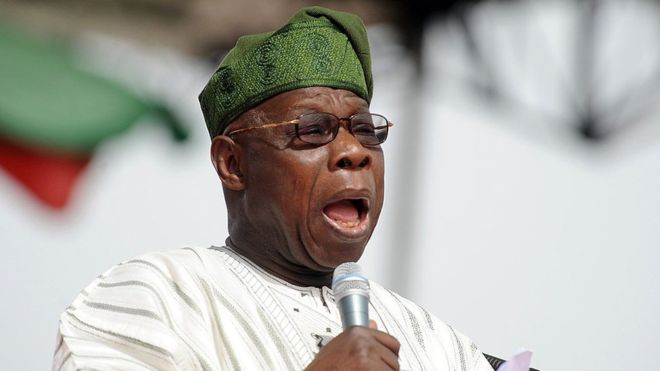
Former President Olusegun Obasanjo has fired his most direct warning yet to Nigeria’s political class: the country will not survive another generation of leadership failure.
Speaking during the 2026 Leadership Empowerment International Conference in Abeokuta at the weekend, Obasanjo declared that Nigeria’s crisis is no longer about identifying bad leadership — it is about the danger of tolerating it.
The two-day conference, themed “The Gravity of Leadership Failure & Correction Methodologies”, was organized by the Perspective Leadership Development Institute in collaboration with the Olusegun Obasanjo Leadership Institute. It holds in over 50 countries and is the brainchild of PLDI Founder, Prof. Olusesi Obateye.
But in Nigeria, Obasanjo turned it into a national diagnosis.
Without mentioning President Bola Ahmed Tinubu by name, the former President’s remarks landed squarely in the present. His target: an administration pushing controversial economic reforms amid widespread hardship, rising insecurity, and collapsing public trust.
Obasanjo’s core argument was blunt: Nigerians can no longer be sold promises while they pay with pain.
“A government may present itself as reformist, transformational or determined to rescue the country,” he said. “But if its decisions ultimately deepen hardship, weaken institutions, erode trust or leave citizens more vulnerable, the consequences become the more important measure of leadership.”
He took a swipe at governments that measure success by policies announced, projects commissioned, or reforms introduced— without accounting for what ordinary Nigerians feel in their pockets.
“Leadership failure in the ongoing circumstance should be judged by its consequences rather than by the intentions proclaimed at the beginning of tenure,” he stated.
The ex-President zeroed in on the human cost of current policies.
“The immediate effects of reforms and policies introduced by government have imposed considerable pressure on households and businesses,” Obasanjo noted, in an apparent reference to fuel subsidy removal, floating of the naira, and inflation.
He added: “And when the leader continues to say that hunger and hardship has been there before he was born, then that tells you clearly that there is leadership failure.”
For Obasanjo, that line is not an excuse. It is evidence.
He reminded current leaders that they will be judged not by what they inherited, but by what they leave behind.
“While it is admissible that governments frequently inherit serious problems from their predecessors, they also leave behind new consequences of their own decisions,” he said.
“The argument, therefore, is not merely about who created Nigeria’s problems. Good leadership is about who is responsible for solving them now.”
He warned that economic hardship, insecurity, institutional decay, and loss of hope are not abstract concepts. They are the direct bill paid by citizens for bad decisions at the top.
“Nigerian citizens cannot be asked indefinitely to endure pain on the promise of a better future,” Obasanjo declared. “This is where good leadership becomes critical.”
Obasanjo has long maintained that Nigeria does not lack resources or potential.
Its problem, he reiterated in Abeokuta, is the failure of those entrusted with power to convert possibilities into development.
“The fundamental danger is not merely that leaders can make mistakes,” he warned. “It is that leadership failure, when left unchecked, can impose consequences on an entire generation.”
Delivered in his hometown and at an institute bearing his name, Obasanjo’s message was both personal and national.
Nigeria’s problem, he said, has moved past diagnosis.
The question now is: Will we correct it before the consequences become irreversible?
As delegates from 50 countries watched, the elder statesman left no doubt where he stands: leadership is not about occupying office. It is about the capacity and willingness to use power responsibly, make difficult decisions in the public interest, and accept the consequences.
Anything less, he warned, and Nigeria may not survive it.

Former Vice President Atiku Abubakar, and a former Governor of Anambra State, Peter Obi, have congratulated Governor Ademola Adeleke on his re-election in the Osun State governorship election.
The two opposition figures separately reacted to Adeleke’s victory in posts on their X accounts on Sunday, commending Osun voters and highlighting the significance of the election to Nigeria’s democracy.
Atiku described Adeleke’s victory as a reflection of the choice made by the people of Osun at the ballot box.
“I congratulate Governor Ademola Adeleke, @AAdeleke_01, on his re-election as Governor of Osun State. His victory demonstrates the choice of the people of Osun as expressed at the ballot box,” Atiku said.
He also commended the electorate for what he described as their passion and peaceful participation in the election, while wishing Adeleke success in his second term.
“I commend the people for their passion and peaceful participation. I wish Governor Adeleke continued success as he continues to serve them,” he added.
Obi, in his reaction, titled “Osun: When the People Stand, Democracy Wins,” also congratulated Adeleke and the people of the state.
He said the election had demonstrated the power of citizens to determine their leaders, adding that Adeleke’s performance and commitment to the people had earned him renewed confidence from the electorate.
Obi particularly praised young voters in Osun for what he described as their vigilance in protecting their democratic mandate.
“The lesson from Osun is clear: democracy is strongest when citizens are alert, conscious of their civic responsibility, and determined to ensure that their votes count,” he said.
The former presidential candidate also used the occasion to urge Nigerians to remain actively involved in the democratic process ahead of the 2027 general elections.
He called on citizens to register, vote and protect their ballots, arguing that Nigerians experiencing hardship, insecurity and deprivation possess the power to demand change through the ballot box.
Obi further urged political actors to prioritise the interests of Nigerians and embrace peace and the rule of law.
“Elections should never be battles of violence, but contests of ideas, competence, character, and service,” he said.
INEC declared Adeleke the winner of the Osun governorship election after he polled 511, 067 votes to defeat his closest challenger, Bola Oyebamiji of the All Progressives Congress, who secured 444, 815 votes.


