
News
Social Media, Nigeria and Fight Against Fake News


- /home/rhoncare/pointblank.ng/wp-content/plugins/mvp-social-buttons/mvp-social-buttons.php on line 27
https://pointblank.ng/wp-content/uploads/2019/04/Digital-1-1000x600.jpg&description=Social Media, Nigeria and Fight Against Fake News', 'pinterestShare', 'width=750,height=350'); return false;" title="Pin This Post">
- Share
- Tweet /home/rhoncare/pointblank.ng/wp-content/plugins/mvp-social-buttons/mvp-social-buttons.php on line 69
https://pointblank.ng/wp-content/uploads/2019/04/Digital-1-1000x600.jpg&description=Social Media, Nigeria and Fight Against Fake News', 'pinterestShare', 'width=750,height=350'); return false;" title="Pin This Post">
By Joel Popoola
Nigeria’s largest social media platform is finally fighting fake news – but not in Nigeria
Whatsapp is Nigeria’s biggest social network and can be found on the phones of 85% of Nigerian social media users, but too often the platform is used to spread dangerous misinformation.
During the last Ebola outbreak, Whatsapp users were told to bathe in saltwater to protect themselves from the deadly disease. As a result, at least two people died.
The recent COVID-19 outbreak has been no different, with raw onion, olive oil, garlic and shaving all preposterously peddled as a “miracle cure” in a pandemic which has already claimed the lives of almost 1000 Nigerians.
This week, the app has finally taken action to stop the spread of fake news on its platform by introducing a magnifying glass icon next to messages forwarded at least five times.
By clicking on the icon users can quickly search the internet to see if the claims are true.
But not in Nigeria.
So far, only users in Brazil, Italy, Ireland, Mexico, Spain, the United Kingdom and the United States are able to use the fact-checking service.
If people weren’t already using the internet to verify claims like ”the disease which has killed over 700,000 people around the world can be stopped in its tracks by leaving an onion on your carpet” before forwarding them to their friends and family, I’m not sure how much an emoji is likely to change – but at least it’s something.
But it is incredible that over 20 million Nigerian users are being excluded from this service – not least given the comparatively low levels of digital literacy in our nation compared to countries where the fact-checking facility is being rolled out.
Ultimately, Nigeria needs a high profile national digital literacy campaign to help social media users to better critically consider the information they see online.
With so much political information being shared online – much of it just as unreliable as the medical advice above – our democracy depends upon it as much as our health and safety.
This campaign must come hand-in-hand with a renewed effort to build a digitally-skilled workforce for the twenty-first century – with the World Bank estimating that less than one percent of African children currently leave school with basic programming computer skills.
We also need to remove data charges from online educational resources.
Whatsapp is Nigeria’s biggest social network simply because users do not need to use much data to access it. The fact the government remains indifferent to calls to make this the case for learning resources, especially when so many youngsters need helping catching up with their schooling after the disruption of the coronavirus, is impossible to understand.
Until then, we need social media companies to take the necessary steps to protect their users from fake news and harmful half-truths. And at the Digital Democracy campaign, which I lead, we’re already doing our bit.
Our free Rate Your Leader app allows voters to get vital information direct from their elected representatives, person to person, straight from their smartphone.
If they think the information they get isn’t reliable or honest, they can rate the source of that information accordingly, directing their neighbours to information sources which are reliable and credible.
At the same time, politicians can get potentially life-saving messages straight to people in their communities, as well as building a more accurate picture of what matters most to the people they serve.
My inspiration for the app came after spending time in Britain, where local politicians are much easier to contact than we are used to in Nigeria. I even managed to meet the Speaker of the British Parliament as a Nigerian living 300 miles away from London!
A lot of the time in Nigeria, we have no idea who our local leaders are and how we are supposed to contact them – and many of them seem happy to keep it that way!
Apps like Rate Your Leader are designed to tackle this, and help move our nation towards a new era of democratic transparency and accountability.
The digital age has the potential to reconnect people and politics without politicians or the people they serve ever having to leave their sofas.
Sadly, when it comes to being signposted to trustworthy information online, it is hard to escape the sense that the major social networks are once again allowing Nigeria to fall behind.
Joel Popoola is a Nigerian tech entrepreneur and digital democracy campaigner and is the founder of the free Rate Your Leader app. You can reach Joel on Twitter @JOPopoola or on Joel@rateyourleader.com



The Nigeria Democratic Congress (NDC) presidential candidate, Peter Obi, has denied asking Nigerians living in the United Kingdom to abandon relatives who depend on them for financial support, saying his message about hardship in Nigeria was distorted by political opponents.
Obi said he appreciates Nigerians in the Diaspora who make sacrifices to support their families at home, stressing that his concern is the country’s dependence on remittances to meet basic needs.
In a statement titled; “My Message Has Been Twisted”, posted on X on Tuesday, the former Governor of Anambra State clarified that he never asked Nigerians abroad to stop supporting their loved ones.
“I deeply appreciate Nigerians in the diaspora who work tirelessly and make enormous sacrifices to support their families back home,” he said.
“Their remittances pay for school fees, hospital bills, rent, and feeding expenses. Their patriotism and sacrifices deserve our profound respect. I never asked them to abandon their loved ones.”
Obi said his message was aimed at drawing attention to the economic conditions forcing millions of Nigerians to rely on relatives abroad for their survival.
“My concern is that Nigeria should not remain a country where millions depend on relatives abroad for basic survival,” he said.
“Our goal must be to build a nation that provides jobs, affordable healthcare, quality education, and economic opportunities for its citizens.”
He accused political opponents of misrepresenting his comments, insisting that his position is about addressing the causes of hardship rather than discouraging financial assistance to families.
“Political opponents may twist my message, but the truth remains clear: I am not asking Nigerians abroad to abandon their families. I am advocating for a Nigeria that will no longer abandon its own people,” he said.
The clarification followed backlash over comments Obi made during a town hall meeting with Diaspora supporters in Manchester on Sunday.
In a video that went viral, Obi urged Nigerians in the UK to think twice before giving money to relatives and others at home who ask them for financial assistance, arguing that such support could ease hardship without addressing its underlying causes.
“You have people at home in Nigeria today who are begging you for money. Tell them no!” he said.
Obi attributed the country’s economic difficulties to poor leadership, urging Nigerians abroad to encourage their relatives and friends at home to vote for leaders who would prioritise productivity and economic opportunities.

The Court of Appeal, Abuja Division, has dismissed the EFCC’s appeal and affirmed the ₦12 million compensation awarded to Dr. Monday Ubani, SAN, for his unlawful 21-day detention in 2019. The court also awarded ₦300,000 in costs against the Commission.
Ubani was detained after securing administrative bail for a client accused of jumping bail. Despite a court order directing the EFCC to release him conditionally or charge him with any alleged offence, the Commission failed to comply, prompting his lawyer, Chief Professor Mike Ozekhome, to institute a fundamental rights action in his favour.
On January 5, 2022, the Abuja High Court, presided over by Justice Sylvanus Oriji, ruled in Ubani’s favour. The EFCC appealed, challenging the trial court’s jurisdiction and the amount of compensation awarded.
In dismissing the appeal, the Court of Appeal rejected both arguments, holding that the compensation was justified and that the EFCC’s investigative powers do not permit arbitrary detention or disobedience of court orders.
The judgment reaffirms that law enforcement agencies remain subject to the Constitution and judicial authority. It also underscores the protection of fundamental rights, the limits of law enforcement powers and the consequences of unlawful detention.
Beyond the financial award, the decision highlights the responsibilities of sureties and the obligation of security agencies to obey court orders, making it a potentially significant reference in future fundamental rights litigation.
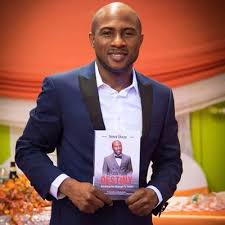
By Henry Ukazu
Dear Destiny Friends,
One of life’s most misunderstood concepts is the relationship between process and failure. When some people fail, they think they have done something wrong, but it could be that the person is experiencing the process, or their season has not yet come.
To understand this concept, let’s explain the two terms. A process is a series of structured actions, steps, or decisions taken in a specific order to transform input into a desired output or goal. Here are the key elements of a process
- Inputs: The raw materials, data, or starting requirements (such as ingredients, customer requests, or raw code).
- Activities/Steps: The specific tasks or decisions performed by people, tools, or machines.
- Trigger: An event or demand that kicks off the process (like submitting an order or launching an app).
- Output: The result, product, or delivered service.
- Owner: The person or role accountable for the outcome.
Failure, on the other hand, is the state or condition of not meeting a desirable, required, or intended objective. According to the Cambridge Dictionary, failure can result from any of the following:
- Omission or Neglect: Failing to perform an action that was promised, owed, or expected (such as a failure to pay on time or submit a report).
- System or Organ Malfunction: A situation where a machine, computer, engine, or bodily organ stops working properly (such as engine failure or kidney failure).
- Insolvency: A financial state of bankruptcy, such as the failure of a business or bank.
Having stated the above terms, one can decipher that process is a necessary tool for success. When a process is lacking, failure is inevitable.
I recently listened to a sermon by a Nigerian Pastor. According to the pastor, there’s something that looks like failure, but in a real sense, it is not failure; it is process. Sometimes in life, when we fail in business, examinations, careers, marriage, or even when our health fails us, the reason why they all happen is that we have failed to do the needful, or we need to go through a process.
Let me explain. Let’s say one has a business; if one has not taken the time to learn the trade very well, the person might fail for not learning a necessary skill required for the business, acquiring formal or informal education, or having a form of apprenticeship from a mentor, which might be all that’s necessary for the entrepreneur to succeed. This is what is called a process.
Also, a student will need to read, research, and do assignments to pass an examination. An employee will have to learn a job as an entry-level employee and work his way through to become the Chief Executive Officer. All this involves a process.
Marriage is not an exception. There’s no successful marriage without a form of mentoring or training. A man/woman must undergo a process of marriage counseling to learn about how to win in marriage. In this training, they will learn about communication in marriage, money in marriage, sex in marriage, money in marriage, and personalities in marriage
I strongly believe that there’s time for everything. There is an appointed time for everything. When something is not in its season, don’t expect to deliver. When one puts pressure, it’s bound to fail.
I can vividly remember what my most revered mentor, Dr. Yomi Garnett, counseled me on the importance of patience. A little background about the case: at that time, I had no job. I was working as a security officer. I tried to use my connections to secure a decent job, but it was very challenging. I reached out to Dr. Yomi, whom I call the sage because of his scintillating and rational wisdom. After ranting to him about my litany of problems, he said to me, “Henry, if you like, meet President Obama, Trump, etc.; if God is not ready to give you a job, you won’t get a job”. He went further to say, you can’t rush God. When the time is ready, God will align everything for you.
According to my mentors, there’s something God and the universe want me to learn. I must go through some process of refining for the task ahead. These refining processes might be preparing for the greater task by learning what needs to be learned, or it could be a case of God teaching me wisdom or something of value that will be useful to me in the near future which I may not be able to see now.
When I look back in retrospect, I can authoritatively say my mentor was right.
Sometimes in life, we prepare for the opportunities, while sometimes, we don’t prepare. We just learn on the job. But I honestly think it’s good to prepare before one embarks on any journey. That preparation is called a process.
To understand how the process works, do you know that if you plant corn in the season that is not the rainy season, you will believe it’s a bad seed, but no, that’s not the case because you planted the corn in the wrong season. Even the bible says there’s a time for everything.
Also, someone might finish university and become frustrated because he doesn’t have a job. What the person might not know is that their season is yet to manifest. It could also be that the student might need refinement, which comes with the process.
It’s instructive to note that when your season comes, nothing can stop it; there will be alignment, and the universe will work for you. What you did many years ago that failed to attract attention will begin to attract attention and draw you in.
Today, I pray, may you command attention in your season, not after your season.
Henry Ukazu writes from New York. He works with the New York City Department of Correction as the Legal Coordinator. He’s the founder of Gloemi. He’s a Transformative Human Capacity and Mindset coach. He is also a public speaker, youth advocate, creative writer and author of Design Your Destiny- Actualizing Your Birthright to Success, Unleash Your Destiny and The Six Pillars of Success . He can be reached via info@gloemi.com


