The meeting called by the Federal Government to resolve the grievances for which the organised labour had issued a threat of an indefinite strike, set to commence on October 3rd, 2023, ended on an inconclusive note, as the two labour centres are to consult with their National Executive Council over the new proposal thrown on the table by the government.
Meanwhile, the federal government has made a U-turn regarding its proposed N25,000 wage award to workers in the lower cadre to cushion the impact of the fuel subsidy removal, stating that the said amount would be applicable to all workers in the civil service.
The Chief of Staff to the President, Femi Gbajiabiamila, backtracked on the earlier decision made by President Bola Ahmed during his Independence Day broadcast to the nation on Sunday.
Briefing journalists on part of the outcome of the meeting, the Chief of Staff said, “Let me, first of all, on behalf of the government and labour, thank you and commend you for the long hours you’ve been here.
“We’ve been at a closed-door meeting with labour and the government side since three o’clock. So, it’s been about a four-hour meeting.
“A lot of issues were addressed, issues that concern the Nigerian worker, the average Nigerian worker. I can’t begin to reel them out here. But I am happy to say that after four hours, we have reached certain agreements that are for the benefit of the Nigerian worker.
“Agreements on the wage bill, agreements on committees on salary increment, CNG buses, and several other things, I believe, both TUC, Labour and the government side?
“Hopefully, we expect that Labour will call a meeting of their various branches and executives tomorrow to present the agreements that have been reached, and we pray, believe, and hope that the strike will be called off on Tuesday.
“There was a lot of chatter on Twitter about the issue of low-income workers only falling into the category of the wage bill.
They spotted that, and we communicated that to Mr President, and he quickly said and agreed that all categories of workers would be given the wage bill.
“There’s nothing like low-income, mid-income, or high-income. I think that’s worthy of clarification tonight.”
NLC President Joe Ajaero, in his remarks after the meeting, said, “I don’t have much to say than the Chief of Staff has said.
We’ve been meeting, and we’ve looked at almost all the issues, all the promissory notes from the government, and we’ll look at how to translate them into reality and make them workable.
Then we’re going to take those promises to our organs. Of course, you know these people here cannot just wake up and review and call off action.”
Among some of the resolutions that all parties at the meeting agreed to was that the Federal Government has announced N25,000 only as a provisional wage increment for all Treasury-paid federal government workers for six months.
The closed-door meeting equally resolved that the Federal Government must show commitment to fast-tracking the provision of compressed natural gas (CNG) buses to ease public transportation difficulties associated with the removal of PMS subsidies while also committing to the provision of funds for micro- and small-scale enterprises.
They also agreed that VAT on diesel would be waived for the next six months. The Federal Government commences payments of N75,000 to 15 million households at N25,000 per month for a three-month period from October to December 2023.
Other highlights of the meeting were that the issues in dispute can only be resolved when workers are at work and not when they are on strike.
Furthermore, a statement by the presidency, signed by the Minister of Information and National Orientation, Mohammed Idris, indicated that labour unions argued for a higher wage award, and the Federal Government Team promised to present Labor’s request to President Bola Tinubu for further consideration.
To this end, they resolved that a sub-committee should be constituted to work out the details of the implementation of all items for consideration regarding government interventions to cushion the effect of fuel subsidy removal.
“The lingering matter of the Road Transport Employees Association of Nigeria (RTEAN) and the National Union of Road Transport Workers (NURTW) in Lagos State needs to be addressed urgently, and Lagos State Governor, Babajide Sanwo-Olu, who participated virtually, pledged to resolve the matter.
“NLC and TUC will consider the offers by the Federal Government with a view to suspending the planned strike to allow for further consultations on the implementation of the resolutions above,” all the stakeholders agreed.
Meanwhile, Governor Abdulrazak Abdulrahman of Kwara State and Chairman of the Nigeria Governors Forum (NGF) and Governor Dapo Abiodun of Ogun State participated virtually in the meeting, chaired by the Chief of Staff to the President, Femi Gbajabiamila.
In attendance were the Minister of Finance and Coordinating Minister of the Economy, Wale Edun, the Minister of Information and National Orientation, Mohammed Idris, the Minister of Labour and Employment, Simon Lalong, the Minister of State, Labour, Nkeiruka Onyejeocha, the Minister of Budget and Economic Planning, Abubakar Atiku Bagudu, the Minister of Humanitarian Affairs and Poverty Alleviation, Betta Edu, the Minister of Industry, Trade, and Investment, Doris Uzoka-Anite, the Head of Service of the Federation, Dr. Folasade Yemi-Esan, and the National Security Adviser (NSA), Mallam Nuhu Ribadu.
The labour delegation was led by NLC President Joe Ajaero, Deputy President, TUC, Dr Tommy Etim Okon, NLC General Secretary Emma Ugboaja, and TUC General Secretary Nuhu Toro, among others.
President Bola Tinubu has ordered a full and transparent investigation into the deaths of suspected illegal miners detained by the Nigeria Security and Civil Defence Corps (NSCDC) following enforcement operations around Lt. Gen. Mohammed Inuwa Wushishi Estate in Minna, Niger State.
The President, in a statement on Friday, said that the government would not tolerate mass deaths arising from official negligence, dereliction of duty, or failure by public officials to protect the lives placed under their care.
President Tinubu said the life of every Nigerian matters and that no citizen should lose his life while in government custody as a result of negligence, abuse, inhumane treatment, or dereliction of duty, describing the development as a grave matter that requires urgent investigation and accountability.
“While the Federal Government would continue to combat illegal mining and other criminal activities across the country, enforcement operations must be conducted strictly within the law and with full respect for the dignity and fundamental rights of every person in custody,” he was quoted as saying in the statement by his Special Adviser on Information and Strategy, Bayo Onanuga.
“The fact that these individuals were suspected of illegal mining does not in any way remove their right to life, dignity and humane treatment while in government custody. Government will not tolerate mass deaths arising from official negligence, dereliction of duty or failure by public officials to protect the lives placed under their care.”
“Where the investigation establishes that any official, through action, abuse or negligence, contributed to these deaths, such an officer must be arrested and prosecuted in accordance with the law. There must be accountability,” the President added.
He directed the relevant authorities to ensure that the investigation is comprehensive, transparent and unhindered, covering the circumstances of the arrests, the condition of the detainees when they were taken into custody, the conditions under which they were detained, the number of people held in the facility, the medical attention provided and the events leading to their deaths.
“The suspension of officers is only an administrative step and must not substitute for a proper determination of criminal responsibility where the evidence warrants prosecution,” the President said.
He directed the Ministry of Interior and the NSCDC leadership to cooperate fully with all relevant investigative authorities and ensure that no officer interferes with the process or attempts to frustrate the establishment of the truth.
President Tinubu extended his condolences to the families of the deceased and prayed for the repose of their souls.
He also appealed for calm among the families and communities affected by the tragedy, assuring them that the Federal Government would pursue the truth and take appropriate action based on credible evidence.
“We must never allow the pursuit of one form of illegality to create another. The government must enforce the law firmly, but it must also obey the law. The sanctity of human life is non-negotiable,” Tinubu added.
The President’s order came after Thursday’s protest linked to the reported deaths of 37 suspected illegal miners while in the custody of the NSCDC, in Minna.
One of the survivors alleged that the suspects were kept in a small room, adding that an unpleasant substance was sprayed before the cell was locked.
Following the unrest, Governor Umaru Bago declared a 24-hour curfew in Minna, the State capital, saying that the curfew takes effect immediately after the Friday Jumu’ah prayers and would remain in force until further notice.
Bago said the government has constituted a committee of inquiry to investigate the circumstances surrounding the deaths.
The governor also announced the suspension of all mining activities across Niger State pending the conclusion of the ongoing investigations.
Similarly, the Ministry of Interior said it had suspended the state commander of the NSCDC.
Following the opening of applications from eligible candidates living with disabilities, for scholarships to pursue legal qualifications, the Opeoluwa Sotonwa Foundation (OSF), a not-for-profit organisation, founded by US-based philanthropist, Mr. Opeoluwa Sotonwa, and dedicated to expanding educational opportunity, leadership and inclusion, has announced the recipients of its 2026 scholarships, fellowships and academic awards.
Now in its fourth year, OSF has continued to deepen its investment in Nigeria’s deaf and hard-of-hearing community while expanding pathways for students with disabilities in the legal profession.
The 2026 awards also mark a new milestone with the introduction of the Prof. Konyinsola Ajayi, SAN Scholar-Practitioner Award, supporting a legal practitioner pursuing doctoral studies in Law.
Founded in 2022, OSF is grounded in a simple but enduring conviction: talent is universal, but opportunity is not. The Foundation seeks to close that gap by investing not merely in education, but in people whose knowledge, leadership and service can create opportunities for others.
PROF. KONYINSOLA AJAYI, SAN SCHOLAR-PRACTITIONER AWARD
For the first time, OSF is extending its investment in legal education beyond the undergraduate level through the Prof. Konyinsola Ajayi, SAN Scholar-Practitioner Award.
The new award recognizes a legal practitioner pursuing a Ph.D. in Law, bridging two worlds essential to the future of justice: the practical experience of the legal profession and the rigorous inquiry of advanced legal scholarship.
Isioma Osakuni — Ph.D. in Law, University of Ibadan — Inaugural Recipient
The establishment of the Scholar-Practitioner Award represents a natural evolution of the Prof. Konyinsola Ajayi, SAN Fellowship. It broadens OSF’s vision from helping students enter the legal profession to supporting practitioners seeking to contribute to its intellectual development through advanced research and scholarship.
PROF. KONYINSOLA AJAYI, SAN FELLOWSHIP
The Prof. Konyinsola Ajayi, SAN Fellowship is OSF’s flagship investment in developing a more inclusive legal profession. Expanded in 2025 to include law students with disabilities beyond the Deaf and hard-of-hearing community, the fellowship recognizes that the pursuit of justice is strengthened when the legal profession reflects the breadth of the society it serves. The recipients are:
Abubakar Nura — Law, Bayero University Kano
Amala Njelita — Law, University of Calabar
OPEOLUWA SOTONWA FOUNDATION GENERAL SCHOLARSHIP
The Foundation’s core scholarship program continues OSF’s foundational commitment to Deaf and hard-of-hearing students pursuing higher education across Nigeria. The 2026 scholars represent a broad range of disciplines, from education and computer science to political science, entrepreneurship and the arts. The recipients are:
Auwalu Mohammed — English Education, Gombe State University
Wende Terungwa — Special Education/PHE, Federal University of Education Pankshin
Farida Dalhatu — Political Science, Umar Musa Yar’dua University, Katsina
Fuhad Abdulrasaq — History and International Studies, University of Ilorin
Irimiya Samaila — Special Education, University of Calabar
Amina Nasiru — Entrepreneurship, Kaduna State University
Abosede Josephine Akilo — Special Education, Federal College of Education in affiliation with University of Ibadan
Toheeb Olajuwon Balogun — Political Science, Federal College of Education (Special), Oyo
Mujahid Adamu — Education-English, Sule Lamido University Kafin Hausa
Inerepamo Maxwell Pounana — Special Education, Ignatius Ajuru University of Education
Precious Onyinyechi Okonkwo — Special Education, Ignatius Ajuru University of Education
Nneoma Happiness Agbo — Economic Education, Peaceland College of Education Enugu
Yusuf Anas — Educational Management, Abdulkadir Kure University, Minna
Omopariola Opeyemi — Educational Management, Kwara State University
Akinkunmi Sheriff Akinboade — Fine and Applied Arts, Federal College of Education (Special), Oyo
Royal Adeh Obi — Special Education/Tourism, University of Calabar
Oladipupo Emmanuel Adeyeri — Computer Science, Federal College of Education (Special), Oyo
Bello Abubakar — Islamic Studies, Aminu Salah College of Education
MOST OUTSTANDING SCHOLARS 2026
Introduced in 2025, the Most Outstanding Scholar distinction recognizes one female and one male scholar whose academic achievement, leadership and perseverance distinguish them within the OSF community.
Mutiyat Oreoluwa Raheem — Microbiology, University of Ilorin — Female Most Outstanding Scholar
John Nworie Nte — Medicine and Surgery, University of Calabar — Male Most Outstanding Scholar
GRADUATE SCHOLARS
OSF’s commitment does not end with undergraduate education. The Graduate Scholars program supports Deaf and hard-of-hearing scholars advancing into postgraduate study and developing expertise capable of influencing their professions, institutions and communities.
Godwin Agianpuye — PGD/M.Sc., Computer Science, Wesley University, Ondo
Auwalu Salisu Ismaila — M.Ed., Special Education, Bayero University, Kano
Caroline Nwugo Onu — Ph.D., Christian Leadership, The Nigerian Baptist Theological Seminary
VOICES BEYOND SOUND – SOCIAL AND BUSINESS SCHOLARSHIP
Established in partnership with Greg and Annette Hudson, Voices Beyond Sound recognizes Deaf and hard-of-hearing students pursuing studies connected to social and business leadership. First featured in the 2025 awards, the initiative reflects a shared belief that leadership is not defined by how a person communicates, but by the ideas, resilience and impact they bring to society.
Zulaihatu Sani — Business Administration, Gombe State University
Qudus Ajiboye — Economics, National Open University of Nigeria
Taiwo Eneyamire Abdul — Economics, Federal College of Education (Special), Oyo
Taiwo Hassan Alatilehin — Business Education, University of Ilorin
“Four years into this journey, we are seeing what becomes possible when opportunity meets determination,” said Dr. Opeoluwa Sotonwa, Founder of OSF. “Our scholars are studying medicine, law, education, science, technology, business, the arts and other disciplines. Some are beginning their higher-education journeys; others are advancing into master’s and doctoral study. What connects them is not disability, but possibility. Our responsibility as a Foundation is to ensure that talent is given room to become impact.”
“The introduction of the Prof. Konyinsola Ajayi, SAN Scholar-Practitioner Award is especially meaningful. Justice requires not only lawyers who practice the law, but scholars who interrogate it, strengthen it and help imagine what it can become. By investing across that continuum—from the undergraduate law student to the doctoral scholar-practitioner—we are investing in the future of the profession itself.”
For more information about the Opeoluwa Sotonwa Foundation and its programs, visit www.opeoluwasotonwafoundation.org.
About the Opeoluwa Sotonwa Foundation
Established in 2022, the Opeoluwa Sotonwa Foundation (OSF) is a nonprofit organization dedicated to unlocking educational and leadership opportunities for Nigeria’s Deaf and hard-of-hearing communities while advancing targeted opportunities for students with disabilities. Through scholarships, fellowships, mentorship and advocacy, OSF invests in students and emerging leaders with the potential to transform their professions, communities and society.
The Foundation can be reached via:
Cassandra Sotonwa Chief Operating Officer
Opeoluwa Sotonwa Foundation
opeoluwasotonwafoundation@gmail.com
The Foundation wishes all recipients a fruitful academic period.
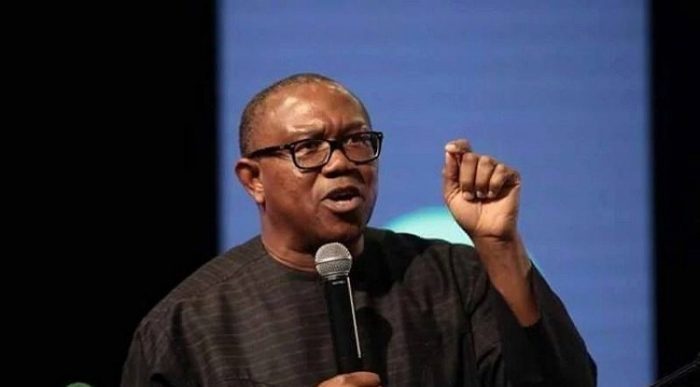
The Nigeria Democratic Congress (NDC) presidential candidate, Peter Obi, has clarified that he did not owe salaries, pensions, gratuities or any money during the period he was Governor of Anambra State.
Obi stated this in response to recent claims by the current government of Anambra State.
The Anambra State Government recently claimed that it is till repaying loans obtained by previous administrations, including those of former governors Obi and Willie Obiano.
According to the government, it has focused largely on paying existing obligations rather than accumulating new debts.
Obi served as the Governor of Anambra State from March 2006 to March 2014.
Reacting to the claim, Obi said: “I left office as Governor nearly 13 years ago. On the day I left office, I was not owing any salaries, pensions, gratuities or any money that the Anambra State Government was supposed to pay.
“I did not owe a single supplier or contractor. If you find even one person I owed, I will end my 2027 campaign today.”