
Headlines
Tambuwal Imposes Curfew As Protest, Violence Rock Sokoto

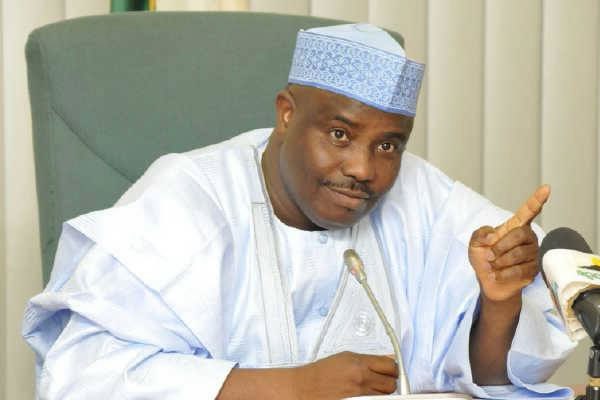
Violence erupted in some parts of Sokoto metropolis on Saturday when some Muslim youths trooped to the streets to demand the release of the two suspects arrested in connection with the killing and setting ablaze of a 200-level female student of the Shehu Shagari College of Education, Deborah Samuel, over alleged blasphemy.
Following the violence, the Sokoto State Governor, Aminu Tambuwal, imposed a 24-hour curfew on the metropolis to restore order in the city.
Deborah was on Thursday stoned to death and burnt by her colleagues for making a WhatsApp post on a group platform that allegedly blasphemed Prophet Muhammed (SAW). In the post, the deceased reportedly advised against posting religious materials on a WhatsApp group meant for assignments.
Saturday’s protest, however, led to the vandalism of properties and looting of shops in some parts of the metropolis, with many residents running helter-skelter for safety. The protesters also made an attempt to attack the palace of the Sultan of Sokoto, Sa’ad Abubakar, who is the spiritual leader of Muslims in Nigeria and had condemned Deborah’s killing, which many described as barbaric.
The protesting youths, shouting ‘Allahu Akbar’ (God is great), while bearing placards with different inscriptions, started their demonstration peacefully at the Zabira Mall roundabout and marched through Gao-Nama on Maiduguri Road within the metropolis.
However, despite a combined team of security operatives, including soldiers from the 8 Division, police and personnel of the Department of State Services and the Nigeria Security and Civil Defence Corps, monitoring the protests to avert its takeover by hoodlums, there were reports of attacks on some public buildings, including an ECWA Church at Aliyu Jodi and a section of the Catholic Clinic, opposite Vision FM.
At the St Backita Catholic Secretariat in the Aliyu Jodi area of Sokoto, which houses the office of the Catholic Bishop of Sokoto Diocese, Matthew Kukah, the protesting youths burnt the security post and a vehicle on the premises. Kukah later announced in a statement that he was safe and unhurt and that his house was not burnt as rumoured.
He also announced the suspension of Masses across the diocese until the curfew imposed by the state government is lifted.
The statement signed by the Director, Directorate of Social Communications, Catholic Diocese of Sokoto, Rev Fr Christopher Omotosho, noted, “ During the protest, groups of youths led by some adults in the background attacked the Holy Family Catholic Cathedral at Bello Way, destroying church glass windows, those of the Bishop Lawton Secretariat and vandalized a community bus parked within the premises. St Kevin’s Catholic Church, Gidan Dere, Eastern Bypass was also attacked and partly burnt.”
Eyewitnesses told Sunday PUNCH that the irate youths stormed the church wielding machetes, stones and sticks. They started throwing stones into the church compound before overpowering the security men at the gate and gaining entrance into the premises. The extent of the damage was unclear as of press time.
One of the eyewitnesses said, “The protesters came en masse. I was across the building opposite the Zenith Bank in Minanata when they began to throw stones into the church. Some of them were attacking traders around the area and burning their wares. They were outraged.
“One of the youth said in Hausa and a very harsh tone that the church wrote an article on its website about Deborah’s murder and called the killers ‘wolves in sheep’s clothing’. I called the police as I tried to escape and they told me to leave the place immediately to avoid unforeseen circumstances, so I had to run away.”
The article referenced by one of the protesters was perhaps the statement issued by the Kukah to condemn the killing and ask Christians to pray for the repose of her soul.
Confirming the attack on the secretariat, a senior official of the church, Mr Matthew Otalike, said the protesters gained entry into the building and burnt down a vehicle. He added that they also invaded Kukah’s residence in the building but that the swift arrival of security agents prevented them from torching the residence.
A trader, who gave her name simply as Onyedikachi, said, “They attacked my sister’s shop where she sold foodstuff at the Sokoto Main Market. When I read that some people planned to protest on Saturday, I went there to warn her to close the shop. She was packing her goods when they came in from the back and we all ran away. We were told that they later set some shops ablaze and chased other traders away. In the process, some hoodlums looted shops unrestrained.”
Onyedikachi said she and her sister had fled the state before the curfew was imposed and were on their way to Jos, Plateau State, to join a bus to their state in the South-East.
Another eyewitness said, “Sokoto metropolis is boiling as I speak to you. The police are not doing enough. Even the curfew imposed by the governor didn’t change anything. I advise Christians in Sokoto to run away for their lives in case the violence escalates.”
The Punch


Political economist, Prof. Pat Utomi, has stated that if the former Governor of Anambra State, Peter Obi, decides to run as someone’s vice-presidential candidate, he will immediately stop supporting him.
Speaking on Channels Television’s Politics Today on Thursday, Prof. Utomi assured that the 2023 presidential candidate of the Labour Party will contest for the presidency in 2027, following his formal defection to the African Democratic Congress (ADC) on Wednesday.
“I can tell you that Peter Obi will contest for the presidency. The day he becomes somebody’s vice president, I walk away from his corner. I can tell you that for a fact,” Prof. Utomi said on the programme.
In the same interview, Prof. Utomi also made a case for limiting presidential and gubernatorial candidates to Nigerians aged 70 and below.
He lamented that the Nigerian presidency has increasingly become a “retirement home,” criticising both former President Muhammadu Buhari’s and President Bola Tinubu’s administrations as “government in absentia.”
“Something important about this election to bear in mind is that the Nigerian presidency has become a retirement home where people go for the Nigerian state to pay their medical bills. It is not acceptable. They don’t have the fitness to run the country. The last one, and the current one, have essentially been government-in-absentia leaders.”
“I, Pat Utomi, am insisting that I will canvass to the Nigerian people that nobody over the age of 70 should run for an executive position, whether it be governor or president,” he concluded.
Rescue mission
Obi, who came third in the 2023 presidential election with over 6 million votes, officially announced his defection to the African Democratic Congress (ADC) in Enugu on Wednesday.
In his speech at the event, Obi said his move to the ADC marks the beginning of a journey to rescue the country from the ruling All Progressives Congress (APC).
“Today is an important day; today is the last day of 2025, so we are ending this year with the hope that, in 2026, we will begin a journey to rescue our country and set it on the path of proper socio-economic development that will be unifying and inclusive,” Obi stated.
He added: “We have all watched as those who benefited from our democracy have, over time, become accessories to destroying it—either through coercion or gangsterism against the opposition. We cannot allow this to happen; we will resist it.”

President Bola Tinubu has assured Nigerians that 2026 will be a more prosperous year for all.
Tinubu stated this in his New Year message on Thursday, adding that his administration would sustain the momentum on its major reforms.
“During 2025, we sustained the momentum on our major reforms. We had a fiscal reset and also recorded steady economic progress.
“Despite persistent global economic headwinds, we recorded tangible and measurable gains, particularly in the economy.
“These achievements reaffirm our belief that the difficult but necessary reforms we embarked upon are moving us in the right direction with more concrete results on the horizon for the ordinary Nigerian,” the President said in the statement he personally signed.
Consolidating gains
Tinubu said that the focus in 2026 would be on consolidating the gains and continuing to build a resilient, sustainable, inclusive, and growth-oriented economy.
According to him, Nigeria closed 2025 on a strong note, as despite the policies to fight inflation, it recorded a robust GDP growth each quarter, with annualised growth expected to exceed four per cent for the year.
Tinubu explained that the nation maintained trade surpluses and achieved greater exchange rate stability while inflation declined steadily and reached below 15 per cent, in line with his administration’s target.
“In 2026, we are determined to reduce inflation further and ensure that the benefits of reform reach every Nigerian household. In 2025, the Nigerian Stock Exchange outperformed its peers, posting a robust 48.12 per cent gain and consolidating its bullish run that began in the second half of 2023.
“Supported by sound monetary policy management, our foreign reserves stood at $45.4 billion as of December 29, 2025, providing a substantial buffer against external shocks for the Naira. We expect this position to strengthen further in the New Year,” he said.
“Foreign direct investment is also responding positively. In the third quarter of 2025, FDI rose to $720 million, up from $90 million in the preceding quarter, reflecting renewed investor confidence in Nigeria’s economic direction, which global credit rating agencies, including Moody’s, Fitch, and Standard & Poor’s, have consistently affirmed and applauded,” Tinubu added.
Tax reforms
The President further assured that with patience, fiscal discipline, and unity of purpose, Nigeria would emerge in 2026 stronger and better positioned for sustained growth.
According to him, as inflation and interest rates moderate, his administration expects increased fiscal space for productive investment in infrastructure and human capital development.
“We are also confronting the challenge of multiple taxation across all tiers of government. I commend states that have aligned with the national tax harmonisation agenda by adopting harmonised tax laws to reduce the excessive burden of taxes, levies, and fees on our people and on basic consumption.
“The new year marks a critical phase in implementing our tax reforms, designed to build a fair, competitive, and robust fiscal foundation for Nigeria.
“By harmonising our tax system, we aim to raise revenue sustainably, address fiscal distortions and strengthen our capacity to finance infrastructure and social investments that will deliver shared prosperity,” he added.
National security
Tinubu said that though the path of reform is never easy, his administration remains mindful that economic progress must be accompanied by security and peace.
“Our nation continues to confront security threats from criminal and terrorist elements determined to disrupt our way of life. In collaboration with international partners, including the United States, decisive actions were taken against terrorist targets in parts of the Northwest on December 24.
“Our Armed Forces have since sustained operations against terror networks and criminal strongholds across the Northwest and Northeast,” he said.
But the President stated that in 2026, Nigeria’s security and intelligence agencies would deepen cooperation with regional and global partners to eliminate all threats to national security.
“We remain committed to protecting lives, property, and the territorial integrity of our country.
“I continue to believe that a decentralised policing system with appropriate safeguards, complemented by properly regulated forest guards, all anchored on accountability, is critical to effectively addressing terrorism, banditry, and related security challenges,” he added.
Investments in infrastructure
The New Year marks the beginning of a more robust phase of economic growth, with tangible improvements in the lives of our people.
Tinubu also said that his government would accelerate the implementation of the Renewed Hope Ward Development Programme, aiming to bring at least 10 million Nigerians into productive economic activity by empowering at least 1,000 people in each of the 8,809 wards across the country.
“Through agriculture, trade, food processing, and mining, we will stimulate local economies and expand grassroots opportunities.
“We will also continue to invest in modernising Nigeria’s infrastructure – roads, power, ports, railways, airports, pipelines, healthcare, education, and agriculture to strengthen food security and improve quality of life. All ongoing projects will continue without interruption,” he said.
He, however, urged Nigerians to play their part to achieve the objectives in 2026 by standing together in unity and purpose, upholding patriotism, and serving the country with honour and integrity in their respective roles.
Let us resolve to be better citizens, better neighbours, and better stewards of our nation.
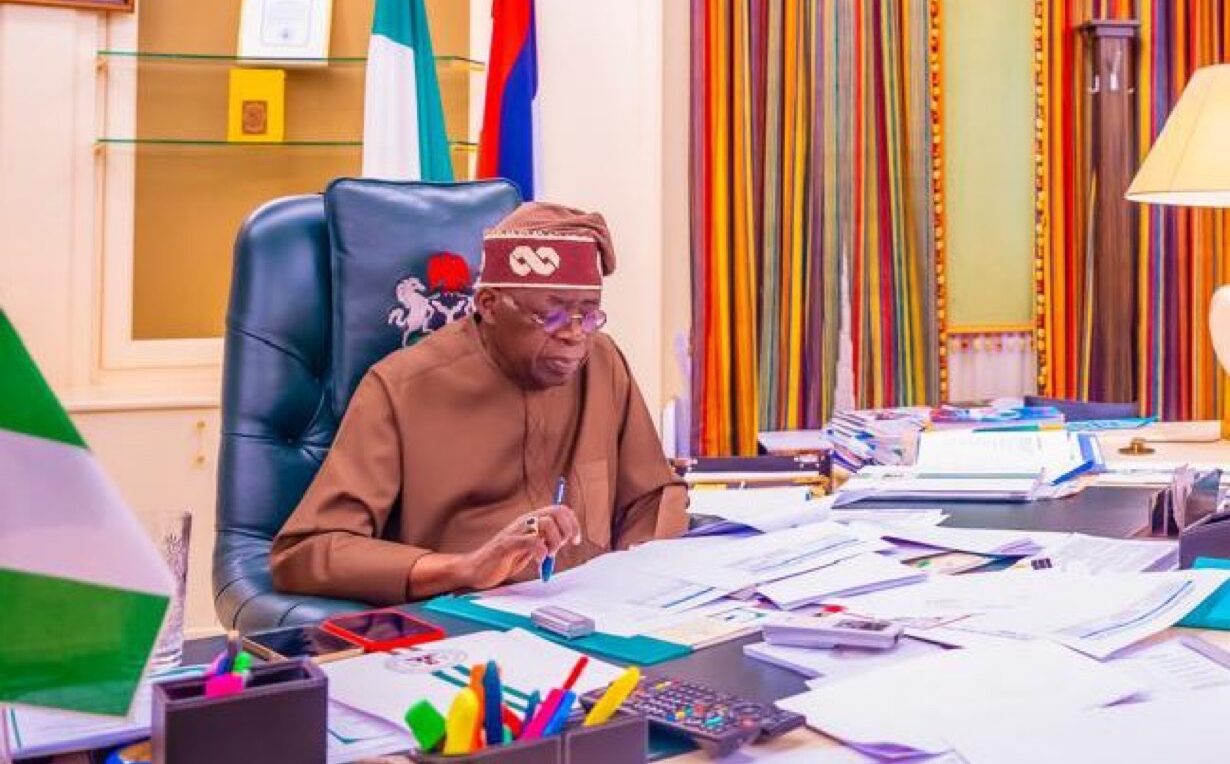
An Abuja High Court has cleared the way for the implementation of Nigeria’s new tax regime scheduled to commence on January 1, 2026, dismissing a suit seeking to halt the programme.
The ruling gives the Federal government, the Federal Inland Revenue Service (FIRS) and the National Assembly full legal backing to proceed with the take-off of the new tax laws.
The suit was filed by the Incorporated Trustees of African Initiative for Abuse of Public Trustees, which dragged the Federal Republic of Nigeria, the President, the Attorney-General of the Federation, the President of the Senate, Speaker of the House of Representatives and the National Assembly before the court over alleged discrepancies in the recently enacted tax laws.
In an ex-parte motion, the plaintiff sought an interim injunction restraining the Federal Government, FIRS, the National Assembly and related agencies from implementing or enforcing the provisions of the Nigeria Tax Act, 2025; Nigeria Tax Administration Act, 2025; Nigeria Revenue Service (Establishment) Act, 2025; and the Joint Revenue Board of Nigeria (Establishment) Act, 2025, pending the determination of the substantive suit.
The group also asked the court to restrain the President from implementing the laws in any part of the federation pending the hearing of its motion on notice.
However, in a ruling delivered on Tuesday, Justice Kawu struck out the application, holding that it lacked merit and failed to establish sufficient legal grounds to warrant the grant of the reliefs sought.
The court ruled that the plaintiffs did not demonstrate how the implementation of the new tax laws would occasion irreparable harm or violate any provision of the Constitution, stressing that matters of fiscal policy and economic reforms fall squarely within the powers of government.
Justice Kawu further held that once a law has been duly enacted and gazetted, any alleged errors or controversies can only be addressed through legislative amendment or a substantive court order, noting that disagreements over tax laws cannot stop the implementation of an existing law.
Consequently, the court affirmed that there was no legal impediment to the commencement of the new tax regime and directed that implementation should proceed as scheduled from January 1, 2026.
The new tax regime is anchored on four landmark tax reform bills signed into law in 2025 as part of the Federal Government’s broader fiscal and economic reform agenda aimed at boosting revenue, simplifying the tax system and reducing leakages.
The laws — the Nigeria Tax Act, 2025, Nigeria Tax Administration Act, 2025, Nigeria Revenue Service (Establishment) Act, 2025, and the Joint Revenue Board of Nigeria (Establishment) Act, 2025 — consolidate and replace several existing tax statutes, including laws governing companies income tax, personal income tax, value added tax, capital gains tax and stamp duties.
Key elements of the reforms include the harmonisation of multiple taxes into a more streamlined framework, expansion of the tax base, protection for low-income earners and small businesses, and the introduction of modern, technology-driven tax administration systems such as digital filing and electronic compliance monitoring.
The reforms also provide for the restructuring of federal tax administration, including the creation of the Nigeria Revenue Service, to strengthen efficiency, coordination and revenue collection across government levels.
While the Federal government has described the reforms as critical to stabilising public finances and funding infrastructure and social services, the laws have generated intense public debate, with some civil society groups and political actors alleging discrepancies between the versions passed by the National Assembly and those later gazetted.
These concerns sparked calls for suspension, re-gazetting and legal action, culminating in the suit dismissed by the Abuja High Court.
Reacting to the judgment, stakeholders described the ruling as a major boost for the reforms, saying it has removed all legal obstacles that could have delayed the implementation of the new tax framework.


