
Metro
Teacher Narrates How Bandits Invaded Kaduna School, Abducted 287 Pupils


- /home/rhoncare/pointblank.ng/wp-content/plugins/mvp-social-buttons/mvp-social-buttons.php on line 27
https://pointblank.ng/wp-content/uploads/2024/03/Kaduna-school.jpeg-1000x600.jpg&description=Teacher Narrates How Bandits Invaded Kaduna School, Abducted 287 Pupils', 'pinterestShare', 'width=750,height=350'); return false;" title="Pin This Post">
- Share
- Tweet /home/rhoncare/pointblank.ng/wp-content/plugins/mvp-social-buttons/mvp-social-buttons.php on line 69
https://pointblank.ng/wp-content/uploads/2024/03/Kaduna-school.jpeg-1000x600.jpg&description=Teacher Narrates How Bandits Invaded Kaduna School, Abducted 287 Pupils', 'pinterestShare', 'width=750,height=350'); return false;" title="Pin This Post">
Details have emerged of how bandits kidnapped 287 pupils of Kuriga Primary and Secondary School in Local Government Area of Kaduna during an attack on Thursday.
Sani Abdullahi, one of the teachers of the Government Secondary School Kuriga, narrated the incident when Governor Uba Sani led senior government officials and security chiefs to the palace of Kuriga Village Head.
Abdullahi said: “I resumed to the school today at exactly 7:47am. I entered the Acting Principal’s office and signed. All of a sudden, the acting Principal asked me to look at my back and when I turned, we discovered that bandits had surrounded the school premises.
“We became confused; we didn’t know where to go. Then, the bandits asked us to enter the bush, so we obeyed them because they were many and the pupils, about 700 were following us. So, when we entered the bush, I was lucky to escape along with several others.
“So, I returned to the village and reported what happened to the community. So, immediately our vigilante and personnel of KADVS followed the bandits but the vigilante did not succeed. In fact, the bandits killed one of the vigilante, we just buried him hours ago.
“It was when we came back from that pursuit that we briefed the Village Head and we started making efforts to know the actual number of pupils and teachers taken away by the bandits.
“At GSS Kuriga, 187 students are missing. In the primary school, 125 pupils were initially missing, but 25 of them escaped and returned home,” he narrated.
Governor Uba Sani assured the community that he would do everything possible to ensure all the children return home unhurt.
The governor said: “In my capacity as your elected Governor, I am assuring you that, by the grace of God, all the children will return unhurt.
“Before coming here, I spoke with the National Security Adviser (NSA) Malam Nuhu Ribadu, and we are making efforts, the security forces have swung into action and by God’s grace, we will rescue the children.
“We will do whatever we need to do to ensure safe return of these children, even if it means coming to Kuriga to stay with you. The essence of government is protection of citizens lives and property. We recognise the fact that we are holding this position in trust for the people and by God’s grace, we will protect the citizens’ rights.
“I am one of the prominent voices on the issue of security. When I was in the Senate, I moved the motion for the creation of State Police.
We have realised that there are not enough boots on ground that is why we feel that, if State Police, every community like Kuriga will have people in the Police and they would be armed with AK47 rifles. That is the only way we would be able to protect the lives and property of the citizens.
“The vigilantes are not as armed as the bandits, because they do have AK47, that is why the bandits are constantly causing us destructions. They come in to humiliate, kill and abduct our citizens.
“Since I received the sad news of this incident, I have not had rest of mind because every child in Kaduna State is my child. So, I don’t want to you people to be disturbed. Let’s us pray to God to help and on our part as a government, we will not rest until these children return home.”
While addressing the community members, Governor Sani also promised to establish a Police Station and build a permanent camp for the military in the community.



By Tolulope A. Adegoke
“For too long, the world drew Africa small—and called the drawing truth. But no cartographer can shrink a continent’s destiny, and no century can belong to those who refuse to see. Africa is not arriving on the map; the map is finally arriving at Africa.” – Tolulope A. Adegoke, PhD
Introduction: The Cartographic and Conceptual Reckoning
For centuries, the world’s understanding of Africa has been mediated through a distorted lens—one that diminished the continent’s physical scale, obscured its historical agency, and relegated its people to the margins of global narrative. That lens is now being shattered. In a move that carries profound symbolic and practical weight, the United Nations General Assembly has endorsed an African-led initiative encouraging the global adoption of the Equal Earth cartographic projection, replacing the centuries-old Mercator projection that inflated Europe and North America while shrinking Africa to a fraction of its true size. The African Union Commission Chairperson Mahmoud Ali Youssouf captured the significance of this shift with remarkable clarity: “A map may change how the world sees Africa, but Africa’s destiny will ultimately be shaped by how Africans see themselves. The time has come to see Africa in its true size, its true strength and its true potential”.
This cartographic correction is more than a technical adjustment. It is a metaphor for a larger transformation underway—the reclamation of Africa’s narrative, its place, and its power in a world order that is itself being remade. Africa is not merely a subject of global history; it is increasingly an architect of it. The old frameworks, designed in the mid-twentieth century for a world that no longer exists, are proving inadequate for the twenty-first century. As UN Secretary-General António Guterres observed at the Africa Forward Summit in Nairobi, “This is not a continent waiting for solutions. This is a continent producing them”.
The Physical and Demographic Realities: Africa in Its True Scale
To understand Africa’s new image, one must first contend with its sheer physical magnitude. Africa is the world’s second-largest continent, spanning approximately 30.3 million square kilometers—roughly 20 percent of the Earth’s total land area and six percent of its total surface. The continent’s demographic weight is equally staggering. As of 2026, Africa’s population stands at approximately 1.58 billion people, representing 19.1 percent of the global total. By 2050, this figure is projected to reach 2.5 billion, meaning that one in four human beings on the planet will be African. By the end of the century, population projections suggest Africa could be home to 3.8 billion people—a demographic transformation of unprecedented historical proportions.
These are not abstract statistics. They represent the future of the global workforce, the world’s largest consumer market in formation, and an immense reservoir of human potential. Africa has the youngest population of any continent, with a median age of approximately 19.7 years, compared to a global median of over 30. More than sixty percent of Africa’s population is under the age of 25. This youth bulge, often framed as a challenge, is increasingly understood as the continent’s most strategic asset—a demographic dividend that, if properly harnessed, will drive global economic growth for decades to come.
Beyond population, Africa’s natural endowments are extraordinary by any measure. The continent holds approximately 60 to 65 percent of the world’s remaining arable land, giving it a decisive voice in global food security and agricultural sustainability. It possesses roughly 30 percent of global mineral reserves, including critical minerals such as cobalt, copper, lithium, and rare earth elements that are indispensable to the global energy transition. Africa also holds 60 percent of the world’s best solar potential—yet receives only two percent of global clean energy investment. This paradox—abundance without realization—is the central grievance that African leadership is now determined to address.
From Norm-Taker to Norm-Shaper: Africa’s Institutional Awakening
The most consequential shift in Africa’s global position is not material but institutional. For decades, Africa was characterized as a “norm-taker”—a passive recipient of rules and frameworks designed elsewhere. That characterization is now outdated. Africa is increasingly acting as a “norm-shaper,” leveraging its collective voice and institutional weight to press for reforms that address the structural inequities embedded in the global system.
The African Union’s permanent membership in the G20, secured in 2023, marked a watershed moment in this transition. For the first time, the continent as a whole—not just individual states—has a seat at the table where the world’s major economies coordinate policy. African leaders have used this platform, alongside expanded BRICS+ engagement, to advocate for debt restructuring, fair financing conditions, and a reevaluation of the credit rating systems that systematically penalize African borrowers.
The numbers underlying this advocacy are stark. African countries face borrowing costs on average twice as high as OECD countries—a premium that drains resources that could otherwise fund infrastructure, health, and education. Some African nations pay up to three times the benchmark rate for borrowing. As UN Secretary-General Guterres noted, “That is not a market verdict on Africa. It is a verdict on the injustices of the system”. The global financial architecture, designed in 1945 for a world that no longer exists, treats Africa not according to its economic fundamentals but according to risk perceptions shaped by historical prejudice and institutional inertia.
African leadership is responding not with complaint but with construction. The African Development Bank is advancing a bold vision to reform the continent’s financial architecture from within, mobilizing African resources for African priorities. The Borrowers’ Platform, an African-led initiative, enables debtor countries to speak as one and negotiate from strength. These are not requests for inclusion; they are exercises in agency.
The Multipolar Opportunity: Africa in a Reconfigured Global Order
The global order is undergoing a profound transformation—from a unipolar system dominated by the West to a multipolar configuration in which multiple centers of power coexist and compete. This shift, while destabilizing in some respects, creates unprecedented opportunities for Africa. As Kevin Chika Urama, Chief Economist of the African Development Bank, observed, “More countries are at the table, and we are going to have more inclusive and greater options for countries to decide on partnerships, on trade relations, and on other things”.
The evidence of this diversification is visible across the continent. China remains a vital partner, with its zero-tariff policy for African products and large-scale infrastructure financing reinforcing its position as a major player. Gulf states—notably the UAE, Saudi Arabia, and Qatar—have expanded investments in logistics, agriculture, and renewable energy. India, Turkey, and Russia are deepening engagement through defense, technology transfer, and trade. The European Union is repositioning itself through its Global Gateway strategy and critical minerals partnerships.
This multipolar environment offers African states a degree of strategic autonomy that was unavailable during the Cold War or the unipolar moment that followed. As James Shikwati, director of the Inter Region Economic Network, argued, Africa has the assets to “play a critical role in international supply chains, position itself as a nonaligned member in geopolitical competitions, and anchor the continent for global security and trade frameworks”. The era in which Africa was compelled to choose sides is giving way to an era in which Africa can define its own terms.
Yet multipolarity is not without risks. The erosion of US trade predictability, the Trump administration’s tariffs, and the shutdown of USAID have accelerated African efforts to diversify trade and development partnerships. The collapse of Official Development Assistance—aid budgets cut, partnerships unwound, commitments walked back—represents what Guterres called “a crisis of solidarity”. But it has also accelerated African self-reliance. The continent’s economic resilience is notable: despite global headwinds, Africa’s average GDP growth reached 4.5 percent in 2025, outpacing the global average. Intra-African trade grew by 5.5 percent, reaching $213.8 billion, with manufactured and processed goods increasingly constituting the composition of that trade.
The Diaspora as Bridge: Brain Gain and Brain Circulation
No account of Africa’s new image would be complete without addressing the role of the African diaspora—a community estimated at over 140 million people scattered across the globe, whose contributions to the continent’s development are increasingly recognized as transformational. The old narrative of “brain drain,” which framed migration as a loss of talent and potential, is being replaced by a more nuanced understanding of “brain gain” and “brain circulation”.
Hon. Abike Dabiri-Erewa, Chairman of the Nigerians in Diaspora Commission, articulated this shift with clarity at the 2026 Black Engineering Week in Silicon Valley: “You left the continent. But you never really left. You live in two worlds and refuse to choose. You connect them. That is engineering at its highest level”. The diaspora functions as a living bridge between Africa and global opportunity, channeling talent, capital, and credibility back to the continent.
The numbers tell part of the story. Diaspora remittances to Africa constitute a vast, largely untapped pool of capital that, if channeled toward investment, could power industrialization, entrepreneurship, climate technology, and venture capital. But the diaspora’s contribution extends far beyond remittances. African engineers, founders, and executives in global technology companies serve as visible evidence of African excellence, lifting the continent’s image and inspiring the next generation of innovators. Their achievements challenge the deficit narratives that have long defined Africa in Western imagination.
For this potential to be fully realized, African governments must dismantle bureaucratic barriers and create enabling environments that make diaspora investment and participation genuinely attractive. The relationship must be reciprocal: the diaspora offers expertise and capital; African states must offer transparency, predictability, and genuine partnership.
Critical Minerals and the Green Transition: Africa’s Leverage
The global energy transition has elevated Africa’s critical minerals to strategic significance. The continent’s reserves of cobalt, copper, lithium, and rare earth elements are indispensable to the manufacture of batteries, solar panels, wind turbines, and the technologies that will define the twenty-first century economy. As Gordon K’Achola, CEO of One Stop Development Agency, observed, “The global green transition is pegged on Africa’s minerals. There is no way the Global North can exclude Africa from the discussion table”.
Yet the history of resource extraction in Africa has been characterized by a pattern that Guterres described with blunt precision: “Africa’s resources have been extracted, the value captured elsewhere, the environmental damage left behind”. Breaking this pattern requires not merely more favorable terms but a fundamental restructuring of value chains. The United Nations Panel on Critical Energy Transition Minerals has pointed the way: fair value chains, in-country processing and manufacturing, transparency, environmental and human rights standards, and meaningful benefits for affected communities. “No more exploitation. No more plundering,” Guterres declared. “The people of Africa must benefit, first and most, from the resources of Africa”.
This is not a plea for charity. It is a demand for economic logic. As K’Achola noted, Africa’s position in the green transition gives it leverage that it has not always possessed: “BRICS is coming in with open arms, ready to trade, ready to co-create solutions with Africa rather than impose them”. The question is whether Africa can coordinate its position effectively enough to translate that leverage into concrete outcomes.
The Unfinished Business: Representation, Security, and Internal Reform
Africa’s rising global influence is constrained by persistent structural deficits. The most glaring is the absence of permanent African representation on the United Nations Security Council. As Guterres acknowledged, “Africa’s continued exclusion from permanent representation is indeed a historical injustice—and we cannot accept it”. The Security Council’s composition reflects the geopolitical realities of 1945, not 2026. Its reform is not a matter of symbolism but of legitimacy and effectiveness. A Council that excludes the continent with the largest population, the most numerous member states, and the most pressing security challenges cannot credibly claim to represent the international community.
The challenge of coordinating African positions within international forums is equally pressing. Despite expanded representation in BRICS—with South Africa, Egypt, and Ethiopia as full members and Nigeria and Uganda as partners—there is no mechanism for African states to coordinate their positions within the grouping. As the International Peace Institute has observed, “despite this growing representation, there is no mechanism for African states to coordinate their positions within the grouping, raising questions about whether a larger footprint has translated into greater collective influence”. The absence of coordination risks reducing Africa’s collective bargaining power to a series of bilateral transactions.
Similar challenges exist within the African Union itself. The continent’s governance structures were designed for a unipolar world order and must be reimagined for the multipolar era. As James Shikwati argued, “These structures need to reevaluate their systems and be agile enough to carry Africa’s agenda in the unfolding multipolar world order”. The AU must become not merely a representative body but a strategic coordinating mechanism capable of articulating and advancing collective African interests.
Domestically, the picture is mixed. Africa’s projected GDP growth of 4.3 percent in 2026 is respectable by global standards, but high debt burdens, inflationary pressures, and declining development assistance constrain the continent’s ability to invest in its future. Youth-led movements in Kenya, Madagascar, Morocco, Tanzania, and Togo are challenging governance failures and entrenched authoritarian models, even as repression continues and international disengagement amplifies risks. The tension between Africa’s rising global voice and its uneven domestic governance remains unresolved.
Conclusion: The Future Is Not Written
Africa’s new image is not a matter of perception management or public relations. It is the product of material transformations: demographic weight, resource endowments, institutional assertiveness, and a multipolar global order that has created space for strategic autonomy. The continent’s place on the world map is no longer defined by its position at the periphery but by its centrality to the defining challenges of the century—climate change, energy transition, food security, and the future of work.
Yet rising influence is not the same as realized power. As the WION editorial observed, “Recognition without influence is merely applause”. Africa’s challenge is to translate its numerical strength, resource wealth, and institutional presence into genuine leverage. This requires coordination, not just representation; strategy, not just seats at the table. It requires African states to negotiate collectively, to add value to their resources domestically, and to build the industrial and technological capacities that will make their economies resilient and their voices authoritative.
The cartographic correction—the simple act of showing Africa at its true size—is a beginning, not an end. The deeper work lies in ensuring that the world’s mental maps, institutional architectures, and economic relationships reflect Africa’s actual significance. Africa is not seeking a larger place in the world; it is reclaiming its rightful place. The future of the global order will be shaped in significant measure by how that reclamation unfolds. As Guterres reminded the world in Nairobi, “It is not Africa that loses. It is the world that loses by the fact that the voice of Africa is not taken into account”. The world is beginning to listen. The question is whether it will act.
Dr. Tolulope A. Adegoke, AMBP-UN, is a globally recognized scholar-practitioner and thought leader at the nexus of security, governance, and strategic leadership. His mission is dedicated to advancing ethical governance, strategic human capital development, resilient nation-building, and global peace. He bridges the worlds of academic rigor and practical application, contributing to leadership discourse at the highest levels of policy and practice. He can be reached via: tolulopeadegoke01@gmail.com, globalstageimpacts@gmail.com

The FCT Council of the Nigeria Labour Congress (NLC) has declared an indefinite strike across the Federal Capital Territory, directing workers in the public and private sectors to shut down schools, hospitals, government offices and other establishments.
The strike began on Wednesday, October 7, following the expiration of a seven-day ultimatum issued to the FCT Administration (FCTA) over the promotion of teachers.
The labour council said the FCTA failed to satisfactorily address its demands, particularly its call for the removal of the requirement for vacancies before teachers can be promoted.
The dispute centres on the FCTA’s position that teachers can only advance when vacancies are available. The NLC said the policy has contributed to years of career stagnation among teachers and is not applicable to the teaching profession.
In resolutions signed by its Chairman, Comrade Knabayi Adalo, the council argued that FCT teachers are not core civil servants or pool staff and should therefore not be subjected to a vacancy-based promotion system designed for pool officers.
It said teachers recruited by the FCT Universal Basic Education Board, UBEB, and FCT Secondary Education Board, SEB, were employed specifically to teach and should be promoted “as and when due.”
The NLC is also demanding that teachers who became eligible for promotion in 2025 be allowed to sit for their promotion examination before or alongside the 2026 candidates.
Another demand is the withdrawal of redeployment and demotion letters issued to directors who benefited from the Harmonised Retirement Age for Teachers Act, 2022.
The council is further calling for the immediate reinstatement of the dissolved management teams of FCT SEB and FCT UBEB.
The decision to commence the strike was taken at the council’s State Executive Council, SEC, meeting held on October 6, at the NLC FCT Secretariat.
At the meeting, the labour body rejected the FCTA’s response to its ultimatum, describing it as “neither clear, positive, nor genuine.”
According to the SEC, the response did not address the vacancy requirement, which it described as the “root cause of career stagnation”, and was also silent on what the council called the “illegal redeployment of directors.”
“The response of the FCTA is ambiguous and totally unacceptable,” the SEC said.
The council added that it “will no longer tolerate the continued dehumanisation of FCT teachers through obnoxious policies alien to the teaching profession.”
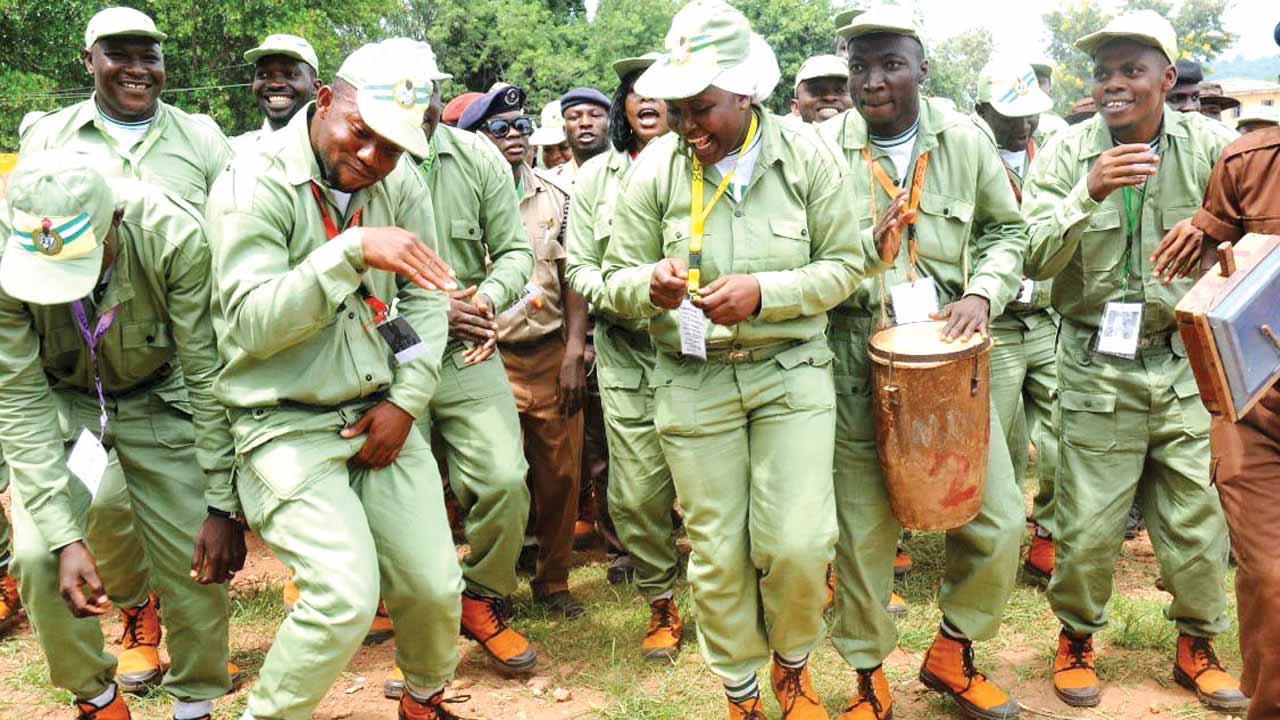
The 20 prospective National Youth Service Corps (NYSC) members and one other abducted along the Owerri-Onitsha Road in Imo State have regained their freedom.
The victims were rescued from the Amakohia-Ubi forest in Owerri West Local Government Area of the state following a coordinated operation involving security agencies.
They have since been taken to the Department of State Services (DSS) Hospital in Owerri, where they are receiving medical attention and undergoing necessary medical checks.
The Director-General of the National Youth Service Corps Brigadier General Olakunle Oluseye Nafiu visited the DSS Clinic in Owerri, where he addressed the rescued victims.
He was in company of the Imo State Commissioner of Police, Director DSS and Brigade Commander 34 artillery Imo State.
Details of the operation, including whether any arrests were made or ransom was paid, have not yet been made public.
However, in a statement issued by the Force Public Relations Officer, Ani Iniedu, the police said, “Efforts are ongoing to apprehend those responsible for the abduction, as the Police and other security agencies sustain coordinated operations towards bringing all culpable persons to justice.”
The victims were abducted on October 1 while travelling from Ibadan, Oyo State, to NYSC orientation camps in Abia and Akwa Ibom states.
The two buses conveying the prospective corps members came under attack near Umunoha in the Mbaitoli Local Government Area of Imo State.
Following the abduction, security agencies launched a coordinated search-and-rescue operation to locate the victims and their abductors.
The Imo State Police Command later said its operatives had located the kidnappers’ camp through drone surveillance but were unable to immediately enter the location because it was reportedly mined with improvised explosive devices (IEDs).
The police subsequently deployed additional operational assets, including bulldozers and armoured personnel carriers, as efforts intensified to reach the victims.
The development also triggered anxiety among the victims’ families after reports that the abductors were demanding ₦50 million for each victim.
Police had earlier confirmed that 10 victims were rescued following the attack, while efforts continued to locate the remaining abductees.
The latest development brings an end to the ordeal of the 20 corps members and the other abducted victim, who have now been reunited with safety and are receiving medical attention in Owerri.


