Metro
The Continent the Compass Forgot: Africa’s Reckoning with Its True Size, Power


- /home/rhoncare/pointblank.ng/wp-content/plugins/mvp-social-buttons/mvp-social-buttons.php on line 27
https://pointblank.ng/wp-content/uploads/2025/08/DR.TOLULOPE-A.-ADEGOKE-AMBP-UN__-1-744x600.jpg&description=The Continent the Compass Forgot: Africa’s Reckoning with Its True Size, Power', 'pinterestShare', 'width=750,height=350'); return false;" title="Pin This Post">
- Share
- Tweet /home/rhoncare/pointblank.ng/wp-content/plugins/mvp-social-buttons/mvp-social-buttons.php on line 69
https://pointblank.ng/wp-content/uploads/2025/08/DR.TOLULOPE-A.-ADEGOKE-AMBP-UN__-1-744x600.jpg&description=The Continent the Compass Forgot: Africa’s Reckoning with Its True Size, Power', 'pinterestShare', 'width=750,height=350'); return false;" title="Pin This Post">
By Tolulope A. Adegoke
“For too long, the world drew Africa small—and called the drawing truth. But no cartographer can shrink a continent’s destiny, and no century can belong to those who refuse to see. Africa is not arriving on the map; the map is finally arriving at Africa.” – Tolulope A. Adegoke, PhD
Introduction: The Cartographic and Conceptual Reckoning
For centuries, the world’s understanding of Africa has been mediated through a distorted lens—one that diminished the continent’s physical scale, obscured its historical agency, and relegated its people to the margins of global narrative. That lens is now being shattered. In a move that carries profound symbolic and practical weight, the United Nations General Assembly has endorsed an African-led initiative encouraging the global adoption of the Equal Earth cartographic projection, replacing the centuries-old Mercator projection that inflated Europe and North America while shrinking Africa to a fraction of its true size. The African Union Commission Chairperson Mahmoud Ali Youssouf captured the significance of this shift with remarkable clarity: “A map may change how the world sees Africa, but Africa’s destiny will ultimately be shaped by how Africans see themselves. The time has come to see Africa in its true size, its true strength and its true potential”.
This cartographic correction is more than a technical adjustment. It is a metaphor for a larger transformation underway—the reclamation of Africa’s narrative, its place, and its power in a world order that is itself being remade. Africa is not merely a subject of global history; it is increasingly an architect of it. The old frameworks, designed in the mid-twentieth century for a world that no longer exists, are proving inadequate for the twenty-first century. As UN Secretary-General António Guterres observed at the Africa Forward Summit in Nairobi, “This is not a continent waiting for solutions. This is a continent producing them”.
The Physical and Demographic Realities: Africa in Its True Scale
To understand Africa’s new image, one must first contend with its sheer physical magnitude. Africa is the world’s second-largest continent, spanning approximately 30.3 million square kilometers—roughly 20 percent of the Earth’s total land area and six percent of its total surface. The continent’s demographic weight is equally staggering. As of 2026, Africa’s population stands at approximately 1.58 billion people, representing 19.1 percent of the global total. By 2050, this figure is projected to reach 2.5 billion, meaning that one in four human beings on the planet will be African. By the end of the century, population projections suggest Africa could be home to 3.8 billion people—a demographic transformation of unprecedented historical proportions.
These are not abstract statistics. They represent the future of the global workforce, the world’s largest consumer market in formation, and an immense reservoir of human potential. Africa has the youngest population of any continent, with a median age of approximately 19.7 years, compared to a global median of over 30. More than sixty percent of Africa’s population is under the age of 25. This youth bulge, often framed as a challenge, is increasingly understood as the continent’s most strategic asset—a demographic dividend that, if properly harnessed, will drive global economic growth for decades to come.
Beyond population, Africa’s natural endowments are extraordinary by any measure. The continent holds approximately 60 to 65 percent of the world’s remaining arable land, giving it a decisive voice in global food security and agricultural sustainability. It possesses roughly 30 percent of global mineral reserves, including critical minerals such as cobalt, copper, lithium, and rare earth elements that are indispensable to the global energy transition. Africa also holds 60 percent of the world’s best solar potential—yet receives only two percent of global clean energy investment. This paradox—abundance without realization—is the central grievance that African leadership is now determined to address.
From Norm-Taker to Norm-Shaper: Africa’s Institutional Awakening
The most consequential shift in Africa’s global position is not material but institutional. For decades, Africa was characterized as a “norm-taker”—a passive recipient of rules and frameworks designed elsewhere. That characterization is now outdated. Africa is increasingly acting as a “norm-shaper,” leveraging its collective voice and institutional weight to press for reforms that address the structural inequities embedded in the global system.
The African Union’s permanent membership in the G20, secured in 2023, marked a watershed moment in this transition. For the first time, the continent as a whole—not just individual states—has a seat at the table where the world’s major economies coordinate policy. African leaders have used this platform, alongside expanded BRICS+ engagement, to advocate for debt restructuring, fair financing conditions, and a reevaluation of the credit rating systems that systematically penalize African borrowers.
The numbers underlying this advocacy are stark. African countries face borrowing costs on average twice as high as OECD countries—a premium that drains resources that could otherwise fund infrastructure, health, and education. Some African nations pay up to three times the benchmark rate for borrowing. As UN Secretary-General Guterres noted, “That is not a market verdict on Africa. It is a verdict on the injustices of the system”. The global financial architecture, designed in 1945 for a world that no longer exists, treats Africa not according to its economic fundamentals but according to risk perceptions shaped by historical prejudice and institutional inertia.
African leadership is responding not with complaint but with construction. The African Development Bank is advancing a bold vision to reform the continent’s financial architecture from within, mobilizing African resources for African priorities. The Borrowers’ Platform, an African-led initiative, enables debtor countries to speak as one and negotiate from strength. These are not requests for inclusion; they are exercises in agency.
The Multipolar Opportunity: Africa in a Reconfigured Global Order
The global order is undergoing a profound transformation—from a unipolar system dominated by the West to a multipolar configuration in which multiple centers of power coexist and compete. This shift, while destabilizing in some respects, creates unprecedented opportunities for Africa. As Kevin Chika Urama, Chief Economist of the African Development Bank, observed, “More countries are at the table, and we are going to have more inclusive and greater options for countries to decide on partnerships, on trade relations, and on other things”.
The evidence of this diversification is visible across the continent. China remains a vital partner, with its zero-tariff policy for African products and large-scale infrastructure financing reinforcing its position as a major player. Gulf states—notably the UAE, Saudi Arabia, and Qatar—have expanded investments in logistics, agriculture, and renewable energy. India, Turkey, and Russia are deepening engagement through defense, technology transfer, and trade. The European Union is repositioning itself through its Global Gateway strategy and critical minerals partnerships.
This multipolar environment offers African states a degree of strategic autonomy that was unavailable during the Cold War or the unipolar moment that followed. As James Shikwati, director of the Inter Region Economic Network, argued, Africa has the assets to “play a critical role in international supply chains, position itself as a nonaligned member in geopolitical competitions, and anchor the continent for global security and trade frameworks”. The era in which Africa was compelled to choose sides is giving way to an era in which Africa can define its own terms.
Yet multipolarity is not without risks. The erosion of US trade predictability, the Trump administration’s tariffs, and the shutdown of USAID have accelerated African efforts to diversify trade and development partnerships. The collapse of Official Development Assistance—aid budgets cut, partnerships unwound, commitments walked back—represents what Guterres called “a crisis of solidarity”. But it has also accelerated African self-reliance. The continent’s economic resilience is notable: despite global headwinds, Africa’s average GDP growth reached 4.5 percent in 2025, outpacing the global average. Intra-African trade grew by 5.5 percent, reaching $213.8 billion, with manufactured and processed goods increasingly constituting the composition of that trade.
The Diaspora as Bridge: Brain Gain and Brain Circulation
No account of Africa’s new image would be complete without addressing the role of the African diaspora—a community estimated at over 140 million people scattered across the globe, whose contributions to the continent’s development are increasingly recognized as transformational. The old narrative of “brain drain,” which framed migration as a loss of talent and potential, is being replaced by a more nuanced understanding of “brain gain” and “brain circulation”.
Hon. Abike Dabiri-Erewa, Chairman of the Nigerians in Diaspora Commission, articulated this shift with clarity at the 2026 Black Engineering Week in Silicon Valley: “You left the continent. But you never really left. You live in two worlds and refuse to choose. You connect them. That is engineering at its highest level”. The diaspora functions as a living bridge between Africa and global opportunity, channeling talent, capital, and credibility back to the continent.
The numbers tell part of the story. Diaspora remittances to Africa constitute a vast, largely untapped pool of capital that, if channeled toward investment, could power industrialization, entrepreneurship, climate technology, and venture capital. But the diaspora’s contribution extends far beyond remittances. African engineers, founders, and executives in global technology companies serve as visible evidence of African excellence, lifting the continent’s image and inspiring the next generation of innovators. Their achievements challenge the deficit narratives that have long defined Africa in Western imagination.
For this potential to be fully realized, African governments must dismantle bureaucratic barriers and create enabling environments that make diaspora investment and participation genuinely attractive. The relationship must be reciprocal: the diaspora offers expertise and capital; African states must offer transparency, predictability, and genuine partnership.
Critical Minerals and the Green Transition: Africa’s Leverage
The global energy transition has elevated Africa’s critical minerals to strategic significance. The continent’s reserves of cobalt, copper, lithium, and rare earth elements are indispensable to the manufacture of batteries, solar panels, wind turbines, and the technologies that will define the twenty-first century economy. As Gordon K’Achola, CEO of One Stop Development Agency, observed, “The global green transition is pegged on Africa’s minerals. There is no way the Global North can exclude Africa from the discussion table”.
Yet the history of resource extraction in Africa has been characterized by a pattern that Guterres described with blunt precision: “Africa’s resources have been extracted, the value captured elsewhere, the environmental damage left behind”. Breaking this pattern requires not merely more favorable terms but a fundamental restructuring of value chains. The United Nations Panel on Critical Energy Transition Minerals has pointed the way: fair value chains, in-country processing and manufacturing, transparency, environmental and human rights standards, and meaningful benefits for affected communities. “No more exploitation. No more plundering,” Guterres declared. “The people of Africa must benefit, first and most, from the resources of Africa”.
This is not a plea for charity. It is a demand for economic logic. As K’Achola noted, Africa’s position in the green transition gives it leverage that it has not always possessed: “BRICS is coming in with open arms, ready to trade, ready to co-create solutions with Africa rather than impose them”. The question is whether Africa can coordinate its position effectively enough to translate that leverage into concrete outcomes.
The Unfinished Business: Representation, Security, and Internal Reform
Africa’s rising global influence is constrained by persistent structural deficits. The most glaring is the absence of permanent African representation on the United Nations Security Council. As Guterres acknowledged, “Africa’s continued exclusion from permanent representation is indeed a historical injustice—and we cannot accept it”. The Security Council’s composition reflects the geopolitical realities of 1945, not 2026. Its reform is not a matter of symbolism but of legitimacy and effectiveness. A Council that excludes the continent with the largest population, the most numerous member states, and the most pressing security challenges cannot credibly claim to represent the international community.
The challenge of coordinating African positions within international forums is equally pressing. Despite expanded representation in BRICS—with South Africa, Egypt, and Ethiopia as full members and Nigeria and Uganda as partners—there is no mechanism for African states to coordinate their positions within the grouping. As the International Peace Institute has observed, “despite this growing representation, there is no mechanism for African states to coordinate their positions within the grouping, raising questions about whether a larger footprint has translated into greater collective influence”. The absence of coordination risks reducing Africa’s collective bargaining power to a series of bilateral transactions.
Similar challenges exist within the African Union itself. The continent’s governance structures were designed for a unipolar world order and must be reimagined for the multipolar era. As James Shikwati argued, “These structures need to reevaluate their systems and be agile enough to carry Africa’s agenda in the unfolding multipolar world order”. The AU must become not merely a representative body but a strategic coordinating mechanism capable of articulating and advancing collective African interests.
Domestically, the picture is mixed. Africa’s projected GDP growth of 4.3 percent in 2026 is respectable by global standards, but high debt burdens, inflationary pressures, and declining development assistance constrain the continent’s ability to invest in its future. Youth-led movements in Kenya, Madagascar, Morocco, Tanzania, and Togo are challenging governance failures and entrenched authoritarian models, even as repression continues and international disengagement amplifies risks. The tension between Africa’s rising global voice and its uneven domestic governance remains unresolved.
Conclusion: The Future Is Not Written
Africa’s new image is not a matter of perception management or public relations. It is the product of material transformations: demographic weight, resource endowments, institutional assertiveness, and a multipolar global order that has created space for strategic autonomy. The continent’s place on the world map is no longer defined by its position at the periphery but by its centrality to the defining challenges of the century—climate change, energy transition, food security, and the future of work.
Yet rising influence is not the same as realized power. As the WION editorial observed, “Recognition without influence is merely applause”. Africa’s challenge is to translate its numerical strength, resource wealth, and institutional presence into genuine leverage. This requires coordination, not just representation; strategy, not just seats at the table. It requires African states to negotiate collectively, to add value to their resources domestically, and to build the industrial and technological capacities that will make their economies resilient and their voices authoritative.
The cartographic correction—the simple act of showing Africa at its true size—is a beginning, not an end. The deeper work lies in ensuring that the world’s mental maps, institutional architectures, and economic relationships reflect Africa’s actual significance. Africa is not seeking a larger place in the world; it is reclaiming its rightful place. The future of the global order will be shaped in significant measure by how that reclamation unfolds. As Guterres reminded the world in Nairobi, “It is not Africa that loses. It is the world that loses by the fact that the voice of Africa is not taken into account”. The world is beginning to listen. The question is whether it will act.
Dr. Tolulope A. Adegoke, AMBP-UN, is a globally recognized scholar-practitioner and thought leader at the nexus of security, governance, and strategic leadership. His mission is dedicated to advancing ethical governance, strategic human capital development, resilient nation-building, and global peace. He bridges the worlds of academic rigor and practical application, contributing to leadership discourse at the highest levels of policy and practice. He can be reached via: tolulopeadegoke01@gmail.com, globalstageimpacts@gmail.com


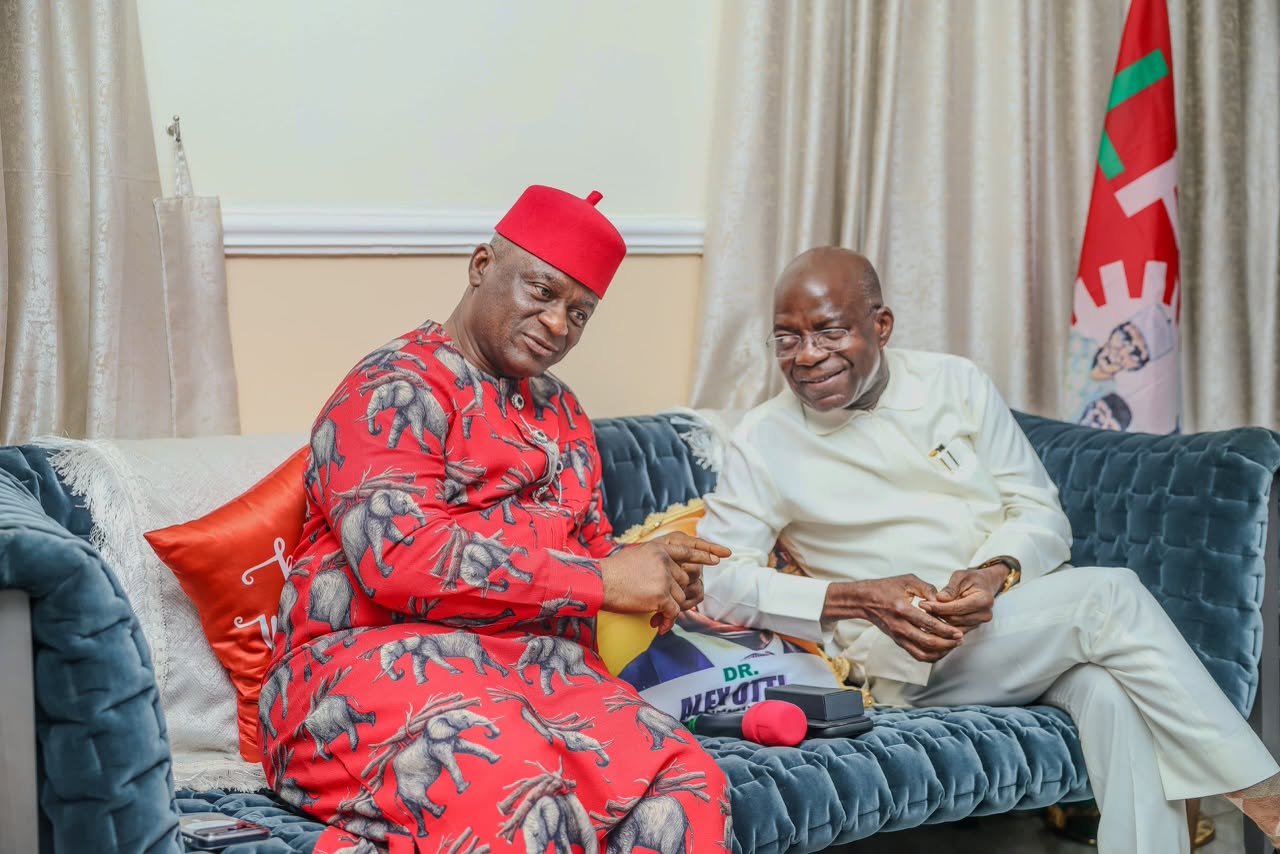
The Inspector-General of Police (IGP), Olatunji Disu, has assured Abia residents of improved security, pledging that the Nigeria Police Force would intensify efforts to protect lives and property across the State.
Disu gave the assurance during a courtesy visit to Governor Alex Otti at Government House, Umuahia, where he commended him for his sustained support to the police.
The IGP, who said he had received positive reports from the Commissioner of Police and the Assistant Inspector-General of Police on the State government’s assistance to the Force, promised that the police would reciprocate the gesture through improved service delivery.
“I want to thank you for all you have been doing for my officers. My Commissioner of Police has told me all you have been doing for us. The AIG too reiterated it. Thank you so much for it,” Disu said.
He assured the governor that the police would remain committed to tackling security challenges and ensuring the safety of residents.
“I will give you my word that we will continue to do our best to ensure proper policing so that people of the state will be able to sleep with their two eyes closed,” he said.
Disu explained that his visit to Abia was primarily to attend the traditional marriage ceremony of his orderly, Victor Nnah Sunday, at Amangwu, Abaki-Ndoki, in Ukwa East Local Government Area.
He, however, said he considered it necessary to pay homage to Otti, as the State’s Chief Security Officer, before proceeding to the wedding venue.
Responding, Otti commended the police leadership for its professionalism and prompt response to the state government’s requests for assistance in addressing security challenges.
“Thank you for what you do for the country. Thank you for the professionalism of the Force and for making everyone realise that the safety and security of the people is paramount.
“We have had instances where we called upon you and you responded swiftly,” the governor said.
Otti also praised the promotion of the immediate past Commissioner of Police in Abia to the rank of Assistant Inspector-General of Police (AIG), describing his service in the State as professional and tactful.
He said the former police commissioner demonstrated commitment in handling security matters, adding that although the state would have preferred to retain him, his elevation was a welcome development.
“He demonstrated professionalism and tact in the discharge of his duties. If not that it is a promotion, we would have resisted it, but we believe it is good for him to move on,” Otti said.
The governor expressed optimism that the officer would sustain his relationship with Abia despite his new position.
Otti also congratulated the IGP’s orderly on his traditional marriage, recalling that he had met him during an earlier encounter with the police chief.
The governor further commended Disu for what he described as his demonstration of national inclusiveness through the choice of aides and associates from different ethnic and geographical backgrounds.
He specifically noted that some of the IGP’s close aides hailed from different parts of the country, including Ohafia in Abia State.
Otti urged Nigerians to rise above ethnic and geographical sentiments, stressing that national unity would be strengthened when citizens saw themselves first as members of one country.
The IGP was accompanied on the visit by his wife, AIG Afolabi and some Commissioners of Police.
Members of the governor’s delegation included the Chief of Staff, Pastor Caleb Ajagba; Commissioner for Information, Prince Okey Kanu; Commissioner for Arts, Culture and Creative Economy, Dr. Matthew Ekwuribe; and other top government officials.

On Saturday, 7 November 2026, the Chinwe Bode-Akinwande (CBA) Foundation successfully hosted its annual Walk4Hope Charity Walk, bringing together individuals, corporate organisations, partners, customers and supporters in a collective show of solidarity for underprivileged widows and their children.
This year’s edition was particularly significant as it formed part of the Foundation’s 10th Anniversary celebration, marking a decade of purposeful intervention, advocacy and commitment to improving the lives of vulnerable women and children across Nigeria.
Walk4Hope is more than an annual charity walk. It is an awareness and fundraising initiative created to draw attention to the challenges faced by widows, including social discrimination, economic hardship, limited opportunities and the difficulties of providing for their children. Through the initiative, CBA Foundation continues to encourage individuals and organisations to take collective action towards creating a more supportive and inclusive society.
Since its establishment in 2015, CBA Foundation has remained committed to protecting, supporting and empowering underprivileged widows and their vulnerable children. Its interventions are driven by five key focus areas: women empowerment and capacity building, health interventions, nutrition, quality basic education and self-employment. Through these programmes, the Foundation provides opportunities for skills acquisition, business development, educational support and improved access to essential needs.
The 10th Anniversary celebration therefore represents more than a milestone, it is a reflection of the lives touched, communities reached and the collective commitment to ensuring that widows and their children are not left behind.
The Foundation extends its sincere appreciation to all participants, customers, volunteers, partners and supporters who came out, contributed and stood behind the Walk4Hope vision. Your presence and generosity helped make this year’s event a success.
Special appreciation goes to our sponsors and corporate partners:
FirstBank •Nominees · First Cap · First HoldCo · Nigerian Breweries · Nexra · Keskese · DigixPlus · Vyrus · EkoHotels · Truecaller · HopeStores
We are grateful to each of these organisations for their support and belief in our mission. We also extend a special thank you to all our customers and everyone who contributed in one way or another. Your support continues to strengthen our work and expand the reach of our interventions.
As we celebrate 10 years of impact, CBA Foundation remains steadfast in its mission to restore dignity, create opportunities and build a society where every widow and child has the support needed to live with hope and confidence.
Together, we can make a difference.
For more information about CBA Foundation, its programmes and opportunities to support its work, visit www.cbafoundation.org.
By Tolulope A. Adegoke
“They came searching for oil and found a nation; they stayed for minerals and discovered a people; they will remain for the harvest and inherit a future. Nigeria’s belly was never empty—it was waiting for the world to learn how to read its abundance. The renewed hope is not that Nigeria will rise, but that the world will finally recognise what has always been true: the Green White Green carries within its fold the seed of every nation’s tomorrow.”
Introduction: Reading the Abundance
For decades, the global narrative surrounding Nigeria has been stubbornly one-dimensional—a tale of paradox, of potential squandered, of a giant perpetually clearing its throat but never quite speaking. Yet, a dispassionate examination of empirical data, recent policy shifts, and geological realities reveals a different story. The Green White Green is not merely a flag of a nation struggling to find its footing; it is the standard of a sleeping giant now stirring with purpose. Nigeria’s metaphoric belly is not empty; it is filled to bursting with a diversity of resources—human, mineral, agricultural, and energy—that the world increasingly requires for its own survival. The renewed hope is not a political slogan; it is a quantifiable reality waiting to be harnessed. And for the early investor—whether institutional or individual, whether based in Lagos or London, Dubai or Toronto—this reality represents a narrowing window of opportunity that rewards those who move with discernment rather than those who wait for consensus.
The Hydrocarbon Bedrock and the Gas Dividend
While the world clamours for energy transition, the uncomfortable truth is that global energy security remains anchored in hydrocarbons. Nigeria’s position here is not merely significant; it is strategic. As of January 2026, the Nigerian Upstream Petroleum Regulatory Commission confirmed the nation’s total oil and condensate reserves at 37.01 billion barrels, alongside a staggering 215.19 trillion standard cubic feet of gas. To put this in perspective, the reserves life index stands at 59 years for oil and 85 years for gas, ensuring that Nigeria will remain a pivotal supplier to global markets for generations.
However, the story is no longer just about crude. The renewed hope is driven by a fundamental shift in how Nigeria manages these resources. The Petroleum Industry Act has moved the country from a stagnant regulatory environment to one that is attracting serious capital. Crude production has rebounded to approximately 1.6 to 1.7 million barrels per day, propelled by increased drilling activity and government-led initiatives to restore output.
What This Holds for Early Investors
The early investor in Nigeria’s upstream sector is not merely buying into a resource play; they are buying into a regulatory reset that has fundamentally altered the risk calculus. In August 2026, President Bola Ahmed Tinubu approved a landmark Deep Offshore Investment Framework designed to unlock up to US$50 billion in new investment by replacing project-by-project negotiations with a transparent, rules-based system. The framework begins with the approximately US$10 billion Bonga South West project and applies across multiple categories of qualifying developments, providing the certainty that globally mobile capital demands. For early movers, this represents an opportunity to enter at the ground floor of a revived deep-water province before competition intensifies.
Furthermore, the Nigerian Upstream Petroleum Regulatory Commission has announced the 2026 Licensing Round, offering 40 oil and gas blocks across land, shallow water, and deep-water terrains. The Commission’s chief executive has explicitly invited qualified Nigerian and international investors to “come and compete,” with full disclosure of evaluation methodology and beneficial ownership requirements—a signal that transparency is being institutionalised rather than merely promised. The immediate production upside is equally quantifiable: the Commission has identified more than 788,000 barrels per day of shut-in production across 63 operators, alongside offshore projects valued at an estimated $30 billion to $50 billion awaiting final investment decision . For the early investor with technical competence and financial capacity, these are not speculative figures; they are a pipeline of bankable opportunities.
The gas sub-sector offers perhaps the most compelling entry point for investors with a longer horizon. Nigeria sits on 215 trillion cubic feet of gas, yet daily production is barely 7 billion cubic feet . The government has completed major infrastructure projects to unlock gas supply and is advancing the Nigeria-Morocco Atlantic Gas Pipeline and Trans-Sahara Gas Pipeline, positioning Nigeria not merely as a domestic supplier but as a strategic corridor for European and regional demand. Early investors in gas processing, pipeline infrastructure, and liquefaction capacity are effectively securing a stake in the architecture of twenty-first-century African energy security.
The Silent Revolution in Solid Minerals
Perhaps the most compelling evidence of Nigeria’s renewed hope lies beneath the soil, in a sector long overshadowed by oil. In mid-2026, the federal government announced the discovery of a world-class polymetallic mineral province in Kaduna State, verified by the Nigerian Geological Survey Agency. This is not a minor find. It contains exceptionally high-grade deposits of platinum group metals, gold, nickel, copper, lithium, and rare earth elements—the very raw materials that power the global transition to electric vehicles, renewable energy infrastructure, and advanced electronics.
Simultaneously, an estimated 3.3 million metric tonnes of lithium reserves were unveiled at a site near Abuja, with the broader project hosting an estimated 94.8 million tonnes of mineral resources including lithium-bearing ore. This is the heartbeat of the twenty-first-century economy. While the world scrambles to secure supply chains for critical minerals, Nigeria has quietly positioned itself as an emerging destination. Crucially, the government has abandoned the old model of exporting raw ore. New licensing requirements mandate local processing and beneficiation, forcing investment into domestic value chains.
What This Holds for Early Investors
The lithium value chain presents a particularly instructive case study for early investors. Nigeria’s known lithium occurrences are concentrated in the North-Central and South-West geopolitical zones, with significant deposits in Nasarawa, Ekiti, Kwara, Kogi, Kaduna, Niger, and Oyo states. The principal lithium-bearing minerals identified include spodumene, lepidolite, petalite, and amblygonite—all recognised globally as important commercial sources of battery-grade lithium. The International Energy Agency projects that demand for lithium could grow by more than 40 times by 2040 under ambitious clean-energy scenarios, placing countries with commercially viable deposits in a strategically advantageous position.
For the early investor, the calculus is straightforward. Those who enter at the exploration and processing stage—rather than waiting for the sector to mature—can secure assets at valuations that do not yet reflect the full magnitude of global demand. The evidence of this opportunity is already materialising. Chinese investors have funded the bulk of Nigeria’s processing infrastructure, with a $600 million lithium processing plant near the Kaduna-Niger border planned to open and a $200 million lithium refinery on the outskirts of Abuja nearly completed, backed by firms including Jiuling Lithium Mining Company and Canmax Technologies. The government expects two additional processing plants in Nasarawa State. These are not pilot projects; they are the foundation of an industrial ecosystem.
The institutional architecture supporting these investments has also matured. The Electronic Mining Cadastral System (EMC+) has streamlined licensing into a fully digitised application process, while the newly launched Nigeria Minerals Decision Support System (NMDSS) provides critical hydrological, geological, and geographical data to assist investors in making informed decisions. The Minister of Solid Minerals Development, Dele Alake, has explicitly charged global mining giants—naming Glencore, Rio Tinto, and Rainbow Mines among others—to recognise Nigeria’s vast mineral resources and collaborate in their development. For early investors, the combination of de-risked licensing, transparent data, and government advocacy represents a rare alignment of conditions.
The Agricultural Engine and the Demographic Dividend
The world’s survival hinges not just on minerals, but on food and human capital. Here too, Nigeria’s belly is full. Agriculture contributes approximately 26 percent to Nigeria’s Gross Domestic Product and provides employment for more than 70 percent of the population across the agricultural value chain. The government has projected that agriculture could account for up to 30 percent of the nation’s one-trillion-dollar economy ambition, translating to approximately $300 billion.
What This Holds for Early Investors
The agricultural opportunity for early investors is anchored in a structural reality: Nigeria possesses 79 million hectares of arable land, of which only about 40 percent is currently cultivated. The productivity gap is equally pronounced. Yields for several Nigerian crops average between 1.3 and 1.5 tonnes per hectare, compared with approximately 11 tonnes per hectare recorded in Egypt under irrigation. Nigeria remains the world’s largest producer of cassava, with annual output estimated at 63 million metric tonnes, yet average yields of six to seven tonnes per hectare remain far below the nation’s capacity.
For the early investor, these gaps are not liabilities; they are arbitrage opportunities. The Federal Government has unveiled a $78.5 billion investment portfolio** featuring 65 projects across key sectors, including agriculture and agro-processing, which alone requires **$9.8 billion. The incentives are explicit: 100 percent foreign ownership, full capital repatriation, and tax credits designed to attract global investors. These are not aspirational policy statements; they are codified instruments available to those who move early.
The momentum is already visible on the ground. At COP31 in November 2026, Nigeria signed a $3 million agreement for a climate-smart greenhouse project in Kano State, deploying approximately 1,000 climate-adapted greenhouses for tomato production under the Special Agro-Industrial Processing Zones programme. The Bank of Agriculture will provide $1.5 million in structured financing for participating farmers, while Turkish firm Direkci Group will contribute another $1.5 million in private-sector financing and technology. The partners have agreed to a joint performance review after nine months, with a possible commercial expansion valued at a minimum of $30 million. For early investors in agro-processing, greenhouse technology, and structured agricultural finance, this is a template that can be replicated across multiple value chains and geographies.
The demographic dimension amplifies the agricultural opportunity. With an estimated population of 230 million—projected to reach between 450 and 500 million by 2050—Nigeria possesses the largest youth demographic on the African continent, with more than half of its people aged under 30 . Each year, 3.5 million young Nigerians enter the labour market, one of the largest waves of youth entering the workforce anywhere in the world. For early investors in labour-intensive sectors—agro-processing, manufacturing, digital services—this represents a structural cost advantage that will only deepen as global labour markets tighten.
A Strategic Partner for Global Stability
The empirical evidence converges on a single conclusion: Nigeria is not asking for charity; it is offering partnership. The financing gaps are real. Nigeria’s Third Nationally Determined Contribution estimates that $337 billion will be required between 2026 and 2035 to deliver its climate and sustainability commitments. The nation’s tax-to-GDP ratio of approximately 15.5 percent remains below regional benchmarks, limiting the government’s capacity to fund priority sectors and respond to shocks.
What This Holds for Early Investors
But these figures represent opportunity, not desperation—and the macro environment is stabilising in ways that directly benefit early entrants. By early 2026, the divergence between the official Nigerian Foreign Exchange Market and the parallel market rate narrowed to less than 2 percent on average. Foreign exchange reserves climbed to a 13-year high of $50.45 billion in February 2026, providing roughly 9.7 months of import cover. This liquidity surge was supported by the removal of FX restrictions on 44 items and a resurgence in foreign portfolio inflows—a signal that the currency risk that once deterred investors is being actively managed.
The capital markets are also opening. The Securities and Exchange Commission has announced plans to introduce an African depositary-receipt framework to attract foreign companies and investors, as part of a strategy to triple the market’s size to 750 trillion naira ($562 billion) by 2036** . The plan targets an increase in annual diaspora investment from **$4 billion to $10 billion** over the next decade, with assets managed by collective investment schemes rising from **$5.6 billion to $56 billion. For early investors in Nigerian equities and fixed income, this represents a structural expansion of the investor base and liquidity pool that will lift valuations across the market.
The proof of concept is already visible. The Dangote Petroleum Refinery is using global depositary receipts to reach investors outside Nigeria through an IPO seeking to raise approximately $2.1 billion, with the offering extended to allow participation from more African markets. For the early investor, this is not merely a single transaction; it is a demonstration that Nigerian assets can be structured to access global capital at scale. Those who establish positions before the depositary-receipt framework is fully operational will be participating in a market that is being deliberately redesigned to accommodate them.
The Window and the Warning
For the early investor, the Nigerian opportunity carries a temporal dimension that cannot be ignored. The conditions that make Nigeria attractive—reformed regulatory frameworks, transparent licensing, currency stabilisation, and a government actively courting foreign capital—are the product of deliberate policy choices made in the past three years. They are not permanent features of the landscape; they are the result of a specific political configuration that has prioritised investment climate over short-term extraction.
The licensing rounds will close. The deep offshore framework will be fully subscribed. The lithium processing capacity will be built out by those who move now. The agricultural corridors will be secured by investors who recognise that food security is the next frontier of global strategic competition. The demographic dividend, too, has a window: the United Nations projects that Nigeria’s working-age population will expand by more than 100 million people within 25 years, but if this surge is not absorbed into productive employment, the same demographic advantage could become a liability.
The early investor, therefore, is not merely seeking returns; they are participating in the construction of a new economic architecture. They are betting not on Nigeria’s resources alone, but on the proposition that a nation of 230 million people, endowed with oil and gas, lithium and gold, arable land and a youthful workforce, and governed by a administration that has staked its legitimacy on attracting capital, represents the most compelling growth story of the coming decade.
Conclusion: The Harvest is Ready
The belly is full. The harvest is ready. The world would do well to take notice—and the early investor would do well to move before the notice becomes consensus. Nigeria’s renewed hope is not a promise deferred; it is a destiny being unveiled, block by block, refinery by refinery, policy by policy. For those who read the abundance correctly, the Green White Green is not merely a flag to be admired from a distance. It is an invitation to participate in the most consequential economic transformation of the twenty-first century.
Note: This write-up draws on official regulatory announcements, government policy documents, and verified industry reporting from 2026. The figures cited are sourced from the Nigerian Upstream Petroleum Regulatory Commission, the Federal Ministry of Solid Minerals Development, the Securities and Exchange Commission, the African Development Bank, the World Economic Forum, and other institutional sources. Early investors are advised to conduct independent due diligence and engage with qualified legal and financial advisers before committing capital.
Dr. Tolulope A. Adegoke, AMBP-UN, is a globally recognized scholar-practitioner and thought leader at the nexus of security, governance, and strategic leadership. His mission is dedicated to advancing ethical governance, strategic human capital development, resilient nation-building, and global peace. He bridges the worlds of academic rigor and practical application, contributing to leadership discourse at the highest levels of policy and practice. He can be reached via: tolulopeadegoke01@gmail.com, globalstageimpacts@gmail.com