
News
The “Egg” That Cracked the “Nuts”: The Nikola Tesla Story


- /home/rhoncare/pointblank.ng/wp-content/plugins/mvp-social-buttons/mvp-social-buttons.php on line 27
https://pointblank.ng/wp-content/uploads/2019/09/Adegoke-1000x600.jpg&description=The “Egg” That Cracked the “Nuts”: The Nikola Tesla Story', 'pinterestShare', 'width=750,height=350'); return false;" title="Pin This Post">
- Share
- Tweet /home/rhoncare/pointblank.ng/wp-content/plugins/mvp-social-buttons/mvp-social-buttons.php on line 69
https://pointblank.ng/wp-content/uploads/2019/09/Adegoke-1000x600.jpg&description=The “Egg” That Cracked the “Nuts”: The Nikola Tesla Story', 'pinterestShare', 'width=750,height=350'); return false;" title="Pin This Post">
By Tolulope A. Adegoke
“A hero can be anyone…anyone who can show courage when faced with a problem. A hero is someone who is willing to help others in his or her best capacity.” – Ricky Martin
Last week article was titled “Take Responsibility and Shine!” there in, we explored the principles and strategies for becoming a paragon of greatness. We have savoured the process of transitioning from the ditch to the peak, from grass to grace, from nothing to something, from the cross to the crown, from shame to fame, from story to glory, from the valley to the mountain, from the ground to the sky, from tests to testimonies and from Zero to HERO!
Now, we must get to the more practical aspect of illustrating the principles we have discussed so far by examining the lives of some carefully selected heroes (you may also call them trailblazers and game-changers) across the world who are making extraordinary impacts, due to their decision to harness their potentials for the good of mankind. As an added advantage, we shall be learning directly from them as they recount their experiences and offer timeless tips on attaining greatness.
Nikola Tesla was born on July 10, 1856, in what is now Smiljan, Croatia. He was one of five children, which included siblings Dane, Angelina, Milka and Marica, in the family.
Tesla’s interest in electrical invention was spurred by his mother, Djuka Mandic, who invented small household appliances in her spare time, while her son was growing up. Tesla’s father, Milutin Tesla, was a Serbian priest and writer. He often pushed for his son to join the priesthood. But Nikola’s interests lay squarely in the sciences. He studied at the Real Schule, Karlstadt, the Polytechnic Institute in Graz, Austria, and the University of Prague. Thereafter, during the 1870s, he moved to Budapest, where, for a time, he worked at the Central Telephone Exchange. It was while in Budapest that the idea for the induction motor first came to him, but after several years of trying to attract interest in his invention, Tesla decided to leave Europe for America at the age of 28.
In 1884, Tesla arrived the United States with little more than clothes on his back and a letter of introduction to famed inventor and business mogul, Thomas Edison, whose DC (Direct Current)-based electrical works were fast becoming the standard in the country. Edison “hired” Tesla, and the two men were soon working tirelessly alongside each other, making improvements to Edison’s inventions.
However, several months later, the two parted ways due to a conflicting business-scientific relationship, attributed by historians to their incredibly different personalities: while Edison was a power figure who focused on marketing and financial success, Tesla was commercially out-of-tune and somewhat vulnerable. Tesla discovered and invented the AC (Alternative Current)-based electrical works. He informed his boss (Edison) about it, but Edison ignored it because he saw the Alternative Current as an impossible invention. Besides, he considered that even if it was possible, it would not be safe for public consumption due to its massive voltage and current.
Rather than encouraging Tesla and finding means of putting resources together to advance the AC, Edison was so engrossed with the financial success of his DC invention that he was blinded to the future possibilities of the so-called ‘impossible’ AC of Tesla. This was why Tesla was left with no other choice than to part ways with his boss.
After parting ways with Edison, Tesla kept on working on his invention. He saw possibilities in it and saw the timely need to chase his dreams. He wrote several letters to potential investors (businessmen) across the United States for funding. He eventually received funding for the Tesla Electric Light Company and was tasked by his investors to develop improved arc lighting. After successfully doing so, however, Tesla was forced out of the venture and for a time, had to work as a manual labourer – a zero – in order to survive.
Fortunately, his destiny was re-launched in 1887, when he was able to find more interests in his AC electrical system and funding for his new Tesla Electric Company. Setting straight to work, by the end of the year, Tesla had successfully filed several patents for AC- based inventions.
Tesla’s AC system eventually caught the attention of American engineer and businessman, George Westinghouse, who was seeking a solution to supplying the nation with long-distance power. Convinced that Tesla’s inventions would help him achieve this, he, in 1888, purchased Tesla’s patents for $60,000 in cash, as well as stocks in the Westinghouse Corporation. As interest in an Alternating Current System grew, Tesla and Westinghouse were put in direct competition with Thomas Edison, who was bent on selling his DC current to the nation. A negative press campaign was soon waged by Edison, in an attempt to undermine interest in AC power.
Tesla, on his part continued his work and would patent several more inventions during this period, including the Tesla coil, which laid the foundation for wireless technologies and is still used in radio technology today.
Unfortunately for Thomas Edison, the Westinghouse Corporation was chosen to supply the lighting at the 1893 World’s Columbian Exposition in Chicago, and Tesla conducted demonstrations of his AC system there. Two years later, in 1895, Tesla designed what was among the first AC hydro-electric power plant in the United States, at the Niagara Falls. The following year, it was used to power the city of Buffalo, New York, a feat that was highly publicised throughout the world. With its repeat successes and favourable press, the Alternating Current system became the preeminent power system of the 20th century, and it has remained the worldwide standard ever since.
Nikola Tesla, therefore, can be said to have transited from being a zero to being a HERO! He did not give up on his dream despite all odds. He did not let his dream end up as a dream; rather, he pushed through, relentlessly empowered his potentials (zero), and planted his ‘seed’ in the fertile land of the United States of America. He discovered his strength and worked on his weak points, even in the midst of storms. He weathered the storms, discovered his actual location (fertile land) and moved out of his comfort zone to the land where God showed him, just like the biblical Abraham. He then carved a niche for himself! Even when Tesla got to his promised land (United States), he encountered greater storms (giants) which came in form of relegation, frustration, intimidation, disappointment, delay and lack, among others; yet he surmounted all in turning his dreams into reality! Tesla worked and walked his way indefatigably into the future against all odds, with his dreams intact, well empowered, then, emerged a global HERO even above his former boss, Thomas Edison. Tesla chased excellence, then success chased him! He knew financial prosperity would eventually locate him after he had done his own part of the deal, by perfecting his gifts and skills to excellence (the law of zero to hero).
I tell you, friend, you too can rise from your present level to an exceedingly glorious and influential one. This is the will of God for you.
Dr. Tolulope A. Adegoke is an accredited ISO 20700 Effective Leadership Management Trainer


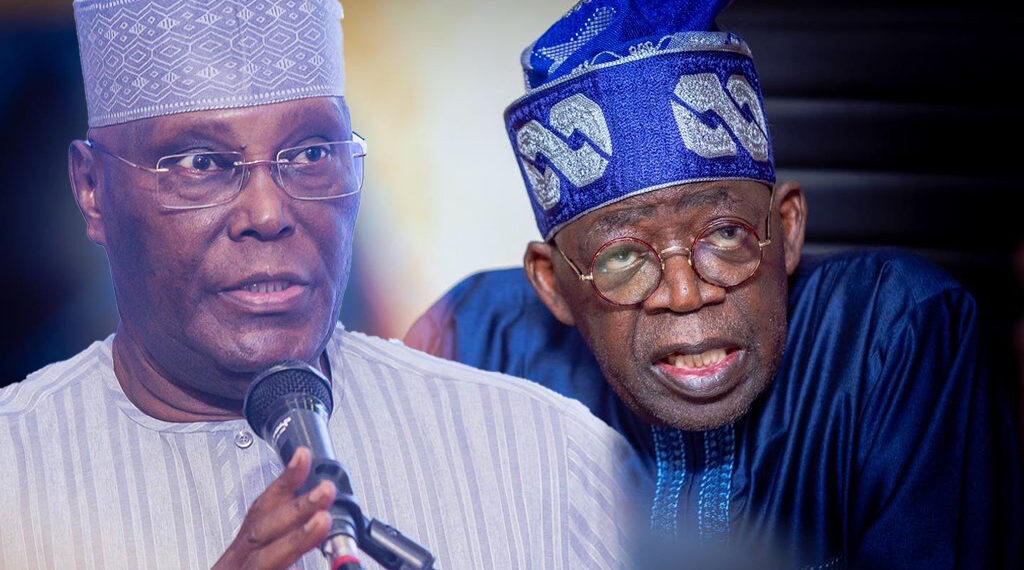
Former Vice President Atiku Abubakar has urged President Bola Tinubu to take immediate steps to reduce the cost of petrol, saying Nigerians are struggling with the combined impact of high energy, transportation and food prices.
Atiku made the call on Friday in Abuja during a press briefing on fuel prices, palliatives and the rising cost of living. His comments came amid renewed concerns over the effect of higher petrol prices on households and businesses.
The African Democratic Congress (ADC) presidential candidate said the removal of petrol subsidy in May 2023 placed additional pressure on families, workers, farmers and businesses.
He said the effect of higher petrol prices was not limited to motorists, as increased transportation and logistics costs had also pushed up the prices of food and other essential goods.
“When government makes energy expensive, it makes life expensive,” Atiku said.
The former vice president recalled that he had previously called for government intervention to reduce petrol prices, but said Tinubu had dismissed the proposal as showing “serious ignorance” of governance and the economy.
Atiku questioned whether the Nigeria Labour Congress (NLC), petroleum marketers, manufacturers and ordinary Nigerians who had raised concerns about rising costs could all be described as ignorant.
“When workers, producers, marketers and ordinary families are all raising the alarm, government must listen,” he said.
He said the government should be prepared to review its policies when their consequences become difficult for citizens to bear, adding that rising production costs were putting further pressure on manufacturers while families were finding it harder to afford basic goods.
Atiku also argued that government revenue and GDP figures did not necessarily reflect the economic reality facing ordinary Nigerians.
“If government receives more Naira while the citizen’s naira buys less food, less fuel, less electricity and less transportation, then bigger government revenues mean little to the family struggling to survive,” he said.
The ADC candidate urged Tinubu to use the remaining eight months of his first term to reduce the burden on Nigerians and consider any measure capable of lowering petrol prices, even if the proposal came from a political opponent.
“What matters to me is that Nigerians pay less,” Atiku said. “A sensible idea does not become a bad idea because it came from your opponent.”
He also offered to make his policy framework available to the Tinubu administration, saying Nigerians should not have to wait for a new government before benefiting from policies that could provide relief.
“If you need the framework, I will provide it. Implement it under your government. Give it whatever name you choose. Take the credit,” he said.
“I ask for only one thing: Let Nigerians breathe.”
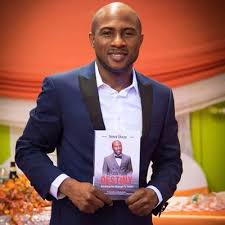
By Henry Ukazu
Dear Destiny Friends,
Passion and purpose are among the most debated topics in the human development space. It’s a grey area that has attracted a lot of attention. While some schools of thought believe it’s better to focus on passion, other schools of thought believe that it’s profitable for one to focus on a job that pays the bills.
According to the latter school of thought, passion doesn’t pay the bills. Well, depending on the schools of thought one subscribes to, I personally believe it pays more for one to pursue passion than profit, and I will explain in a minute.
I strongly believe passion is stronger than power because when one loves what one is doing, there’s an inherent strength that comes with it, but if one doesn’t like what they are doing, they’ll lack the moral strength to forge on.
Let me share a practical example with you. My late dad encouraged me to study Taxation Law at New York Law School, a major I didn’t like. He had the mindset that money rules the world, which I tend to believe because when money talks, the world “generally” seems to move around. That mindset and principle is relatable; however, it’s not applicable in other cases because there are some people or situations where money doesn’t move around.
My late dad believed it makes no sense for me to read a major and remain unemployable or poor. So, when I arrived in the United States, the economy was experiencing a recession, and there were no jobs at the time. So, while I was passionate about studying International Relations, Energy Law, or Communications Law, my late dad sat me down and said, based on the information he was receiving from his friends, these are great courses, but when I graduate, it will be hard to find a job because most people in those firms are laying off employees.
According to my late dad, his friends suggested that since I have a legal background, tax law is the only major I can study and be guaranteed a job because people and corporations will always file their tax returns. I initially objected to this advice because my brain is not wired for numbers. I really struggled to accept this advice because I hated numbers with passion.
My late dad would later tell me, you know we are from a humble background, and so we need money. My late dad would always say, “You wouldn’t want to study international law or communication, and the only thing you can do very well is speak English while remaining poor. One fact about my late dad was that he liked money to a stupor. According to him, after God, the most important thing in the world is money.
After much hesitation, I decided to study the major to make my late dad happy because I saw how happy he would be when I studied tax law. If truth be told, I wasn’t happy studying the major. I really struggled with the major. I managed to get a scholarship and graduated with a decent grade, but getting a job was challenging because employers could see that I didn’t like the major each time I went for an interview.
At the end of the day, I managed to get a job as a Case Manager for a private organization and later as the Legal Coordinator for the New York City Department of Correction. An important point to note here is that, after I left the tax firm, I was intentional about applying for jobs I was passionate about. Money to me was a secondary concern because I strongly believe that when you love what you do and you are good at it, money will surely find you.
I had to share this practical experience to give an insight into the importance of focusing on passion. Don’t get me wrong, money is good, but I personally feel there are more valuable things than money, and a perfect example is marrying a kind man as opposed to marrying a man with money, or marrying a lady with good character as opposed to marrying a lady with a good physique.
It’s instructive to note that when I began to focus on what I love to do, I had to spend time on honing my skills, developing myself by attending relevant training sessions and taking courses that would distinguish me from my contemporaries. It didn’t take long for me to receive recognition for my work. I was celebrated for being a trailblazing author of three books on television; I was interviewed by The New York Times in addition to meeting resourceful global leaders. In all sincerity, I doubt if I would have received accolades assuming I focused on taxation or doing what would give me money.
The moral of this analysis is that while profit is good, passion is much better because it will give one the necessary satisfaction and fulfilment they deserve. To understand how this works, one might make good money in a job but won’t be happy, but someone else might make little money and be happy in what they are doing. If research is done on what makes one happy, most people will likely say it is their passion or what they love to do that makes them happy as opposed to the job they do. It’s only a fragment of people who will attribute their happiness to the job they do, and that’s simply because they have truly figured out who they are or are probably happy and passionate about the work they do.
Let me explain a little: your profession is what you are trained to do as a doctor, lawyer, accountant, or engineer. Your vocation is what you are trained to do as a skilled worker or one with a 9-to-5 job, but your ministry is your calling, and that’s why you find your talent or gift and passion. So, one’s passion can be found in what they love to do.
When one’s profession is aligned with one’s vocation and ministry, then success is bound to be present because passion is at play.
It’s instructive to note that most of the great people I know in the world have become famous because they were doing what they love to do. I recently attended an award ceremony where my alma mater, Baruch College, celebrated alumni who have distinguished themselves. One of the award recipients, Ms. Doris Gonzalez, stated in her speech, “Of all the jobs I have had in my life, this is my best job. I really love my job”. I strongly believe there is a form of spiritual blessing and success that comes when one is happy doing what one is passionate about.
In conclusion, if one is desirous of succeeding in life, please endeavor to focus on your passion; if you can’t find it, explore what makes you happy. When you find what makes you happy, develop and monetize it, and in no distant time, opportunities and recognition will begin to triple in.
Henry Ukazu writes from New York. He works with the New York City Department of Correction as the Legal Coordinator. He’s the founder of Gloemi. He’s a Transformative Human Capacity and Mindset coach. He is also a public speaker, youth advocate, creative writer, and author of Design Your Destiny- Actualizing Your Birthright to Success, Unleash Your Destiny and The Six Pillars of Success. He can be reached via info@gloemi.com
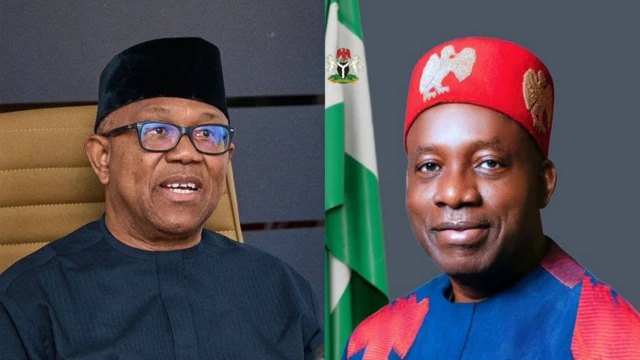
The Nigeria Democratic Congress (NDC) presidential candidate, Peter Obi, has released his handover document to counter the Anambra State Government’s claims that his administration left behind loans and other financial liabilities.
Obi’s challenge followed the release of his handover note, which showed the financial position of the State at the end of his administration.
The Interim National Coordinator of the Obedient Movement, Dr. Yinusa Tanko, published the handover document dated March 17, 2024, on Wednesday.
The document contained a summary of Anambra State’s financial position as of the close of business that day and showed a net positive balance of over N86 billion.
Tribune Online had earlier reported that the Anambra State Government said it is still repaying loans obtained by previous administrations, including those of former governors Peter Obi and Willie Obiano.
The Commissioner for Finance, Izuchukwu Okafor, disclosed this on Sunday while speaking on the Ndi Anambra podcast released by the government’s New Media team.
Okafor said the inherited loans remained part of the financial commitments of the current administration, despite the Soludo government’s decision not to obtain fresh commercial bank loans since taking office.
Obi, however, rejected the claim and asked the Soludo administration to provide evidence to support its position. He also said he would end his campaign for the 2027 presidency if the allegation could be proven.
The Anambra State Government later disputed Obi’s claim that he left office without outstanding debts or other unpaid financial obligations.
The government maintained that its records showed that some liabilities incurred during Obi’s administration, as well as obligations inherited by it, remained unpaid.
In a statement titled; “Gov Peter Obi and Record of Public Debt in Anambra: Facts Beyond Propaganda and Lies,” the Commissioner for Information and Value Reorientation, Law Mefor, described Obi’s position on the State’s debt profile as false.
Mefor said eight external loans connected to projects implemented during Obi’s administration, or inherited by it, were still outstanding.
According to him, the loans had a combined balance of $92.35 million, which the State government said was equivalent to N127.37 billion as of June 30, 2026.


