
Business
The Real Story: FirstBank Debunks Misleading Report

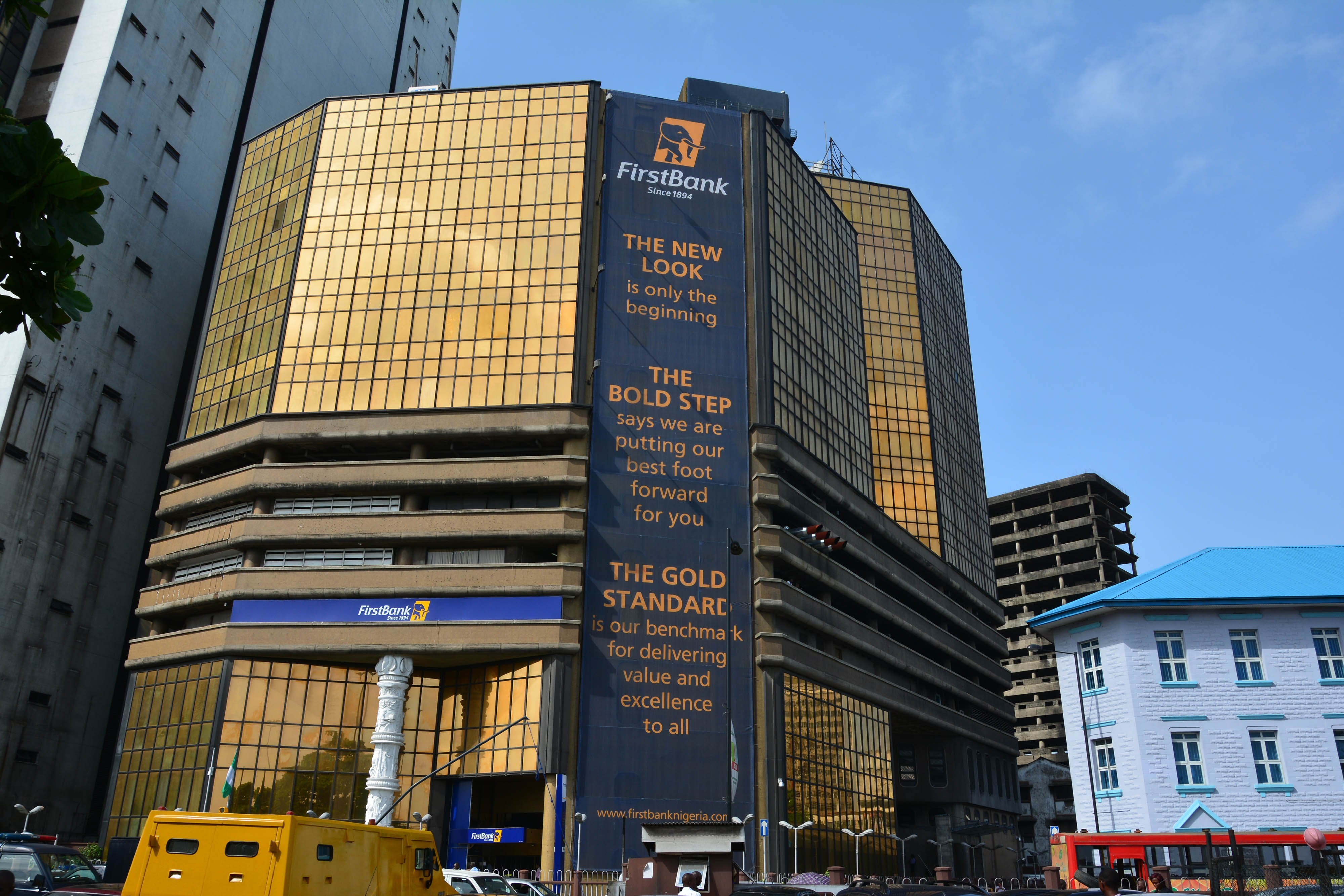
Leading financial institution, FirstBank of Nigeria Limited, has debunked reports making the rounds as regards its transaction with General Hydrocarbons Limited, which has become a subject of litigation.
In a statement by the management, and made available to Pointblank.ng, the bank insisted that it has been on the right side of the law while assuring customers, stakeholders and friends of the bank of its unflinching stand in the provision of first class services. It also expressed its appreciation to subscribers for holding faith with the parent body, FirstHoldco in the first round of its capital raise.
The full statement is represented below:
Our attention has been drawn to recent media reports regarding a commercial transaction between First Bank of Nigeria Limited (FirstBank) and General Hydrocarbons Limited (GHL) that is currently a subject of litigation.
As a responsible and law-abiding corporate citizen of Nigeria with utmost respect for the courts, FirstBank will not be able to offer comments on issues which are pending for determination by the courts, as such issues are sub-judice.
However, we are constrained to issue the following clarifications to correct the sponsored but false narratives on the matter presented in some of the media publications.
There is a subsisting commercial transaction between FirstBank as lender, and GHL as borrower, where FirstBank extended several credit facilities to GHL for the development of some Oil Mining Lease assets.
These facilities are backed by very robust loan agreements executed by the parties in which the obligations of the parties are clearly defined and the security arrangement clearly spelt out.
While FirstBank has diligently performed its obligations under the loan agreements, at the root of the present dispute is FirstBank’s demand for good governance and transparency in the transaction, which GHL rejected.
Upon FirstBank’s realization of breaches on the part of GHL including diversion of proceeds, FirstBank requested that an independent operator mutually acceptable to both parties be appointed in line with the terms of the agreement, to operate the financed asset in a transparent manner that will bring greater visibility to the project, protect the interest of, and bring value to all stakeholders. Not only did GHL roundly reject this reasonable and fair request, rather GHL insisted that FirstBank avails it with more funding. GHL refused to execute the terms of offer stipulated by the Bank for the availment of additional funding but rather proceeded to commence needless Arbitral proceedings.
GHL issued a notice to initiate arbitration and has no substantive claim pending at the Federal High Court. GHL approached the Federal High Court solely to seek preservative orders pending arbitration. Some of the preservative orders sought by GHL were granted while others were denied.
FirstBank is the only party that filed a substantive claim against GHL at the Federal High Court and the subject matter of FirstBank ‘s claim is not identical with the dispute GHL submitted to arbitration because FirstBank’s claim is in respect of subsequent credit facilities granted to GHL and the offer letters and finance documents pertaining to the subsequent transactions clearly state that the disputes arising from the subsequent facilities are to be resolved by a court of competent jurisdiction in Nigeria and not by arbitration.
Consequently, it is incorrect to assert that FirstBank abused the process of the court.
GHL off-took crude from the Floating Production Storage and Offloading (FPSO) vessel and diverted the proceeds. The Bank had no choice as a secured lender, under these circumstances of continued breaches, non-payment of due obligations and attempts to shield the Bank away from agreed security and repayment sources, than to approach the court for legal remedies, to preserve assets, recover the diverted proceeds, prevent reoccurrences and safeguard FirstBank’s interest. It is clear to us that the courts do not support or protect illegalities and breaches of contracts.
FirstBank has a long and very rich history of supporting and providing for the financial needs of its customers over its more than 130 years of unbroken existence. FirstBank remains committed to ensuring that it continues to support legitimate business aspirations of its teeming customers. At the same time, FirstBank is committed to the building of a strong credit culture where borrowers pay their debts when they borrow and will always take appropriate steps, within the ambit of the law, to resist attempts by borrowers to repudiate their repayment obligations.
We wish to assure FirstBank’s numerous customers, stakeholders and the general public that FirstBank remains solid, calm, steadfast and unflinching in its resolve to continue to provide first-class services to its teeming customers within and outside the country.
FirstBank also wishes to respectfully thank our shareholders for the indicatively oversubscribed Rights Issue of its parent Company, First Holdco Plc (“FirstHoldco”), in the first round of its capital raise and looks forward to an equally successful final leg of the recapitalization exercise when it is announced by FirstHoldco.


West Africa’s premier financial institution and financial inclusion services provider, FirstBank, has officially announced its sponsorship of the Carnival Calabar & Festival 2025, unveiling a landmark addition set to redefine the carnival experience — the first-ever private premium seating area at the event.
The highlight of FirstBank’s participation is the construction of a 500-seater premium bleacher, designed to provide comfort, safety, and an elevated viewing experience for carnival enthusiasts.
Speaking on the sponsorship, the Acting Group Head Marketing and Corporate Communications, FirstBank, Olayinka Ijabiyi, noted that the carnival aligns with the Bank’s First@Arts initiative, a platform dedicated to supporting the creative arts value chain across Nigeria. He said, “We recognise the transformative power of the arts, including carnivals, in inspiring people and strengthening national unity. For more than 131 years, we have supported platforms that promote self-expression, social reflection and cultural exchange. Our investment in the Carnival Calabar & Festival demonstrates our commitment to preserving the nation’s rich cultural heritage through First@Arts.”
“As part of our sponsorship this year, we are introducing the first-ever private 500-seater premium bleacher to further elevate the carnival experience. This exclusive seating is designed to provide exceptional comfort and an unforgettable viewing experience for attendees,” Ijabiyi added.
The Chairman of the Cross River State Carnival Calabar Commission, Gabe Onah, also commented on FirstBank’s sponsorship. “FirstBank’s involvement is a strong demonstration of private-sector support for culture and tourism. This partnership not only enhances the overall quality of the carnival but also strengthens its global appeal,” he said.
The Carnival Calabar & Festival 2025 is officially marketed by Okhma Global Limited, the appointed Official Marketer responsible for brand partnerships, promotional engagements, and ticket sales. Okhma Global Limited has partnered with the Cross River State government in delivering Carnival Calabar & Festival for over ten years, playing a key role in strengthening the carnival’s commercial growth and global visibility.
Ecobank Nigeria, a member of Africa’s leading pan-African banking group, has assured customers of uninterrupted access to banking services throughout the year-end holiday period via its secure and robust digital platforms. The Bank also urged customers to remain vigilant against fraud and scams during the festive season.
Speaking on the development, Victor Yalokwu, Head, Products & Analytics, Consumer & Commercial Banking, Ecobank Nigeria, said the Bank’s digital channels — including the Ecobank Mobile App, Ecobank Business App, USSD *326#, Ecobank Online, OmniPlus, Omnilite, EcobankPay, RapidTransfer, Ecobank Cards, ATMs, PoS terminals, and over 35,000 Ecobank Xpress Point (Agent Banking) locations nationwide — will remain fully available to support customers throughout the yuletide and year-end holiday period.
He noted that customers will continue to enjoy a wide range of services during the period, including local and international funds transfers, bill payments and airtime top-ups, merchant payments, balance inquiries and account statements, as well as cardless cash withdrawals via ATMs.
According to Yalokwu, “Ecobank encourages customers to leverage these digital solutions for safe, fast, and efficient banking, especially during the festive season when convenience and reliability are essential. While physical branch operations may be subject to adjusted working hours in line with public holidays, customers can be assured that Ecobank’s digital platforms are designed to deliver uninterrupted service and enhanced security at all times. Ecobank remains committed to providing innovative financial solutions and exceptional customer service, and we wish all our customers a joyful festive season and a prosperous New Year.”
Yalokwu also cautioned customers to remain vigilant against fraudsters and scammers during the period. “Before you wrap up the year, tighten your security. December brings online sales, travel, and year-end distractions—this is exactly when scammers are most active. From fake festive deals to cloned merchant sites and suspicious messages, staying vigilant helps keep your money safe.”
He advised customers to shop only on trusted websites, never share their PINs, passwords, or one-time passwords (OTPs), avoid banking on public Wi-Fi networks, be cautious of urgent or emotionally charged messages, and regularly review their account activity.
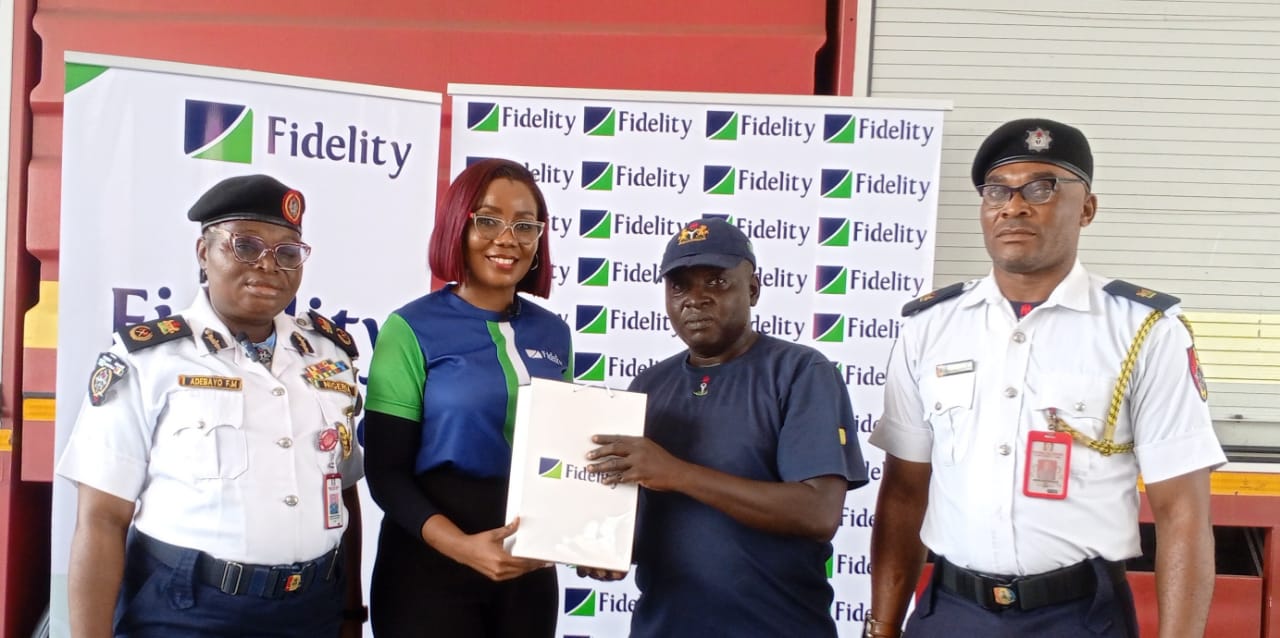
Fidelity Bank Plc has donated firefighting and preventive equipment, including hoses and gasoline-powered water pumps, to the Ikoyi Fire Service Station in Lagos, reinforcing efforts to improve emergency response and promote community safety.
The donation was executed under the Fidelity Helping Hands Programme (FHHP) by the bank’s True Serve team. Through the initiative, Fidelity Bank employees identify critical community needs, raise funds, and receive matching financial support from the bank to implement impact-driven projects.
Speaking on the initiative, Divisional Head, Brand and Communications Division at Fidelity Bank, Dr Meksley Nwagboh, said the intervention reflects the bank’s commitment to public safety, environmental protection, and sustainable community development.
“Community safety is a shared responsibility. Fidelity Bank remains committed to supporting initiatives that protect lives, property, and the environment,” Nwagboh said, adding that preventive measures remain more effective than emergency responses.
He noted that providing the right tools to first responders aligns with the bank’s broader goal of enabling people to live safe, meaningful, and empowered lives.
Lagos State Controller of the Federal Fire Service, Controller of Fire (CF) Funke Adebayo, commended Fidelity Bank for the timely support, particularly as the festive season approaches amid dry weather conditions that heighten fire risks.
She urged residents to remain vigilant and warned parents against allowing children to handle fireworks during celebrations, stressing that careless handling of fire could lead to avoidable disasters.
Adebayo also disclosed that the Fire Service has intensified sensitisation visits to corporate organisations to promote fire safety and discourage unsafe practices.
Also speaking, Area Commander, Onikan Fire Station, Chief Superintendent of Fire (CSF) Oswere Michael, expressed appreciation for the donation, noting that it would strengthen the station’s operational capacity.
He encouraged households, businesses, and community members to prioritise fire safety, describing collective responsibility as critical to preventing fire outbreaks.
Fidelity Bank Plc is a full-fledged commercial deposit money bank serving over 9.1 million customers through its digital platforms, 255 business offices across Nigeria, and its UK subsidiary, FidBank UK Limited. The bank has received multiple local and international awards in recognition of its performance in digital transformation, MSME banking, and innovative financial services.
Photo – L-R: Lagos State Controller, Federal Fire Service, CF (Controller of Fire), Adebayo Funke; Tolulope Rojaiye, Marketing Business Partner, Fidelity Bank Plc; Assistant Superintendent of Fire, Ishola Folorunsho Olufemi; and Station Commander, Onikan Fire Station, Lagos, Okeke Ferdinand; during the donation of firefighting equipment to the Federal Fire Service at Ikoyi, Lagos, recently.


