
Business
The Real Story: FirstBank Debunks Misleading Report

- /home/rhoncare/pointblank.ng/wp-content/plugins/mvp-social-buttons/mvp-social-buttons.php on line 27
https://pointblank.ng/wp-content/uploads/2019/06/FirstBank-2-1000x600.jpg&description=The Real Story: FirstBank Debunks Misleading Report', 'pinterestShare', 'width=750,height=350'); return false;" title="Pin This Post">
- Share
- Tweet /home/rhoncare/pointblank.ng/wp-content/plugins/mvp-social-buttons/mvp-social-buttons.php on line 69
https://pointblank.ng/wp-content/uploads/2019/06/FirstBank-2-1000x600.jpg&description=The Real Story: FirstBank Debunks Misleading Report', 'pinterestShare', 'width=750,height=350'); return false;" title="Pin This Post">
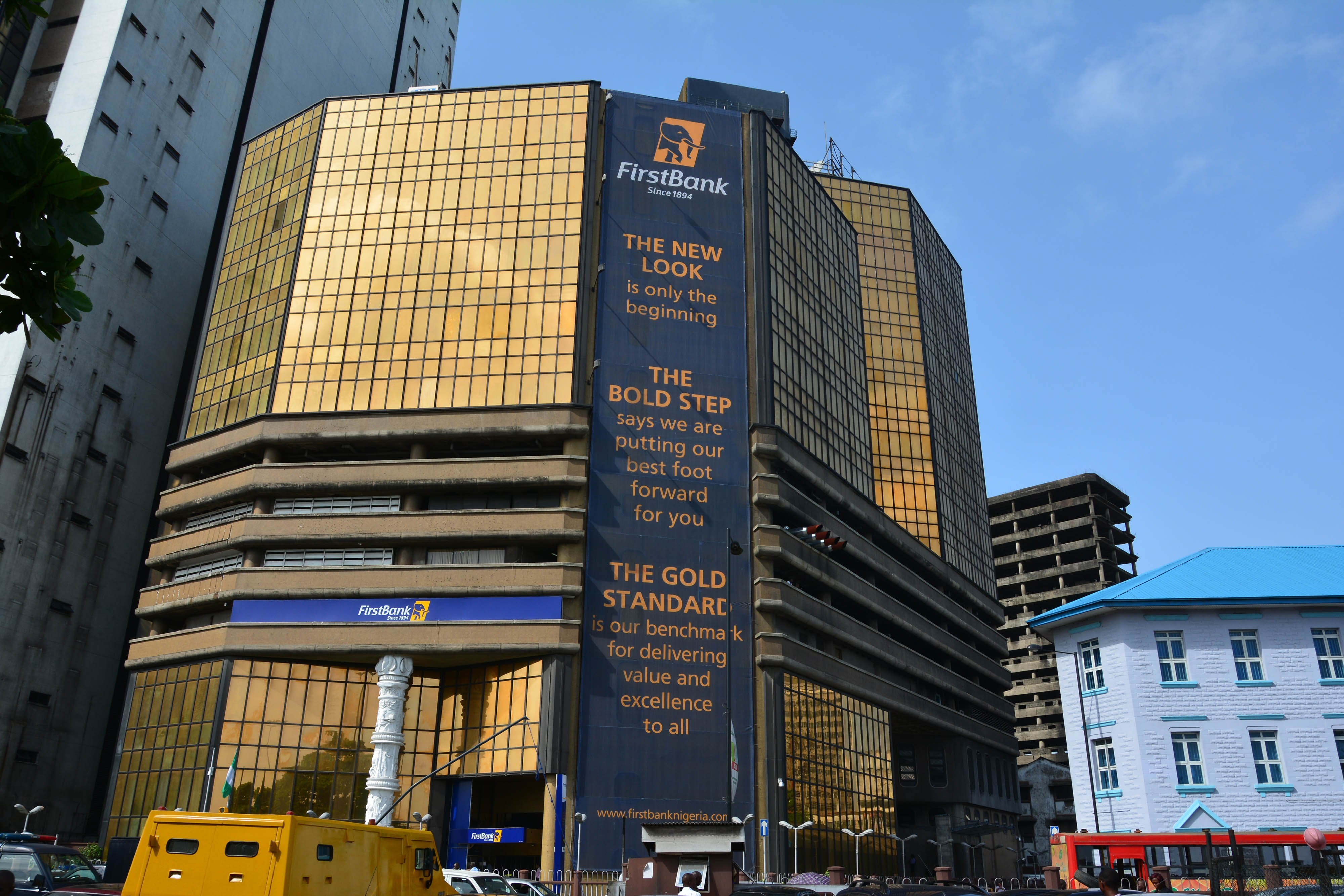
Leading financial institution, FirstBank of Nigeria Limited, has debunked reports making the rounds as regards its transaction with General Hydrocarbons Limited, which has become a subject of litigation.
In a statement by the management, and made available to Pointblank.ng, the bank insisted that it has been on the right side of the law while assuring customers, stakeholders and friends of the bank of its unflinching stand in the provision of first class services. It also expressed its appreciation to subscribers for holding faith with the parent body, FirstHoldco in the first round of its capital raise.
The full statement is represented below:
Our attention has been drawn to recent media reports regarding a commercial transaction between First Bank of Nigeria Limited (FirstBank) and General Hydrocarbons Limited (GHL) that is currently a subject of litigation.
As a responsible and law-abiding corporate citizen of Nigeria with utmost respect for the courts, FirstBank will not be able to offer comments on issues which are pending for determination by the courts, as such issues are sub-judice.
However, we are constrained to issue the following clarifications to correct the sponsored but false narratives on the matter presented in some of the media publications.
There is a subsisting commercial transaction between FirstBank as lender, and GHL as borrower, where FirstBank extended several credit facilities to GHL for the development of some Oil Mining Lease assets.
These facilities are backed by very robust loan agreements executed by the parties in which the obligations of the parties are clearly defined and the security arrangement clearly spelt out.
While FirstBank has diligently performed its obligations under the loan agreements, at the root of the present dispute is FirstBank’s demand for good governance and transparency in the transaction, which GHL rejected.
Upon FirstBank’s realization of breaches on the part of GHL including diversion of proceeds, FirstBank requested that an independent operator mutually acceptable to both parties be appointed in line with the terms of the agreement, to operate the financed asset in a transparent manner that will bring greater visibility to the project, protect the interest of, and bring value to all stakeholders. Not only did GHL roundly reject this reasonable and fair request, rather GHL insisted that FirstBank avails it with more funding. GHL refused to execute the terms of offer stipulated by the Bank for the availment of additional funding but rather proceeded to commence needless Arbitral proceedings.
GHL issued a notice to initiate arbitration and has no substantive claim pending at the Federal High Court. GHL approached the Federal High Court solely to seek preservative orders pending arbitration. Some of the preservative orders sought by GHL were granted while others were denied.
FirstBank is the only party that filed a substantive claim against GHL at the Federal High Court and the subject matter of FirstBank ‘s claim is not identical with the dispute GHL submitted to arbitration because FirstBank’s claim is in respect of subsequent credit facilities granted to GHL and the offer letters and finance documents pertaining to the subsequent transactions clearly state that the disputes arising from the subsequent facilities are to be resolved by a court of competent jurisdiction in Nigeria and not by arbitration.
Consequently, it is incorrect to assert that FirstBank abused the process of the court.
GHL off-took crude from the Floating Production Storage and Offloading (FPSO) vessel and diverted the proceeds. The Bank had no choice as a secured lender, under these circumstances of continued breaches, non-payment of due obligations and attempts to shield the Bank away from agreed security and repayment sources, than to approach the court for legal remedies, to preserve assets, recover the diverted proceeds, prevent reoccurrences and safeguard FirstBank’s interest. It is clear to us that the courts do not support or protect illegalities and breaches of contracts.
FirstBank has a long and very rich history of supporting and providing for the financial needs of its customers over its more than 130 years of unbroken existence. FirstBank remains committed to ensuring that it continues to support legitimate business aspirations of its teeming customers. At the same time, FirstBank is committed to the building of a strong credit culture where borrowers pay their debts when they borrow and will always take appropriate steps, within the ambit of the law, to resist attempts by borrowers to repudiate their repayment obligations.
We wish to assure FirstBank’s numerous customers, stakeholders and the general public that FirstBank remains solid, calm, steadfast and unflinching in its resolve to continue to provide first-class services to its teeming customers within and outside the country.
FirstBank also wishes to respectfully thank our shareholders for the indicatively oversubscribed Rights Issue of its parent Company, First Holdco Plc (“FirstHoldco”), in the first round of its capital raise and looks forward to an equally successful final leg of the recapitalization exercise when it is announced by FirstHoldco.


Business
Dangote Refinery Surpasses Nameplate Capacity, Strengthens Nigeria’s Energy Security, Export Position
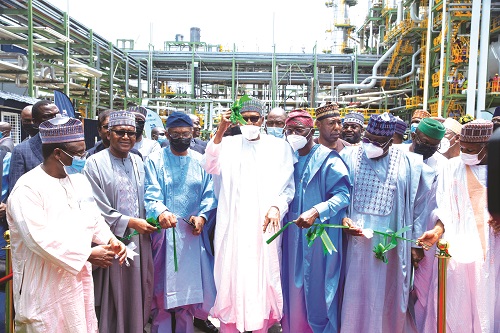
Dangote Petroleum Refinery has achieved a significant operational milestone, recording an average capacity utilization of 105.21 percent in August 2026, according to data released by the Nigerian Midstream and Downstream Petroleum Regulatory Authority (NMDPRA).
The 700,000 barrels-per-day refinery processed an average of 736,470 barrels of crude oil per day in August, a substantial increase from 497,000 barrels per day in July when utilization stood at 71 percent.
The strong performance was supported by a rebound in domestic crude oil supply, with deliveries rising by 16.75 percent to 683,000 barrels per day during the month, enabling the refinery to ramp up throughput.
The improved throughput translated into average daily production of 84.43 million litres of refined white products, including Premium Motor Spirit, PMS, Automotive Gas Oil, AGO or diesel, and Aviation Turbine Kerosene, ATK, further reinforcing its role as a major supplier of refined petroleum products across Nigeria and the wider West African region.
Speaking on the development, the Dangote Group said the achievement underscores the refinery’s growing contribution to Nigeria’s energy security, foreign exchange conservation, and industrial growth agenda.
The refinery continued to significantly reduce Nigeria’s dependence on imported petroleum products during the review period. Domestic PMS deliveries from the refinery rose by 39 percent month-on-month to 35.87 million litres per day in August, accounting for approximately 71 percent of total domestic petrol supply.
The increased local supply contributed to a sharp decline in fuel imports, with national PMS imports falling by 26 percent to 14.60 million litres per day, highlighting the refinery’s expanding impact on the domestic fuel market.
Beyond meeting a significant portion of Nigeria’s domestic fuel requirements, the refinery also strengthened the country’s export profile through robust shipments of refined products.
In August, the refinery exported an average of 9.73 million litres of PMS daily, alongside 8.75 million litres of diesel and 21.30 million litres of aviation fuel. These volumes further support Nigeria’s emergence as a net exporter of refined petroleum products and contribute to increased foreign exchange earnings for the country.
The refinery’s growing production capacity was particularly evident in the diesel market, where domestic AGO deliveries averaged 12.37 million litres per day. This level of output substantially reduced the need for imported diesel, with national diesel imports declining from 7.90 million litres per day in July to 1.30 million litres per day in August.
The development reflects the refinery’s increasing ability to support critical sectors of the economy, including transportation, manufacturing, agriculture, telecommunications, and power generation.
According to the Group, the ability to operate above nameplate capacity demonstrates the efficiency, reliability, and resilience of its operations. The milestone also reinforces investor confidence as the refinery’s ongoing public offering continues to attract significant market attention.
Dangote Group reiterated its commitment to maximizing local value addition, supporting economic diversification, and ensuring the sustainable supply of high-quality refined petroleum products to Nigeria, Africa, and global markets.
The road to the 2026 Zenith Bank NBBF Women’s Basketball League title reaches its climax as eight top teams converge on Lagos for the highly anticipated National Finals.
The finals will hold from September 28 to October 3, 2026, at the Indoor Sports Hall of the National Stadium, Surulere, Lagos.
Emerging from fiercely contested Atlantic and Savannah Conference campaigns, Nigeria Customs, AS Sky Queens, Titans, Air Warriors, MFM, First Bank, Victoria Queens, and Bayelsa Blue Whales have booked their place in the battle for national honours.
Last year’s champions, Dolphins Basketball Club, who lifted the trophy after defeating First Bank in the final, will not be in contention this year after failing to make the top four of the Atlantic Conference. Their absence leaves the title wide open for a new champion.
The trophy will however be contested by teams with rich championship pedigree. First Bank, last year’s finalist and the most successful team in the history of the competition, arrives with a record nine league titles, while MFM will be banking on its recent dominance after winning back-to-back championships in 2023 and 2024.
It is a level of competition that reflects the growth of a league that has, for more than two decades, provided a platform for Nigeria’s best female basketball talents to emerge, compete and develop. At the heart of that journey has been Zenith Bank, the sole sponsor of the National Women’s Basketball League since 2005.
Through its partnership with the Nigeria Basketball Federation (NBBF), Zenith Bank has consistently supported the development of women’s basketball, helping to provide and sustain a competitive platform where talents can be discovered, nurtured and prepared for the highest level of the sport.
The league has also served as a vital pathway to the National Women Basketball team, D’Tigress, with several players who have featured prominently for Nigeria emerging from the domestic competition.
Beyond the national team, the league continues to contribute to youth development by giving young female athletes the opportunity to build confidence, skill, discipline, teamwork and professional sporting careers.
For Zenith Bank, the sponsorship of the Women’s Basketball League represents more than support for a sporting competition.
It reflects the Bank’s broader commitment to creating platforms that provide opportunities, develop potential and make a meaningful difference in the lives of young Nigerians.
This commitment extends across several areas of community development, with notable initiatives including the reconstruction and beautification of Ajose Adeogun Street and Roundabout, the annual Zenith Bank Youth Parade and Light-Up Ceremony, the construction of ICT Centres in tertiary institutions across the country, and the construction of the ultra-modern Iga Iduganran Primary Healthcare Centre, among others.
Through these initiatives and its longstanding support for women’s basketball, Zenith Bank Plc continues to demonstrate that its commitment to society goes beyond banking, with a focus on creating opportunities and contributing to the development of communities and the next generation.
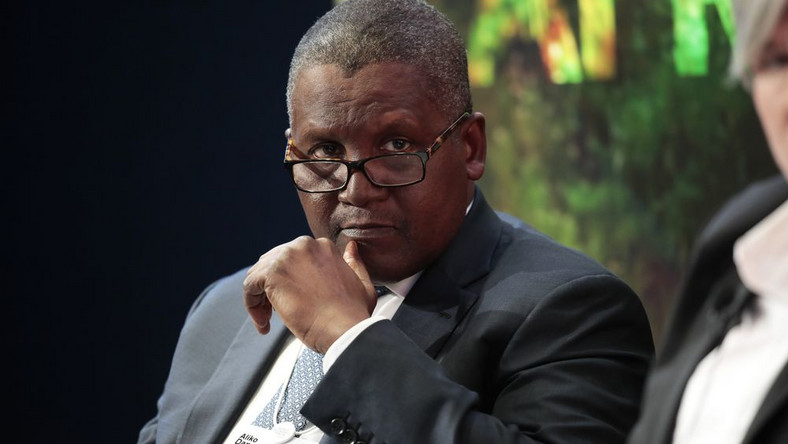
Africa’s richest man, Aliko Dangote, has revealed that he would be investing over $10 billion dollars in the coming years to tackle the power crisis in Nigeria and drive industrialisation.
He spoke during an interview with Al Jazeera, where he identified inconsistent government policies and inadequate electricity supply as major challenges discouraging Africans from investing in the continent.
He disclosed that the group is considering redirecting funds from certain businesses, including steel, towards electricity generation and other power-related investments.
“And I’m telling you in the next three to four years, there will be a major transformation in Africa, and that’s why we’re looking at power. We are going to invest in power. There are one or two businesses that we might cancel, like steel, and we will put the money in power. We want to invest over $10billion alone in power.”
He expressed concern that more than 600 million Africans continued to live without electricity, describing the situation as one that the continent must address, saying, “We Africans should not really allow over 600 million of our people to remain in darkness.”
The industrialist linked electricity supply to economic development and argued that governments that successfully deliver power to their citizens may not need to go for campaigns again during elections.
“You know, if some politicians work hard and have a plan, when you deliver power, you don’t need to go for a campaign when you’re going for an election. Power is key; we will never create growth without power. That’s why they say power is growth. When I say power, I mean electricity is growth.”
He said Africa would be unable to create jobs and achieve sustainable economic growth without industrialisation, stressing that the continent must reduce its dependence on imported goods.
On what some are saying about not investing in Africa, he said: “The problem really is, it takes two to tango. I think in the past, there’s been a lot of flip-flops in government policies. Government policies are changing every day, and then, the lack of electricity is also there.
“So, these two issues haven’t gone away. They are still there. But for some of us that really mean business, we are here, and we know that yes, without our intervention, Africa will never be able to create jobs. If there’s no industrialisation, how do you create jobs? You can’t,” he said.
Dangote warned that Africa could eventually lack the financial resources to continue importing the goods it consumes, making industrial development and local production necessary for the continent’s future.
“One day we will not have money to import what we are consuming. So how can we remain an import continent? It has to change. But that change can only happen when Africans believe in Africa, and they invest in Africa,” he stated.
According to the businessman, a growing number of investors are showing interest in supporting African businesses because of the opportunities available on the continent. He added that his investment approach was focused on spreading wealth, expanding participation in businesses and strengthening corporate governance.
“We want to make sure it’s about spreading the wealth. It’s about getting more people in the business. It’s also about corporate governance. So that’s the direction.”
Responding to accusations that his business activities were creating a monopoly, Dangote said he would remain focused on his objectives rather than be distracted by his critics.
He used football star Lionel Messi as an example, explaining that a player must concentrate on the ball rather than the audience while playing.
“Well, you know, if I’m going to listen to that, have you ever seen a footballer looking at the audience? He has to continue looking at the ball. If I’m Messi, for example, I’m kicking the ball, and I’m looking at the audience, do you think I won’t miss the ball? I will miss the ball,” he stated.
Dangote argued that people would not always be satisfied with the activities of businesses, adding that accusations of monopoly would not stop him from pursuing his investment plans.
“If I’m going to make my continent great and people want to call me a monopoly for no reason, so be it. I mean, it’s not going to reduce the colour of my face or whatever. You can call me whatever you want to call me; I didn’t stop anybody; it is an opportunity given to everybody, every one of us has that opportunity whether Africans, foreigners or whoever,” he stressed.
He said the government had not granted his businesses exclusive rights to operate in any sector, maintaining that opportunities were available to investors who were willing to participate.
“There’s nothing that the government gave us and say, ‘this is only for Dangote ’. The government will create a policy around a sector, and they will blow a whistle and say, ‘ Yes, this is it,” he noted.
Using a 100-metre race as an illustration, Dangote said investors who had chosen not to participate should not blame those who entered and won.
“If there’s a 100-metre race, some people were on the bench while I’m on the track, and I agreed to run that race, and I won that race alone, are you going to blame me or are you going to blame people who just sat on the bench?” he asked.
The businessman added that businesses and individuals needed to believe in Africa and invest in its development if they want to benefit from the continent’s economic opportunities.
“They’re not ready, they’re not prepared, they don’t even believe in Africa itself. If you don’t invest, you are not going to get fruit of that labour,” he replied to those accusing him of monopoly.


