
Metro
The Stewards of Liberty: How True Leadership Bears the Weight of Freedom


- /home/rhoncare/pointblank.ng/wp-content/plugins/mvp-social-buttons/mvp-social-buttons.php on line 27
https://pointblank.ng/wp-content/uploads/2025/08/DR.TOLULOPE-A.-ADEGOKE-AMBP-UN__-1-744x600.jpg&description=The Stewards of Liberty: How True Leadership Bears the Weight of Freedom', 'pinterestShare', 'width=750,height=350'); return false;" title="Pin This Post">
- Share
- Tweet /home/rhoncare/pointblank.ng/wp-content/plugins/mvp-social-buttons/mvp-social-buttons.php on line 69
https://pointblank.ng/wp-content/uploads/2025/08/DR.TOLULOPE-A.-ADEGOKE-AMBP-UN__-1-744x600.jpg&description=The Stewards of Liberty: How True Leadership Bears the Weight of Freedom', 'pinterestShare', 'width=750,height=350'); return false;" title="Pin This Post">
By Tolulope A. Adegoke
Freedom is humanity’s greatest triumph. But every liberation comes with a hidden bill, and true leadership is defined by how we choose to pay it.
INTRODUCTION: THE UNSEEN PRICE OF OUR GREATEST VICTORY
Freedom is the anthem of our age. From the ballot box to the boardroom to the bedroom, we celebrate the expansion of choice and autonomy. We march for it, vote for it, and sacrifice for it. We have enshrined it in constitutions, encoded it in market regulations, and elevated it as the ultimate human aspiration. Yet, as we applaud each new victory of liberation, we have failed to open the liberty ledger—the silent accounting of what we owe in return. There is a debt we pay, not in currency, but in psychological exhaustion, corporate integrity, and national cohesion. And that debt is now coming due with alarming urgency.
This is not a call to abandon freedom. It is a call to mature beyond the adolescent fantasy that liberation is a one-time event. The truth, as history and contemporary experience demonstrate, is far more sobering. Freedom is not a finish line; it is a perpetual negotiation. Every act of emancipation—whether a nation throwing off colonial rule, a corporation breaking free from regulatory oversight, or an individual shedding the constraints of tradition—sets in motion a cascade of hidden liabilities. These liabilities, if left unacknowledged, metastasize into crises that undermine the very freedom they were meant to secure. True leadership, therefore, must be redefined. It is not measured by the freedom we acquire, but by the weight we bear to preserve it for those who follow.
PART I: THE PARADOX OF PERSONAL FREEDOM – LIBERATION WITHOUT ANCHORS
For the individual, never have we possessed more freedom. We can choose our careers, our relationships, our spiritual paths, and our identities with a latitude that would have been unimaginable to previous generations. Digital platforms connect us to global communities, and economic mobility offers opportunities once reserved for the privileged few. Yet, the data tells a profoundly unsettling story. The World Health Organization reports a 25% surge in anxiety and depressive disorders over the past decade, with young adults bearing the heaviest burden. Suicide rates have climbed in nearly every region of the developed world.
What is driving this contradiction? The answer lies in the erosion of external scaffolding. For millennia, human beings derived their sense of stability, identity, and purpose from traditional structures: family, faith, community, and inherited social roles. These structures provided pre-packaged life scripts. They answered fundamental questions—”Who am I?” “What is my purpose?” “Where do I belong?”—without requiring each individual to reinvent the wheel from scratch.
Liberation dismantled these scripts. In doing so, it granted unprecedented autonomy, but it also transferred the entire burden of existential meaning-making onto the individual. This is what existential philosophers like Jean-Paul Sartre and Viktor Frankl called the “burden of choice.” When we are free to become anything, we are also forced to become something—and that act of creation is terrifying.
The result is decision fatigue, chronic anxiety, and a gnawing sense of inadequacy. Social media amplifies this crisis by presenting a relentless parade of curated perfection, encouraging perpetual comparison and self-doubt. Ironically, freedom from prejudice and tradition has birthed new forms of self-imposed tyranny: the pressure to be perfectly curated, professionally agile, and perpetually happy. We have produced a generation that is free from external chains but enslaved to internal dissonance. This is the hidden cost of personal liberation—and it is a crisis that demands a leadership response.
True leadership in the personal sphere begins with the recognition that autonomy without emotional intelligence is a ship without a rudder. We must institutionalize emotional literacy, teach decision-theory in schools, and destigmatize therapy as a routine practice of self-maintenance. We must also revive what sociologists call “third spaces”—public libraries, community gardens, intergenerational mentorship hubs, and cultural centers—that offer belonging without coercion. These spaces serve as psychological moorings, anchoring us against the storm of radical autonomy. Mental health first aid must become as routine as physical health screenings. This is not a soft indulgence; it is a strategic investment in human capital and social stability.
PART II: THE CORPORATE LEDGER – WHEN MARKET FREEDOM BECOMES MARKET LICENSE
For corporations, freedom has historically been synonymous with market liberalization, deregulation, and shareholder primacy. The victory of corporate liberation—from the Gramm-Leach-Bliley Act of 1999 to the global proliferation of private equity—has catalyzed extraordinary innovation. We have witnessed technological revolutions, global supply chains, and wealth creation on an unprecedented scale. Yet, the hidden cost manifests as strategic myopia and systemic ethical erosion.
When oversight is removed, corporate entities frequently conflate freedom with license. The results are not abstract theoretical concerns; they are catastrophic realities. Consider the BP Deepwater Horizon disaster, which was not merely an engineering failure but a failure of leadership culture—a culture that prioritized speed and cost-cutting over safety and environmental stewardship. Consider the gig-economy revolution, which has created remarkable flexibility but also a precarious underclass of workers without benefits, job security, or collective bargaining power. Consider the 2008 subprime crisis, which was not a natural disaster but a direct consequence of financial deregulation and the reckless pursuit of short-term profits.
Beyond these operational failures lies a deeper, more insidious cost: reputational fragility. A corporation freed from government anchors must now answer to a hyper-critical public, volatile social media campaigns, and activist shareholders—all within a relentless 24-hour news cycle. The very freedom to pivot strategies, downsize workforces, or relocate headquarters has cultivated a transactional culture devoid of loyalty. Short-term quarterly earnings systematically undermine long-term sustainable value. Leadership has become synonymous with quarterly performance, and stewardship has been replaced by speculative arbitrage.
The Edelman Trust Barometer consistently confirms this crisis. Over 60% of global citizens now distrust business leaders, viewing corporate freedom not as a gift but as a euphemism for unbridled greed. This erosion of trust is not a public relations problem; it is a leadership pathology. When trust collapses, everything collapses: employee engagement, consumer loyalty, investor confidence, and regulatory goodwill. The freedom to operate, it turns out, is contingent upon the social license to operate.
True leadership in the corporate sphere requires a fundamental shift from shareholder primacy to stakeholder stewardship. Corporations must legally restructure their charters to include explicit fiduciary duties not only to shareholders, but also to employees, communities, and the biosphere. This is not philanthropy; it is risk management. Companies that embed Environmental, Social, and Governance (ESG) metrics into executive compensation structures reduce long-term volatility and enhance brand resilience.
Furthermore, every major strategic decision—mergers, downsizing, new market expansions—must undergo a mandatory “hidden cost impact assessment” that quantifies psychological, social, and ecological externalities. This converts abstract moral costs into concrete, mitigable financial line items. Finally, corporations must co-create governance councils with civil society representatives and local government entities. By treating operational freedom as a perishable privilege that must be continuously earned, corporate leaders can transform hidden costs into competitive advantages, securing premium talent, investor confidence, and long-term market stability. This is the new fiduciary duty of modern leadership.
PART III: THE GEOPOLITICAL LEDGER – SOVEREIGNTY AS A DOUBLE-EDGED SWORD
For sovereign states, the ultimate victory is complete sovereignty—the freedom to chart foreign policy, manage national resources, and enforce legal frameworks without external interference. The dissolution of empires, the collapse of communist blocs, and the democratization of authoritarian regimes represent some of the most profound achievements of modern history. Yet, this victory incurs a crushing hidden cost: the absolute and unilateral responsibility for national security, economic stability, and social cohesion.
Historical evidence is instructive and sobering. Post-colonial transitions across Africa and Asia frequently produced not prosperity but civil war, ethnic conflict, and economic disintegration. Post-communist transformations in Eastern Europe witnessed the dissolution of social safety nets, the rise of oligarchic capitalism, and a generation of disillusionment. Even mature democracies, such as the United States and the United Kingdom, have experienced the “weight of victory” in the form of polarized legislatures, deteriorating public infrastructure, and fiscal insolvency. When a nation is liberated from imperial or authoritarian control, it inherits a broken bureaucracy, a fragmented civil society, and a hollowed industrial base. The liberation may be political, but the reconstruction is existential.
The most profound cost is the maintenance of legitimacy. Unlike dictatorial regimes that rule by coercion, free nations must govern through consent—a process that is inherently messy, resource-intensive, and slow. Electoral processes, judicial appeals, public consultations, and independent media consume enormous fiscal and emotional capital. Furthermore, the freedom to select alliances, trade partners, and defense strategies creates perpetual geopolitical anxiety. The nation that was once a pawn is now a player—yet every strategic move carries the risk of diplomatic isolation, economic sanctions, or military confrontation.
The ultimate tragedy is the dissolution of collective purpose. Freedom from a common enemy often fractures national unity. The United States, following the Cold War, experienced a crisis of national purpose that persists to this day. The Soviet Union’s dissolution left many post-Soviet republics in economic chaos and identity vacuums. The Arab Spring, which was celebrated globally as a democratic awakening, descended into devastating civil wars in Libya, Syria, and Yemen. Freedom, without a unifying narrative, becomes a centrifugal force that tears nations apart. Leadership, in this context, must provide not only liberty but meaning.
True leadership in the national sphere requires strategic statecraft and adaptive governance. Nations must institutionalize four interconnected pillars. First, constitutional resilience mechanisms: constitutions should incorporate “circuit breakers” for political polarization—including mandatory national dialogues, citizen assemblies, and independent fiscal councils—that intervene during periods of acute crisis. Second, national unity covenants: rather than relying on external threats for consolidation, nations must forge cross-partisan “prosperity pacts” centered on measurable, bipartisan objectives such as energy independence, universal digital access, and healthcare equity. Third, regional integration with safeguards: the singular burden of sovereignty can be shared through supranational frameworks like the European Union, ASEAN, or the African Union, but integration must be predicated upon subsidiarity—ensuring that local identities and national legislative autonomy are preserved. Fourth, national resilience funds: every liberated nation should establish a sovereign wealth fund that sequesters a fixed percentage of resource revenues specifically for systemic shocks—pandemics, climate catastrophes, cyber-attacks, and demographic collapse. These pillars transform the weight of sovereignty from a crushing burden into a sustainable framework for enduring prosperity.
PART IV: ONE LEDGER, THREE COLUMNS – THE INTERCONNECTED CRISIS
It is critical to recognize that the hidden costs for peoples, corporates, and nations are not discrete or isolated. They are dynamically interlocking. When a corporation exploits its market freedom to maximize quarterly profits, it destabilizes national labor markets, exacerbates income inequality, and intensifies individual psychological distress. When a nation asserts its sovereignty through aggressive foreign policies, it disrupts global supply chains, destabilizes corporate logistics, and propagates civilian anxiety. Conversely, when an individual exercises freedom irresponsibly—through excessive consumption or financial imprudence—it fuels corporate extraction and depletes national fiscal reserves.
This systemic entanglement means that fragmented, sector-specific solutions are inherently insufficient. A holistic resolution requires a tripartite compact—a legally and ethically binding agreement among the state, the market, and the citizenry. This compact must enshrine the foundational principle that freedom is a form of stewardship, not a conditional entitlement. Leadership, at every level, must recognize that liberty is a trust—a trust that requires careful management, transparent accounting, and unwavering commitment to the common good.
PART V: THE LIBERTY LOAD INDEX – A GLOBAL MEASURE FOR LEADERSHIP ACCOUNTABILITY
Imagine a global benchmark—a Liberty Load Index—that assesses how well a nation or corporation balances freedom with resilience. This index would measure three critical variables: psychological burden (mental health prevalence, suicide rates, and life satisfaction scores); corporate accountability (ESG compliance, ethical breach records, and workforce satisfaction); and national stability (fiscal health, political polarization, and infrastructure quality).
Nations and corporations that achieve a healthy “sweet spot”—where freedom is responsibly balanced with resilience—would receive preferential access to international development financing, improved sovereign credit ratings, and expedited trade agreements. Conversely, entities exhibiting “freedom fatigue”—high liberty indices but low resilience scores—would be mandated to participate in internationally supported stewardship reconstruction programs. This is not socialism; it is prudent global risk management. It is also the hallmark of mature leadership on the world stage.
CONCLUSION: THE VICTORY OF MATURITY
The hidden cost of freedom is, at its core, the price of collective maturity. Children demand liberty without understanding its consequences; adults accept it as a package deal with obligations. For centuries, humanity has fought to liberate itself from external tyrants, monopolies, and empires. Yet, the next frontier of struggle is not against external oppressors. It is against the internal atrophy, fragmentation, and fatigue that inevitably follow liberation.
By objectively recognizing, quantitatively measuring, and systematically addressing the psychological, strategic, and geopolitical weights that accompany victory, global leaders can transform these hidden costs from silent ravagers into visible architects of sustainable progress. The solution is not to abandon freedom—such a regression would be existential folly. The solution is to carry the weight with dignity and institutional intelligence, to construct systemic support structures that distribute the burden equitably, and to instill in every citizen, executive, and statesman a profound truth: that true leadership is not merely the right to choose—it is the wisdom to choose well, with foresight, responsibility, and collective solidarity.
In doing so, humanity converts a hidden cost into a hidden strength. We transform a heavy burden into a proud badge of enduring stewardship. And we ensure that the victory of delivering freedom to peoples, corporates, and nations is not a fleeting historical euphoria, but a permanent, prosperous, and peaceful inheritance for all generations yet to come.
Dr. Tolulope A. Adegoke, AMBP-UN is a globally recognized scholar-practitioner and thought leader at the nexus of security, governance, and strategic leadership. His mission is dedicated to advancing ethical governance, strategic human capital development, resilient nation building, and global peace. He can be reached via: tolulopeadegoke01@gmail.com, globalstageimpacts@gmail.com


Metro
International Day of the Girl-Child: Pad Me A Girl Foundation Holds Menstrual Health Outreach in Ogun

The Pad Me A Girl Empowerment Foundation has taken its menstrual health campaign to Igbesa High School (Junior), in Ado-Odo/Ota Local Government Area of Ogun State, providing free sanitary pads, menstrual hygiene pamphlets, exercise books and pens to over 100 schoolgirls to promote menstrual health, dignity and education.
The outreach, held on Wednesday, October 21, commemorated the 2026 International Day of the Girl Child, whose global theme is “End Child Marriage and Invest in Girls’ Rights!”
The programme brought together girls from Junior Secondary School (JSS) 1 to 3 who participate in the school’s reading clubs for mentorship, reading activities and menstrual health education.
It was convened by Oyelami Yetunde Anuoluwapo and Blessing Kappo, teachers and Teach For Nigeria Fellows at the school, following an appeal for sanitary products, learning materials and health education support. The Foundation’s founder, Theresa Moses, responded by providing the requested items and facilitating an interactive session on menstrual hygiene management.
Speaking at the event, Moses said she was inspired by the girls’ determination and aspirations, stressing the need for sustained investment in their health, education and future.
“Invest in girls and Nigeria will rise. Every girl deserves dignity, education and the right to dream beyond child marriage. That is why we are here; to ensure no girl misses school because of her period,” she said.
She emphasised that access to menstrual hygiene products and accurate information helps girls manage their periods confidently and participate fully in school activities.
In a letter of appreciation, Oyelami and Kappo described the outreach as impactful and inspiring, noting that it enhanced the girls’ understanding of menstrual health, hygiene and self-confidence. They also said the support would help promote the students’ hygiene, school attendance and dignity.
“You did not just give pads; you gave our girls confidence and hope,” the teachers wrote on behalf of the school community, expressing gratitude to the Foundation and hope for future collaboration.
Mrs Amarachi Eze, Assistant Divisional Commissioner of the Nigerian Girl Guides Association, Ado-Odo/Ota, Ogun State Branch, also commended the Foundation for supporting the girls’ hygiene needs and development.
“We sincerely appreciate the Management of Pad Me A Girl Foundation for joining hands with the Association in supporting our girls on hygiene management. May God Almighty continue to uplift your foundation. Thanks for joining hands in the development of girls in our schools. Bravo,” she said.
The Foundation’s Media Coordinator, Mr Oluwatosin Simon Faleye, called on corporate organisations, non-governmental organisations and well-meaning Nigerians to support initiatives that address period poverty and help girls remain in school.
“For over a year, we have been committed to ending period poverty and keeping girls in school. We call on corporate organisations and well-meaning Nigerians to support this cause for the betterment of Nigeria,” Faleye said.
The celebration also featured a student drama presentation highlighting the effects of child marriage, alongside reading and mentorship activities designed to encourage the girls to understand their rights, value their education and pursue their aspirations.
The Foundation also acknowledged the continued support of its sponsors and partners, including Access Bank, Pro Star Sports International, BL Consulting, Vita Baites Foods, Checkers, Senator Ireti Kingibe, representing the Federal Capital Territory (FCT) in the 10th Nigerian National Assembly, the Senate Committee on Women Affairs (SCOWAS), as well as individuals and media organisations whose contributions have supported its broader mission of ending period poverty, promoting menstrual health education and empowering girls and women.
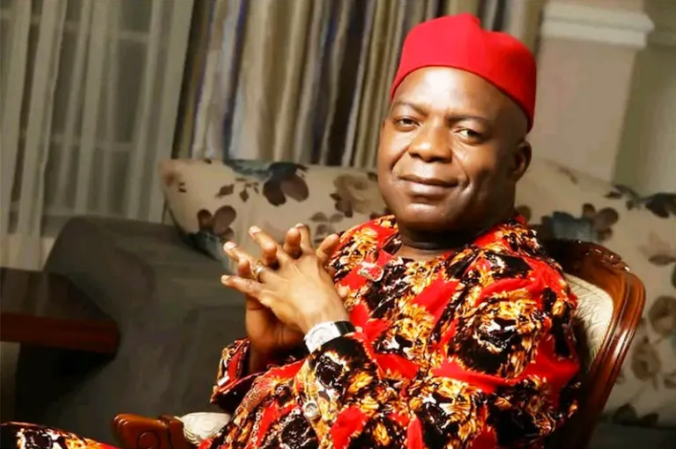
Abia State governor, Alex Otti, is set to flag off the reconstruction of Uratta Road and Old Express Road in Aba, two major routes which poor condition has disrupted transportation, commercial activities and access to residential communities for years.
The governor’s media aide, Ferdinand Ekeoma, in a statement on Wednesday, said that work on the roads has begun ahead of the scheduled official flag-off.
The two roads are considered important to Aba’s commercial and industrial activities, with Uratta Road connecting several adjoining streets to Port Harcourt Road and Old Express Road. At the same time, Old Express Road serves as a key route within the city’s industrial layout.
Ekeoma said the roads had suffered neglect for more than 24 years, leaving some sections impassable and forcing residents and businesses to contend with difficult transportation conditions.
According to the statement, Uratta Road provides access to more than 100 adjoining streets. Its poor condition has affected residents, traders and small-scale manufacturers who depend on the road to transport goods and access their businesses.
The statement said the road had become waterlogged and overgrown with weeds, discouraging commercial motorcycle and tricycle operators from using it.
Similarly, the deterioration of Old Express Road forced heavy-duty truck operators, fabric merchants, spare-parts dealers and small businesses to use longer routes, increasing transportation costs and affecting productivity.
The government said the road reconstruction is part of its broader effort to restore Aba’s infrastructure and strengthen the city’s commercial base.
Aba, one of southeastern Nigeria’s major commercial centres, hosts manufacturing clusters, markets, and small and medium-sized enterprises that depend heavily on functional roads to move raw materials and finished products.
The government said the reconstruction would improve market access, reduce transportation costs, facilitate the movement of goods, and support businesses operating along the affected corridors.
Ekeoma cited the reconstruction of Port Harcourt Road as an example of the administration’s infrastructure programme, noting that improved road access encouraged shops to reopen, attracted manufacturing activities and increased property rents along the corridor.
The government also said the new projects would complement other road interventions in Aba, including works on Ohanku and Obohia roads, as part of efforts to improve connectivity within the commercial city.
Beyond road construction, the administration said its projects include drainage systems, solar-powered streetlights, and pedestrian walkways, which it described as necessary to improve safety, accessibility, and flood resilience.
Ekeoma said Governor Otti views infrastructure development as an economic strategy rather than merely a construction programme, arguing that better roads would help businesses operate more efficiently and create employment opportunities.
He also quoted the governor as saying at an earlier church event that his administration is shifting attention from basic infrastructure improvements to healthcare, education, technology and industrialisation.
The governor, a former bank chief executive, was elected in 2023 on the Labour Party platform, defeating candidates from the major established parties in a state historically dominated by the Peoples’ Democratic Party.
Otti has remained in the Labour Party despite the defection of its 2023 presidential candidate, Peter Obi.
His administration has made rehabilitating Aba roads and public infrastructure central to its governance agenda, presenting the city’s recovery as essential to reviving economic activity across Abia State.

MILO Nigeria, in partnership with former Nigerian national team captain and MILO Brand Ambassador Ahmed Musa, has concluded the inaugural MILO × Ahmed Musa Sports Clinic and Tournament in Kano, providing 2,500 young footballers with professional coaching, mentorship and competitive football experience.
Over two weeks, participants took part in 10 coaching sessions and competed in matches under the guidance of Ahmed Musa and experienced coaches. The programme combined practical football training with lessons in teamwork, discipline, resilience and confidence, equipping participants with skills and values that extend beyond the pitch.
The initiative culminated in a tournament at the Ahmed Musa Sports Complex in Kano, where Khamis Football Academy emerged as champions of the inaugural edition. Participants also received cash prizes, certificates and football equipment.
Speaking on the initiative, Gilbert Tweneboah-Koduah, Category Lead, MILO, said: “At MILO, we believe sport is a powerful platform for young people to discover their abilities, build confidence and develop values that extend beyond the field of play. Our partnership with Ahmed Musa brings together MILO’s longstanding commitment to sports development and the experience of an athlete whose journey from grassroots football to the highest level of the game can inspire the next generation. By combining his experience with structured coaching and competition, this programme has given young footballers in Kano an opportunity to develop their skills, learn from experienced professionals and better understand the commitment required to pursue their aspirations.”
For the participants, the clinic offered an opportunity to learn from an athlete whose football journey began in northern Nigeria and progressed to the highest levels of the sport, making his experience a source of inspiration for aspiring players.
Commenting on the partnership, Ahmed Musa said: “Nigeria has incredible football talent, but talent alone is not enough. Young players need good coaching, regular competition and people who will guide them. I am proud to partner with MILO and share some of what football has taught me. My message to these players is simple: keep training, listen to your coaches and work hard every day to improve.”
Musa also called for greater investment in grassroots football, emphasizing the importance of giving young players access to quality coaching, structured development and regular competitive opportunities.
The MILO × Ahmed Musa Sports Clinic and Tournament builds on MILO’s longstanding commitment to youth development through sports in Nigeria. Through its school-based and grassroots sporting initiatives, MILO continues to create opportunities for young people to participate in sports, develop their abilities and embrace values that can support them both on and off the pitch.


