
Headlines
There’s Need to Recruit 50m Youths into Military, Police – Tinubu

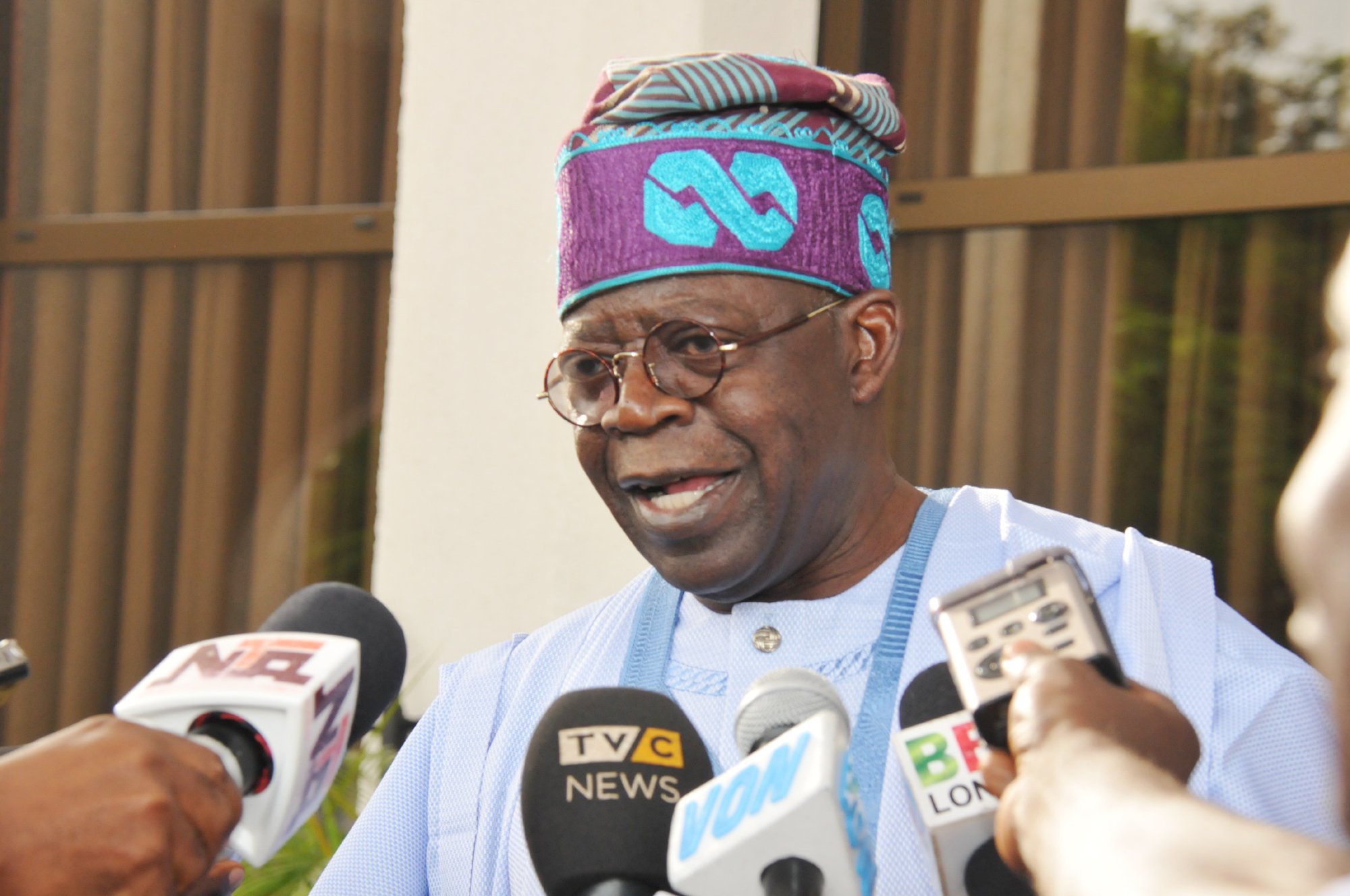
Amidst an array of tributes before and during his 69th birthday colloquium, former Lagos State Governor and National Leader of the ruling All Progressives Congress (APC), Asiwaju Bola Ahmed Tinubu has cautioned the Federal Government against inflicting stiffer economic policies on Nigerians, stating that citizens were already going through devastating pressure occasioned by the administration’s economic management.
Tinubu said: “What Nigerians need is economic stimulus and not austerity measures capable of driving Nigerians deeper into poverty.”
Asiwaju, who lamented the country’s unemployment rate, which stood at 33 per cent, said the country is competing with bandits to recruit unemployed youths, while he proposed immediate recruitment of 50 million youth to fill the acute shortage in the military and police.
The former Governor of Lagos State said: “Nigeria is under-policed. We are competing with armed robbers and bandits to recruit from the youths who are unemployed. Nigeria’s unemployment rate recently hit a new record high at 33.3 per cent in the fourth quarter of 2020.
“With the high unemployment rate, some have feared that many youths who are out of jobs might turn to social vices and ills including banditry in northern parts of the country. It is time for the Buhari administration to address the situation so as to improve the standard of living of the citizens. Something must be urgently done to salvage the country.
“Let’s do a lot of things at home to create jobs. We find very creative minds on social media. Let us salute our youths.
Yes, they (youths) are angry but we will pacify them. We need to pacify our youths otherwise the consequences could be dangerous. What we did in Lagos could be replicated across the country.”
Tinubu, however, cautioned against constant youth agitation, which he claimed might be a vital ground for dangerous revolution.
He disclosed that the shift of his annual colloquium to Kano was deliberately considered to strengthen Nigeria’s unity and promote peaceful co-existence across the country regardless of divergent views.
Making reference to the marriage of the daughter of Kano State Governor, Abdullahi Ganduje, to the son of the late ex-Oyo State Governor, Abiola Ajimobi, which took place in Kano in 2018, he asked: “Why are we in Kano? It is to demonstrate unity to Nigerians at this critical time. It is because there is a Fulani man, a herder who gave his daughter to a farmer, Yoruba man.”
Tinubu, who appreciated his host, Governor Ganduje, said by hosting the event in the northwest state, he and the governor have demonstrated that a firm Nigeria is possible, going forward.
President Buhari said occasional tensions in the nation’s history characterised by diversity of ethnicity, culture, language and religion, notwithstanding, Nigerians are better off and stronger together, especially at a period the corporate existence of the country is being challenged by ethnic diversity and agitation for self-determination.
The president, who commended the celebrant for always being an advocate of unity and cohesion in Nigeria, said: “This has been a constant factor in his outstanding political career, from the time he served in the short-lived senate of the Third Republic to his involvement in the struggle for the actualisation of the June 12 mandate of the late Chief MKO Abiola, to his much-acclaimed period of service as Governor of Lagos State from 1999 to 2007.
“The ranks of Asiwaju’s political collaborators, whether as party members, comrades in the struggle, members of his cabinet, or his advisers, assistants and political associates, have always reflected a pan-Nigeria attitude. I believe all of us here can also confirm that the same outlook of Asiwaju Bola Tinubu and other like-minded Nigerians eventually made possible the coalition of four political parties into what we now see as our great party, the All Progressives Congress,’’ he said.
President Buhari noted that the objectives of the colloquium, which seeks to provide answers to national issues, further reflect the personal principles of Asiwaju Tinubu in promoting the unity and welfare of the country.
“I can also relate personally to the ideals of one Nigeria. As a military officer, I have served with great comrades from all the nooks and crannies of our country. I have seen over and over again that their goodness or failings did not depend on ethnicity or religion.
“More importantly, I fought for the unity of Nigeria during the civil war of 1967 to 1970, and I saw first-hand the unspeakable horrors of war, not just on fellow soldiers on both sides, but on the civilians: innocent children, women and elderly citizens that they left behind. As we all know, the peace-building, recovery and reconstruction that followed could also not have succeeded under an atmosphere of inter-ethnic animosity.”
This message of unity was also corroborated by the Vice President, who said the country needs “a growing new tribe of Nigerians that are willing to make the sacrifices and self-constraints crucial to building a strong society, and are prepared to stick together, fight for equity and justice.
“This would be my first colloquium where I will not be physically present at the venue. Several of us did the best we could from Abuja to get to Kano this morning, but bad weather certainly gave us so much difficulty that we were unable to fly there,” he disclosed.
According to the VP, despite the various socio-economic challenges worsened by the fallouts of a global pandemic, he urged Nigerians to avoid stoking tendencies, viewpoints and opinions that threaten the federation and its unity.
Participants also used the occasion to advocate for a renewed national integration and genuine rebirth to purge Nigeria from a looming ethnic and religious fragmentation.
Keynote speaker, Prof. Dani Rodrik, who contended that infusion of social conflict is not necessarily destined to ravage any society, however suggested inter-ethnic equity, spatial integration and encompassing politics as solution to peace.
The professor of international political economy from Harvard University noted that inequality and lack of economic inclusion among diverse ethnic groups remain major cause of instability and acrimony in Nigeria. He tasked political leaders to ensure wide spread of resources to check growing disaffection in the country.
The don added that if anything, democracy is better in handling diversity than authoritarian regime. “Democracy provides more economic stability. Africa provides two important examples of this claim. Mauritius and Botswana.
Mauritius was wrecked in the first time by ethnic crisis but good leadership addressed the situation.
“Democratic form of governance is better than authoritarian government. It was proven during the Covid-19 lockdown. Democracy is not only about election but protecting the rights of the people, including the minority group.”
In his comment, Acting National Chairman of APC, Governor Mai Mala-Buni, said the colloquium is with a difference because it demonstrated the sense of unity in Nigeria. According to him, “We are demonstrating a great leader and a bridge builder. I also salute Ganduje for demonstrating the true sense of unity by hosting the event.
Gbajabiamila said many successful politicians today in the country owe their gratitude to God and of course to the vessel God used to bring them up, which is Tinubu. “I do not know of any man in Nigeria either living or dead that dreams, talks and thinks politics 24 hours everyday like Asiwaju. I don’t know anybody with such capacity.”
The Guardian


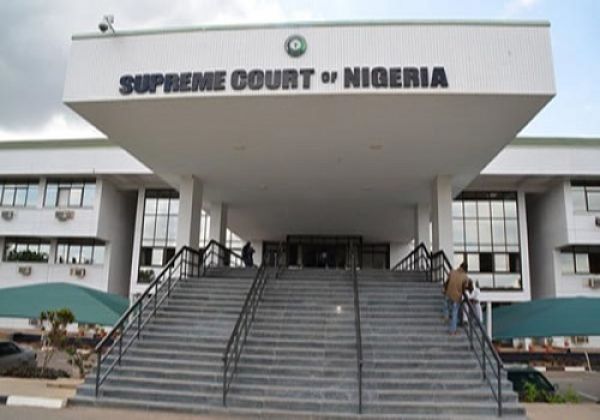
The Supreme Court has reserved its judgment in the appeal filed by the Taminu Turaki-led group of the Peoples’ Democratic Party (PDP) seeking to overturn the judgment of the Court of Appeal, which nullified the conduct of the party’s national convention, held last year in Ibadan, Oyo State.
A five-member panel of the apex court announced on Wednesday that its judgment would be delivered on a date to be communicated to all parties in the appeal.
Justice Garba Mohammed, who led the five-member panel, made the announcement shortly after lawyers representing parties in the appeal adopted their processes as briefs of their arguments for and against the appeal.
The appeal was filed by the Turaki-led group’s national executives of the party who emerged from the convention.
They had approached the apex court to challenge the judgment of the Court of Appeal, which had nullified the convention for being held in disobedience of a valid order of the court.
While adopting their brief of argument filed on April 2, the appellants, through their team of lawyers led by Paul Erokoro (SAN), urged the Supreme Court not only to allow their appeal but also to dismiss a cross-appeal lodged against them by a leadership group in the party aligned with the Minister of the Federal Capital Territory (FCT), Nyesom Wike.
Meanwhile, Lamido, who was represented by J. C. Njikonye (SAN), as well as the Wike-backed group represented by Joseph Daudu (SAN), filed preliminary objections seeking dismissal of the appeal.
The respondents insisted that, contrary to the contention by the Turaki-led group, the appeal did not fall within the sphere of the PDP’s internal affairs.
It was the respondents’ position that both the high court and the appellate court had rightly exercised jurisdiction over the matter.
Justice Peter Lifu of the Federal High Court in Abuja, in a judgment last year, restrained the then-Ambassador Iliya Damagum-led National Executive Committee of the PDP from proceeding with the convention slated for November 15 and 16, 2026, in Ibadan, Oyo State.
Justice Lifu had ordered that the convention should not hold until an aspirant to the office of national chairman, former Jigawa State Governor Sule Lamido, is allowed to purchase interest and nomination forms to enable him to participate in the convention for the election of national officers.
The party, however, went ahead to conduct the convention in disregard of the orders of the court.
The PDP had predicated its action to conduct the convention on the grounds that the court lacked the jurisdiction to stop the convention, as the issue brought before it was an internal matter of the PDP, which no court has jurisdiction to delve into.
However, the appellate court in its judgment last month disagreed that the issue at the trial court was an internal affair of a political party, which courts cannot entertain.
The three-member panel of the appellate court subsequently nullified the outcome of the convention for being held in disobedience to the orders of the Federal High Court, Abuja.
Dissatisfied, the PDP approached the apex court, praying it to accept the appeal against the lower court judgment, set the judgment aside, and hold that the issue was an internal matter of the PDP, which both the Court of Appeal and the Federal High Court lacked jurisdiction to entertain.
However, the respondents in the appeal urged the court to dismiss the appeal for lack of merit and hold otherwise.
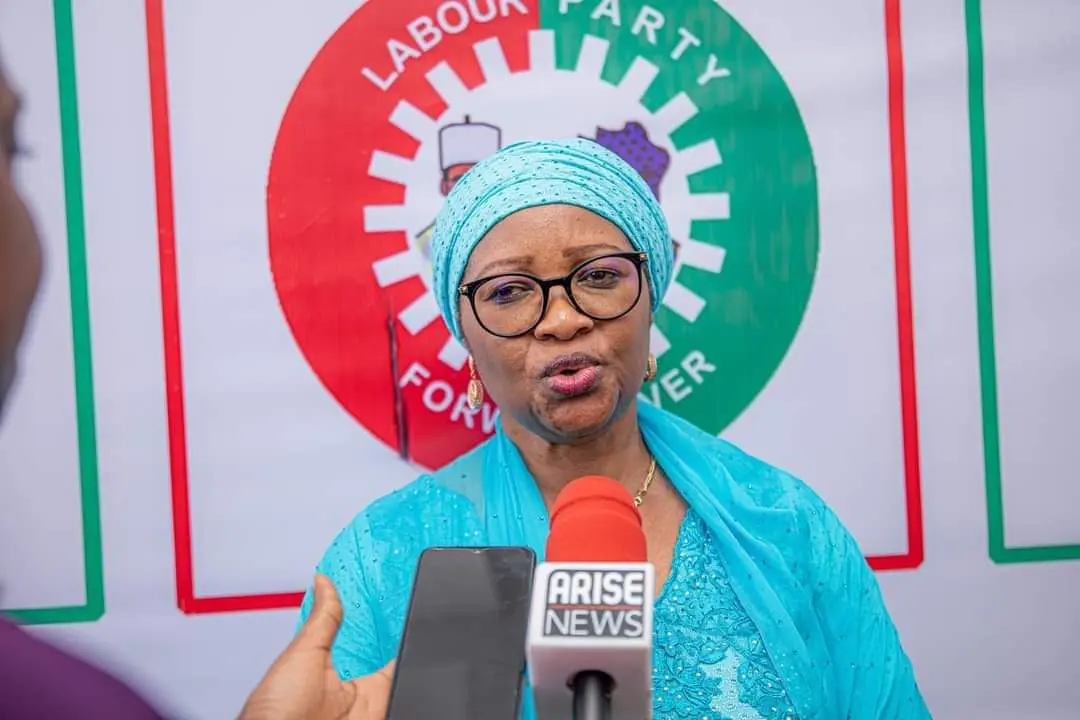
The Court of Appeal in Abuja has dismissed the appeal filed by Julius Abure challenging the legitimacy of the Nenadi Usman-led leadership of the Labour Party (LP).
A three-member panel of the appellate court, in a Tuesday judgment, unanimously affirmed the January 21 judgment by Justice Peter Lifu of the Federal High Court in Abuja, which upheld the legitimacy of the 29-member caretaker committee of the LP, led by Senator Usman.
In the lead judgment delivered by Justice Oyejoju Oyewumi, which Justices Abba Mohammed and Eberechi Nyesom-Wike agreed with, the appellate court held that the earlier Supreme Court judgment conclusively settled the leadership dispute within the LP by nullifying the convention that purportedly returned Abure as National Chairman.
Justice Lifu had, in the January 21 judgment, relied on an April 4, 2025, decision of the Supreme Court, which held that Abure’s tenure as the party’s National Chairman had expired. The judgment directed the Independent National Electoral Commission (INEC) to recognize Senator Usman and other members of her committee as the legitimate leaders of the party, to the exclusion of all others.
The court further held that the lower court had the power under Section 251 of the Constitution to compel a statutory Federal government agency to perform its functions when it ordered INEC to recognize Senator Nenadi Usman as the National Chairman of the Labour Party.
It was equally agreed with the trial court that constituting the LP’s caretaker committee, headed by Usman, was a doctrine of necessity required to provide leadership in the party when a vacuum appeared to exist.
The court faulted Abure’s claim that the trial court denied him a fair hearing and accused him of abusing the court process.
The court also accused Abure of forum shopping by appearing before the Nasarawa State High Court in a case already decided by the Supreme Court, and of persisting in the claim the party’s leadership despite the apex court’s clear and unambiguous pronouncement.
It held that the appeal, marked: CA/ABJ/CV/255/2026, was devoid of merit and constituted an abuse of court process.
“On the whole, I agree with the decision and conclusion of the trial court as the same, being in accordance with the Constitution,” Justice Oyewumi held, adding that the lower court reached a reasonable conclusion that the Court of Appeal cannot fault.
While dismissing the appeal, the court awarded him costs of N10 million for wasting the court’s time on an issue that had already been conclusively determined.
Earlier, the court held that Nenadi Usman, as a juristic person, had the right to file the case before the trial court, and that the trial court had jurisdiction to hear and determine the case.
The court also rejected Abure’s allegation that the lower court denied him a fair hearing, noting that the claim lacked any basis.
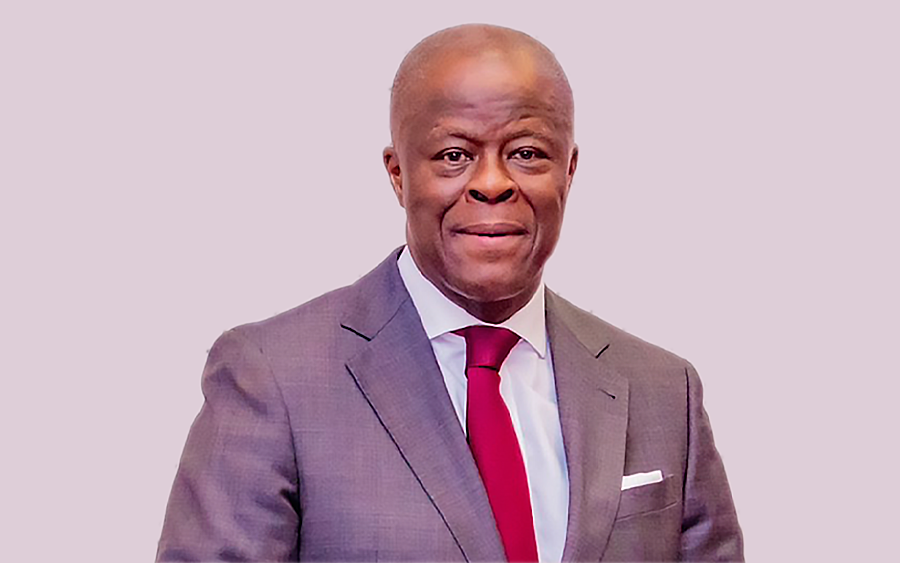
President Bola Tinubu has approved a minor cabinet reshuffle in the membership of the Federal Executive Council (FEC).
According to a memo signed by the Secretary to the Government of the Federation, Senator George Akume, two cabinet members, Mr. Wale Edun and Arc. Ahmed Musa Dangiwa are to leave the cabinet while their replacements have been named.
A statement signed by the Special Adviser, Media and Publicity to the Secretary to the Government of the Federation, Yomi Odunuga, on Tuesday evening, said Edun, until the latest development, was the Minister of Finance and Coordinating Minister for the Economy.
“He has been directed to hand over to Mr. Taiwo Oyedele, who is now to take over as Minister of Finance and Coordinating Minister of the Economy. Oyedele was formerly a Minister of State in the ministry.
“Also Mr. Muttaqha Rabe Darma (PhD.) has been named as the ministerial nominee and minister-designate for the Housing and Urban Development Ministry,” Odunuga stated.
The memo also directed Dangiwa to hand over to the Minister of State in the ministry pending Darma’s confirmation.
The memo stated that “all handing over and taking over processes should be completed on or before close of business on Thursday 23rd April, 2026.”
Explaining the President’s decision, Odunuga quoted Akume as saying: “These changes are aimed at strengthening cohesion, synergy in governance as well as achieving more impactful delivery on the economy to Nigerians, through the Renewed Hope Agenda.”
He said the President, in approving the cabinet reshuffle, has fully exercised his powers as conferred on him by Sections 147 and 148 of the Constitution of the Federal Republic of Nigeria (1999, as amended).
The President thanked the outgoing ministers for their services to the nation while wishing them the best in all their future endeavours.
The President, Akume noted, equally assured all cabinet members that “the process of reinvigoration shall be continuous.”


