Connect with us

Headlines

Tinubu Gives Self Pass Mark, Says Nigeria on the Rise Under His Leadership

Published

on

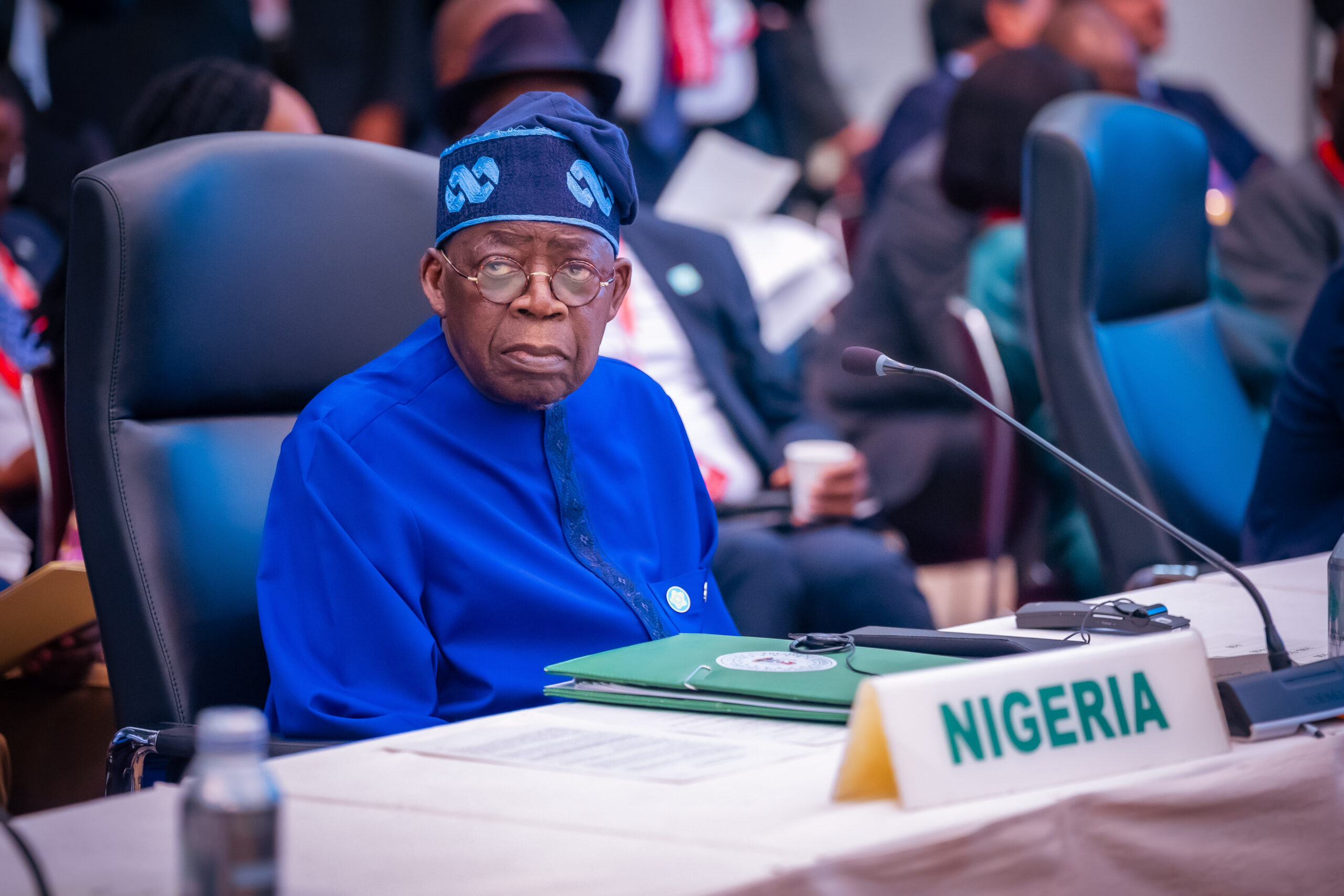
President Bola Tinubu has said that Nigeria is on the rise again under his leadership, while reiterating that leadership is about “thinking and doing” — blending visionary ideas with practical actions to drive stability, unity, and growth.

Tinubu said this on Thursday at Kahala Hotel and Resort, Yokohama, Japan, during an interactive meeting with select members of the Nigerian community on the sidelines of the ongoing Tokyo International Conference on African Development (TICAD9).

The meeting, which brought together professionals and entrepreneurs across various fields, allowed the President to share his administration’s achievements and assure them of his commitment to drive economic growth.

The President who expressed delight at meeting called on Nigerians in the Diaspora to contribute their expertise and resources to consolidating national development and building a stronger and more prosperous country.

He also expressed his delight at meeting those he described as a vibrant representation of Nigeria’s diversity, assuring the Diaspora community that his government is determined to make the country conducive for all citizens.

He noted significant improvements in passport issuance, making the process seamless for residents and the Diaspora. He reaffirmed his administration’s priority to create an environment where every Nigerian can feel the positive impact of change.

“I am happy to listen to you. I’m happy to report that many of our people are returning home. Yes, for economic reasons, some people might decide to stay away; it’s a fundamental right of the individual, but for the economic growth and opportunity available in Nigeria, don’t stay away. Your contribution is very much needed. If you stay away, who will build it?” the President asked.

President Tinubu stressed that national development cannot be left to the government alone; it requires a shared sense of responsibility between citizens at home and those abroad.

He urged the Diaspora community to remain ambassadors of the country by projecting Nigeria positively in their engagements abroad.

“If we don’t join hands and work together, then we’ve lost the hope of being the leaders we are supposed to be,” he cautioned.

He reminded his audience that the strength of citizenship is not only in holding a Nigerian passport but in character and commitment to the nation’s progress.

According to him, negative portrayals of Nigeria do little to advance the cause of development and discourage the investment and partnerships the country needs.

Regarding the economy, Tinubu assured that his administration has stabilised key fundamentals and is driving reforms to unlock immense opportunities for investment and job creation.

He said the government has also reversed the trend of medical tourism by upgrading healthcare infrastructure and expanding access to quality services at home.

The President invited the Minister of State for Industry, Senator John Enoh, and the executive vice chairman of NASENI, Khalil Suleiman Halilu, to speak on the government’s programmes and achievements. Wale Tinubu, the President’s nephew, provided insight into how the government’s reforms have impacted the economy positively by making businesses more competitive, attracting investment, and expanding the stock market.

Some of the Nigerians in Japan expressed their satisfaction with the pace of the government’s reforms, affirming their support. They also pledged to explore avenues for greater involvement in Nigeria’s economic and social transformation.

Mr. Emeka Ebogota, President of the Nigerian Union in Japan, thanked President Tinubu for finding time to meet with them.

He affirmed his members’ support for the administration’s efforts to reposition Nigeria.

Other notable attendees included John Ologbotsere, a Japanese national award winner for electrotechnical standardisation; Mr. Kingsley Kabuyashi, entrepreneur and investor; and businesspeople, doctors, and students.

Also present were the Minister of Foreign Affairs, Ambassador Yusuf Tuggar; Charge d’Affaires, Mrs. Florence Akinyemi Adeseke; Minister of Solid Minerals, Dele Alake; Minister of Regional Development, Abubakar Momoh; Minister of Science and Technology, Uche Nnaji; Minister of Budget, Atiku Bagudu; Minister of State for Finance, Doris Uzoka-Anite; the Director-General of the National Intelligence Agency, Ambassador Mohammed; senior government officials, and top private sector leaders.

Continue Reading
Advertisement


Click to comment

Leave a Reply

Your email address will not be published. Required fields are marked *

Headlines

Again, Iran’s Military Closes Strait of Hormuz

Published

on

Iran’s military, on Saturday, declared the Strait of Hormuz closed again, hours after reopening it and with more than a dozen commercial ships passing through the vital waterway.

The toing and froing over the strait cast doubt on US President Donald Trump’s optimism the day before, that a peace deal to end the US-Israeli war with Iran was “very close”.

Tehran had on Friday declared the strait, which usually carries a fifth of the world’s oil and liquefied natural gas, open on Friday after a ceasefire was agreed in Lebanon to halt Israel’s war with Hezbollah.

That prompted elation in global markets and sent oil prices plunging, but with Trump insisting that a US naval blockade of Iranian ports would continue until a deal was concluded, Tehran threatened to shutter the strait once more.

Then, late on Saturday morning, citing a statement from military central command, Iranian state TV reported that “control of the Strait of Hormuz has returned to its previous status” and “is under strict management and control of the armed forces”, blaming the continued US blockade.

The announcement came as maritime tracking sites showed several ships making a dash through the narrow waterway, hugging close to Iranian territorial waters as instructed by Tehran and, for some, broadcasting their identity as Indian or Chinese in an apparent attempt to show their neutrality.

The same sites showed that late on Friday, a number of ships began heading for the strait before suddenly turning back amid the uncertainty.

By 0900 GMT on Saturday, several ships had fully transited the strait in both directions, but at least two tankers headed eastwards from the Gulf towards India after loading in UAE ports appeared to have turned around and aborted their journeys.

There are just four days remaining before the end of the two-week ceasefire in the US-Israeli war with Iran, launched by Washington and its ally on February 28.

Nevertheless, President Trump appeared convinced that a deal could be finished shortly.

He declared Friday “GREAT AND BRILLIANT,” and made a series of social media posts praising talks mediator Pakistan.

Islamabad’s powerful military chief, Field Marshal Asim Munir, on Saturday finished a three-day visit to Iran aimed at securing the peace deal, during which he met Iran’s top leadership.

While Munir was in Iran, Pakistani Prime Minister Shehbaz Sharif visited Saudi Arabia, Qatar and Turkey to push the peace process.

Islamabad has emerged as the lead mediator during the conflict, hosting a marathon round of direct peace talks last weekend attended by US Vice President JD Vance.

A second round of talks is expected in the Pakistani capital this coming week, with envoys hoping to end the war that was started by the US and Israel on February 28.

The allies launched a massive wave of surprise attacks on Iran, despite Washington and Tehran being engaged in diplomatic talks, that killed Iranian supreme leader Ali Khamenei and numerous senior leaders.

The war rapidly spread across the region, with Iran targeting US interests in the Gulf and Hezbollah dragging Lebanon into the conflict by launching rockets at Israel.

In a sign that the two-week ceasefire remained stable, Iran’s civil aviation agency declared its airspace was open again, with international flights able to transit Iran via the east of the country.

Nevertheless, two major sticking points in the peace talks — Iran’s stockpile of near-weapons-grade enriched uranium and the future of the Strait of Hormuz — appeared up in the air.

Speaking by phone with AFP on Friday, Trump said “we’re very close to having a deal,” adding that there were “no sticking points at all” left with Tehran.

Later the same day, at an event in Arizona, the president declared that Iran had agreed to hand over its 440 or so kilogrammes of uranium enriched to 60 percent — close to that needed for a bomb.

“We’re going to get it by going in with Iran, with lots of excavators,” he said.

But hours before, Iran’s foreign ministry had said its stockpile, thought to be buried deep under rubble by US bombing in last June’s 12-day war, was not going anywhere.

“Iran’s enriched uranium is not going to be transferred anywhere,” Iranian foreign ministry spokesman Esmaeil Baqaei told state TV.

“Transfer of Iran’s enriched uranium to the US has never been raised in negotiations.”

Ordinary Iranians, meanwhile, remained cut off from the international internet, with monitor netblocks announcing on Saturday that the blackout implemented at the start of the war had reached its 50th day.

AFP

Continue Reading

Headlines

Dele Momodu Proposes Atiku/Obi Ticket As ‘Best Bet’ to Unseat Tinubu in 2027

Published

on

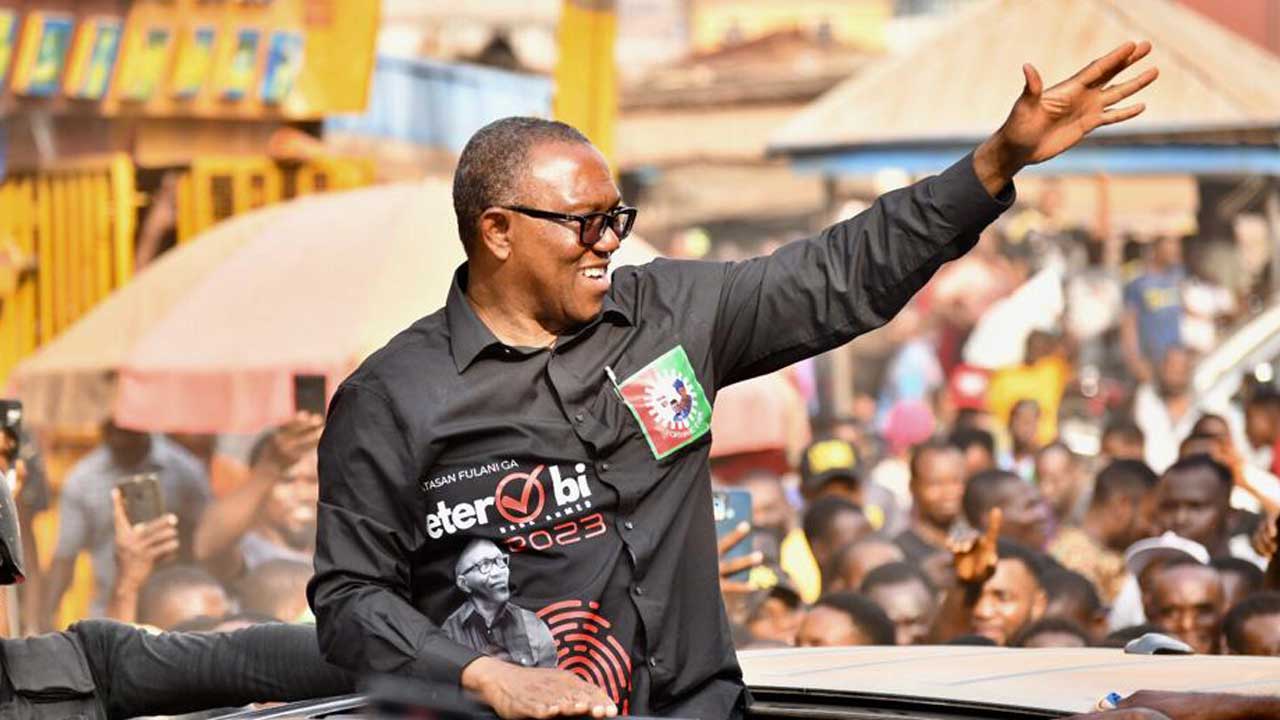
Veteran journalist and chieftain of the African Democratic Congress (ADC), Chief Dele Momodu, has declared that a joint presidential ticket between Atiku Abubakar and Peter Obi represents the strongest strategy for the opposition to defeat the ruling All Progressives Congress in the 2027 general elections.

Speaking on Politics Today on Channels Television, Momodu said the emerging ADC coalition is gaining momentum as a credible alternative to President Bola Tinubu’s administration, which he accused of promoting “one-man rule” and weakening democratic institutions.

Momodu argued that an Atiku–Obi ticket offers both experience and electoral appeal, noting that both politicians already command significant national followings from previous elections. He recalled their collaboration in 2019, adding that Obi’s performance in the 2023 presidential election provides a ready base of supporters that can be consolidated.

According to him, the coalition is further strengthened by the involvement of political heavyweights such as Rabiu Kwankwaso and Rotimi Amaechi, making it a formidable opposition alliance.

“The candidates who placed second, third, and even fourth are aligning. That naturally builds a strong challenge,” Momodu said, suggesting that this development could unsettle the APC ahead of 2027.

He also accused the Tinubu administration of centralising power and undermining democratic processes, claiming that key institutions—including the legislature and electoral system—are increasingly influenced by the executive arm of government. He warned that such a trend poses risks to Nigeria’s democracy.

Momodu further alleged that opposition parties face systemic obstacles, including difficulties in accessing venues, legal pressures, and institutional interference. He argued that these challenges have made opposition unity not just strategic, but necessary.

Dismissing concerns about possible cracks within the ADC coalition, Momodu described such fears as speculative, insisting that current political realities have effectively forced major opposition figures to work together.

Continue Reading

Headlines

Supreme Court Fixes April 22 for Hearing in ADC Leadership Crisis

Published

on

The Supreme Court has scheduled hearing for April 22 in the appeal filed by the National Chairman of the African Democratic Congress (ADC), Senator David Mark, in relation to the leadership dispute in the party.

Mark’s appeal is against the March 12 judgment of the Court of Appeal, which dismissed his appeal against the September 4, 2025 ruling by Justice Emeka Nwite of the Federal High Court in Abuja refusing to grant some injunctive reliefs contained in an ex-parte application filed by a chieftain of the party, Nafiu Bala Gombe.

A five-member panel of the Supreme Court, led by Justice Mohammed Garba chose the date on Tuesday after granting accelerated hearing in the appeal marked:  SC/CV/180/2026.

The court ordered Mark’s lawyer, Jibril Okutepa (SAN) to file the appellant’s brief and serve on Wednesday.

It ordered the respondents to each file and serve on the appellant, a respondent’s brief within three days of being served with the appellant’s brief.

The appellant, according to the court, is to file a reply brief, if needs be, within one day of being served with the respondents’ briefs.

Continue Reading