
Headlines
Tinubu in New Year Broadcast, Insists Policies in Best Interest of Nigerians (Full Text)


- /home/rhoncare/pointblank.ng/wp-content/plugins/mvp-social-buttons/mvp-social-buttons.php on line 27
https://pointblank.ng/wp-content/uploads/2023/06/Tinubu-signs-students-loan-bill-1280x720-1-1000x600.jpg&description=Tinubu in New Year Broadcast, Insists Policies in Best Interest of Nigerians (Full Text)', 'pinterestShare', 'width=750,height=350'); return false;" title="Pin This Post">
- Share
- Tweet /home/rhoncare/pointblank.ng/wp-content/plugins/mvp-social-buttons/mvp-social-buttons.php on line 69
https://pointblank.ng/wp-content/uploads/2023/06/Tinubu-signs-students-loan-bill-1280x720-1-1000x600.jpg&description=Tinubu in New Year Broadcast, Insists Policies in Best Interest of Nigerians (Full Text)', 'pinterestShare', 'width=750,height=350'); return false;" title="Pin This Post">
President Bola Tinubu has told Nigerians that despite the hardship presently being experienced, his policies are in the best interest of the country.
The President made the remarks during his New Year address on Monday.
Read below the full details of Tinubu’s speech:
Dear Compatriots,
It gives me immense joy to welcome each and every one of you – young and old- to this brand new year 2024. We must lift up our hands to Almighty God, in gratitude, for his grace and benevolence to our country and our lives in the year 2023 that has just gone by.
Though the past year was a very challenging one, it was eventful in so many ways. For our country, it was a transition year that saw a peaceful, orderly and successful transfer of power from one administration to another, marking yet another remarkable step in our 24 years of unbroken democracy.
It was a year, you the gracious people of this blessed nation, entrusted your faith in me with a clear mandate to make our country better, to revamp our economy, restore security within our borders, revitalise our floundering industrial sector, boost agricultural production, increase national productivity and set our country on an irreversible path towards national greatness that we and future generations will forever be proud of.
The task of building a better nation and making sure we have a Nigeria society that cares for all her citizens is the reason I ran to become your President. It was the core of my Renewed Hope campaign message on the basis of which you voted me as President.
Everything I have done in office, every decision I have taken and every trip I have undertaken outside the shores of our land, since I assumed office on 29 May 2023, have been done in the best interest of our country.
Over the past seven months of our administration, I have taken some difficult and yet necessary decisions to save our country from fiscal catastrophe. One of those decisions was the removal of fuel subsidy which had become an unsustainable financial burden on our country for more than four decades. Another was the removal of the chokehold of few people on our foreign exchange system that benefited only the rich and the most powerful among us. Without doubt, these two decisions brought some discomfort to individuals, families and businesses.
I am well aware that for some time now the conversations and debates have centred on the rising cost of living, high inflation which is now above 28% and the unacceptable high under-employment rate.
From the boardrooms at Broad Street in Lagos to the main-streets of Kano and Nembe Creeks in Bayelsa, I hear the groans of Nigerians who work hard every day to provide for themselves and their families.
I am not oblivious to the expressed and sometimes unexpressed frustrations of my fellow citizens. I know for a fact that some of our compatriots are even asking if this is how our administration wants to renew their hope.
Dear Compatriots, take this from me: the time may be rough and tough, however, our spirit must remain unbowed because tough times never last. We are made for this period, never to flinch, never to falter. The socio-economic challenges of today should energize and rekindle our love and faith in the promise of Nigeria. Our current circumstances should make us resolve to work better for the good of our beloved nation. Our situation should make us resolve that this new year 2024, each and everyone of us will commit to be better citizens.
Silently, we have worked to free captives from abductors. While we can’t beat our chest yet that we had solved all the security problems, we are working hard to ensure that we all have peace of mind in our homes, places of work and on the roads.
Having laid the groundwork of our economic recovery plans within the last seven months of 2023, we are now poised to accelerate the pace of our service delivery across sectors.
Just this past December during COP28 in Dubai, the German Chancellor, Olaf Scholz, and I agreed and committed to a new deal to speed up the delivery of the Siemens Energy power project that will ultimately deliver reliable supply of electricity to our homes and businesses under the Presidential Power Initiative which began in 2018.
Other power installation projects to strengthen the reliability of our transmission lines and optimise the integrity of our National grid are ongoing across the country.
My administration recognises that no meaningful economic transformation can happen without steady electricity supply. In 2024, we are moving a step further in our quest to restart local refining of petroleum products with Port Harcourt Refinery, and the Dangote Refinery which shall fully come on stream.
To ensure constant food supply, security and affordability, we will step up our plan to cultivate 500,000 hectares of farmlands across the country to grow maize, rice, wheat, millet and other staple crops. We launched the dry season farming with 120,000 hectares of land in Jigawa State last November under our National Wheat Development Programme.
In this new year, we will race against time to ensure all the fiscal and tax policies reforms we need to put in place are codified and simplified to ensure the business environment does not destroy value. On every foreign trip I have embarked on, my message to investors and other business people has been the same. Nigeria is ready and open for business.
I will fight every obstacle that impedes business competitiveness in Nigeria and I will not hesitate to remove any clog hindering our path to making Nigeria a destination of choice for local and foreign investments.
In my 2024 Budget presentation to the National Assembly, I listed my administration’s 8 priority areas to include national defence and internal security, job creation, macro-economic stability, investment environment optimization, human capital development, poverty reduction and social security. Because we take our development agenda very seriously, our 2024 budget reflects the premium we placed on achieving our governance objectives.
We will work diligently to make sure every Nigerian feels the impact of their government. The economic aspirations and the material well-being of the poor, the most vulnerable and the working people shall not be neglected. It is in this spirit that we are going to implement a new national living wage for our industrious workers this new year. It is not only good economics to do this, it is also a morally and politically correct thing to do.
I took an oath to serve this country and give my best at all times. Like I said in the past, no excuse for poor performance from any of my appointees will be good enough.
It is the reason I put in place a Policy Coordination, Evaluation, Monitoring and Delivery Unit in the Presidency to make sure that governance output improves the living condition of our people.
We have set the parameters for evaluation. Within the first quarter of this new year, Ministers and Heads of Agencies with a future in this administration that I lead will continue to show themselves.
Fellow Nigerians, my major ambition in government as a Senator in the aborted Third Republic, as Governor of Lagos State for eight years and now as the President of this blessed country is to build a fair and equitable society and close the widening inequality. While I believe the rich should enjoy their legitimately-earned wealth, our minimum bargain must be that, any Nigerian that works hard and diligent enough will have a chance to get ahead in life. I must add that because God didn’t create us with equal talents and strengths, I can not guarantee that we will have equal outcomes when we work hard. But my government, in this new year 2024 and beyond, will work to give every Nigerian equal opportunity to strive and to thrive.
For the new year to yield all its good benefits to us as individuals and collectively as a people we must be prepared to play our part. The job of building a prosperous nation is not the job of the President, Governors, Ministers, Lawmakers and government officials alone. Our destinies are connected as members of this household of Nigeria. Our language, creed, ethnicity and religious beliefs even when they are not same should never make us work at cross purposes.
In this new year, let us resolve that as joint-heirs to the Nigerian Commonwealth, we will work for the peace, progress and stability of our country. I extend this call to my political opponents in the last election. Election is over. It’s time for all of us to work together for the sake of our country.
We must let the light each of us carries – men and women, young and old – shine bright and brighter to illuminate our path to a glorious dawn.
I wish all of us a happy and prosperous year 2024.
May God continue to bless the Federal Republic of Nigeria.
Bola Ahmed Tinubu, GCFR
1 January 2024


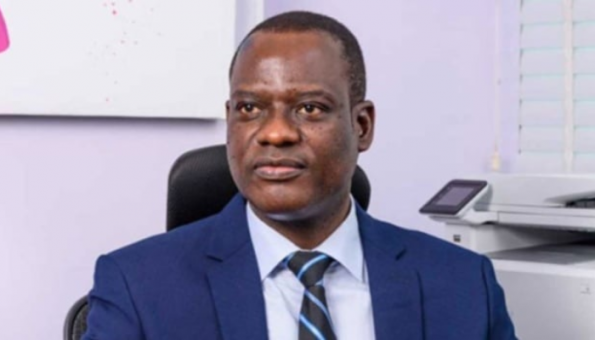
Minister of Finance and Coordinating Minister of the Economy, Taiwo Oyedele, has denied saying the Federal government will introduce a fuel tax when the economy stabilises and income levels improve.
In a post on X on Tuesday, Oyedele said his remarks during an interview with ARISE News was misrepresented, insisting that a “fuel tax is not on the table.”
However, during the interview with Rotus Odiri, ARISE News Business Correspondent, on the sidelines of the 2026 International Monetary Fund and World Bank annual meetings in Bangkok, Thailand, Oyedele said the tax would come when income levels improve enough for Nigerians to accommodate it.
He said taxes account for between 20 and 80 percent of pump prices in some countries, while many African countries impose between six and 10 different taxes on fuel products.
He said introducing fuel tax while petrol was still subsidised would have been counterproductive because government would effectively be paying the tax itself.
According to him, imposing the tax immediately after removal of petrol subsidy would be insensitive to Nigerians.
“The objective should be that instead of trying to suppress prices, which hasn’t worked for us, it hasn’t worked for any country in the world, not one. Instead of trying to suppress prices, think about how to grow income faster than prices rise,” Oyedele said.
“That’s how you bring prosperity and grow the middle class and that is exactly what we are doing as led by Mr. President himself.
“At the appropriate time, when the economy has stabilizes and income level will be able to accommodate it, those taxes will come. Not because we want to impose taxes,” he added.
In his Tuesday post, the minister reiterated that introducing a fuel tax at this time would be insensitive following removal of petrol subsidy, describing reports that government will introduce the levy when the economy stabilises as “fake news.”
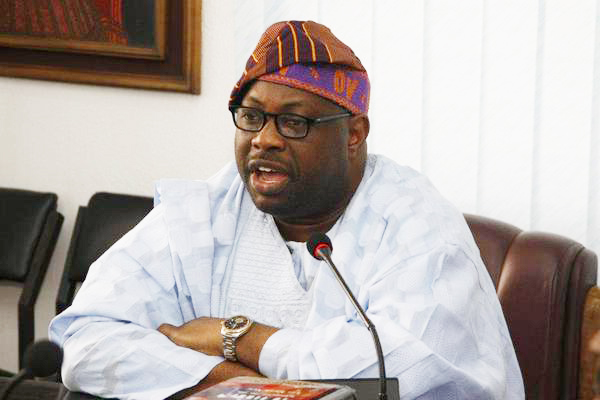
A chieftain of the African Democratic Congress (ADC), and Deputy Director of the Presidential Campaign Council, Chief Dele Momodu, has described former Vice-President Atiku Abubakar as the most nationally formidable and experienced among the leading contenders for the 2027 presidential election.
Momodu said Atiku’s experience at the national level distinguishes him from President Bola Tinubu and former Anambra State Governor, Peter Obi.
He stated this on Wednesday during an interview on Eagle 102.5 FM, Ilese-Ijebu, in Abeokuta.
“If you look at the antecedents of the three major candidates, between Atiku Abubakar and Peter Obi, you will see that Atiku is the most experienced. He has managed our country at the highest level,” he said.
Momodu traced Atiku’s political journey to the 1992 Social Democratic Party (SDP), presidential primary where he contested against late MKO Abiola and stepped down for him.
He said Atiku accepted the outcome without crisis even after he was not picked as Abiola’s running mate, describing it as a mark of true democratic temperament.
“He is the only one who started from around 1992, contested the SDP primary against Abiola and stepped down with uncommon equanimity. He did not make any noise,” Momodu said.
He noted that Atiku was among the founders of the Peoples Democratic Party, PDP, and served as Vice-President from 1999 to 2007.
Comparing Atiku with Obi, Momodu argued that while Obi’s best was demonstrated in Anambra, Atiku’s was at the presidency level managing the national economy.
“Peter Obi has tried his best in Anambra, while Atiku’s best is at the level of vice president controlling the economy of Nigeria. The difference is clear. He has matured in experience and exposure,” he said.
Momodu also said President Tinubu’s experience was largely limited to Lagos.
“What I’m trying to say is that Tinubu’s experience was limited to Lagos, and that is why when he became president, he thought Nigeria was Lagos. And he has found out now that Nigeria is not Lagos,” he said.
He argued that the current economic hardship under the present administration did not show prosperity, insisting Atiku remained better positioned to lead the country.
“Well, we are yet to see that prosperity, and if yesterday would determine today and tomorrow, it is obvious that Tinubu should retire now and let someone else do it,” Momodu added.
DailyPost
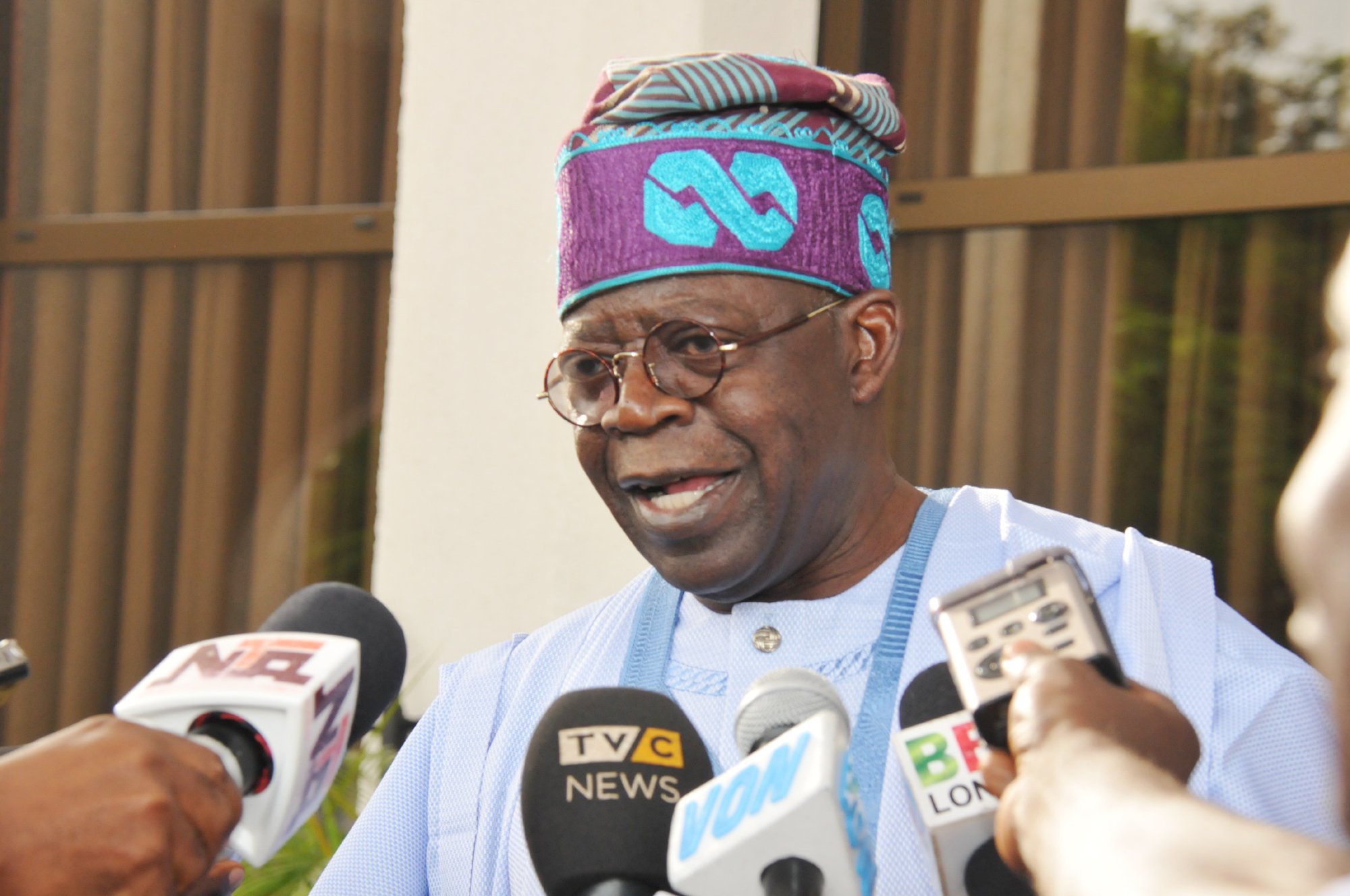
President Bola Tinubu says he has no regrets over the removal of petrol subsidy and other economic reforms introduced by his administration, insisting that Nigeria could not borrow its way to greatness.
Meanwhile, Minister of Finance and Coordinating Minister of the Economy, Taiwo Oyedele, has warned Nigerians against returning to petrol subsidy. He said the backtrack could trigger capital flight, undermining investor confidence and pushing the Naira to N3,000, N3,500 or even N4,000 per dollar.
But the Director of Media and Publicity of the African Democratic Congress (ADC) Presidential Campaign Council (PCC), Kola Ologbondiyan, challenged Oyedele to publish the economic model behind his warning that a return to fuel subsidy could push the naira to N4,000 per dollar.
The President spoke on Monday during the City Boys Movement retreat in Abuja, where he charged members of the group to mobilise support for his administration ahead of the 2027 general elections, insisting that the country’s future mattered more than the ambition of any individual candidate.
“No regrets,” Tinubu said, insisting that his administration would not be pushed back from its reform agenda.
He took a swipe at his political opponents, promising to restore the petrol subsidy, saying Nigeria could no longer afford to pay the fuel subsidy, and warning that reversing the policy would take the country back to an unsustainable economic path.
Defending his decision to remove the subsidy on his first day in office, Tinubu said the country was on the verge of financial collapse and could no longer afford the policy’s cost.
Tinubu also sought to reassure Nigerians about the direction of the economy, arguing that growth was steady and that the sacrifices associated with his reforms would ultimately offer citizens a future worth believing in.
Oyedele disclosed during a press briefing of the International Monetary Fund (IMF) and World Bank Annual Meetings in Bangkok, Thailand, yesterday, that investors had repeatedly questioned whether the government would abandon its reforms ahead of the next election cycle.
Ruling out the reversal of the government’s economic reforms, he maintained that any signal that Tinubu’s administration was contemplating or reinstating the subsidy would immediately affect financial markets, raise borrowing costs and worsen economic pressures on households.
“In all the meetings I have had, I came to a conclusion that the markets, including the domestic market, which you can read from the capital market, and the international market, have largely written off the opposition in Nigeria as unserious.
“If, for any reason, the President were to say we are merely considering the return of fuel subsidy, capital would react immediately, airfares would struggle, the naira would come under severe pressure, potentially moving towards 3,000, 3,500 or even 4,000.
The very fuel people want subsidised would become far more expensive in Naira terms,” Oyedele warned.
However, Ologbondiyan accused the Federal government of using fear to discourage debate on fuel subsidy, insisting that Nigerians deserve evidence, not alarming projections, on the potential economic consequences of restoring the policy.
Speaking to journalists, he described the minister’s warning as scaremongering and demanded that the government explain how it arrived at the projected exchange rate.
“The Minister of Finance is merely scaremongering. He cannot claim that a return to fuel subsidy will cause the naira to depreciate to N4,000 to the dollar without showing Nigerians the model behind that projection,” he said.
He questioned the reliance on investors’ concerns to oppose a subsidy’s return, challenging the government to identify the sources of the projections and disclose their calculations.


