
Headlines
Tinubu’s Govt Worse Than Buhari’s, Says Amaechi


- /home/rhoncare/pointblank.ng/wp-content/plugins/mvp-social-buttons/mvp-social-buttons.php on line 27
https://pointblank.ng/wp-content/uploads/2025/07/Rotimi-Amaechi-and-Bola-Tinubu2-1000x600.webp&description=Tinubu’s Govt Worse Than Buhari’s, Says Amaechi', 'pinterestShare', 'width=750,height=350'); return false;" title="Pin This Post">
- Share
- Tweet /home/rhoncare/pointblank.ng/wp-content/plugins/mvp-social-buttons/mvp-social-buttons.php on line 69
https://pointblank.ng/wp-content/uploads/2025/07/Rotimi-Amaechi-and-Bola-Tinubu2-1000x600.webp&description=Tinubu’s Govt Worse Than Buhari’s, Says Amaechi', 'pinterestShare', 'width=750,height=350'); return false;" title="Pin This Post">
A former Minister of Transportation, Rotimi Amaechi, says while former President Muhammadu Buhari did not achieve all his goals, he still performed better than the current administration led by President Bola Tinubu of the All Progressives Congress (APC).
Amaechi, also a former two-term Governor of Rivers State, made the remarks on Thursday while appearing as a guest on Channels Television’s prime programme Politics Today.
“Not everything was achieved. Buhari will tell you that he did not achieve all that he planned for. But then, he was better than the current government by all standards,” he said.
He highlighted security and institutional independence as areas where Buhari out-performed Tinubu.
“In terms of security, Buhari focused on it. In transportation, I’m open to a new challenge. Again, the independence of INEC was higher in Buhari’s government than now.
“Now, they can’t even register a party because government officials are telling them not to. Those who applied to INEC for registration — their rents have expired,” he said.
He also clarified that his criticism of President Tinubu is not personal, adding that he would have been the first to sing the President’s praises if he believed the administration was performing well.
“If Tinubu was doing well, I’d be the first to sing his praises. I feel ashamed for a President commissioning 16 kilometres of road, that’s what a local government chairman should be doing,” he stated.
The ex-minister accused the Tinubu administration of mishandling the economy, insisting it has worsened poverty across the country.
“The current government has completely buried the economy. Any economy that does not put money in the pockets of individuals in Nigeria is not an economic policy.
“You’re making savings from removing subsidy, from floating the naira — where is the money? Where is it going?”
According to him, Nigeria’s socio-economic structure has collapsed into just two classes — the elite and the poor.
“We have a situation where only members of this government are in the rich class. The middle class has vanished, and the poor are increasing. At this rate, a time will come when we won’t even see the poor anymore — they’ll have all died.”
The former Rivers State governor said his record in office remains untainted, adding that he never stole from the public purse. He also dismissed claims that his current stance is motivated by not receiving an appointment from Tinubu.
“I never stole anything in politics. I don’t drive a Rolls-Royce. I’m not in opposition because Tinubu didn’t give me an appointment. I’m not interested in any appointment.
“If there’s anyone who says Amaechi deceived them, let them come forward. If there was corruption in my tenure, let them come forward. I’m waiting,” he said.
In 2022, Amaechi formally declared his intention to contest for the presidency under the APC.
Speaking on his ability to lead Nigeria, Amaechi, who is part of the ongoing coalition talks, declared that he has what it takes to deliver results where the current government is failing.
“Of course, can I lead Nigeria? Yes. I have led as a Speaker, and I was one of the best Speakers in this country,” he said.
“Nigerians would not have been this hungry if I had become President. There is absolutely no way we would have this level of insecurity under me.”
He promised to be transparent about his credentials and fitness to lead, saying, “In the next three weeks, I’ll publish my health details, age, birth certificate, and school certificate. I’ll reassure Nigerians that I won’t be going to hospitals if I am made president.”
On party politics, he lauded the efforts of the African Democratic Congress (ADC), where he’s a notable figure in a new coalition gearing up for the 2027 elections.
“Once the people want their power, they can restore it. That’s what the ADC is doing — trying to end political apathy and return power to the people,”Amaechi said.
He added that the leadership of ADC will ultimately determine the fate of the All Democratic Alliance (ADA), being considered as a merger platform.
Amaechi stressed that the goal of the opposition coalition is not just about elections, but the future of the country.
“The coalition’s ultimate goal is to see a better Nigeria. If I become President, I’ll accept a one-term tenure if that’s what it takes to fix the country,” he said.
When asked about Nigeria’s political future, Amaechi made a call for reform
“We need to remove politicians — including myself, if necessary. What Nigeria needs is a people’s government. And in that government, we can look at politicians who are qualified to actually listen to the people.”
Weighing in on the electoral body, he accused the Independent National Electoral Commission (INEC) of enabling the ruling APC by deliberately closing the political space.


A United States-based policy advisory and lobbying firm, Von Batten-Montague-York, has alleged that Nigeria’s President, Bola Tinubu, spent millions of dollars to prevent the release of records of his alleged drug trafficking case.
Von Batten-Montague-York made this allegation in a post on its verified X handle late Tuesday.
According to the firm, Tinubu’s claim that he was not attempting to block the release of the records is contradictory to the action of his own legal team in the ongoing Freedom of Information Act (FOIA) case.
It accused Tinubu of having petitioned the court and consulted with the Federal Bureau of Investigation (FBI) and Drug Enforcement Administration, DEA, as part of efforts to prevent the records from being released.
“Despite claiming innocence, Tinubu has spent millions of dollars to ensure that his drug trafficking records are never released.
“The description of the underlying matter is merely a civil case. The involvement of US law-enforcement agencies in the records dispute demonstrated that the matter involved sensitive investigative material,” the firm said.
The latest allegation from the firm came against the backdrop of the ongoing legal battle over the release of records held by the US Department of Justice, DOJ, FBI and DEA, concerning historical investigations involving Tinubu.
United States District judge, Beryl Howell, had granted Donald Trump-appointed attorney, Jeanine Pirro, additional days to release the alleged drug-trafficking records.
Tinubu had joined the request of the US Department of Justice for a 10-day extension to respond to a motion seeking the release of records relating to allegations of drug trafficking.
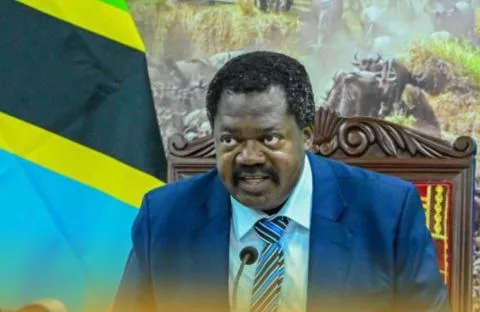
Born on December 24, 1971, in the Mbeya Region, Dr Emmanuel John Nchimbi grew up in a family rooted in public service. His father, Mzee John Nchimbi, hailing from Songea District, served as an Assistant Commissioner of Police (ACP) and Regional Police Commander for Mtwara.
Beyond his law enforcement career, the elder Nchimbi was actively involved in politics, serving two terms as a National Executive Committee (NEC) member for Chama Cha Mapinduzi (CCM) through the armed forces wing and later as a CCM regional secretary.
Dr Nchimbi began his primary education at Oysterbay Primary School in Dar es Salaam from 1980 to 1986. He pursued his O-Level studies at Uru Secondary School (Form I to III) from 1987 to 1989 before transferring to Sangu Secondary School, where he completed Form IV in 1990.
He then moved to Forest Hill Secondary School in Mbeya for his A-Level education between 1991 and 1993.
Advancing to higher education, Dr Nchimbi earned an Advanced Diploma in Administration from the Institute of Development Management (IDM) Mzumbe in Morogoro between 1994 and 1997.
Upon graduating, his political trajectory accelerated rapidly: he was elected as a member of CCM’s National Executive Committee (NEC), and by 1998, he was elected Chairman of the CCM Youth Wing (Umoja wa Vijana wa Chama cha Mapinduzi – UVCCM).
Alongside his rising political responsibilities, Dr Nchimbi built a professional background in public service and academia. He worked at the National Environment Management Council (NEMC) from 1998 to 2003.
During this period, he pursued further studies, obtaining a Master of Business Administration (MBA) specialising in Banking and Finance from Mzumbe University between 2001 and 2003. He was later appointed District Commissioner for Bunda (2003–2005) and went on to complete a Doctorate (PhD) at Mzumbe University between 2008 and 2011.
He served in that capacity until October 2006, when he was reshuffled to serve as Deputy Minister for Labour, Employment, and Youth Development until February 2008. He subsequently served as Deputy Minister for Defence and National Service until November 2010.
Source: The Star
Headlines
Tinubu Orders Arrest, Suspension of Three Perm Secs As ICPC Uncovers Another Fake Govt Agency

President Bola Tinubu on Friday ordered the immediate arrest and suspension of three federal Permanent Secretaries over their alleged involvement in the operation of another fake agency uncovered by the Independent Corrupt Practices and Other Related Offences Commission (ICPC).
ICPC Chairman, Dr Musa Adamu Aliyu, who disclosed this to newsmen after briefing President Tinubu on the latest findings from the commission’s ongoing investigation into fictitious agencies and weaknesses in public sector processes named the affected Permanent Secretaries to include M S Danjuma, Engr Nadungu Gagare, and Richard Pheelangwah.
The Commision’s latest discovery is coming barely few weeks after exposing the fictitious Presidential Foreign Intervention Promotion Council (PFIPC).
According to Aliyu, the newly uncovered entity, operating as National Brands Development and Made-in-Nigeria Special Project Office, had allegedly secured office accommodation within the premises of the Office of the Secretary to the Government of the Federation (OSGF) without authorisation from the President.
The discovery, he said, was made during the broader investigation into the PFIPC, which President Tinubu had directed the ICPC to undertake.
The fake agency, according to ICPC boss, was promoted by Prince George Buchi Nwabueze, who allegedly operated under several variations of his name, including George Nathan Nwabueze, Honourable George Buchi Nwabueze, Prince George Buchi Nwabueze and George Buchi Nwabueze.
Aliyu disclosed that the commission was engaging relevant officials in the Office of the Secretary to the Government of the Federation to establish how the purported agency came to operate from government premises and to obtain other vital information required for the investigation.
“I have briefed Mr President comprehensively on these new developments. ICPC will continue with its investigation,” he said.
Following the fresh findings, Aliyu said President Tinubu had directed the immediate arrest of Prince George Buchi Nwabueze, as well as the immediate suspension of the three named permanent secretaries.
The commission is expected to establish the roles played by the suspended officials and other individuals in the emergence and operation of the purported agency.
Aliyu said the latest discovery underscored the need for tighter controls and greater scrutiny of government institutions and internal administrative processes.
He commended President Tinubu for ordering a wider policy audit of federal agencies and government processes, describing the initiative as a proactive measure to strengthen the governance system.
His said: “President Bola Tinubu must be commended for the proactive step of directing the policy audit of MDAs and internal government processes towards strengthening government governance system.”
The latest development has widened the scope of the ICPC’s investigation into the proliferation of fictitious government entities and alleged exploitation of official structures by individuals seeking to create the impression of government authority.
The commission’s investigation into the PFIPC was initiated after the purported agency came under scrutiny, with the President subsequently directing the ICPC to unravel those behind its operations and determine whether public officials facilitated its activities.
With the discovery of another purported agency operating from government premises, the ICPC probe is now expected to examine broader institutional weaknesses that may have enabled unauthorised entities to gain access to federal government facilities and present themselves as legitimate government bodies.


