
Personality in Focus
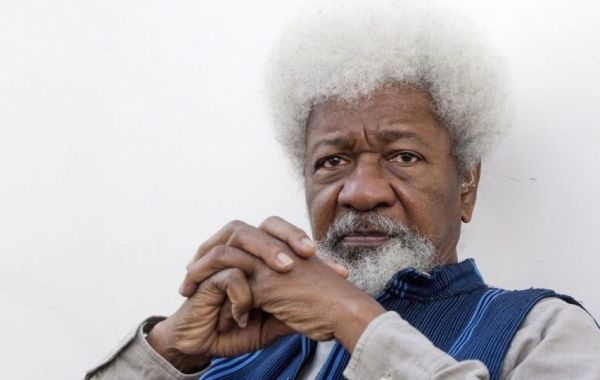
Tinubu’s Hails Wole Soyinka at 90, Names National Theatre after Nobel Laureate

- /home/rhoncare/pointblank.ng/wp-content/plugins/mvp-social-buttons/mvp-social-buttons.php on line 27
https://pointblank.ng/wp-content/uploads/2019/07/Soyinka.jpg&description=Tinubu’s Hails Wole Soyinka at 90, Names National Theatre after Nobel Laureate', 'pinterestShare', 'width=750,height=350'); return false;" title="Pin This Post">
- Share
- Tweet /home/rhoncare/pointblank.ng/wp-content/plugins/mvp-social-buttons/mvp-social-buttons.php on line 69
https://pointblank.ng/wp-content/uploads/2019/07/Soyinka.jpg&description=Tinubu’s Hails Wole Soyinka at 90, Names National Theatre after Nobel Laureate', 'pinterestShare', 'width=750,height=350'); return false;" title="Pin This Post">
President Bola Tinubu has congratulated Nobel Laureate, Professor Wole Soyinka, and named the National Arts Theatre in Iganmu, Lagos, after him in honour.
Tinubu announced this in a letter he wrote to the iconic figure in commemoration of his 90th birthday.
“I am pleased to join admirers around the world in celebrating the 90th birthday of Nigeria’s iconic son and the world-renowned Professor Akinwande Oluwole Babatunde, famously known as Wole Soyinka.
“…the 13th July will be the climax of the series of local and international activities held in his honour. To underscore the global relevance of the literary giant, a symposium, along with poetry reading was held in Rabat Morocco on 9 July. The event was organized by the Academy of the Kingdom of Morocco and the Pan African Writers Association (PAWA).
“Professor Soyinka, the first African to win the Nobel Literature Prize in 1986, deserves all the accolades as he marks the milestone of 90 years on earth. Having beaten prostate cancer, this milestone is a fitting testament to his ruggedness as a person and the significance of his work.
It is also fitting we celebrate this national treasure while he is still with us. I am, accordingly, delighted to announce the decision of the Federal Government to rename the National Theatre in Iganmu, Surulere, as the Wole Soyinka Centre for Culture and the Creative Arts.”
Tinubu said his government did not only celebrate Soyinka’s remarkable literary achievements but also his unwavering dedication to the values of human dignity and justice.
“When he turned 80, I struggled to find words to encapsulate his achievements because they were simply too vast. Since then, he has added to his corpus with his series of Interventions, which have been published in many volumes.”
“Professor Soyinka is a colossus, a true Renaissance person blessed with innumerable talents. He is a playwright, actor, poet, human rights and political activist, composer, and singer. He is a giant bestriding not just the literary world but our nation, Africa, and the world.
“He remains the shining light of our nation, the gadfly that pokes our national soul, decrying tyranny and oppression, urging us to become better as a nation.
“He is one Nigerian whose influence transcends the Nigerian space and who inspires people around the world. Since his youth, he has been a vocal critic of oppression and injustice wherever it exists, from apartheid in South Africa to racism in the United States. Soyinka always speaks truth to power.
“Beginning from his 20s, he took personal risks for the sake of our nation. His courage was evident when he attempted to broker peace at the start of the civil war in 1967. Detained for two years for his bravery, he narrated his experience in his prison memoir, “The Man Died.”
Despite deprivation and solitary confinement, his resolve to speak truth to power and fight for the marginalized was further strengthened. His early writing, such as ‘The Lion and the Jewel,’ ’Death and the King’s Horseman’, not only testified to his mastery of language, his innovative storytelling, but also his unflinching commitment to enthroning a fair and just society.
“Our paths crossed during our just struggle for the enthronement of democracy in Nigeria following the annulment of June 12, 1993 presidential election. When faced with a trial in absentia and death sentence by the military regime at home, he galvanized opposition in exile through NALICON and NADECO. His global stature made him the face of our struggle to validate June 12 and restore democracy in Nigeria.
“Today, I join the world to celebrate his profound influence on generations of writers, scholars, and activists who have been inspired by his work. I celebrate him for giving us the spark to fight and confront military dictators in our country. I celebrate him for his enduring spirit and for teaching us that literature and drama can be used as a powerful tool to challenge the status quo. I wish Professor Soyinka an incredibly happy 90th birthday.”


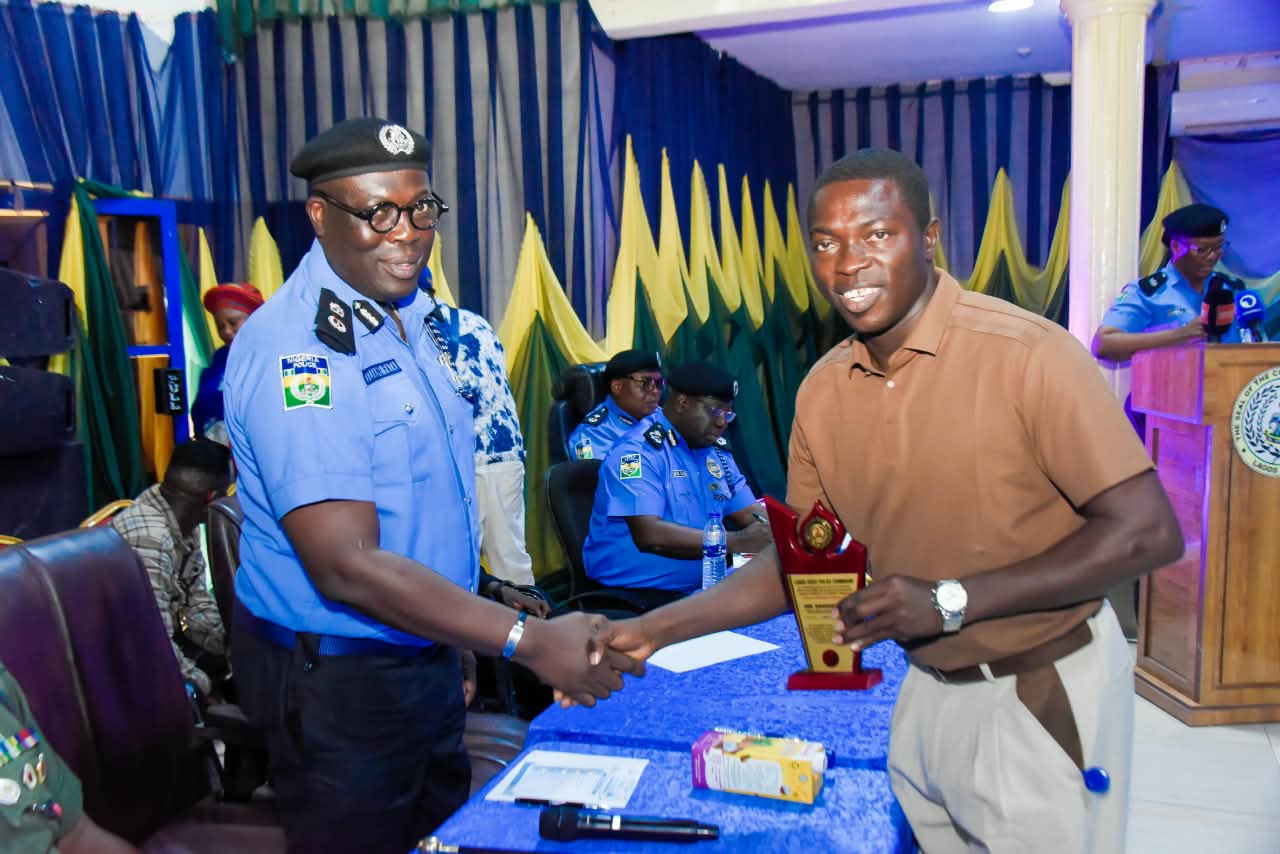
The Lagos State Police Command under the leadership of the Commissioner of Police, CP Fatai Tijani, on Thursday, honoured the President of the National Association of Online Security News Publishers (NAOSNP), Mayor Oki Olatunji Samson, as a Police-Youth Advocate for his contribution to youth engagement and advocacy, responsible security journalism and community safety.
The recognition came during the Command’s commemoration of International Youth Day 2026, themed “Different Contexts, Common Aspirations,” held at the Police Officers’ Wives Association (POWA) Secretariat, Oduduwa Street, Lagos.
The event also featured the launch of the National Campaign Against Political and Digital Thuggery and a Police-Youth Dialogue designed to build stronger partnerships between law enforcement and young Nigerians. The initiative, in line with the vision of Inspector-General of Police, IGP Olatunji Rilwan Disu, placed youth participation, responsible citizenship and peacebuilding at the centre of contemporary security discourse.
In his address at the event, the NAOSNP President, a respected security journalist, stressed that youth advocacy must move beyond rhetoric to deliberate investment in the values, opportunities and relationships that enable young people to become agents of stability. He argued that the youth should not be viewed simply as potential victims or perpetrators of insecurity, but as indispensable stakeholders in preventing it. According to him, the digital space has become an extension of society and therefore requires the same standards of responsibility expected in the physical world.
The NAOSNP President urged young Nigerians to recognise the power of their voices, particularly on social media, and deploy that influence constructively. “Your phone is powerful. Your social media account is powerful. Your voice is powerful. Please use that power to build, not destroy.” He further challenged young people to resist political manipulation, stressing that no temporary political reward could justify sacrificing one’s future.
“Do not allow anyone to use your future to settle their present disagreement.”
He advocated a culture in which political differences could be expressed without becoming personal hostility, urging youths to verify information before sharing it and to understand that digital actions can have real-world consequences.
The intervention resonated strongly with the message of the Commissioner of Police, Lagos State Command, CP Tijani Fatai, who warned young people against allowing politicians to exploit them for electoral violence as the country approaches another election cycle. Fatai said youths must look beyond immediate gratification and recognise the importance of preserving their future.
“Tomorrow is there for us. We should not think of today. We should always think of tomorrow. That tomorrow is more important than what we are today.”
The CP also delivered a particularly strong message against the recruitment of young Nigerians into political thuggery, noting that political actors rarely expose their own children to the dangers of electoral violence. “None of these politicians will use any of their children for electioneering, thuggery, violence or what have you.”
He urged youths to reject attempts to use them for ballot-box snatching, intimidation, destruction of property and other forms of electoral violence, while stressing that political participation remained a legitimate right when exercised responsibly.
The Commissioner equally identified the digital environment as an emerging frontier of security, urging young Nigerians to think carefully before posting, sharing or reacting to provocative content. His message was clear: political participation must never become political violence, whether offline or online.
In his goodwill message, Commander, 9 Brigade, Nigerian Army, Brigadier General Ayokunle Owolabi, described the campaign as timely and commended the Police for strengthening engagement with young Nigerians. Owolabi noted that the energy, creativity and resilience of young people remained indispensable to Nigeria’s peace, security and development. He emphasised that national security could no longer be regarded as the exclusive responsibility of security agencies, but required a whole-of-society approach in which young Nigerians become active partners. He particularly warned against the misuse of digital platforms and physical spaces for violence, intimidation, misinformation and destructive engagement, while calling for stronger trust and communication between young people and security institutions.
Also speaking, the Lagos State Coordinator of the Police Campaign Against Cultism and Other Vices (POCACOV), SP Olivia Amarachi Ugochukwu, urged young people to become the change they desire in their communities.
“Policing is everybody’s business. If you see something, say something.”
She also charged the media to ensure that only verified information was disseminated, noting that responsible information management was essential to preventing fear, confusion and conflict.
The well attended event attracted representatives of the Nigerian Army, Nigerian Air Force, Nigerian Navy, NDLEA, FRSC and NSCDC, alongside NYSC, POCACOV, PCRC, NYCN, NANS, NURTW, RTEAN, CRAN, NAOSNP, POWA and youths from Police Barracks across Lagos. The programme featured an extensive Police-Youth Dialogue on security, political participation, social media, cultism, thuggery and emerging threats.
The recognition of Mayor Oki Samson as Police-Youth Advocate therefore represented more than an individual honour. It underscored the growing importance of credible voices capable of connecting young people, the media and security institutions around a shared commitment to peace.
In a society where insecurity can be amplified by a rumour, a provocative post or a manipulated young mind, youth advocacy has become a frontline security intervention. The future of Nigeria cannot be secured merely by policing the streets; it must also be secured by winning the minds, trust and participation of its young people.
The challenge before advocates such as Mayor Oki Samson and institutions such as the Police is to ensure that the message does not end with an award or a commemorative event. It must travel into schools, communities, newsrooms, transport parks and digital spaces—until peace becomes not merely a campaign slogan, but a conscious choice made by a generation whose future is ultimately at stake.
Personality in Focus
Malian Singer Salif Keita Pulls Out of South African Festival over Xenophobic Attacks
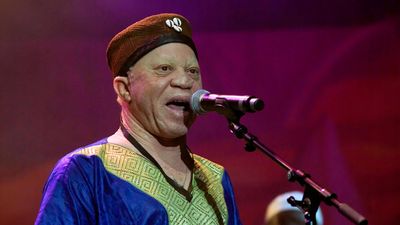
Malian music legend, Salif Keïta, has cancelled upcoming commercial performances in South Africa, including an appearance at the Mangaung African Cultural Festival (Macufe), citing what he described as “xenophobic violence” against African migrants.
The decision comes as anti-migrant protests intensify in one of Africa’s most industrialised economies, prompting thousands of foreign nationals to return home and increasingly straining cultural ties across the continent.
Explaining his decision, Keïta said he could not “ignore the reports of xenophobic violence against our African brothers and sisters.”
“When I see migrants attacked, I do not see ‘politics’. I see people looking for work, safety, and dignity.”
The 77-year-old musician stressed that his decision was not a rejection of South Africans.
“To be clear — I am not closing the door on South Africa. I am closing the door on violence,” he said.
Often described as the “Golden Voice of Africa”, Keïta has spent more than five decades in music and remains one of the continent’s most recognisable artists.
The award-winning Malian singer has earned four Grammy nominations and won France’s Victoire de la Musique for World Music Album of the Year in 2010 for La Différence.
His ties to South Africa also stretch back decades, including a performance at the Nelson Mandela 70th Birthday Tribute concert at Wembley Stadium in 1988, an event closely linked to the international anti-apartheid movement.
In response to his withdrawal, the Free State’s culture department said it regretted the decision and stressed that Macufe was intended to celebrate African unity.
Keïta’s withdrawal comes against the backdrop of worsening tensions over migration in South Africa, which has long attracted workers from across the continent.
More than 160,000 foreigners have left South Africa through repatriation programmes since May, according to an AFP tally. They include citizens of Malawi, Zimbabwe, Zambia, Ghana and Nigeria.
This week, 173 Tanzanian nationals also returned home from Durban, one of the centres of recent anti-migrant demonstrations.
Anti-migrant groups accuse undocumented foreigners of putting pressure on jobs and public services and contributing to crime.
However, South African authorities have maintained that immigration laws must be enforced through legal channels and have acted against people accused of vigilantism and violence.
Increasingly, the tensions are also spilling into Africa’s entertainment industry.
In July, a planned Lagos concert by Grammy-winning South African singer Tyla disappeared from her A*POP World Tour schedule after boycott calls from some Nigerians over reported xenophobic attacks against African migrants in South Africa.
Although Tyla and her management did not publicly confirm that the backlash caused the change, the episode showed how migration tensions were beginning to affect cross-border cultural exchanges.
Keïta’s decision now brings the issue into sharper focus from the opposite direction, with one of West Africa’s most prominent musicians refusing to perform in South Africa over the treatment of fellow Africans.
As a result, the controversy has added a cultural dimension to a migration crisis already affecting labour flows, diplomacy and relations between African countries.
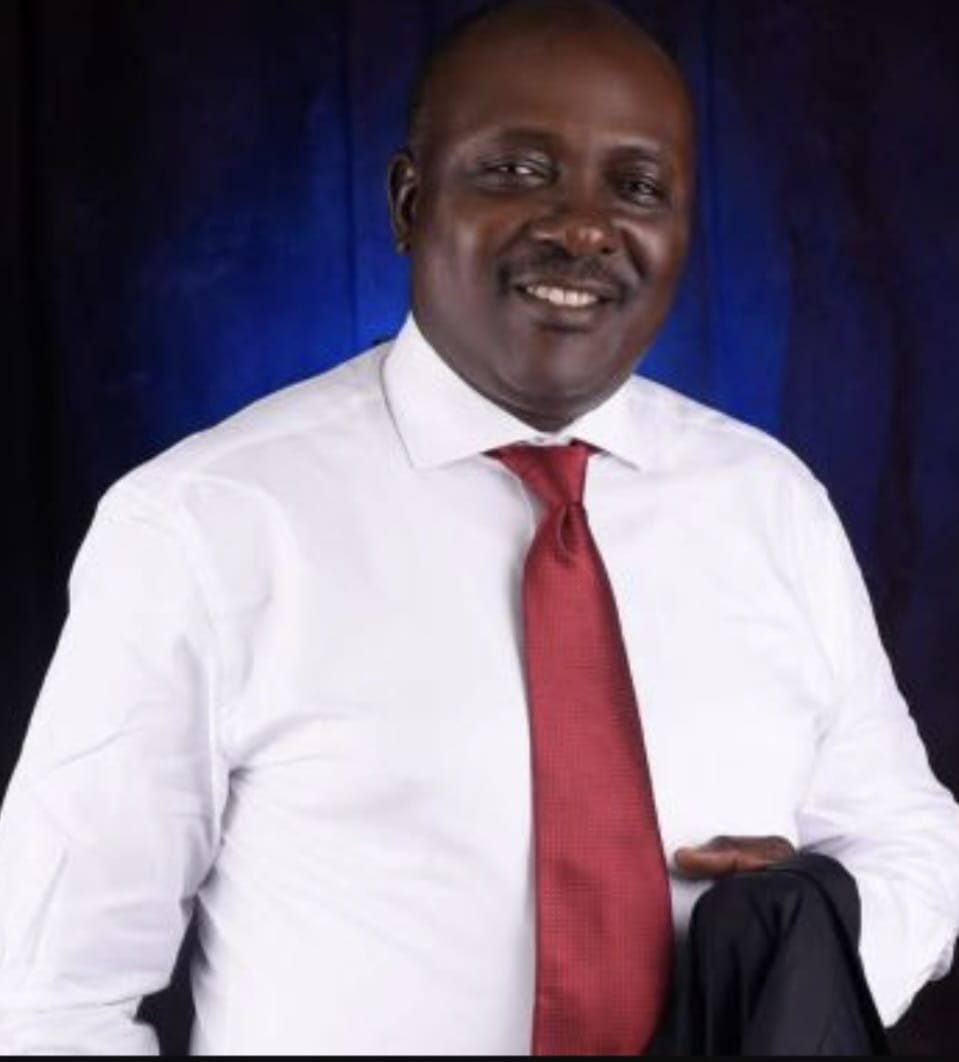
President Bola Tinubu has expressed sadness over the death of Dotun Oladipo, former Political Editor of The Punch newspaper and Publisher of The Eagle Online, describing his passing as a painful loss to Nigeria’s media industry and the nation.
Tinubu’s message was contained in a statement signed by his Special Assistant on Information and Strategy, Bayo Onanuga, on Wednesday.
Oladipo reportedly died on Tuesday, 25 August 2026, in Lagos at the age of 56.
The President acknowledged Oladipo’s contributions to journalism, particularly his years of dedicated service in political reporting and his commitment to providing Nigerians with credible information through traditional and digital media platforms.
He said Oladipo’s professional career reflected the important role journalists play in strengthening democracy by informing citizens, holding public officials accountable and providing platforms for robust public discourse.
Tinubu recalled Oladipo’s passion for journalism and his contributions to the growth of digital media through The Eagle Online, which he founded after his career at Punch Newspaper.
“Dotun Oladipo’s death at the age of 56 is a painful loss to the Nigerian media community and to our nation. He was a committed journalist who devoted significant years of his life to informing the public and contributing to the development of our democracy.
“His contributions to political journalism and the digital media space will not be forgotten. I extend my heartfelt condolences to his family, colleagues in the Guild of Online Corporate Publishers (GOCOP) and friends. I pray that Almighty God will grant him eternal rest and give his loved ones the strength to bear this irreparable loss,” President Tinubu noted.


