
Metro
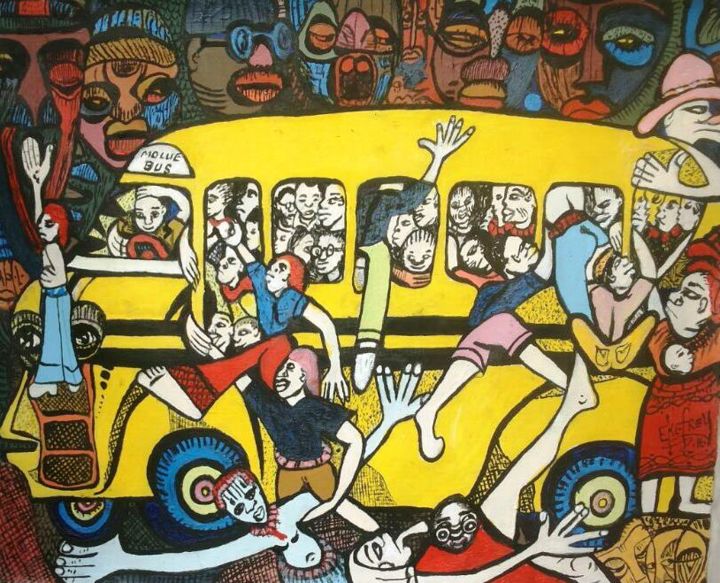
Tourism and Culture: The Molue Crowd

- /home/rhoncare/pointblank.ng/wp-content/plugins/mvp-social-buttons/mvp-social-buttons.php on line 27
https://pointblank.ng/wp-content/uploads/2023/12/10315366_emmanuelekongekefrey-moluebus-50x60cm-acryliconcanvas-2016-013.jpg&description=Tourism and Culture: The Molue Crowd', 'pinterestShare', 'width=750,height=350'); return false;" title="Pin This Post">
- Share
- Tweet /home/rhoncare/pointblank.ng/wp-content/plugins/mvp-social-buttons/mvp-social-buttons.php on line 69
https://pointblank.ng/wp-content/uploads/2023/12/10315366_emmanuelekongekefrey-moluebus-50x60cm-acryliconcanvas-2016-013.jpg&description=Tourism and Culture: The Molue Crowd', 'pinterestShare', 'width=750,height=350'); return false;" title="Pin This Post">
By Frank Meke
Cookies they say easily crumble, yet I wonder why some people love and relish cookies. And since Ms. Hilda Baci broke the world records for longest cooking hours, a crown she lost before the cookies could again crumble.
Trust Nigerians and our copy, copy Taiwanese mentality (some say we copy like the Chinese and there’s nothing wrong with good copying), everyone simply woke up to family cooking competitions even government agencies now go festive, cooking for hungry Nigerians, even when they know that they don’t have any business cooking food for over two hundred million Nigerians, many who poke, deride and nose up these new deceptive and clinically wasteful adventure.
So what exactly is wrong with us? While smart people, the oyinbos in our midst, will cook food and invite you to the table, these same guys will cleverly tie the eating to charity issues and get you to pay for it for the sake of helping the less privileged but to our wasteful father xmas government appointees who cook for their pockets in the name of feeding our hungry poor.
Now, I don’t have issues with feeding our poor, but I just wonder what the National Emergency Management Agency and Ministry of Humanitarian Affairs does with their budget. Abeg ooo, this does not mean that I am calling for the auditing of these agencies, but I am just wondering why food matters, cooking and distribution of food to select poor Nigerians is now the new game in town?
Now, if states governments budget and spend billions of naira on entertainment (buying tea, biscuits, sweets, and kolanuts), it should not be strange to know that prospecting for contracts and a possible manifestation of misappropriation and misapplication of funds through entertainment window, would gain ground.
One comedian poked at our new Culture and Entertainment economy for being at the head of this fanciful entertainment spending profligacy since Nigerians love fake lives, fake hair, fake plastic nose and sneeze out nonsensical and banal extravagant lifestyles.
Now, let me tell you my molue story. Hmmm, growing and indeed being born in Lagos, Nigeria is not an easy matter, particularly if your parents were patriotic and Catholic about being faithful to keeping their hands off the national purse. Please, don’t ask me if my father was once the Accountant General of the Federation ooo.
All I know is that my late father, like others in his generation, was accountable during his time out at the Nigeria Ports Authority, where he held his duty post without fear or favour and for thirty five years, only came home at each end of the month with his well deserved pay, which couldn’t get me and my siblings to ride in posh cars to school.
Now to the Papa song, a welcome lullaby often the exclusive musical preserve of kids (not for this Gen z ones ooo), I only had Evening Times, a publication of Daily Times as my reward, no sweet, meat pie, or chicken and fried rice.
My dad taught me to read, every day, and through the influence of reading the newspapers, it became fashionable for me to welcome you to my house with newspapers well laid out before being entertained and that is if the contents and headlines don’t get you provoked on issue(s) that may annoyingly frustrate you, leading to your premature walk out.
Indeed, don’t ever read our national dailies at breakfast table if actually you don’t want to go out on empty stomach for the rest of the day. There is so much rubbish going on across the country in the name of national development and political achievements.
Okay, sorry for the digression. I don’t know how to describe the molue, but simply to say, it is one of the earliest homegrown public transportation systems in lagos, affordable to the masses, and could move passengers in numbers.
To the best of my knowledge, the molue crowd was very obedient to instruction and would shift from one point to another depending on where one would disembark during the very slow, laborious ride.
There were no car stereos in the molue then, but every driver and I must confess accidents were rare then, must be a lover of the music of late Ayinla Omowura, the apala music genre exponent.
As a young and unassuming primary school student, I will board the molue from Otun Oba, Mushin Road, and would take count of the number of passengers who would “shiftingly” and like a lamb disembark before me and honestly I do wonder why they don’t complain at task of making way for others even when it’s not necessary or convenient to do so.
So, at my Ishaga bus stop and location of my primary school, Christian Primary school, Ishaga, (now I hear it has been converted to moslem primary school), I would simply jump down, yes that is the right word as the molue itself has a high board attached to the body for the purpose of disembarkation.
So, the board or step, call it whatever, became a practice ground for my mischievousness. So all those who claimed to be Lagos boys or born, please come share your molue experience or forever remain silent.
Again, there’s one molue crowd trait unknown to many people. Since it was mandatorily compulsory for each passenger to have the right amount of fare as it’s sacrilegious to go against the molue’s “universal rules,” one may be at mercy of poisonous tongues of the molue crowd.
As a cultural community, though of our transportation genre then, the molue family was a kind of university or college its own. As students, we sometimes get assistance in various forms from elders we hardly know and when we err, trust the molue crowd to tongue lash you, sometimes with some, particularly mothers volunteering to visit our schools to report our misdemeanours for further disciplinary action or, where a student reportedly took ill during the ride, they would take it upon themselves to ensure that the school did the needful.
I recall a day that the molue broke down. It was a day the crowd decended on the driver and conductor without mercy. Molue drivers were like airline pilots hardly seen except for the privileged two passengers sharing the front seats with them, but the molue conductor was the king.
Most molue conductors were street boys, toughies, and potential kick boxers, and so were reverred and feared by all, but this day, power changed hands.
The conductor, who in total disregarded of the molue operational ecosystem, cleverly selected passengers in two or three as a group for refund, and hell was let loose.
As students, we saw the once high moral dispensing molue crowd literally beat hell out of the driver and conductor and instigated incendiary rebuke to molue drivers and conductors who felt the world belong only to their ilk.
Now, the same crowd seems to populate our tourism and culture space. It’s almost six months, and we gladly stand in the gap to excuse escapasism, laziness, and lack of direction to our industry since the coming of this administration.
Our two ministers, as molue drivers, simply exposed us to ridicule, divisiveness, and shame. Mrs Ayeni Lola Ade-John is sick, and we have prayed for her recovery, but must the ministry be grounded to ignominy and inefficiency?
It’s sad that almost six months into this government, we shiver around like lost sheeps, rudderless and prone to mockery because we have a ministry peopled by most undeserving work force.
Now I ask retrospectively that even if we have an incapacitated minister as political head of the ministry of tourism, do we also excuse the failed permanent secretary as the accounting task master of the ministry of tourism?
I just kind of wonder at this development and why the presidency is watching this critical sector go up in smoke and directionless.
If Mrs Ade-John on proper account of her best of health, is not fully fit to drive an active and result oriented ministry, Nigeria as a show of gratitude should pick her hospital bills, relieve her of the burden of leadership of ministry and find a replacement, not just political jobbers.
Unfortunately, Mrs Ayeni Lola Ade-John has the wrong molue crowd watching her back in the identified and focal agencies watching her back. It is human to break down, but it’s an unexplainable hazard to have subordinates who can not confidently take up the steering wheel in the event of a breakdown.
This country is bleeding despite huge resources at our doorstep, but we gladly tolerate deceptive characters, failures, and the worst of low bellies as seen in our tourism space.
Just take a look at the so called Nigerian Tourism Development Authority and you will poke at how a once vibrant and result oriented tourism promotion and marketing agency was brought to a place of tourism abbaitor and skined to the bones in less than six years.
Please juxtapose what is going on at our airports, immigration and other high flying agencies under this government in less than four months to the emetic failings and shame on-going at NTDA.
In the culture sector, Hannatu Musa Musawa is simply just confused and shouldn’t have been so perplexed by huge expectations in the sector. I have patiently waited for her to come to grips with the fast Pacing deliveries expected by the president and Nigerians on the culture economy but it’s seems to me that Hannatu isn’t sure of what to do and it’s sad.
Why am I worried? Hannatu has some of the most accomplished agencies leaders, men that could be described as culture strikers, and from evidence of verifiable deliveries on their mandates, should help Hannatu come to terms with her call to duty.
Let me boldly state here that the National Council for Arts and Culture under Segun Runsewe remains the key driver of that ministry mission agenda. Indeed, and I won’t debate with nay sayers because in Nigeria, we hate and envy those who are outstanding in public service and choose failures as our pals. Otunba Segun Runsewe is the godfather of Nigerian cultural rebirth, and as he did in tourism, he is aggressively pushing culture to its economic growth and potential metrics to national and international attention, birthing a new exclusive ministry by the President.
Ado Yahuza of National Institute For Cultural Orientation ( NICO) is another great go-getter in the Hannatu team, yet she is groping around in darkness. Ahmed Mohammed Ahmed, another cultural developmental specialist with deep knowledge of global expectations on culture and so progressively wooled, picked up the National Troupe of Nigeria from the gutters, cleaned it up and brought young and committed artistic influencers to flourish our dance Troupe, bringing global honours with vista to make huge foreign exchange from global and local engagements.
Today, the Nigerian dance troupe is in high demand outside our shores but needs a ministerial political head that could break grounds running and market our dances to a waiting world.
Four months ago and during the last international arts and culture expo, specifically dedicated to marketing Nigeria arts and crafts to the world, a gathering which with brand attraction to the international community in Nigeria, China and Turkey even Cuba promised to provide and assist in the training of the Nigerian youths and young persons with skills in the craft ecosystem.
Last week, Segun Runsewe unveiled the Nigerian crafts and arts village, a vision with desirable melting pot for marketing our huge and diverse arts and crafts works, showcasing our fashion, food and dances.
The mini theatre in the place, manifestly painted in our national colours, brings excitement to our creative economy and to add, affordable for culture entrepreneurs and startups.
I just kind of wonder how Hannatu Musa Musawa could just pretend that these realities do not exist and choose to waste time grandstanding at the villa before the vice president instead of going out to the streets to create jobs.
January would soon be here, and possibly time to assess leadership deliveries as expected by the president and Nigerians, so what these two sectors ought to have brought to the table should not be left to imagination.
I can see Hadiza Bala Usman, waiting with a sledge hammer, and let no one cry women not helping women. Hannatu has the best team in the system, but what she wants to do with them determines whether she would score culture goals or go down as an opportunity waster.


Metro
International Day of the Girl-Child: Pad Me A Girl Foundation Holds Menstrual Health Outreach in Ogun
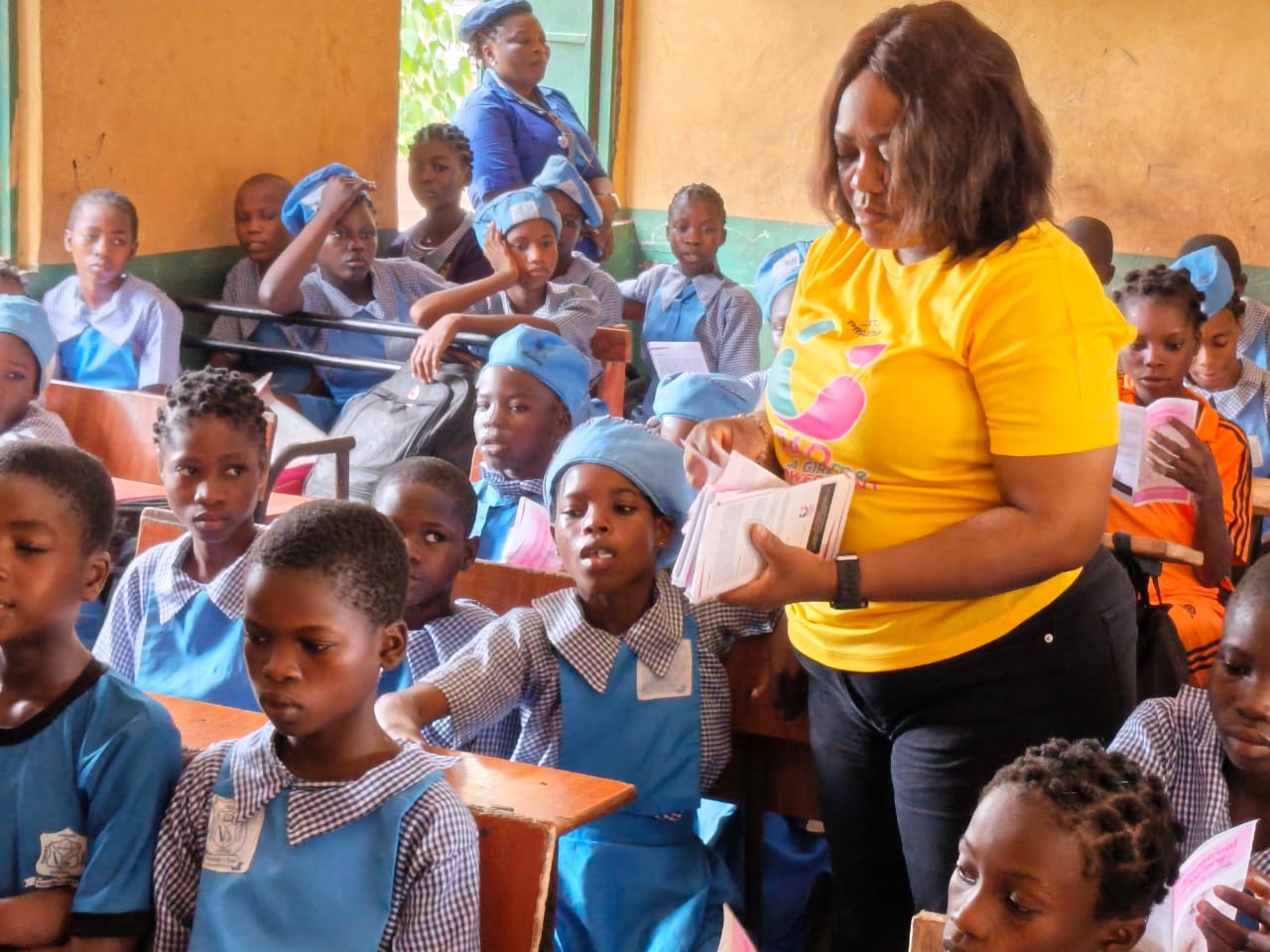
The Pad Me A Girl Empowerment Foundation has taken its menstrual health campaign to Igbesa High School (Junior), in Ado-Odo/Ota Local Government Area of Ogun State, providing free sanitary pads, menstrual hygiene pamphlets, exercise books and pens to over 100 schoolgirls to promote menstrual health, dignity and education.
The outreach, held on Wednesday, October 21, commemorated the 2026 International Day of the Girl Child, whose global theme is “End Child Marriage and Invest in Girls’ Rights!”
The programme brought together girls from Junior Secondary School (JSS) 1 to 3 who participate in the school’s reading clubs for mentorship, reading activities and menstrual health education.
It was convened by Oyelami Yetunde Anuoluwapo and Blessing Kappo, teachers and Teach For Nigeria Fellows at the school, following an appeal for sanitary products, learning materials and health education support. The Foundation’s founder, Theresa Moses, responded by providing the requested items and facilitating an interactive session on menstrual hygiene management.
Speaking at the event, Moses said she was inspired by the girls’ determination and aspirations, stressing the need for sustained investment in their health, education and future.
“Invest in girls and Nigeria will rise. Every girl deserves dignity, education and the right to dream beyond child marriage. That is why we are here; to ensure no girl misses school because of her period,” she said.
She emphasised that access to menstrual hygiene products and accurate information helps girls manage their periods confidently and participate fully in school activities.
In a letter of appreciation, Oyelami and Kappo described the outreach as impactful and inspiring, noting that it enhanced the girls’ understanding of menstrual health, hygiene and self-confidence. They also said the support would help promote the students’ hygiene, school attendance and dignity.
“You did not just give pads; you gave our girls confidence and hope,” the teachers wrote on behalf of the school community, expressing gratitude to the Foundation and hope for future collaboration.
Mrs Amarachi Eze, Assistant Divisional Commissioner of the Nigerian Girl Guides Association, Ado-Odo/Ota, Ogun State Branch, also commended the Foundation for supporting the girls’ hygiene needs and development.
“We sincerely appreciate the Management of Pad Me A Girl Foundation for joining hands with the Association in supporting our girls on hygiene management. May God Almighty continue to uplift your foundation. Thanks for joining hands in the development of girls in our schools. Bravo,” she said.
The Foundation’s Media Coordinator, Mr Oluwatosin Simon Faleye, called on corporate organisations, non-governmental organisations and well-meaning Nigerians to support initiatives that address period poverty and help girls remain in school.
“For over a year, we have been committed to ending period poverty and keeping girls in school. We call on corporate organisations and well-meaning Nigerians to support this cause for the betterment of Nigeria,” Faleye said.
The celebration also featured a student drama presentation highlighting the effects of child marriage, alongside reading and mentorship activities designed to encourage the girls to understand their rights, value their education and pursue their aspirations.
The Foundation also acknowledged the continued support of its sponsors and partners, including Access Bank, Pro Star Sports International, BL Consulting, Vita Baites Foods, Checkers, Senator Ireti Kingibe, representing the Federal Capital Territory (FCT) in the 10th Nigerian National Assembly, the Senate Committee on Women Affairs (SCOWAS), as well as individuals and media organisations whose contributions have supported its broader mission of ending period poverty, promoting menstrual health education and empowering girls and women.
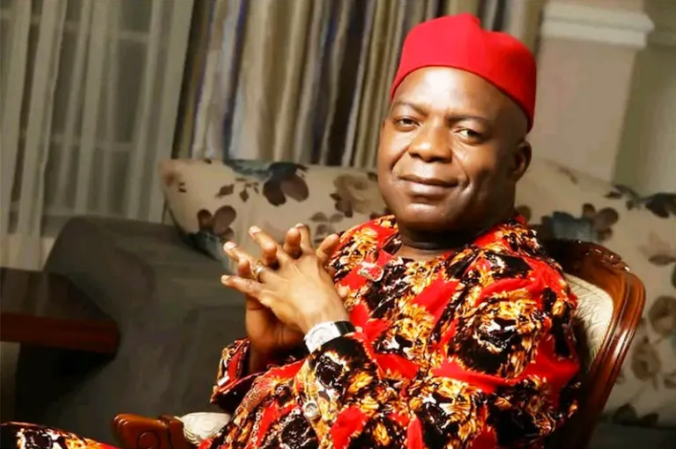
Abia State governor, Alex Otti, is set to flag off the reconstruction of Uratta Road and Old Express Road in Aba, two major routes which poor condition has disrupted transportation, commercial activities and access to residential communities for years.
The governor’s media aide, Ferdinand Ekeoma, in a statement on Wednesday, said that work on the roads has begun ahead of the scheduled official flag-off.
The two roads are considered important to Aba’s commercial and industrial activities, with Uratta Road connecting several adjoining streets to Port Harcourt Road and Old Express Road. At the same time, Old Express Road serves as a key route within the city’s industrial layout.
Ekeoma said the roads had suffered neglect for more than 24 years, leaving some sections impassable and forcing residents and businesses to contend with difficult transportation conditions.
According to the statement, Uratta Road provides access to more than 100 adjoining streets. Its poor condition has affected residents, traders and small-scale manufacturers who depend on the road to transport goods and access their businesses.
The statement said the road had become waterlogged and overgrown with weeds, discouraging commercial motorcycle and tricycle operators from using it.
Similarly, the deterioration of Old Express Road forced heavy-duty truck operators, fabric merchants, spare-parts dealers and small businesses to use longer routes, increasing transportation costs and affecting productivity.
The government said the road reconstruction is part of its broader effort to restore Aba’s infrastructure and strengthen the city’s commercial base.
Aba, one of southeastern Nigeria’s major commercial centres, hosts manufacturing clusters, markets, and small and medium-sized enterprises that depend heavily on functional roads to move raw materials and finished products.
The government said the reconstruction would improve market access, reduce transportation costs, facilitate the movement of goods, and support businesses operating along the affected corridors.
Ekeoma cited the reconstruction of Port Harcourt Road as an example of the administration’s infrastructure programme, noting that improved road access encouraged shops to reopen, attracted manufacturing activities and increased property rents along the corridor.
The government also said the new projects would complement other road interventions in Aba, including works on Ohanku and Obohia roads, as part of efforts to improve connectivity within the commercial city.
Beyond road construction, the administration said its projects include drainage systems, solar-powered streetlights, and pedestrian walkways, which it described as necessary to improve safety, accessibility, and flood resilience.
Ekeoma said Governor Otti views infrastructure development as an economic strategy rather than merely a construction programme, arguing that better roads would help businesses operate more efficiently and create employment opportunities.
He also quoted the governor as saying at an earlier church event that his administration is shifting attention from basic infrastructure improvements to healthcare, education, technology and industrialisation.
The governor, a former bank chief executive, was elected in 2023 on the Labour Party platform, defeating candidates from the major established parties in a state historically dominated by the Peoples’ Democratic Party.
Otti has remained in the Labour Party despite the defection of its 2023 presidential candidate, Peter Obi.
His administration has made rehabilitating Aba roads and public infrastructure central to its governance agenda, presenting the city’s recovery as essential to reviving economic activity across Abia State.

MILO Nigeria, in partnership with former Nigerian national team captain and MILO Brand Ambassador Ahmed Musa, has concluded the inaugural MILO × Ahmed Musa Sports Clinic and Tournament in Kano, providing 2,500 young footballers with professional coaching, mentorship and competitive football experience.
Over two weeks, participants took part in 10 coaching sessions and competed in matches under the guidance of Ahmed Musa and experienced coaches. The programme combined practical football training with lessons in teamwork, discipline, resilience and confidence, equipping participants with skills and values that extend beyond the pitch.
The initiative culminated in a tournament at the Ahmed Musa Sports Complex in Kano, where Khamis Football Academy emerged as champions of the inaugural edition. Participants also received cash prizes, certificates and football equipment.
Speaking on the initiative, Gilbert Tweneboah-Koduah, Category Lead, MILO, said: “At MILO, we believe sport is a powerful platform for young people to discover their abilities, build confidence and develop values that extend beyond the field of play. Our partnership with Ahmed Musa brings together MILO’s longstanding commitment to sports development and the experience of an athlete whose journey from grassroots football to the highest level of the game can inspire the next generation. By combining his experience with structured coaching and competition, this programme has given young footballers in Kano an opportunity to develop their skills, learn from experienced professionals and better understand the commitment required to pursue their aspirations.”
For the participants, the clinic offered an opportunity to learn from an athlete whose football journey began in northern Nigeria and progressed to the highest levels of the sport, making his experience a source of inspiration for aspiring players.
Commenting on the partnership, Ahmed Musa said: “Nigeria has incredible football talent, but talent alone is not enough. Young players need good coaching, regular competition and people who will guide them. I am proud to partner with MILO and share some of what football has taught me. My message to these players is simple: keep training, listen to your coaches and work hard every day to improve.”
Musa also called for greater investment in grassroots football, emphasizing the importance of giving young players access to quality coaching, structured development and regular competitive opportunities.
The MILO × Ahmed Musa Sports Clinic and Tournament builds on MILO’s longstanding commitment to youth development through sports in Nigeria. Through its school-based and grassroots sporting initiatives, MILO continues to create opportunities for young people to participate in sports, develop their abilities and embrace values that can support them both on and off the pitch.


