
Headlines
Trump Didn’t Lie, There’s Christian Genocide in Nigeria, PFN Insists

- /home/rhoncare/pointblank.ng/wp-content/plugins/mvp-social-buttons/mvp-social-buttons.php on line 27
https://pointblank.ng/wp-content/uploads/2025/11/fellow-ship-scaled-1-1000x600.jpg&description=Trump Didn’t Lie, There’s Christian Genocide in Nigeria, PFN Insists', 'pinterestShare', 'width=750,height=350'); return false;" title="Pin This Post">
- Share
- Tweet /home/rhoncare/pointblank.ng/wp-content/plugins/mvp-social-buttons/mvp-social-buttons.php on line 69
https://pointblank.ng/wp-content/uploads/2025/11/fellow-ship-scaled-1-1000x600.jpg&description=Trump Didn’t Lie, There’s Christian Genocide in Nigeria, PFN Insists', 'pinterestShare', 'width=750,height=350'); return false;" title="Pin This Post">
The Pentecostal Fellowship of Nigeria (PFN) has insisted that there is Christian genocide ongoing in Nigeria, hence demanding end to the alleged Christian killings.
Speaking on Thursday after an emergency executive meeting of the Fellowship held at its national headquarters in Lagos, PFN President, Bishop Francis Wale Oke, said the body would no longer remain silent while Christians are “targeted, killed, raped, and displaced” across the country.
He said: “There is Christian genocide going on in Nigeria. If we call it by any other name, it will bring Nigeria down. We are crying out to our international friends, beginning with America and Donald Trump. Whatever you can do to help our government put an end to it, come quickly and get it done. When on Christmas Day, Christmas Day was turned a bloody day in Benue State, and hundreds were massacred. And we are to be conducting mass funerals when we are not in open conflict. What do you call that? And this is different from individual cases.
“Let us call a spade a spade. There is Christian genocide ongoing in Nigeria,”Bishop Oke declared.
“Even while we speak, killings are still taking place in Borno, Plateau, and Benue states. When 501 Christians were massacred in Dogon Noma in Plateau, what do we call that? When Christmas Day turned into a bloody day in Benue, with hundreds massacred, what name should we give it?
While noting that the United States President Donald Trump spoke the truth, the PRN President cited the case of Leah Sharibu who was abducted alongside other Chibok girls and has since remained in captivity.
“Like the case of Leah Sharibu. Where is Leah Sharibu? Like the case of Deborah that was lynched and burned alive in Sokoto? What about that? And several of our girls were kidnapped and forced, given out as wives by force without the consent of their parents and their Christian parents. And the Christian parents would not see them for years.And this has been going on. We have been talking and we are not taking it seriously. And it has been going on again and again, until Donald Trump now spoke. And Donald Trump spoke the truth. There is Christian genocide going on in Nigeria.
“Like you will have picked in the news, even since this narrative began, killing was still going on in Borno, in Plateau, in Benue, up until yesterday. What are we saying? When 501 Christians were massacred in Dogonaya in Plateau State, what do we call that? And for no offense other than they are Christians.”
Oke recalled that the Christian community had repeatedly called the attention of the government to the alleged genocide with no decisive action from the authority.
The cleric expressed his backing for President Trump’s intervention, adding that Trump only echoed what Nigerian Christians had been saying for year
“I was part of the team that went to see the immediate past President, Muhammadu Buhari. We spoke very strongly about this and the President listened to us, but he completely ignored the main issue we came for, If we came and spoke with such vehemence, with such passion, and then you pick the peripheral matter and left this matter alone, I knew that day that his government was complicit in what was going on,” he added.
Oke alleged that the killings across parts of Nigeria were systematic and targeted on Christians, lamenting that the killings had continued unchecked despite repeated appeals from the Church.
“The evidence is all over the place. There is nothing anybody can say that can whitewash it. It is evil, it is blood shedding, it is mass murder and it is genocide. The time to stop it is now. That is what the church in Nigeria is saying with one voice.
“Christians in this nation must be free to practice their faith in any part of Nigeria as bona fide citizens of Nigeria.
“These armed bandits, Fulani herdsmen, Boko Haram, ISWAP, all of them using Islam as a cover. We have been living in peace with our Muslim brothers for a long, until this violent Islamic sect came up with an intent to make sure they impose Sharia on all Nigerians,” Oke said.
Bishop Oke called on President Bola Tinubu to decisively overhaul the nation’s security architecture, and ensure justice for victims of religious violence. He questioned why those responsible for notorious attacks—such as the killing of Deborah Samuel in Sokoto and the abduction of Leah Sharibu and the Chibok schoolgirls—remain unpunished.
“The government should prove by action, not words, that it is not complicit,” he said. “When hundreds are buried in mass graves and the whole world sees it, who can deny it? Why should we play politics with the blood of Nigerians?”
The PFN urged President Tinubu’s administration to rebuild trust by ensuring that the security architecture of the country is not infiltrated by those sympathetic to extremist ideologies.
Oke further condemned the government’s rehabilitation of so-called “repentant terrorists,” describing the move as a grave security.
He assured Christians that the PFN would continue to speak out until the killings stop. “We are not going to keep quiet. We will keep raising our voices until justice is done and every Nigerian, regardless of faith, can live in peace. The truth may be suppressed for a time, but it cannot be buried forever,” he said.
The meeting, which drew PFN leaders from across the country, reaffirmed the body’s commitment to national unity, peace, and the protection of fundamental human rights, while urging the media to “side with the oppressed” and report the truth without fear or bias.


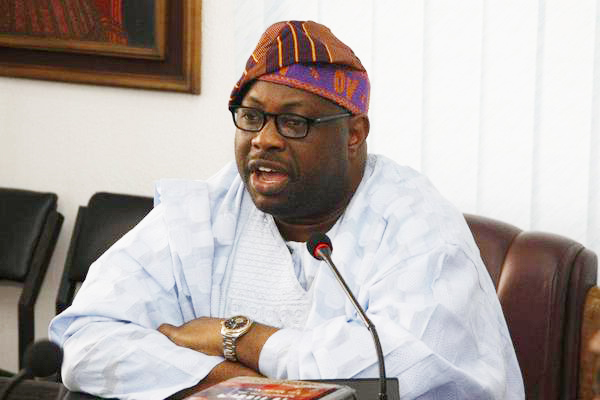
A chieftain of the African Democratic Congress (ADC), and Deputy Director of the Presidential Campaign Council, Chief Dele Momodu, has described former Vice-President Atiku Abubakar as the most nationally formidable and experienced among the leading contenders for the 2027 presidential election.
Momodu said Atiku’s experience at the national level distinguishes him from President Bola Tinubu and former Anambra State Governor, Peter Obi.
He stated this on Wednesday during an interview on Eagle 102.5 FM, Ilese-Ijebu, in Abeokuta.
“If you look at the antecedents of the three major candidates, between Atiku Abubakar and Peter Obi, you will see that Atiku is the most experienced. He has managed our country at the highest level,” he said.
Momodu traced Atiku’s political journey to the 1992 Social Democratic Party (SDP), presidential primary where he contested against late MKO Abiola and stepped down for him.
He said Atiku accepted the outcome without crisis even after he was not picked as Abiola’s running mate, describing it as a mark of true democratic temperament.
“He is the only one who started from around 1992, contested the SDP primary against Abiola and stepped down with uncommon equanimity. He did not make any noise,” Momodu said.
He noted that Atiku was among the founders of the Peoples Democratic Party, PDP, and served as Vice-President from 1999 to 2007.
Comparing Atiku with Obi, Momodu argued that while Obi’s best was demonstrated in Anambra, Atiku’s was at the presidency level managing the national economy.
“Peter Obi has tried his best in Anambra, while Atiku’s best is at the level of vice president controlling the economy of Nigeria. The difference is clear. He has matured in experience and exposure,” he said.
Momodu also said President Tinubu’s experience was largely limited to Lagos.
“What I’m trying to say is that Tinubu’s experience was limited to Lagos, and that is why when he became president, he thought Nigeria was Lagos. And he has found out now that Nigeria is not Lagos,” he said.
He argued that the current economic hardship under the present administration did not show prosperity, insisting Atiku remained better positioned to lead the country.
“Well, we are yet to see that prosperity, and if yesterday would determine today and tomorrow, it is obvious that Tinubu should retire now and let someone else do it,” Momodu added.
DailyPost
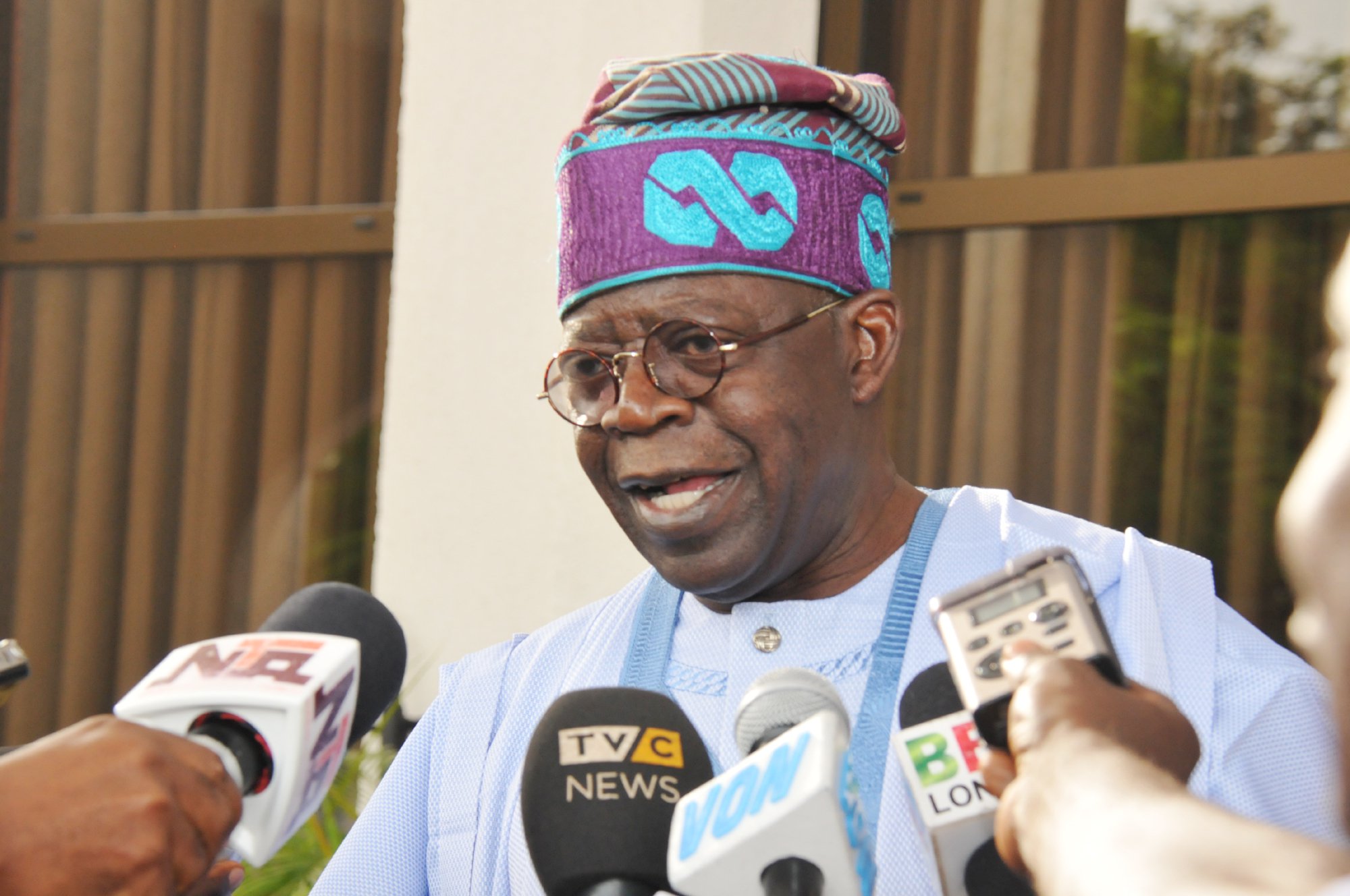
President Bola Tinubu says he has no regrets over the removal of petrol subsidy and other economic reforms introduced by his administration, insisting that Nigeria could not borrow its way to greatness.
Meanwhile, Minister of Finance and Coordinating Minister of the Economy, Taiwo Oyedele, has warned Nigerians against returning to petrol subsidy. He said the backtrack could trigger capital flight, undermining investor confidence and pushing the Naira to N3,000, N3,500 or even N4,000 per dollar.
But the Director of Media and Publicity of the African Democratic Congress (ADC) Presidential Campaign Council (PCC), Kola Ologbondiyan, challenged Oyedele to publish the economic model behind his warning that a return to fuel subsidy could push the naira to N4,000 per dollar.
The President spoke on Monday during the City Boys Movement retreat in Abuja, where he charged members of the group to mobilise support for his administration ahead of the 2027 general elections, insisting that the country’s future mattered more than the ambition of any individual candidate.
“No regrets,” Tinubu said, insisting that his administration would not be pushed back from its reform agenda.
He took a swipe at his political opponents, promising to restore the petrol subsidy, saying Nigeria could no longer afford to pay the fuel subsidy, and warning that reversing the policy would take the country back to an unsustainable economic path.
Defending his decision to remove the subsidy on his first day in office, Tinubu said the country was on the verge of financial collapse and could no longer afford the policy’s cost.
Tinubu also sought to reassure Nigerians about the direction of the economy, arguing that growth was steady and that the sacrifices associated with his reforms would ultimately offer citizens a future worth believing in.
Oyedele disclosed during a press briefing of the International Monetary Fund (IMF) and World Bank Annual Meetings in Bangkok, Thailand, yesterday, that investors had repeatedly questioned whether the government would abandon its reforms ahead of the next election cycle.
Ruling out the reversal of the government’s economic reforms, he maintained that any signal that Tinubu’s administration was contemplating or reinstating the subsidy would immediately affect financial markets, raise borrowing costs and worsen economic pressures on households.
“In all the meetings I have had, I came to a conclusion that the markets, including the domestic market, which you can read from the capital market, and the international market, have largely written off the opposition in Nigeria as unserious.
“If, for any reason, the President were to say we are merely considering the return of fuel subsidy, capital would react immediately, airfares would struggle, the naira would come under severe pressure, potentially moving towards 3,000, 3,500 or even 4,000.
The very fuel people want subsidised would become far more expensive in Naira terms,” Oyedele warned.
However, Ologbondiyan accused the Federal government of using fear to discourage debate on fuel subsidy, insisting that Nigerians deserve evidence, not alarming projections, on the potential economic consequences of restoring the policy.
Speaking to journalists, he described the minister’s warning as scaremongering and demanded that the government explain how it arrived at the projected exchange rate.
“The Minister of Finance is merely scaremongering. He cannot claim that a return to fuel subsidy will cause the naira to depreciate to N4,000 to the dollar without showing Nigerians the model behind that projection,” he said.
He questioned the reliance on investors’ concerns to oppose a subsidy’s return, challenging the government to identify the sources of the projections and disclose their calculations.
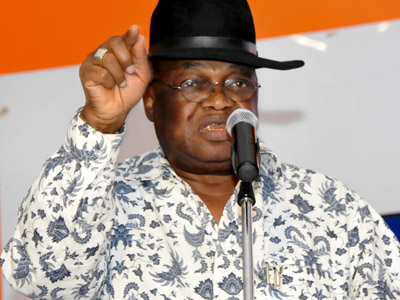
President Bola Tinubu has expressed sadness over the death of Ambassador Patrick Dele Cole, describing him as a distinguished diplomat, journalist, politician and public servant.
Cole died at 86.
In a statement on Saturday, Tinubu said Cole devoted his life to national service and brought distinction to his work in diplomacy, journalism and politics.
“His career reflected the enduring value of dialogue, tact, mutual respect and the pursuit of shared interests in advancing national development and international cooperation,” the President said.
Tinubu noted Cole’s contributions to Nigeria’s media landscape, particularly as Managing Director of the Daily Times, where he upheld the role of the press in holding public officials accountable, speaking truth to power and strengthening democratic governance.
“His legacy in journalism and public life remains an enduring part of our national story,” he said.
The President said at 86, Cole witnessed defining moments in Nigeria’s history and contributed to national development, adding that his life stands as a testament to experience, principled engagement and commitment to public good.
Tinubu extended condolences to Cole’s family, friends, professional associates and all whose lives he touched, praying that memories of his remarkable life will bring comfort and strength.
“May Almighty God grant Ambassador Cole eternal rest and give his family and all who mourn him the fortitude to bear this profound loss,” he said.


