Metro
Two Years Anniversary: Sanwo-Olu Slashes Fare on Lagos Blue Line by 50%

- /home/rhoncare/pointblank.ng/wp-content/plugins/mvp-social-buttons/mvp-social-buttons.php on line 27
https://pointblank.ng/wp-content/uploads/2025/09/IMG-20230831-WA0758-1000x600.jpg&description=Two Years Anniversary: Sanwo-Olu Slashes Fare on Lagos Blue Line by 50%', 'pinterestShare', 'width=750,height=350'); return false;" title="Pin This Post">
- Share
- Tweet /home/rhoncare/pointblank.ng/wp-content/plugins/mvp-social-buttons/mvp-social-buttons.php on line 69
https://pointblank.ng/wp-content/uploads/2025/09/IMG-20230831-WA0758-1000x600.jpg&description=Two Years Anniversary: Sanwo-Olu Slashes Fare on Lagos Blue Line by 50%', 'pinterestShare', 'width=750,height=350'); return false;" title="Pin This Post">
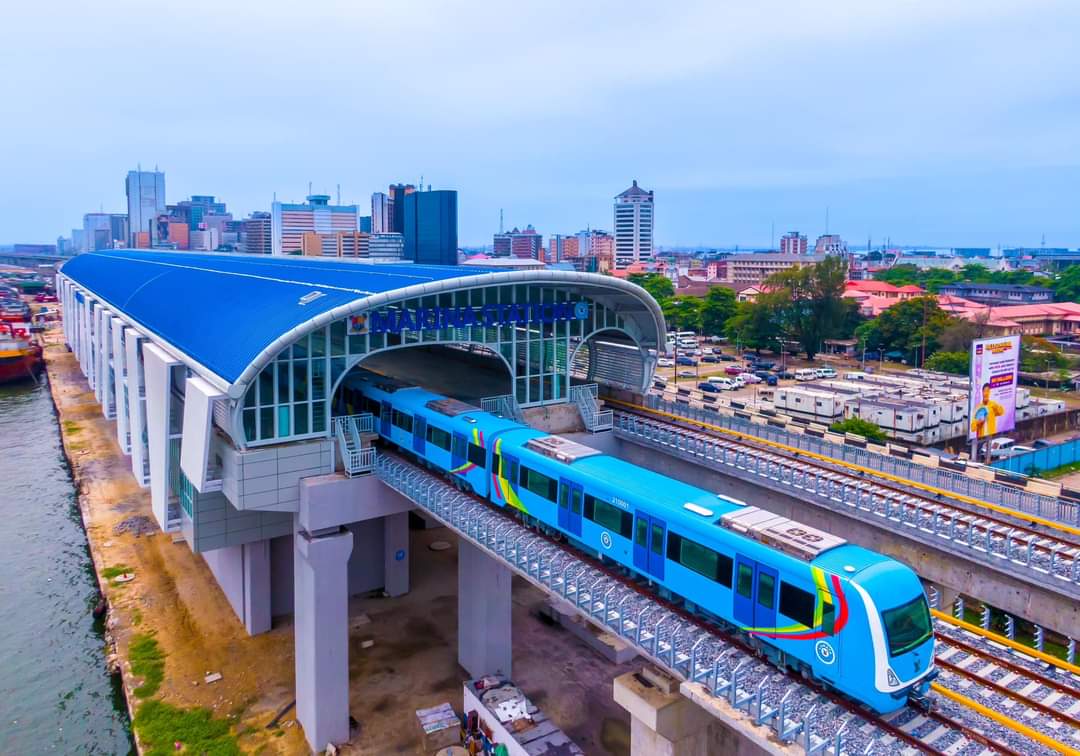
Lagos State governor, Babajide Sanwo-Olu, has announced a 50 per cent discount on fares for the Lagos Rail Mass Transit (LRMT) Blue Line to mark its second anniversary, effective Thursday, September 4, 2025.
The governor, in a statement ato residents via his official X handle on Wednesday, highlighted the successes of the Blue Line since its launch two years ago, disclosing that the rail system has transported more than five million passengers without a single accident.
He said: “Dear Lagosians, two years ago, we took a bold step with the launch of the Lagos Rail Mass Transit Blue Line. Today, as I look back on how far we have come, I feel a deep sense of pride and gratitude.
“In these two years, the Blue Line has carried more than five million passengers safely, without a single accident. Trains now run every ten minutes, making over 90 trips each day. Journeys that once took much longer have become faster and easier.”
He noted that the milestone reflects the state’s commitment to building transport infrastructure that delivers value to residents.
According to him, the project has eased commuting challenges and demonstrated the power of collective trust and dedication.
“These achievements show that when we work with dedication and purpose, we can build systems that truly serve the people,” he added.
Sanwo-Olu expressed appreciation to Lagosians for their support, describing the Blue Line as “a project that belongs to all of us.”
He said the anniversary discount was designed to encourage more residents to experience the modern rail service.
“To mark this second anniversary, I am pleased to announce a 50 per cent reduction in fares on the Blue Line for tomorrow, Thursday, September 4, 2025. If you have not yet experienced the Blue Line, I encourage you to take a ride and see what we have built together,” the governor stated.
Looking ahead, Sanwo-Olu reaffirmed his administration’s resolve to improve mobility in the city through safer, faster, and more efficient transport systems.
“Our journey is far from over. Step by step, we are creating the Lagos we all desire, building a city where moving around is easier, safer, and faster. Together, we are shaping the Lagos of our future,” he said.
The Blue Line, launched in September 2023, is the first of several rail projects envisioned under the state’s integrated mass transit strategy, designed to reduce congestion, improve efficiency, and enhance productivity in Africa’s most populous city.



From smartphones and laptops to
vehicles and AI systems, semiconductors are essential to modern technology. Yet, the expertise required to design these components remains concentrated in a relatively small number of global
technology hubs.
ChipMango is working to expand access to semiconductor engineering skills and commercial opportunities for African engineers. Its journey also highlights why initiatives such as EIB’s Boost Africa matter. By supporting venture capital funds investing in innovative African businesses, Boost Africa helps strengthen the financing ecosystem needed to develop specialised technology companies. Watch the video to learn how
ChipMango is contributing to Africa’s place in the global technology industry.
Watch the video:
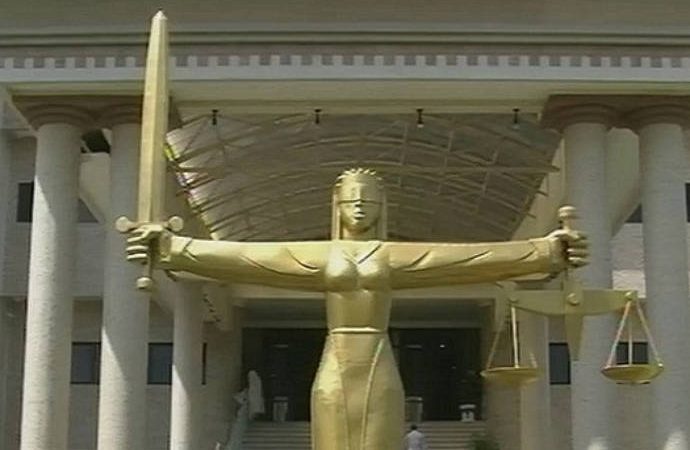
The Court of Appeal has inaugurated 375 judges for election petition tribunals across the country ahead of the 2027 general elections, setting in motion preparations for the adjudication of electoral disputes that may arise from the polls.
President of the Court of Appeal, Justice Monica Dongban-Mensem, inaugurated the judges on Monday at the Body of Benchers Complex in Abuja, coming 68 days before the 2027 general elections.
The tribunals will hear and determine petitions arising from elections into the National and State Houses of Assembly, as well as governorship elections, in line with the provisions of the 1999 Constitution, as amended.
Speaking at the inauguration, Dongban-Mensem said the exercise represents an important institutional step towards safeguarding constitutional democracy, upholding the rule of law and preserving the integrity of Nigeria’s electoral process.
She stressed that the responsibility of the judiciary extends beyond the formal determination of disputes, noting that the manner in which election petitions are handled has significant implications for public confidence in democratic governance.
“This gathering is more than a ceremonial event; it is an important institutional preparation for one of the most consequential responsibilities entrusted to the judiciary,” she said.
Dongban-Mensem maintained that the credibility of democratic institutions depends not only on the conduct of elections but also on the availability of impartial and effective judicial mechanisms for resolving disagreements over electoral outcomes.
“The credibility of democracy depends not only on the conduct of elections but also on the existence of impartial, effective, and timely mechanisms for resolving electoral disputes,” she added.
She further explained that the judiciary’s responsibility in electoral matters is central to ensure that the outcome of democratic contests is subjected to lawful scrutiny whenever challenged.
“Through the fair determination of such disputes, the Judiciary safeguards the people’s mandate, upholds constitutional supremacy and sustains public confidence in democratic governance,” Dongban-Mensem noted.
Providing a breakdown of the tribunal membership, Dongban-Mensem disclosed that the 375 judges were nominated from various courts and judicial institutions across the country.
She said 138 of the judges are returning members who had previously served on election petition tribunals, while 237 are newly nominated.
“Of this number, 138 are returning members with previous Tribunal experience, while 237 are newly nominated members,” she said.
The composition brings together judicial officers with previous experience in election petition proceedings and newly nominated members who will be participating in the tribunal process for the first time.
The Court of Appeal President urged the judges to approach their assignments with a strong sense of responsibility, reminding them that their conduct and decisions would attract considerable public scrutiny.
She cautioned them, in particular, to remain mindful of the significance of their judicial responsibilities in determining disputes capable of affecting the political fortunes of candidates and parties, as well as public confidence in the electoral process.
The tribunal judges are expected to discharge their duties in accordance with the Constitution and applicable electoral laws, ensuring that petitions brought before them receive fair and lawful consideration.
The inauguration is pursuant to the constitutional and statutory framework governing the establishment and operation of election petition tribunals in Nigeria.
Section 285(1) and (2) of the 1999 Constitution, as amended, vests in the President of the Court of Appeal the responsibility of constituting election petition tribunals to adjudicate disputes arising from National and State Houses of Assembly elections, as well as governorship elections.
Similarly, Section 134(3)(a) and (b) of the Electoral Act, 2026, prescribes timelines for constituting the tribunals and opening their registries.
These provisions establish the legal framework for the tribunals to commence operations and entertain petitions arising from the elections.
The inauguration of the 375 judges comes as the country prepares for the 2027 general elections, with the judiciary expected to play a critical role in resolving post-election disputes and determining challenges to electoral outcomes in accordance with the law.

The Nigeria Democratic Congress (NDC) governorship candidate in Lagos, Funso Doherty, has accused vested interests within the State’s informal transport sector of frustrating efforts to modernise public transportation.
Doherty made the remarks during the Lagos governorship debate on Friday organised by the Nigeria Debate Consortium comprising Channels Television, TVC News, The PUNCH, TheCable and Vanguard, where he criticised the continued reliance on ageing commercial buses and the influence of the agbero system in the State’s transport sector.
He questioned why successive administrations had failed to modernise public transportation despite the thousands of rickety buses operating across Lagos.
“Our public transportation system is not modernised. Thousands of rickety buses are moving around. We must ask ourselves: are these what our people deserve? Why has it taken so long to modernise public transportation?” he asked.
The NDC candidate argued that the failure to reform the system is not accidental, alleging that powerful interests benefit from the existing arrangement.
“In my opinion, the lack of modern transportation is not by accident. There are vested interests in operating the bus system the way it is. Many of us understand the agbero system; there is an ecosystem around it, and there is no political will to deal with that problem,” he said.
Doherty, who promised to overhaul the State’s public transportation system if elected, said his administration would not be beholden to informal transport networks.
“We would modernise public transportation because we would be elected by the people and not by the agbero network,” he added.