
Metro
Uda Nkwa: Legacies of Eze Aro VII, Mazi Kanu Oji, Revisited

- /home/rhoncare/pointblank.ng/wp-content/plugins/mvp-social-buttons/mvp-social-buttons.php on line 27
https://pointblank.ng/wp-content/uploads/2025/02/IMG-20250212-WA0096-1000x600.jpg&description=Uda Nkwa: Legacies of Eze Aro VII, Mazi Kanu Oji, Revisited', 'pinterestShare', 'width=750,height=350'); return false;" title="Pin This Post">
- Share
- Tweet /home/rhoncare/pointblank.ng/wp-content/plugins/mvp-social-buttons/mvp-social-buttons.php on line 69
https://pointblank.ng/wp-content/uploads/2025/02/IMG-20250212-WA0096-1000x600.jpg&description=Uda Nkwa: Legacies of Eze Aro VII, Mazi Kanu Oji, Revisited', 'pinterestShare', 'width=750,height=350'); return false;" title="Pin This Post">
As the drumbeat sounded, it echoed memories of Nigeria’s longest-serving monarch, whose legacies transcended generations.
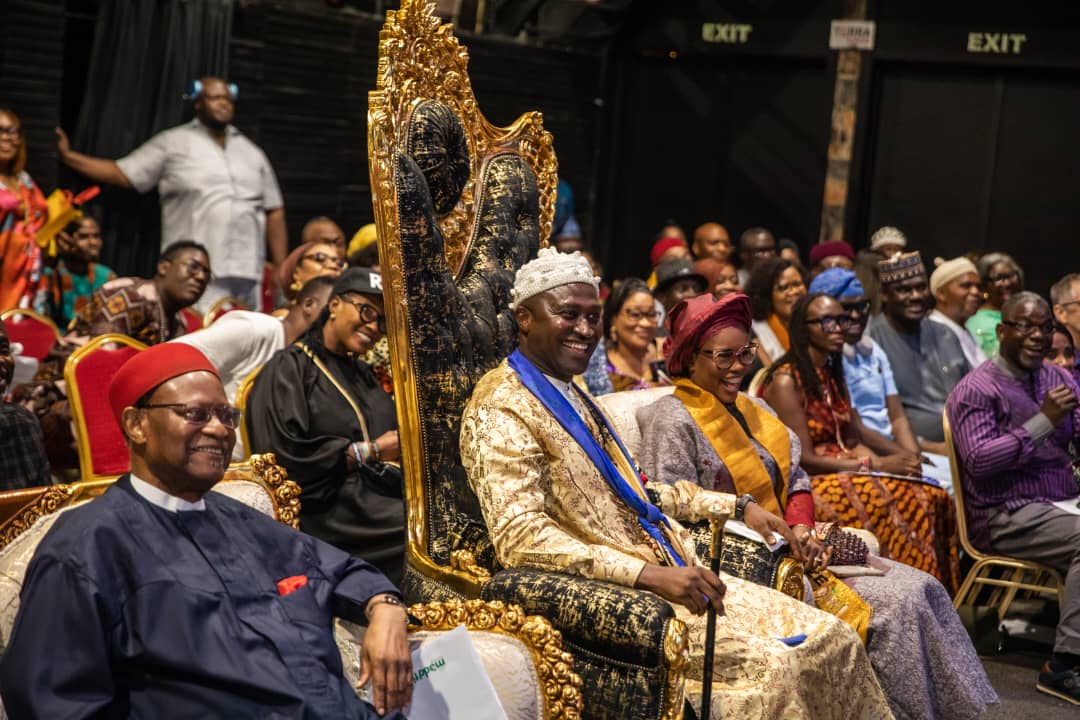
It was Uda Nkwa, a Command Performance depicting the legendary reign of His Majesty Mazi Kanu Oji, Eze Aro VII of Arochukwu Kingdom, before an elite audience in Lagos, on February 2, 2025.
Scripted by Dr Ikechukwu Erojikwe of UNN, the play was produced by Joseph Edgar, and hosted in honour of Eze Aro IX, His Eminence Dr Eberechukwu Oji, at the prestigious Terra Kulture on Victoria Island.
Like the maiden public performance in homeland Arochukwu Kingdom on December 27 – as component part of the events marking the 2024 Aro Day celebration – the Lagos episode was a big show, which attracted top socialites, industry titans, art and culture aficionados, the clergy and foreign nationals.
Performed by a cast of young and talented artistes, the stage show depicted the exceptional leadership sagacity of the legendary Eze Kanu Oji, which earned him honours from the British Empire.
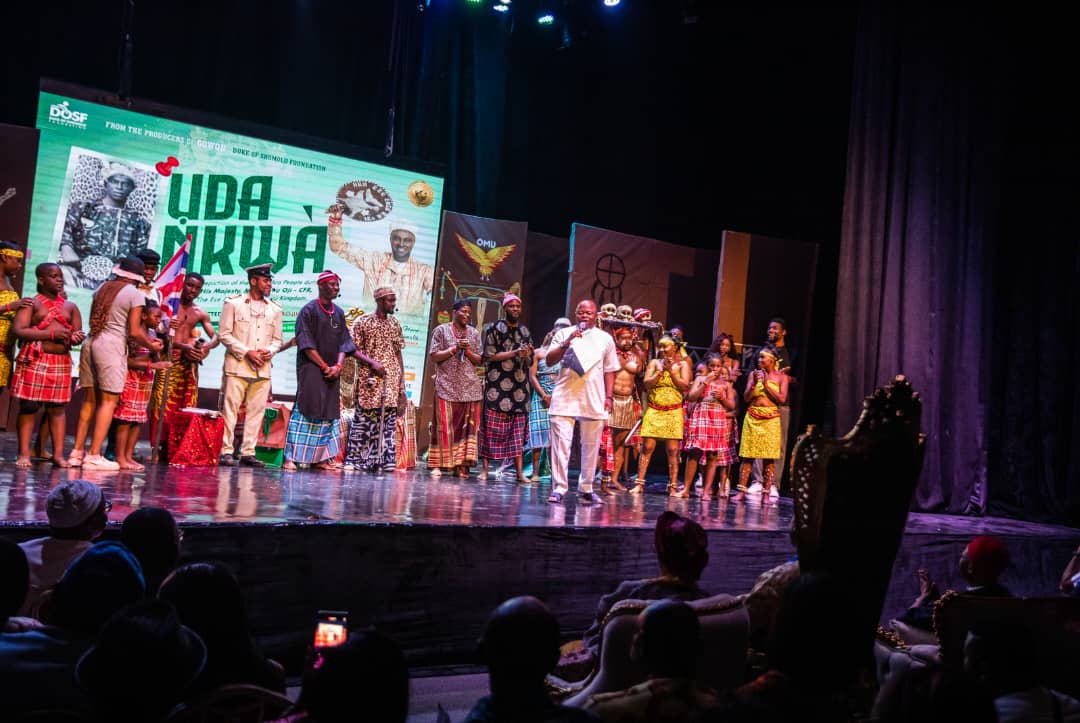
The play demonstrated how the legendary Eze Aro, during his 73-year reign, deployed his God-given wisdom to resolve otherwise knotty issues, and maintain peace in his kingdom.
Following the captivating theatre performance at Terra Kulture, guests were invited to indulge in a delightful refreshment spread, graciously hosted by Princewill Utchay, the group’s chairman.
Under the impressive glow of decorative string led lights at the Prime Chinese Restaurant on Victoria Island, a symbolic evening unfolded, honouring the life of the legendary Eze Kanu Oji.
As the night progressed, vibrant Aro cultural dances intertwined with the rhythmic steps of Urhobo performers, led by Olorogun Oskar Ibru, who energized the atmosphere, compelling guests to their feet.
The celebrations echoed the rich cultural heritage of the Aro Kingdom, known for its spirit and unity.
The event held a sentimental significance, marking not just a celebration of the current Eze Aro, but also serving as a poignant reminder of a gathering from 24 years ago. Specifically on March 12, 2001, the then Eze Aro, Eze Ogbonnaya Okoro, CFR, was warmly welcomed at the same venue, initiating the Aro 2002 Centenary Commemoration of the Aro-British war.
Now, celebrating the iconic Eze Kanu Oji, who ruled for an astonishing 73 years (1914-1987) and was amongst the first traditional rulers conferred with Nigerian’s National honours at inception in 1964, the night felt like a beautiful continuum of tradition and respect for leadership.
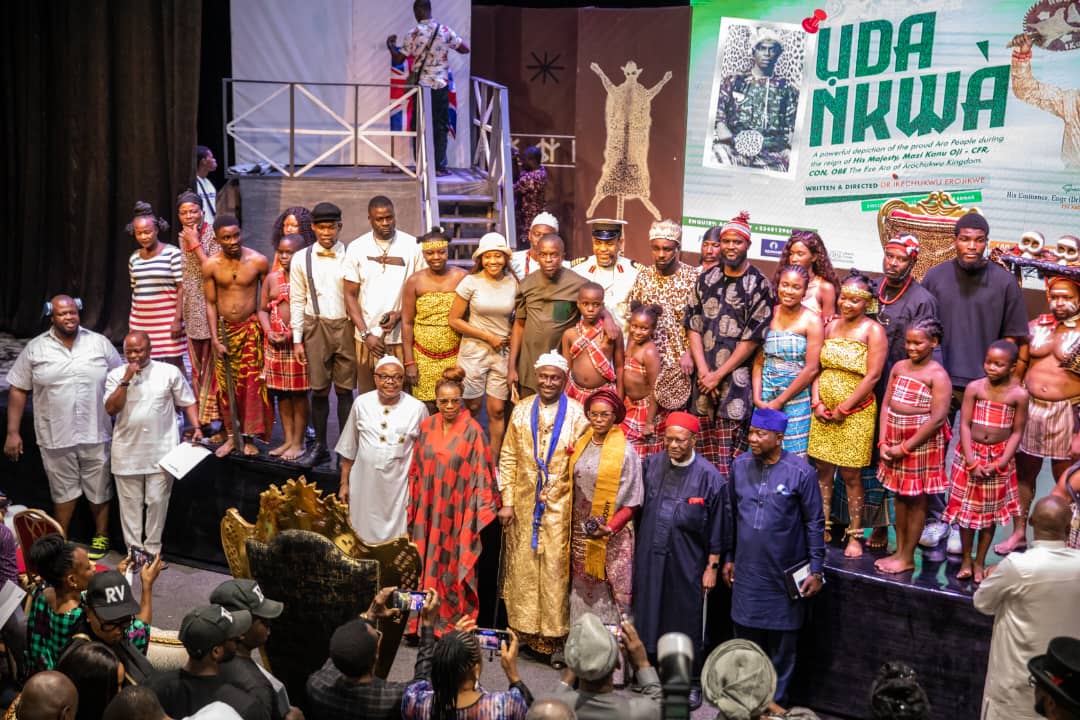
Eze Kanu Oji, CFR, CON, OBE, a figure enshrined in respect, represents more than mere lineage; he embodies a legacy deeply intertwined with the nation’s history.
He was hosted by three Nigerian heads of State across decades: Tafawa Balewa in 1965; Olusegun Obasanjo in 1976; and Ibrahim Babaginda in 1986, adding to the weight of his reign and the significance of this night.
As His Eminence Dr. Eberechukwu Oji, the grandson of this revered monarch, he carries forth not only his ancestral legacy but also the hopes of his people.
“It is a unique moment for us,” Princewill Utchay remarked during his opening address, “not merely to celebrate a king but to honour the greatness that has united the Aro Kingdom and the larger Nigerian community.”
Prime Chinese Restaurant plays a pivotal role in this tradition, ensuring that heritage is celebrated amid the culinary delight they provide.
Beyond the cultural festivities, the evening highlighted Eze Aro’s remarkable contributions to the oil industry and his recent engagement at the World Bank/IMF session in Washington, USA, where he advocated sustainable solutions in Africa’s energy sector on October 22, 2024. His journey from the oil fields to esteemed leadership presents an inspiring narrative, resonating with both local and global ambitions.
Indeed the gathering was not for lengthy speeches, as emphasized by the host, but rather to “express gratitude and respect for Eze Eberehukwu Oji’s commitment to unity and development, and to pledge our total support and loyalty to His Eminence Dr Eberechukwu Oji, Eze Aro.
“As the first grandson of Mazi T.K. Utchay the designer of Omu Aro – the Coat of Arms of the Aro Kingdom in 1925 – it is traditional that I align myself with this great king of our time.”
Mazi Sam Ohuabunwa, a venerable elder of Arochukwu Kingdom, led the opening prayer, invoking blessings for peace and prosperity in Nigeria, a heartfelt moment that resonated with everyone present.
In her vote of thanks, Prof. Ngozi Osarenren passionately reaffirmed the night’s purpose: to celebrate unity and the bridge-building efforts of Eze Eberechukwu Oji.
Within just a year of his ascendancy, he has been pivotal in forming the Southern Nigeria Traditional Rulers Council, forging alliances among various traditional leaders including the Oni of Ife; Dein of Agbor; Jaja of Opobo; Obong of Calabar; Obi of Isingwu; Elegushi of Ikate; Olofin of Isheri; Alara of Ilara; Amanyanabo of Abonnema, amongst others.
As the evening drew to a close, Eze Eberechukwu Oji, flanked by his adorable queen, Ugoeze Nneoma, expressed deep appreciation to Prime Chinese Restaurant, which has consistently served its customers with excellence for over three decades, twenty-four hours a day, seven days a week, inviting all Aro people to come together for communal growth and development.
His Eminence promised that the third leg of the play would be staged in Abuja, and subsequently taken to the United Kingdom.
In the spirit of the night, the Echoes of the Drum, laughter and music intertwined with promises of a united future, celebrating not just a lineage but a shared vision of greatness that transcends boundaries.
The legacy of Eze Aro continues to thrive, reminding all present of the rich culture and relentless spirit of the Aro Kingdom, and its importance in the tapestry of Nigeria’s history.
Some of the dignitaries present included a former Secretary-General of the Commonwealth, His Excellency, Chief Emeka Anyaoku; former President of the Pharmaceutical Society of Nigeria, Mazi Sam Ohuabunwa; Professor Ngozi Osarenren of University of Lagos; Treasurer-General of Nzuko Aro Worldwide, Mazi Adindu Elekwa and his wife Maria; former presidents of Nzuko Aro, Lagos branch, Mazi Jideofor Kanu; and Mazi Ejike Onwuchekwa; Chairman of AROSON, Lagos branch, Mazi Chinedu Nwankwo and his wife Nnenna; Dr JK Onwuchekwa and his wife Gift.
Others were the Publisher of Daily Times, Mr. Fidelis Anosike; Mr. Rufai Oseni of Arise TV; Nollywood actress Rita Dominic-Anosike; Showbiz presenter, Yemi Shodimu; Engr. Obioha Chijioke, Mazi Chimezie Orji; oil and gas magnet, Mazi Obioha Okorafor; Full Moon Hotel proprietor, Mazi Chike Okorafor; real estate developer, Mazi Emeka Okoronkwo; Ezienyi Club President, Mazi Udeaha Nwosu and his wife Ebere; Palace Secretary, Mazi Ugo Okoro and his wife Nancy, amongst several others.



The Edo State Special Criminal Court has sentenced four men to death for their involvement in the kidnapping of a woman at the Vegetable Market along Airport Road in Benin City.
Justice Aigbona Momodu handed down the sentences after finding the defendants guilty on multiple counts connected to the kidnapping case.
The convicts are Marvellous Isaac, Wisdom Michael, Rufus Emete Michael and Gift Raphael.
Isaac and Michael were sentenced to death on counts two through nine. They also received separate prison terms on other counts, including seven years on count one, while Isaac was sentenced to 10 years on count 10 and life imprisonment on count 11.
Rufus Emete Michael was sentenced to death on counts two, three, four, six and seven, in addition to a seven-year prison term on count one.
The fourth defendant, Gift Raphael, was sentenced to death on counts two, four, six and eight and received seven years imprisonment on count one.
Delivering the sentences, Justice Momodu ordered that the death sentences be carried out by hanging or lethal injection, in accordance with the court’s judgment.
The court also ordered the forfeiture of a JoJef pump-action firearm and ammunition tendered as exhibits during the trial.
The firearm, identified as Exhibit M, along with two unused cartridges and two spent cartridges listed as Exhibits E and E1, was ordered to be handed over to the Edo State Police Armourer at the State Criminal Investigation Department for destruction.
Justice Momodu directed that the exhibits be transferred to the police through the Deputy Director of the Criminal Division and destroyed within 30 days.
The convictions bring to an end the trial arising from the abduction of the woman at the Vegetable Market along Airport Road, an incident that added to concerns over kidnapping and armed crime in Benin City.
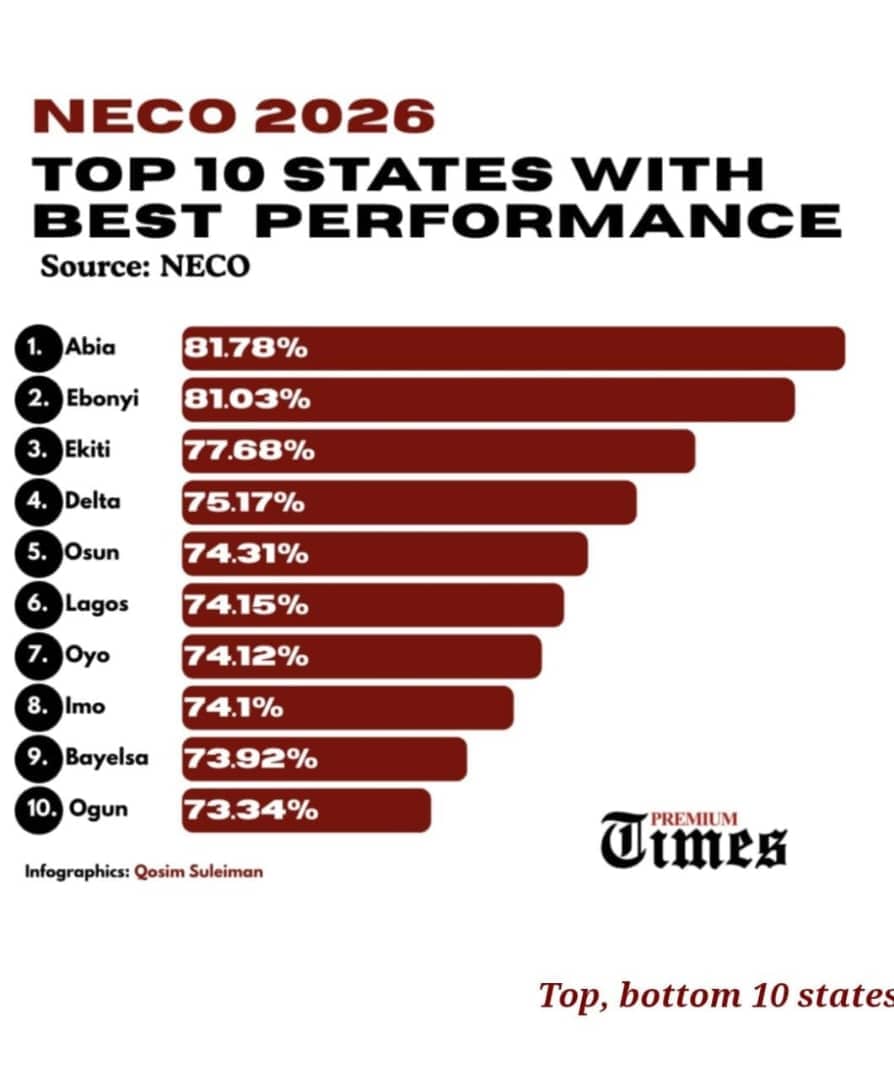
Osun State Governor, Senator Ademola Adeleke, has hailed the state’s strong performance in the 2026 National Examinations Council (NECO) Senior School Certificate Examination, describing the result as a positive reflection of ongoing efforts to reposition education in the state.
Osun placed fifth nationally in the 2026 NECO ranking, with 74.31 per cent of candidates recording at least five credits, including English Language and Mathematics.
While congratulating the students, teachers, parents, school administrators and other stakeholders, the governor noted that the state performance has been improving within a single digit rating for three consecutive years namely 2024, 2025 and 2026.
“Osun has moved from 33rd position in the 2022 NECO ranking to 5th in 2026, while improving its pass rate to 74.31 per cent. This is encouraging, and it shows that our sustained interventions in the education sector are yielding positive results,” the Governor said.
Governor Adeleke said the improved performance reflects his administration’s deliberate investment in the education sector, including the recruitment of additional teachers to strengthen the teaching workforce, while prioritising workers’ welfare and creating a more conducive environment for effective teaching and learning across public schools.
The Governor said the performance reinforces his administration’s determination to continue investing in education, noting that the objective is to build a system that gives every Osun child the knowledge, skills and opportunities needed to succeed.
“This result is encouraging, but we see it as a reason to do more. We will continue to invest in our schools, improve the learning environment, support our teachers and provide our students with the necessary tools to excel.
“We are building an education system that prepares our young people not only for examinations but for life,” the Governor said.
He assured that ongoing interventions in the education sector would be sustained and expanded, while urging students to remain committed to their studies.
His Excellency also commended teachers across the state for their dedication and sacrifices, assuring them that the administration would continue to prioritise measures that strengthen the education system and improve workers’ welfare.
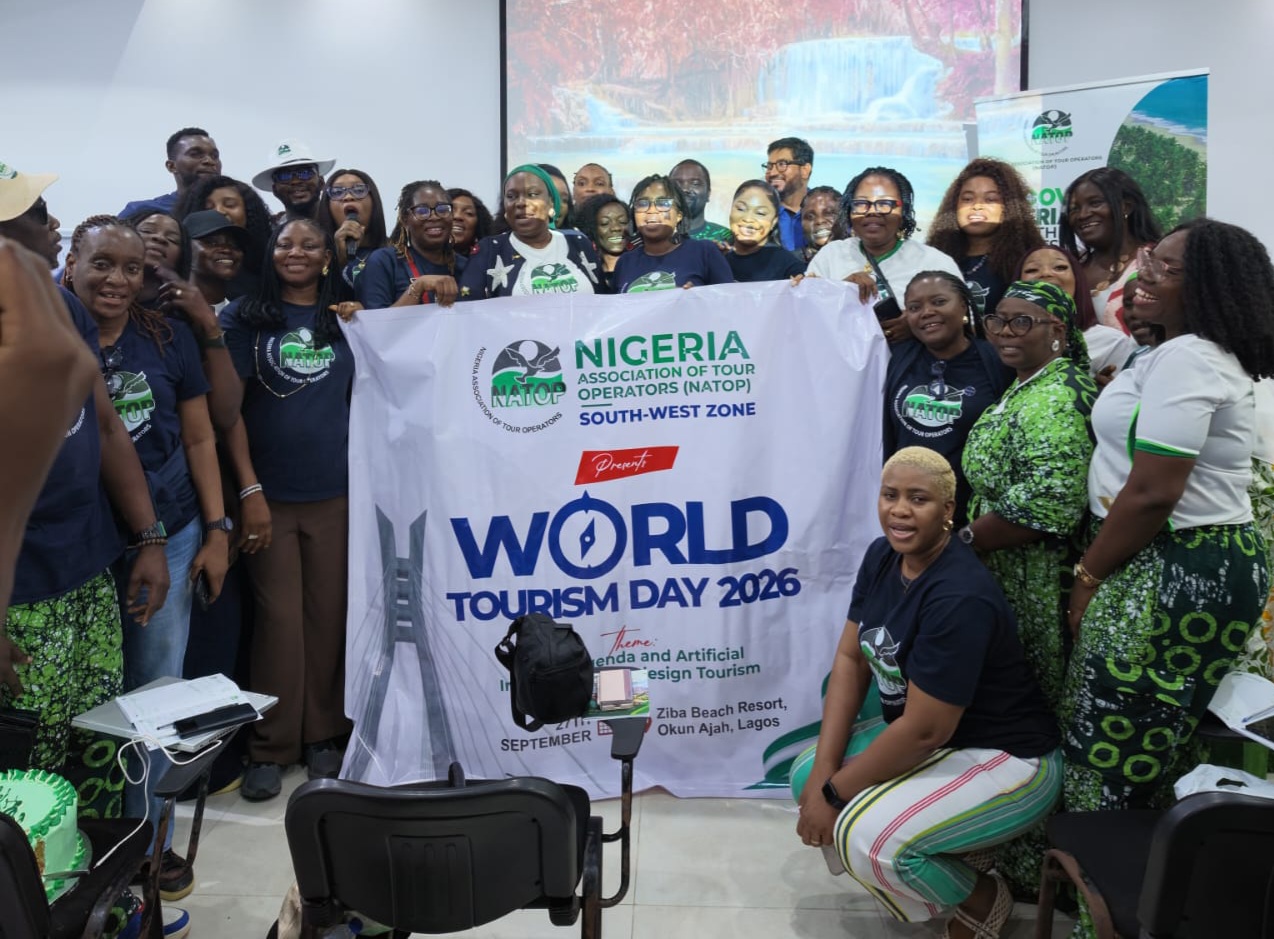
The Nigeria Association of Tour Operators (NATOP) marked the 2026 World Tourism Day with activities which capture capacity building, technology, destination promotion and domestic tourism, and celebration.
In the South West Zone, close to 200 tour operators gathered at Ziba Beach Resort, Lagos, for a special training focused on Artificial Intelligence and its application in tourism, equipping operators with digital tools to improve their businesses and destination marketing.
In Abuja, the FCT and Northern Zone, in collaboration with Naija Adventurers, staged a colourful Tourism Awareness Walk and Hike to the Centre of Nigeria.
The celebration also spread to the South-South Zone, where members marked the day with a destination tour, alongside activities to commemorate with the world tourism day celebrations.
In line with the theme for this year’s WTD celebration: ‘Digital agenda and artificial intelligence to redesign tourism’ the NATOP training on AI and application in tour operation at Ziba Beach Resort Lagos saw a large turnout of the members of the association.
The President of the association, Hajia Bolaji Mustapha explained that the idea for the location and training was to train members on how to do tour business, to know how to promote tourism digitally, using different AI tool and everything so that they will grow their businesses.
She said: “we follow the theme and, you know, blend with the old situation. Let’s do the training so that we attach it to the World Tourism Day with the theme that we have achieved something and also celebrate.”
She said the training will go a long way in helping the tour operators do greater content to digitally tell destination stories using AI, and also using the tool for expression.
Mustapha also explained why the association chose Ziba Beach Resort: “We always attach World Tourism Day to a tourism site. And definitely, if you look at this whole area and this community, that’s why we see that Ziba is a tourism site. We want to explore and of course. The resort newly launched its third phase. So, we will use this opportunity to look at their rooms, look at how we can sell this destination, to showcase it that the resort is actually in Nigeria, not Zanzibar. By using the place, we would kill two birds with one stones.
Facility tour of Ziba Beach Resort
“As tour operators who are willing to tell the good story of our Nigeria, we need to bring ourselves up to the speed, align with the digital revolution. Let everybody go digital. Because we also see the content creators are taking our business, we want to align it with what they do. We are the ones that understand the business and we’ll be able to tell the story better, so that anybody coming to Nigeria will be able to discover Nigeria with the experts.”
Also commenting on the celebration, the NATOP Vice President South West and chairman of the WTD Organizing Committee for the zone, Mrs. Wonuola Olatunde-Lamidi explained why NATOP South West’s usage of the 2026 WTD for training. She said many of the members still have a lot to learn about the tour business, and that some do not understand the foundation of the business, including how to create packages hence the need for the training.
Mrs. Olatunde-Lamidi spoke further: “Many don’t understand the foundation of what it is to create a tour package. And when you have people that are not well-trained in an industry, the industry will not grow. The kind of people that you also have will not have enough earning power to do many things. And because this is an industry that I have been in for 16 years, I run Diamonds and Pearls Travels with my husband. And I’ve seen Diamonds and Pearls Travels metamorphose into a company where people don’t just look at us as travel agents. We have become a Destination Management Company (DMC). We have become a trusted brand. We have become a company that when we talk about a destination, people want to go to that destination because of how we have portrayed the destination. And you may not realize that, as tour operators, you can actually decide where people go. You can make people go to a particular destination by marketing it, by letting them know the benefits of that destination.”
The tour operators had opportunity to tour the resort and unwind during the programme.


