
Headlines
UN Warns of ‘Catastrophe’ As Sudan War Rages On

- /home/rhoncare/pointblank.ng/wp-content/plugins/mvp-social-buttons/mvp-social-buttons.php on line 27
https://pointblank.ng/wp-content/uploads/2023/05/Sudan.jpg&description=UN Warns of ‘Catastrophe’ As Sudan War Rages On', 'pinterestShare', 'width=750,height=350'); return false;" title="Pin This Post">
- Share
- Tweet /home/rhoncare/pointblank.ng/wp-content/plugins/mvp-social-buttons/mvp-social-buttons.php on line 69
https://pointblank.ng/wp-content/uploads/2023/05/Sudan.jpg&description=UN Warns of ‘Catastrophe’ As Sudan War Rages On', 'pinterestShare', 'width=750,height=350'); return false;" title="Pin This Post">
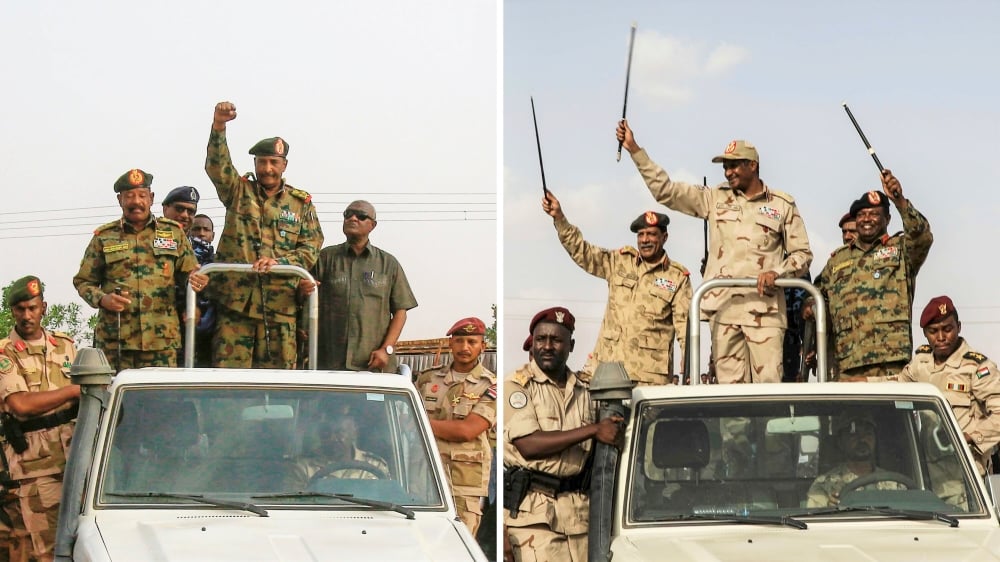
Fierce fighting between rival generals raged on in Sudan Tuesday despite the latest truce, as warnings multiplied of the potential for a “catastrophic” humanitarian crisis with hundreds of thousands of refugees.
Many more cannot afford the arduous journey to Sudan’s borders, and have been forced to hole up inside the city of five million people with dwindling supplies of food, water and electricity.
“We are hearing some sporadic gunfire, the roaring of a warplane and the anti-aircraft fire at it,” said one resident of south Khartoum.
In a Monday briefing, the top United Nations aid official in Sudan, Abdou Dieng, warned that the situation was turning into “a full-blown catastrophe”.
Kenyan President William Ruto said the conflict had reached “catastrophic levels” with the warring generals declining “to heed the calls by the Inter-Governmental Authority on Development (IGAD), the African Union and the international community to cease fire.”
In a virtual meeting with senior UN officials, Ruto said it was imperative to find ways to provide humanitarian relief “with or without a ceasefire”.
Burhan and Daglo, who fell out after carrying out a 2021 military coup which derailed Sudan’s transition to elective civilian rule, have flouted multiple ceasefires, the latest a 72-hour extension agreed late on Sunday.
Foreign governments have scrambled to evacuate their citizens. Over the past 10 days, thousands of foreigners have been brought to safety by air or sea in operations that are now winding down.
Russia’s armed forces said on Tuesday they were evacuating more than 200 people from Sudan on four military transport planes.
Nearly 500 people arrived in the Saudi port of Jeddah on Monday aboard two vessels, one a US Navy ship, the other Saudi.
– Relief trickles in –
Top UN humanitarian official Martin Griffiths arrived in Nairobi on Monday on a mission to find ways to bring relief to the millions of civilians trapped inside Sudan.
“The situation unfolding there (in Sudan) since April 15 is catastrophic,” he said on Twitter.
Sudan’s turmoil has seen hospitals shelled, humanitarian facilities looted and foreign aid groups forced to suspend most of their operations.
At least 528 have been killed and some 4,600 wounded in the violence, according to the health ministry.
The United Nations’ refugee agency, UNHCR, said it was bracing for “the possibility that over 800,000 people may flee the fighting in Sudan for neighbouring countries”.
The World Health Organization warned that the fighting was pushing Sudan’s already ailing health sector toward “disaster” with only 16 percent of health facilities in Khartoum still functioning.
The WHO said that it had delivered six containers of medical equipment to Port Sudan on the Red Sea coast, including supplies for treating trauma injuries and severe acute malnutrition. It had also distributed scarce fuel to hospitals which rely on generators for power.
– Darfur chaos –
Beyond Khartoum, lawlessness has engulfed the West Darfur state capital, El Geneina, where at least 96 people have been reported killed since the start of the fighting, according to UN figures.
More than 330,000 people have been displaced, over 70 percent of them in West and South Darfur states, according to the International Organization for Migration.
“The health system has completely collapsed in Geneina,” the doctors’ union said, adding that looting of clinics and camps for the displaced had forced several agencies to carry out “emergency evacuations” for their teams.
On Friday, Doctors Without Borders said the fighting had forced it to halt “almost all activities in West Darfur”.
The Darfur region is still scarred by a war that erupted in 2003 when then hardline president Omar al-Bashir unleashed the Janjaweed militia, mainly recruited from Arab pastoralist tribes, against ethnic-minority rebels.
The scorched-earth campaign left at least 300,000 people dead and close to 2.5 million displaced, according to UN figures.
The Janjaweed — which rights groups have accused of atrocities in Darfur — later evolved into the RSF, which was formally created in 2013.
AFP


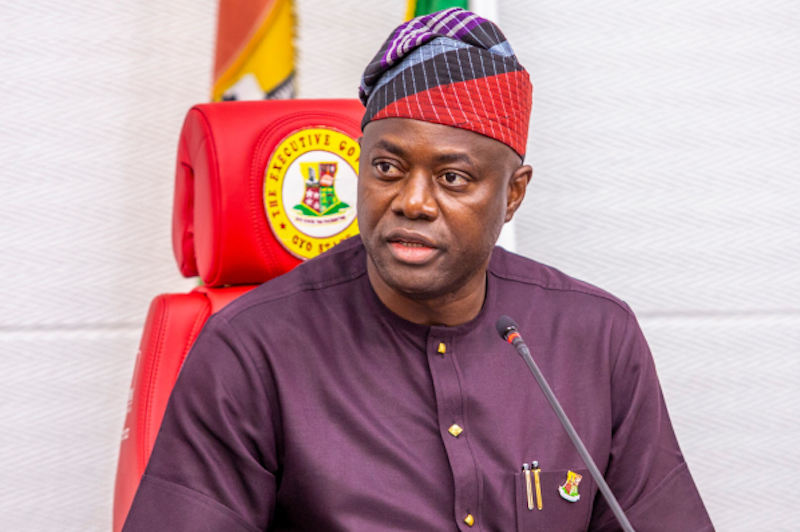
The Allied Peoples Movement (APM) presidential candidate, Seyi Makinde, on Thursday, criticised President Bola Tinubu’s “Emi Lokan” slogan ahead of the 2027 presidential election.
Makinde said Nigerians do not need “turn-by-turn nepotism”, arguing that voters should be free to decide who becomes the country’s next president in 2027.
The Oyo State governor spoke during the APM’s town hall meeting in Akure, Ondo State.
Makinde asked: “How can someone say ‘Eemi lokan’ in a country like Nigeria? You were given the opportunity. If you recall the 1999 presidential election, the South-West voted massively for Baba Olu Falae, but the rest of Nigerians voted for Baba Obasanjo. So, this is not an issue that only the South-West can resolve; it is an issue we must address collectively as Nigerians.
“We do not want ‘turn-by-turn nepotism’, nor do we want a situation where people say, ‘I will vote for projects because it is my turn’. You will not finish those projects, and when it becomes someone else’s turn, they will do the same thing. We will end up with a Nigeria where we cannot get value for the resources belonging to Nigerians.
“The Reset Nigeria agenda is about building a country where infrastructure development supports economic growth and addresses the concerns of young people and women.
“Once we fix our economy, no zone will be left behind, and no demographic group will be left behind.”
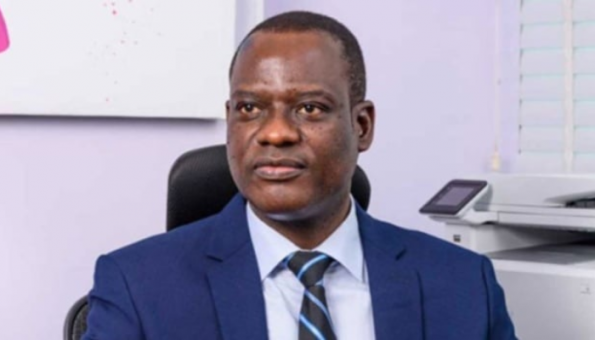
Minister of Finance and Coordinating Minister of the Economy, Taiwo Oyedele, has denied saying the Federal government will introduce a fuel tax when the economy stabilises and income levels improve.
In a post on X on Tuesday, Oyedele said his remarks during an interview with ARISE News was misrepresented, insisting that a “fuel tax is not on the table.”
However, during the interview with Rotus Odiri, ARISE News Business Correspondent, on the sidelines of the 2026 International Monetary Fund and World Bank annual meetings in Bangkok, Thailand, Oyedele said the tax would come when income levels improve enough for Nigerians to accommodate it.
He said taxes account for between 20 and 80 percent of pump prices in some countries, while many African countries impose between six and 10 different taxes on fuel products.
He said introducing fuel tax while petrol was still subsidised would have been counterproductive because government would effectively be paying the tax itself.
According to him, imposing the tax immediately after removal of petrol subsidy would be insensitive to Nigerians.
“The objective should be that instead of trying to suppress prices, which hasn’t worked for us, it hasn’t worked for any country in the world, not one. Instead of trying to suppress prices, think about how to grow income faster than prices rise,” Oyedele said.
“That’s how you bring prosperity and grow the middle class and that is exactly what we are doing as led by Mr. President himself.
“At the appropriate time, when the economy has stabilizes and income level will be able to accommodate it, those taxes will come. Not because we want to impose taxes,” he added.
In his Tuesday post, the minister reiterated that introducing a fuel tax at this time would be insensitive following removal of petrol subsidy, describing reports that government will introduce the levy when the economy stabilises as “fake news.”
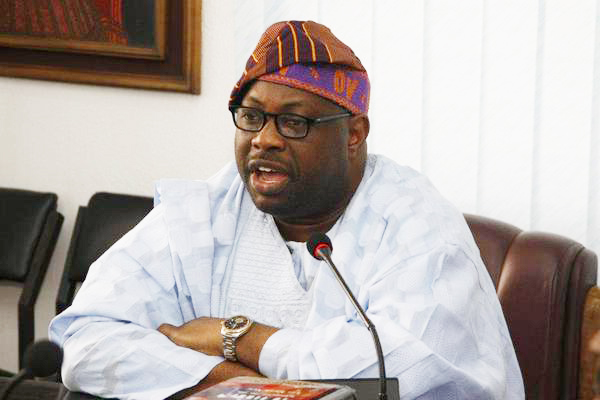
A chieftain of the African Democratic Congress (ADC), and Deputy Director of the Presidential Campaign Council, Chief Dele Momodu, has described former Vice-President Atiku Abubakar as the most nationally formidable and experienced among the leading contenders for the 2027 presidential election.
Momodu said Atiku’s experience at the national level distinguishes him from President Bola Tinubu and former Anambra State Governor, Peter Obi.
He stated this on Wednesday during an interview on Eagle 102.5 FM, Ilese-Ijebu, in Abeokuta.
“If you look at the antecedents of the three major candidates, between Atiku Abubakar and Peter Obi, you will see that Atiku is the most experienced. He has managed our country at the highest level,” he said.
Momodu traced Atiku’s political journey to the 1992 Social Democratic Party (SDP), presidential primary where he contested against late MKO Abiola and stepped down for him.
He said Atiku accepted the outcome without crisis even after he was not picked as Abiola’s running mate, describing it as a mark of true democratic temperament.
“He is the only one who started from around 1992, contested the SDP primary against Abiola and stepped down with uncommon equanimity. He did not make any noise,” Momodu said.
He noted that Atiku was among the founders of the Peoples Democratic Party, PDP, and served as Vice-President from 1999 to 2007.
Comparing Atiku with Obi, Momodu argued that while Obi’s best was demonstrated in Anambra, Atiku’s was at the presidency level managing the national economy.
“Peter Obi has tried his best in Anambra, while Atiku’s best is at the level of vice president controlling the economy of Nigeria. The difference is clear. He has matured in experience and exposure,” he said.
Momodu also said President Tinubu’s experience was largely limited to Lagos.
“What I’m trying to say is that Tinubu’s experience was limited to Lagos, and that is why when he became president, he thought Nigeria was Lagos. And he has found out now that Nigeria is not Lagos,” he said.
He argued that the current economic hardship under the present administration did not show prosperity, insisting Atiku remained better positioned to lead the country.
“Well, we are yet to see that prosperity, and if yesterday would determine today and tomorrow, it is obvious that Tinubu should retire now and let someone else do it,” Momodu added.
DailyPost


