
Metro
Unrest in Lagos As Truck Crushes Ojudu Students, Number of Casualties Unconfirmed

- /home/rhoncare/pointblank.ng/wp-content/plugins/mvp-social-buttons/mvp-social-buttons.php on line 27
https://pointblank.ng/wp-content/uploads/2021/12/Ojudu-2.jpeg&description=Unrest in Lagos As Truck Crushes Ojudu Students, Number of Casualties Unconfirmed', 'pinterestShare', 'width=750,height=350'); return false;" title="Pin This Post">
- Share
- Tweet /home/rhoncare/pointblank.ng/wp-content/plugins/mvp-social-buttons/mvp-social-buttons.php on line 69
https://pointblank.ng/wp-content/uploads/2021/12/Ojudu-2.jpeg&description=Unrest in Lagos As Truck Crushes Ojudu Students, Number of Casualties Unconfirmed', 'pinterestShare', 'width=750,height=350'); return false;" title="Pin This Post">
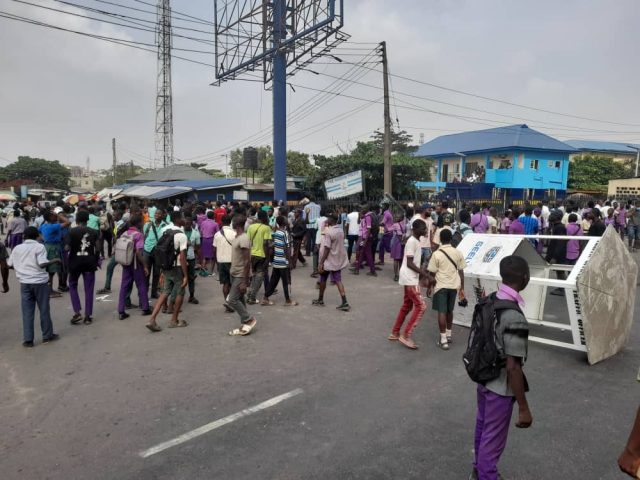
There was pandemonium on Tuesday when a truck driver reportedly crushed no fewer than 10 students on Ogunnusi Road, Grammar School Bus-Stop, Lagos State.
It was learnt that the students were going home after closing from school around 2pm when the truck ran over them.
PUNCH Metro gathered that the driver of the white DAF truck was being chased by officials of the Federal Road Safety Corps when he lost control of the vehicle and rammed into the pupils, who were by the roadside.
The driver, who took to his heels after the incident, was reportedly caught at Aguda – about two kilometres from the scene of the incident – by some students and youths who accosted him and later handed him over to the police.
The truck, which was loaded with soap, was set ablaze.
A student of Ojodu Grammar School, where the victims were coming from, claimed that 17 students died, while several others were injured.
He said, “I was also at the bus stop trying to buy doughnut while the other students were trying to cross the road. Some boys had crossed earlier, so they were at the other side of the road abusing the female students for not being smart enough to cross like them.
“The students gave the truck driver a sign to wait for them to cross, but it didn’t stop and the truck crushed 17 of them to death, while some were injured.
“The driver did not wait, so other students and adults chased the driver to Ogba, where he was arrested and his truck was burnt.”
A commercial motorcyclist, who witnessed the incident, said he saw 15 dead bodies.
He said, “I have never witnessed such a terrible thing in my life. I saw 15 pupils lying lifeless on the floor. The incident occurred around 2 pm.”
A riot broke out when policemen deployed in the scene fired tear gas canisters to disperse the crowd.
Angry youths subsequently broke the windscreens of about 10 trucks plying the road and beat up one of the drivers.
Bonfires were also made on Aina Street, close to the Ojodu Police Station.
PUNCH Metro observed as several parents, amid tears, paced around the scene of the incident, looking for their children.
“I have not seen my two children. One is in JSS1, while the other is in JSS2. They are Nafisat and Abdulqowiyu Amusan. We live in Lambe (Ogun State),” one of the distraught mothers lamented.
She later called one of our correspondents back on the telephone that the children were found at the Lagos State Accident and Emergency Centre, Ojota.
Pupils were seen in groups discussing the incident, as some mentioned the names of the victims.
“I saw Sodiq lying down covered in blood. Two pupils, who were siblings, were also crushed,” a pupil, Olamide Joseph, said.
Our correspondents learnt that some of the students were rushed to the Royan Hospital, St. Timothy Catholic Hospital, and the Lagos State Accident and Emergency Centre, Ojota, among other medical facilities.
During a visit to one of the hospitals, our correspondents saw some of the injured students on the bed receiving treatment.
The FRSC, in a statement by the Public Education Officer of the Lagos State Command, Olabisi Sonusi, on Tuesday, denied involvement in the accident, adding that seven pupils were rescued by its officials, while another seven were rescued by first responders.
The statement read in part, “An articulated truck was said to have lost control at the Grammar School Bus Stop along Ogunnusi Road, Lagos, which caused the death of unverified number of students and leaving many injured.
“The men of the FRSC were called upon by passersby to help intervene after the crash happened.
“The general public should disregard the disgruntled information being circulated by some unscrupulous elements that FRSC men caused the crash. We want to place on record that our men were not in any way involved in the cause of the crash as patrol activities was not ongoing along that axis as of the time of the crash.”
The Director-General of the Lagos State Emergency Management Agency, Dr Femi Oke-Osanyintolu, said he could not also ascertain the number of casualties.
He said, “This unfortunate incident provoked some bystanders into taking the law into their hands by attempting to lynch policemen, LASTMA officials and other first responders at the scene, destroying vehicles and other properties.
“The attack by the miscreants led the emergency team to head back to base as the scene was insecure and unsafe for rescue and recovery operations.”
The state Police Public Relations Officer, Adekunle Ajisebutu, in a statement on Tuesday, said two people died in the accident while 12 people were injured.
Ajisebutu noted that the driver, Bolaji Kabiru, had also been arrested.
He said, “Traffic personnel from the Motor Traffic Department of the Ojodu Police Division immediately visited the scene. Corpses of the dead students (identity not yet known) were removed with the support of officers of the FRSC and were deposited at the morgue of the Mainland Hospital, Yaba, for autopsy. The erring driver has been apprehended and kept in police custody.
“However, the angry students, who were later joined by hoodlums, set the accidented vehicle ablaze. They also attacked the Ojodu Police Station in their large number, demanding the release of the driver for jungle justice.
“However, when their demand was not met, they became violent. In the process, they destroyed four vehicles parked on the premises of the police station and another mobile truck on the highway.
“To avoid total breakdown of law and order, the Lagos State Commissioner of Police, Hakeem Odumosu, immediately ordered deployment of policemen comprising tactical teams, Rapid Response Squad and others to the scene to maintain law and order.
“The protesters were professionally dispersed with minimum force without resulting to any further injury.
“While commiserating with the bereaved families who lost their loved ones in the fatal motor accident, the Commissioner of Police appeals to sympathisers and other members of the public to allow the police carry out a thorough investigation and avoid seeking self help.”
The Punch


The FCT Council of the Nigeria Labour Congress (NLC) has declared an indefinite strike across the Federal Capital Territory, directing workers in the public and private sectors to shut down schools, hospitals, government offices and other establishments.
The strike began on Wednesday, October 7, following the expiration of a seven-day ultimatum issued to the FCT Administration (FCTA) over the promotion of teachers.
The labour council said the FCTA failed to satisfactorily address its demands, particularly its call for the removal of the requirement for vacancies before teachers can be promoted.
The dispute centres on the FCTA’s position that teachers can only advance when vacancies are available. The NLC said the policy has contributed to years of career stagnation among teachers and is not applicable to the teaching profession.
In resolutions signed by its Chairman, Comrade Knabayi Adalo, the council argued that FCT teachers are not core civil servants or pool staff and should therefore not be subjected to a vacancy-based promotion system designed for pool officers.
It said teachers recruited by the FCT Universal Basic Education Board, UBEB, and FCT Secondary Education Board, SEB, were employed specifically to teach and should be promoted “as and when due.”
The NLC is also demanding that teachers who became eligible for promotion in 2025 be allowed to sit for their promotion examination before or alongside the 2026 candidates.
Another demand is the withdrawal of redeployment and demotion letters issued to directors who benefited from the Harmonised Retirement Age for Teachers Act, 2022.
The council is further calling for the immediate reinstatement of the dissolved management teams of FCT SEB and FCT UBEB.
The decision to commence the strike was taken at the council’s State Executive Council, SEC, meeting held on October 6, at the NLC FCT Secretariat.
At the meeting, the labour body rejected the FCTA’s response to its ultimatum, describing it as “neither clear, positive, nor genuine.”
According to the SEC, the response did not address the vacancy requirement, which it described as the “root cause of career stagnation”, and was also silent on what the council called the “illegal redeployment of directors.”
“The response of the FCTA is ambiguous and totally unacceptable,” the SEC said.
The council added that it “will no longer tolerate the continued dehumanisation of FCT teachers through obnoxious policies alien to the teaching profession.”
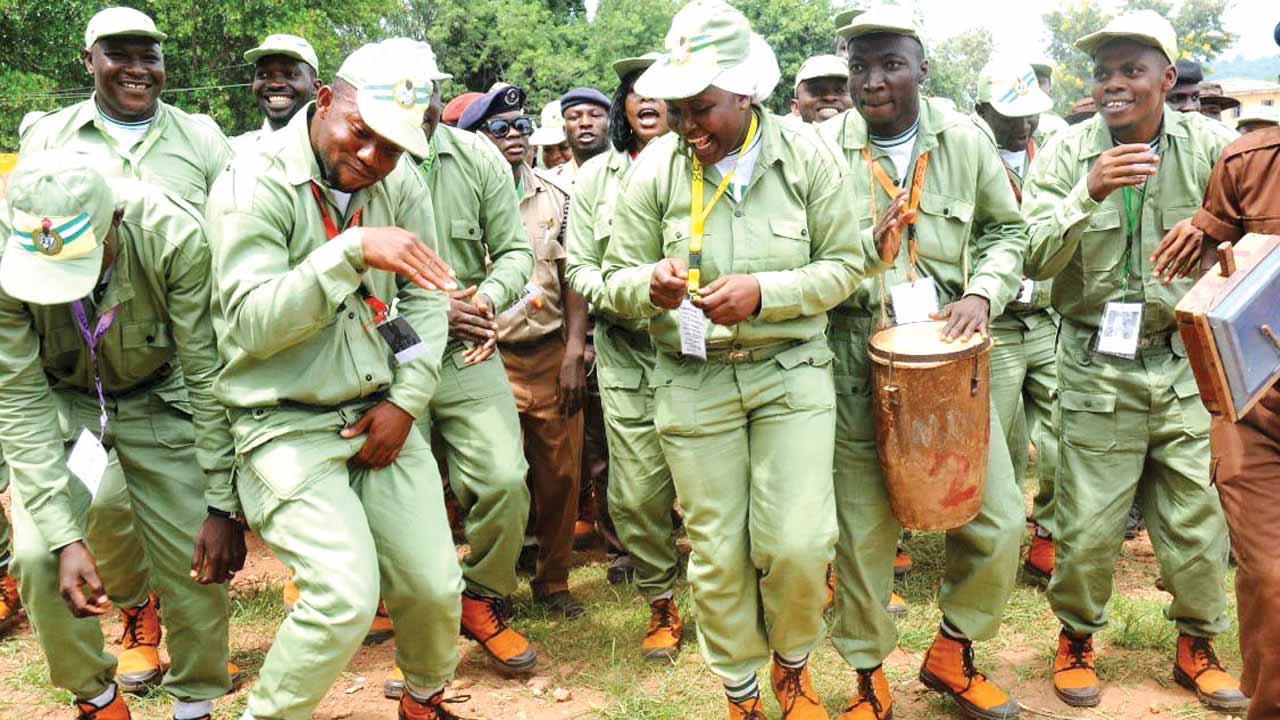
The 20 prospective National Youth Service Corps (NYSC) members and one other abducted along the Owerri-Onitsha Road in Imo State have regained their freedom.
The victims were rescued from the Amakohia-Ubi forest in Owerri West Local Government Area of the state following a coordinated operation involving security agencies.
They have since been taken to the Department of State Services (DSS) Hospital in Owerri, where they are receiving medical attention and undergoing necessary medical checks.
The Director-General of the National Youth Service Corps Brigadier General Olakunle Oluseye Nafiu visited the DSS Clinic in Owerri, where he addressed the rescued victims.
He was in company of the Imo State Commissioner of Police, Director DSS and Brigade Commander 34 artillery Imo State.
Details of the operation, including whether any arrests were made or ransom was paid, have not yet been made public.
However, in a statement issued by the Force Public Relations Officer, Ani Iniedu, the police said, “Efforts are ongoing to apprehend those responsible for the abduction, as the Police and other security agencies sustain coordinated operations towards bringing all culpable persons to justice.”
The victims were abducted on October 1 while travelling from Ibadan, Oyo State, to NYSC orientation camps in Abia and Akwa Ibom states.
The two buses conveying the prospective corps members came under attack near Umunoha in the Mbaitoli Local Government Area of Imo State.
Following the abduction, security agencies launched a coordinated search-and-rescue operation to locate the victims and their abductors.
The Imo State Police Command later said its operatives had located the kidnappers’ camp through drone surveillance but were unable to immediately enter the location because it was reportedly mined with improvised explosive devices (IEDs).
The police subsequently deployed additional operational assets, including bulldozers and armoured personnel carriers, as efforts intensified to reach the victims.
The development also triggered anxiety among the victims’ families after reports that the abductors were demanding ₦50 million for each victim.
Police had earlier confirmed that 10 victims were rescued following the attack, while efforts continued to locate the remaining abductees.
The latest development brings an end to the ordeal of the 20 corps members and the other abducted victim, who have now been reunited with safety and are receiving medical attention in Owerri.
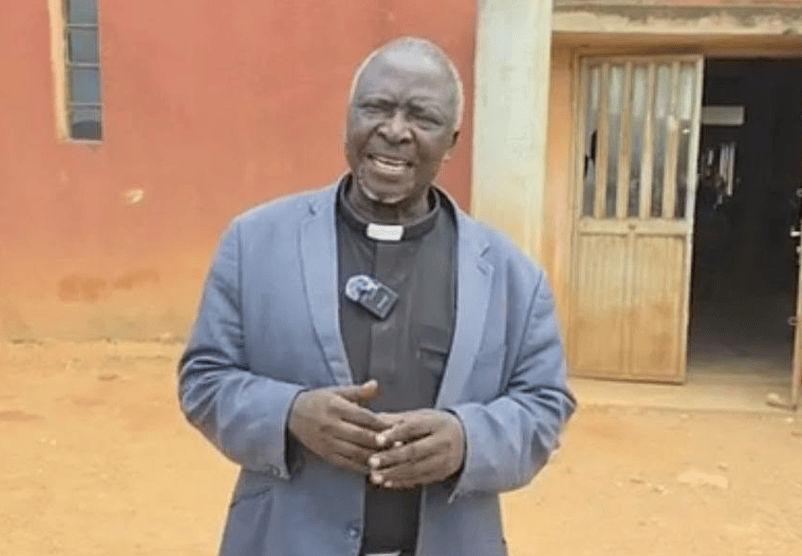
The Regional Chairman of Church of Christ in Nations (COCIN), Barkin Ladi Local Government Area of Plateau State, Rev. Ezekiel Dachomo, has denied reports that he prayed for the re-election of President Bola Tinubu and Vice President Kashim Shettima in the 2027 presidential election.
Dachomo, who is currently in Israel on what he described as his first International Christian Advocacy Tour, said his visit was aimed at drawing the attention of world leaders to the plight of Christians in Plateau.
The cleric made the clarification in a social media post on Monday night following reports that he had prayed for the success of the All Progressives Congress (APC) presidential ticket and expressed support for the Muslim-Muslim ticket.
Dachomo said his earlier post, in which he prayed for Nigeria, had been misconstrued as an endorsement of Tinubu and Shettima ahead of the 2027 election.
According to him, there was nowhere in the post where he prayed for the President and Vice-President to win the election.
“People are trying to frame me, saying I prayed for a Muslim-Muslim ticket. But I did not, and I will never pray for a Muslim-Muslim ticket because Nigeria belongs to both Muslims and Christians,” he said.
Dachomo said his prayers were for the well-being and success of Nigeria and its citizens, irrespective of their religious affiliations.
“I pray for both Muslims and Christians in Nigeria. I pray for Nigeria to succeed. If you truly want to come to God, come with a clean heart,” he added.
The cleric further stated, “I did not pray for President Tinubu and Vice President Shettima to win in 2027. My prayers have always been for Nigeria to succeed.”
Dachomo’s clarification came amid reactions to his ongoing advocacy tour in Israel, where he is seeking international attention to security challenges and what he described as the persecution of Christians in Plateau.


