
Metro
Untamed Freedom: The Root Cause of Human Errors!


By Tolulope A. Adegoke
“GREED is a matter of CHARACTER. Greed should never be your CREED! When research on the major cause of crisis in the world was made, it was said that some set of people had GREED, and greed became a global phenomenon. Discipline powers character for effective leadership, while Character Disciplines Power. Character and Ethics are national and global security issues. Living right is a global security issue. When you live right, you are simply affecting a lot of people vice-versa.”– Tolulope A. Adegoke
The ultimate reason of revisiting this aspect of leadership enlightenment is to solve the societal menace that have ravaged, hampered and tampered with the core systems of many Third World Countries, which has its roots in what I refer to as Untamed Freedom- the root cause of Character failure in humans, corporates and nations at large.
We must understand that true leadership spreads its tentacles to the core aspects of human relations which helps to nurture, build and deliver the authentic requirement for true and sustainable leadership, and its implications on the economy, technology and politics of nations across the world which focuses on ‘Character’ as the ‘authentic key for leadership, its relevance and as well establishing ways of harnessing it to building effective leaders in all sectors of human endeavours for the benefits of mankind.
It must also be understood that character is the major weakness of most developing nations across the world, and how ineffective leadership practices have groomed unethical conduct.
‘Ethics’ could be said to be a disturbing aspect of leadership and how it has so much affected the majority of Third World Countries which are having issues in handling sustainable leadership. Therefore, a blessed nation like Nigeria could enlarge its coasts by judiciously maximizing its endowments through effective ‘Character’ in individual and joint leadership endeavours, thereby enlightening the readers and her citizenries with the facts that character sees people as great ASSETS and not mere properties that could be carelessly ignored.
Here, I shall focus on the indispensable and irrefutable power of Character (as vital requirement for leadership in Nation Building)’ with the aim of building capacities through greater enlightenment strategy towards fixing today, and as well handing over a better world to coming generations, even as trends evolve globally.
Do you know why leaders are so weak in many developing countries of the world? The answer is lack of CHARACTER. The deficiency of character is what makes bad leadership, while bad leadership is what breeds gross mismanagement, unethical conducts and bad policies. Gross misconducts and mismanagement are what destroys or impedes national growths and development.
Bad leaders are one thing in the day and another thing in the night! They make deals that are shady and then look pretty or handsome on the camera. They rule instead of leading; they grind instead of guiding. The Holy Book says, God is the same Yesterday, Today and Forever! It also reveals that Night and Day are the same to God! This is a clear indication that God has CHARACTER! And He has given unto us the same thing called CHARACTER!
If you are going to be what you were born or created or desired to be, then you must develop the first principle God gave to us (MAN), which is CHARACTER! For us to deliver the present and future maximally, and as well fulfil divine intentions (purpose), we need to study God Himself and His manner of operations and creations according to Genesis chapter 1 verses 26 (NKJV): ‘Let us make Man in Our IMAGE after our likeness: and let them have DOMINION over the fish of the sea, and over the fowl of the air, and over the cattle, and over all the earth, and over every creeping thing that creepeth upon the earth.’ Nothing is therefore IMPOSSIBLE, because I and you came out of God. He is the most authentic leadership example to be followed, because principles are fixed and not meant to be broken. He has made us in His IMAGE and LIKENESS to have DOMINION over the works of His Hands. It should be noted that the first gift given to Man by God is IMAGE. Whatever God gives you first is what you need first.
What then is IMAGE? The simplest meaning of Image is CHARACTER. God said let Man have my distinctive qualities (Character). What is most expected of you by God is that you become a Leader of worth by consistently living and leading by examples embedded in the qualities of true CHARACTER. Truth be told, the number one fitness and proof of leadership today is CHARACTER. This is the foundation of leadership!
Everybody was born to be a leader. We are not meant to rule over people, but lead and guide one another through and to what is right! Leaders lead by examples, guides by principles and guard by strategies. Leaders lead in specific areas of gifting or expertise. Leaders are not careless beings, but intentional beings who upholds the tenets of selfless and authentic lifestyles in a bid to correct the past errors and set new records for the benefits of the coming generation, which makes leadership a continuous pattern, as it requires passing the tenets as baton unto others for continuity (from generation to generations).
The word CHARACTER means FIXED, Predictable, Stable, Dependable and Ready. These are qualities that are unchanging and dependable like the STATUE. For example, have a good look at a STATUE; what is it doing where you put it or fix it? Whatever inflictive words you say to the ‘statue’, it still stands? It doesn’t react to the negative vibes, but to good maintenance cultures. That is simply CHARACTER!
As a leader that you are, can we trust you to be the same, even in the dark? Are you the same person when no one is watching? What would you do if none would ever find out? What are those things you secretly do on your mobile phones or laptops or on the internet? Are you the same person all the time? Are you the same person even when given freedom or power? When life rains on you, are you the same person? Are you the same person, no matter what people say to you or about you? That is why Third World Countries are having issues handling true and sustainable leadership! What is commonly present in many of these regions of the world are RULERS, not LEADERS, due to CHARACTER deficiency.
Requirements of Character for Sustainable Leadership
Do you have CHARACTER? When you change location, are you still the same person? When given a title, are you still the same person? LEADERSHIP demands CHARACTER. A reliable example of Character is PRINCIPLE, because it is Constant, it never changes. When you throw something up, it falls down… it is like that everywhere. Leadership requires CONSISTENCY! This is because the will of God never changes. No matter where you go, gravity is constant. Do you have Character? I want you to keep encouraging yourself to keep on developing CHARACTER. As leaders, who are empowered to save the present and the future. To impart our world positively, we must be unchanging if truly we are going to develop our powerful leadership capacities beyond mediocrity.
The Disturbing aspect of Leadership
The major disturbing aspect of leadership which most leaders do not consider to develop is ETHICS. Ethics is a result of character! The power of unethical behaviour affects everyone in the community, society, State, nation and the world at large. Ethics is personal, but it is never private! A few business or political leaders have no ETHICS; they make some unethical moves that can affect everyone. When you violate character, it is a personal decision, but it is not a private issue. You affect all of us. That is why corruption must never be tolerated anytime because one corrupt person affects everyone. Many developing nations are still struggling with their economy today, because of unethical behaviours by a majority that has fully established CORRUPTION as a practice that can now be overlooked, which have crippled the economy of these nations. Many people consider Nigeria to be a poor nation in spite of all the natural resources she is endowed with (Precious stones, crude oil, very fertile soil among others) because just a few set of people are unethical, and this tends to affects the entire population in the country. So many investors are currently scared to invest in some part of the developing nations because there are just a few set of people who would abuse such an investment which has therefore deprived so many people of the opportunities to be employed or to become job owners, just because a few people are unethical. You, therefore need to tell your neighbor ‘Do right for my sake’. If great leaders who have been absorbed by history had decided not to do what is right, what do you think would have happened to us today? A few chose to stand right, do right and make right. One decision could have affected the entire world. This is why it is so important for you to This is why it is so important for you to have character for the sake of the millions who will look up to you some day! This is why your gift is critical to your generation, but protecting it is much more important. GREED is a matter of CHARACTER. Greed should never be your CREED! When a research on the major cause of crisis in the world was made, it was said that some set of people had GREED, and greed became a global phenomenon. Discipline powers character for effective leadership, while Character Disciplines Power. Character and Ethics are national and global security issues. Living right is a global security issue. When you live right, you are simply affecting a lot of people vice-versa.
Thank you all for reading.


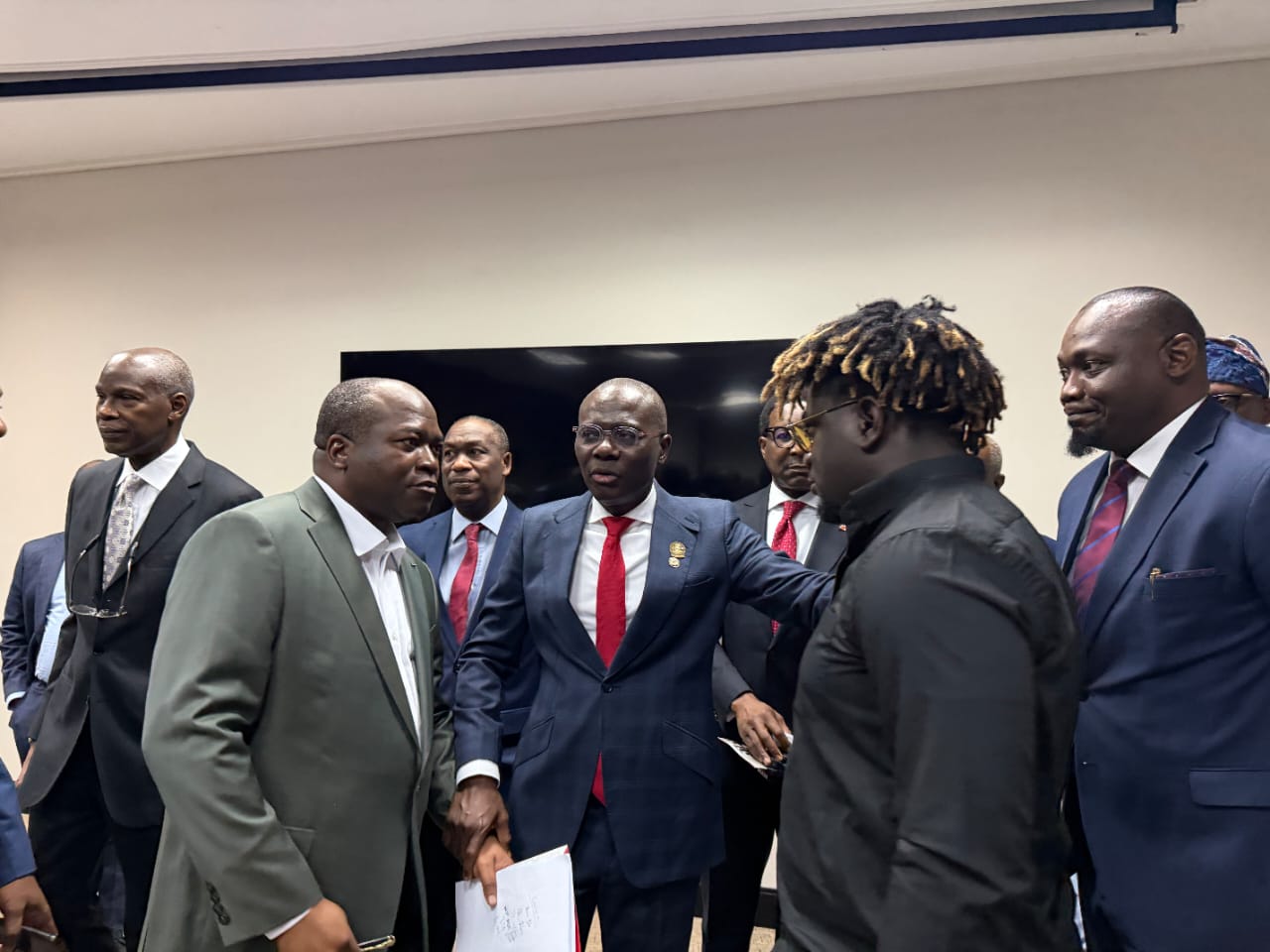
The Governor of Lagos State, Mr. Babajide Olusola Sanwo-Olu, has urged top chief executive officers in Nigeria’s financial and corporate sectors to scale up their support for the Lagos State Security Trust Fund (LSSTF), saying the state must now embark on an ambitious upgrade of its security architecture built heavily around intelligence, surveillance, and rapid-response technology.
Speaking at LSSTF-Organised private breakfast meeting with Gov. Sanwo-Olu for Bank CEOs and industry leaders in Lagos, the Governor said Lagos cannot afford security complacency at a time when global and domestic threats are becoming more complex. He noted that the LSSTF model based on transparency, joint ownership, and year-on-year accountability remains central to the state’s ability to consistently maintain relative safety.
“We have built one of the strongest public-private security partnerships anywhere in Africa,” Sanwo-Olu said. “For almost two decades, the LSSTF has shown that when government and the private sector work together with transparency and consistency, you get real results. But we must now move to the next stage. Lagos is bigger, busier, and more exposed than ever, and our security infrastructure must reflect that reality.”
The Governor explained that Lagos is currently overhauling its Command and Control Centre originally built over 15 years ago and migrating it into a more sophisticated nerve centre capable of integrating thousands of CCTV feeds, emergency calls, and multi-agency field operations in real time.
“Our Command centre has served Lagos well for over a decade, but technology has evolved,” he said. “We are rebuilding it into a state-of-the-art operations hub that can support modern surveillance tools, digital tracking systems, and faster coordination. This is essential for the Lagos of today.”
He revealed that while the state initially planned to deploy between 5,000 and 10,000 CCTV cameras, fewer than 1,000 are currently installed due to technological and funding limitations.
“We need to scale up massively,” the Governor stressed. “Cameras have become as important as patrol vehicles. They help us see, track, and respond before situations escalate. Lagos must not fall behind.”
Sanwo-Olu said the state is also strengthening its aerial surveillance capacity through a mix of helicopters, drones, and marine monitoring devices to enable faster emergency response, search-and-rescue operations, and monitoring of emerging high-density and waterfront communities.
“In today’s world, drones are not luxury tools, they are essential assets,” he noted. “We are working with Nigerian innovators to build drone systems tailored for Lagos. If global investors can fund local tech talent, we have no excuse not to support them ourselves.”
The Governor emphasized that security funding cannot be left solely to the government, noting that the private sector stands to gain the most from a stable, secure Lagos. “Security is the backbone of investment,” he said. “Your banks, your offices, your personnel, your assets, they all depend on a safe operating environment. We are doing our part, but we need your support to expand the tools and technology that keep Lagos safe.”
Sanwo-Olu added that Lagos currently funds more than half of the state’s overall security expenditure, providing vehicles, communication tools, protective gear, and logistics support to the Nigeria Police, military formations, FRSC, NDLEA, NSCDC and other agencies.
“The Lagos State Government has never taken the back seat,” he said. “But security challenges today require greater intelligence capabilities, more surveillance infrastructure, and better mobility equipment. This is where your contributions make the difference.”
He also pointed to the growing skyline of Lagos, with more than seventeen skyscrapers buildings coming in the State, and the expanding population as urgent reasons to invest in new-generation tools. “How do we secure these new developments without stronger surveillance? How do we protect millions of residents without better intelligence systems?” he asked. “The future of Lagos depends on the investments we make now.”
The Governor again introduced the newly appointed Executive Secretary/CEO of the LSSTF, Dr. Ayo Ogunsan, describing him as “a reliable and committed security professional who understands both the operational and strategic needs of the Fund.”
Gov. Sanwo-Olu praised the continuity of the LSSTF Board, noting that its stability and adherence to transparent reporting have sustained credibility for nearly two decades. “Every year, independent auditors and the public are able to see exactly how the Fund is run,” he said. “That level of accountability is why partners keep supporting us.”
Sanwo-Olu concluded by reaffirming that Lagos’ future as a global economic hub rests on the foundation of safety. “Our goal is simple,” he said. “We want a Lagos that is safe, resilient, and globally competitive. To achieve this, we need to deepen our investments in surveillance, intelligence, and rapid response. This is not just government business, it is a shared commitment. Let us secure tomorrow together.”
Earlier on his part, the Executive Secretary/CEO of LSSTF, Dr. Ayo Ogunsan noted that private sector-led funding is vital for the security funding agency, LSSTF to achieve its mandate in this New Year. He cited that virtually all security agencies in Lagos now look towards the Agency for support, but it will only meet those needs when it gets the private sector to own the security agenda in Lagos. He listed some of the critical security needs for 2026 to include multipurpose security helicopters and drones, APCs and water cannons, digital communication equipment, and smart CCTV cameras. Others are tactical training and infrastructural upgrades for the Police, operational vehicles, and ultramodern mechanical workshops.
Ogunsan calls for more contributions to the funding agency, “Security is not a cost to business. It is a risk mitigation strategy and a business enabler. A security risk translates to uninterrupted operations, protected assets, investor confidence, stable supply chains, and a vibrant social environment where talent and capital are attracted and retained. Every contribution to Lagos state security trust fund is deployed transparently and strategically based on clearly identified operational needs and approval by a predominantly private sector-led board. Your support directly strengthens the capacity of those charged with protecting the very environment in which your businesses operate.”
Meanwhile, the LSSTF’s CEO thanked the governor for his remarkable support to the agency, “May I also say that Mr. Governor has contributed immensely to providing most of the items I’ve enumerated, and we must thank him for that. He has consistently supported us. But we just need to do more. We need to do more so that we keep the state running, and that’s why we have come to you.”
By Tolulope A. Adegoke, PhD
“Leadership for our age is measured not by the height of the throne, but by the depth of its roots in integrity, the breadth of its embrace of collective talent, and the courage to cultivate systems that bear fruit for generations yet unseen” – Tolulope A. Adegoke, PhD.
Leadership today is at a crossroad. Around the world, in our communities, and within our organizations, old ways of leading are straining under new pressures. This isn’t just a theoretical discussion; it’s about the quality of our daily lives, the success of our businesses, and the future of our nations. Let’s walk through the current trends, understand their very real impacts, and then explore practical, hands-on solutions that can unlock a better future for everyone.
Part 1: The Leadership Landscape – Where We Stand
The Global Picture: Beyond the Solo Leader
The image of the all-powerful, decisive leader at the top of a pyramid is fading. Today, effective leadership looks different. It’s more about empathy and service than authority. People expect their leaders—in companies and governments—to be authentic, to listen, and to foster teams where everyone feels safe to contribute. Furthermore, leadership is now tightly linked to purpose and responsibility. It’s no longer just about profits or power; stakeholders demand action on climate, fair treatment of workers, and ethical governance. Leaders must also be tech-savvy guides, helping their people navigate constant digital change while dealing with unpredictable global events that disrupt even the best-laid plans.
Africa’s Dynamic Challenge: Youth and Promise
Africa’s story is one of incredible potential meeting stubborn challenges. The continent is young, energetic, and full of innovative spirit. Yet, this tremendous asset often feels untapped. Too frequently, a gap exists between this rising generation and established leadership structures, leading to frustration. While the African Continental Free Trade Area (AfCFTA) presents a historic chance for economic unity, it requires leaders who think beyond their own borders. At the same time, democratic progress sometimes stalls, with leaders clinging to power. The most pragmatic leaders are those who engage with the vibrant informal economy—the hustlers, market traders, and artisans—who form the backbone of daily life and hold the key to inclusive growth.
Nigeria’s Pressing Reality: Crisis and Resilience
In Nigeria, the leadership experience often feels like moving from one emergency to the next. Attention is consumed by immediate crises—security threats, economic swings, infrastructure breakdowns—making long-term planning difficult. This has triggered a profound loss of confidence, visibly seen in the “Japa” phenomenon, where skilled professionals leave seeking stability and opportunity abroad. This brain drain is a direct critique of the system. Politics remains deeply influenced by ethnic and regional loyalties, which can overshadow competence and national vision. Yet, in the face of these trials, a remarkable spirit of entrepreneurial resilience shines through. Nigeria’s business people and tech innovators are daily solving problems and creating value, often compensating for wider systemic failures.
Part 2: The Real-World Impact – How This Affects Us All
These trends are not abstract; they touch lives, businesses, and countries in tangible ways.
· On Everyday People: When leadership is perceived as self-serving or ineffective, trust evaporates. People feel anxious about the future and disconnected from their leaders. This can manifest as cynicism, social unrest, or the difficult decision to emigrate. The struggle to find good jobs, feel secure, and build a future becomes harder, deepening inequalities.
· On Companies and Organizations: Businesses operate in a tough space. They face a war for talent, competing to retain skilled employees who have global options. They must also navigate unpredictable policies, provide their own power and security, and balance profitability with rising demands for social responsibility. The burden of operating in a challenging environment increases costs and risk.
· On Nations: Countries plagued by poor governance face a competitiveness crisis. They struggle to attract the kind of long-term investment that builds economies. Policy becomes unstable, changing with political winds, which scares off investors and stalls development. Ultimately, this can destabilize not just one nation but entire regions, as problems like insecurity and migration spill across borders.
Part 3: A Practical Pathway Forward – Building Leadership That Delivers
The situation is complex, but it is not hopeless. Turning things around requires deliberate, concrete actions focused on systems, not just individuals.
1. Fortify Institutions with Transparency and Merit.
We must build systems so strong that they work regardless of who is in charge.
· Action: Legally protect key institutions—the electoral body, the civil service, the courts—from political interference. Appointments must be based on proven competence and integrity, not connections.
· Action: Implement technology-driven transparency. Let citizens track government budgets and projects in real time through public online portals. Sunshine is the best disinfectant.
2. Bridge the Gap Between Leaders and the Led.
Leadership must become a conversation, not a monologue.
· Action: Create mandatory Youth Advisory Councils at all levels of government and in large corporations. Give young people a formal platform to contribute ideas and hold leaders accountable on issues like education, digital innovation, and job creation.
· Action: Leaders must adopt regular, unscripted “town hall” meetings and use simple digital platforms to explain decisions and gather feedback directly from citizens and employees.
3. Channel Entrepreneurship into National Solutions.
Harness the proven problem-solving power of the private sector.
· Action: Establish Public-Private Impact Partnerships. For example, the government can partner with tech companies to roll out digital identity systems or with agribusinesses to build modern farm-to-market logistics. Clear rules and shared goals are key.
· Action: Launch National Challenge Funds that invite entrepreneurs and researchers to compete to solve specific national problems, like local clean energy solutions or affordable healthcare diagnostics, with funding and market access as the prize.
4. Redeploy Nigeria’s Greatest Export: Its Diaspora.
Turn the brain drain into a brain gain.
· Action: Create a Diaspora Knowledge & Investment Bureau. This agency would actively connect Nigerians abroad with opportunities to mentor, invest in startups, or take up short-term expert roles in Nigerian institutions, transferring vital skills and capital.
· Action: Offer tangible incentives, like tax breaks or matching funds, for diaspora-led investments in critical sectors like healthcare, renewable energy, and vocational training.
5. Cultivate a New Mindset in Every Citizen.
Ultimately, the culture of leadership starts with us.
· Action: Integrate ethics, civic responsibility, and critical thinking into the core curriculum of every school. Leadership development begins in the classroom.
· Action: Celebrate and reward “Local Champions”—the honest councilor, the community organizer, the business owner who trains apprentices. We must honor integrity and service in our everyday circles to reshape our collective expectations.
Conclusion: The Work of Building Together
The challenge before us is not to find a single heroic leader. It is to participate in building a better system of leadership. This means championing institutions that work, demanding transparency in our spaces, mentoring someone younger, and holding ourselves to high ethical standards in our own roles.
For Nigeria and Africa, the possibility of a brighter future is not a dream; it is a choice. It is the choice to move from complaining about leaders to building leadership. It is the choice to value competence over connection, to seek common ground over division, and to invest in the long-term health of our community. This work is hard and requires patience, but by taking these practical steps—starting today and in our own spheres—we lay the foundation for a tomorrow defined by promise, stability, and shared success. The power to deliver that possibility lies not in one person’s hands, but in our collective will to act.
Dr. Tolulope A. Adegoke, AMBP-UN is a globally recognized scholar-practitioner and thought leader at the nexus of security, governance, and strategic leadership. His mission is dedicated to advancing ethical governance, strategic human capital development, and resilient nation-building, and global peace. He can be reached via: tolulopeadegoke01@gmail.com, globalstageimpacts@gmail.com
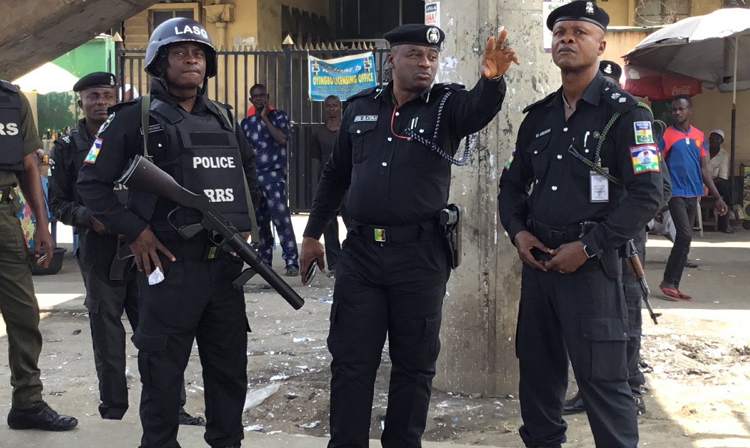
The Lagos State Police Command has arrested a 25-year-old man over alleged fake bomb threat messages to two private schools in Ikeja Government Reserved Area (GRA).
The suspect was tracked and arrested on January 24 in the Okota area of Lagos State following digital investigations.
According to the sources, the suspect allegedly sent WhatsApp messages threatening a fire explosion to the Human Resources Manager of AVI–CEENA School and the Chief Security Officer of Grange School, both located in Ikeja GRA.
Although the messages were sent from an unknown phone number, police said digital tracking led to the identification and arrest of the suspect, identified as Kosisochukwu Chukwuekenyem Ogbumuo.
The suspect is currently in police custody and will be charged to court on conclusion of investigations.
Police said inquiries are ongoing to determine the motive behind the threats and whether other individuals were involved.
The Lagos State Police Command reassured parents, school authorities and residents of Ikeja GRA of its commitment to maintaining security and preventing panic or disruption within the education sector.


