
Headlines
US Govt Revokes Wole Soyinka’s Visa

- Share
- Tweet /home/rhoncare/pointblank.ng/wp-content/plugins/mvp-social-buttons/mvp-social-buttons.php on line 69
https://pointblank.ng/wp-content/uploads/2019/07/Soyinka.jpg&description=US Govt Revokes Wole Soyinka’s Visa', 'pinterestShare', 'width=750,height=350'); return false;" title="Pin This Post">
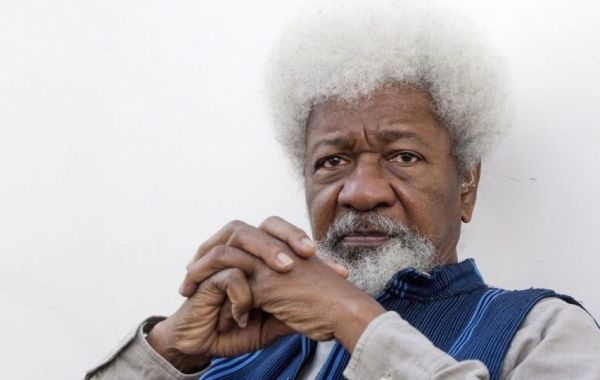
The United States government has revoked the non-immigrant visa of Wole Soyinka, the Nobel laureate.
In a letter dated October 23 and signed by the US consulate-general in Lagos, Soyinka was directed to present his passport at the consulate for physical cancellation of the visa.
Soyinka spoke during a media parley held in Lagos on Tuesday, where he read excerpts from the official correspondence sent to him.
“This letter serves as official notification by the United States Consulate General in Lagos that the nonimmigrant visa listed below has been revoked pursuant to the authority contained in U.S. Department of State regulations 22 CFR 41.122 and is no longer valid for application for entry into the United States,” the letter reads.
The Nobel laureate said he could not identify the specific offence that led the revocation of his visa by the US government.
Soyinka said he applied for the visa after he received a letter from the US Internal Revenue Service about an audit for tax returns.
He explained that his trip was to resolve the tax issues, adding that he wanted to prevent a situation where the US might advertise him as a “tax dodger” to the world.
Soyinka made reference to how he discarded his US green card after President Donald Trump assumed office in his first term.
The Nobel laureate said he wondered whether his visa was revoked because he described Trump as “Idi Amin in white face”.
“It is necessary for me to give this press conference so that people in the United States who are expecting me for their event, not to waste their time. I have no desire,” he said.
“It is necessary for me to give this press conference so that people in the United States who are expecting me for their event, not to waste their time. I have no desire,” he said.
“I have written a lot of plays about Idi Amin. Maybe it is about time I also write about Donald Trump. Literary compliment. Maybe he would reconsider and restore my visa.
“I want to reassure the US Consulate that I’m very contend with the revocation of my visa. Individual citizens are free to interact with me.”
In September, Soyinka said he would not honour an invitation by the US consulate in Lagos for a visa interview scheduled for September 11, 2025.
TheCable


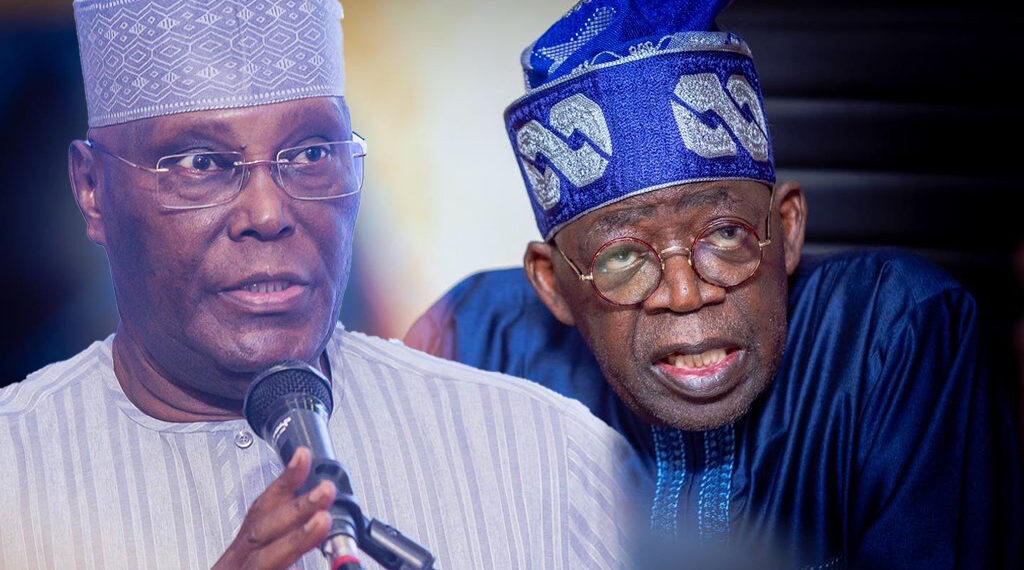
Former Vice President Atiku Abubakar has called on the Tinubu administration to provide clarity on how savings from the removal of fuel subsidy have been applied, following renewed concerns raised by the Academic Staff Union of Universities (ASUU) over unpaid entitlements and unresolved agreements.
Speaking on Sunday through his Senior Special Assistant on Public Communication, Phrank Shaibu, Atiku said the subsidy removal imposed significant costs on households through higher fuel prices, transport fares, food prices and school fees.
The presidential candidate of the African Democratic Congress (ADC) noted that the policy was also presented to Nigerians as a step that would release resources for education, healthcare, infrastructure and other essential services.
“If the subsidy has been removed and Nigerians have borne the attendant costs, then Nigerians deserve a clear explanation of how the savings are being applied,” Atiku said.
He said public universities continue to face funding challenges, with lecturers raising concerns about unpaid entitlements and outstanding agreements, while students face the risk of disruptions to the academic calendar.
Atiku added that the administration has cited increased allocations to State governments as part of the benefits of subsidy removal.
He, however, asked why public education across the federation still faces severe pressure, with both Federal and State-owned universities experiencing industrial disputes and infrastructure gaps.
“If more resources are reaching the federal government and states, citizens are entitled to ask how those resources are translating into improved classrooms, laboratories, hostels and teaching facilities,” he said.
The former vice president also raised questions about the government’s student loan scheme, NELFund.
He said the rising cost of education has put additional strain on families and that the loan programme should be matched with measures to expand access and reduce the cost burden.
“Every year, more young Nigerians seek university education. The physical capacity of the system needs to expand to meet that demand. We need to see more classrooms, laboratories, hostels and expanded admission spaces,” he said.
Atiku further said that while government has asked citizens to make sacrifices, it must also ensure transparency and equity in the application of public resources, including the use of waivers and concessions.
He called for accountability in the management of proceeds from subsidy removal, and urged the government to prioritise investment in education, healthcare and infrastructure.
“ASUU is again raising concerns over unpaid entitlements and outstanding agreements. State universities have also experienced disruptions. Students are taking loans to fund education, while infrastructure in many universities remains inadequate.
“The sacrifice has been made by Nigerians. The expected improvements in public services must now be seen and felt,” he said.
Atiku urged President Bola Tinubu to address the concerns raised by ASUU and other stakeholders, and to ensure that commitments made at the time of subsidy removal are fulfilled.
Arsenal left the Stadium of Light with another three points, but Mikel Arteta was far from satisfied with one of the major refereeing decisions in the champions’ 2-0 win over Sunderland.
The turning point came early in the second half when Sunderland were awarded a penalty following a physical battle between Arsenal’s Ezri Konsa and Dan Ballard.
Although VAR reviewed the incident, the original decision stood. Arteta strongly disagreed, insisting that the footage showed no offence worthy of a penalty and warning that such calls could have serious consequences in a Premier League title race.
Sunderland had a chance to capitalise, but Raya came to Arsenal’s rescue. The goalkeeper guessed correctly to keep out Le Fée’s penalty and turned the ball onto the post.
Arsenal needed only a short time to make the save count.
Guimarães, introduced at half-time, collected the ball outside the area and unleashed a curling strike that flew into the top corner. It was his first goal since joining Arsenal and gave the visitors the breakthrough they needed.
Sunderland refused to collapse and continued to test the visitors, but Arsenal’s defence survived the pressure. Saka then put the result beyond doubt from the spot in stoppage time after Reinildo was sent off for a second yellow card.
The victory means Arsenal have won all four of their Premier League matches this season, maintaining their flawless start and moving to 12 points.
For Arteta, however, the result did not erase his concerns about the penalty decision.
He argued that football’s extensive use of VAR should ensure such controversial calls are corrected, saying the incident was not acceptable at the highest level.
Arsenal ultimately had Raya’s heroics, Guimarães’ brilliance and a resilient defensive performance to thank for turning a potentially difficult night into another important victory.

Nigeria’s Tobi Amusan won the silver medal in the women’s 100m hurdles at the inaugural World Athletics Ultimate Championship in Budapest, Hungary, on Friday.
Amusan clocked 12.34 seconds to finish second behind United States Olympic champion Masai Russell, who won the title in 12.22 seconds.
Netherlands’ Nadine Visser completed the podium after finishing third in 12.39 seconds.
The result meant Amusan, a former world record holder in the event, was unable to reclaim the top spot from Russell, who broke the Nigerian’s world record with a time of 12.09 seconds at the Zurich Diamond League in August.
Russell entered the Budapest final as the favourite following her record-breaking performance in Zurich and maintained her impressive form to claim another victory.
The American also extended her unbeaten run in 2026, adding the Ultimate Championship title to the Diamond League Final crown she won in Brussels last week.
Reflecting on her performance after the race, Amusan said she went into the championship determined to give her best after a challenging period during the season.
“First, God is good,” Amusan said.
“What started off as an amazing season, you know, in between I had some nipping here and there. You know, I’m not a robot. You know, the body did shut down at a point.”
The 29-year-old hurdler said she gradually regained her momentum by taking each race as it came before arriving in Budapest with a determined mindset.
“Coming into this championship, my mindset going to the line was, ‘We die here.’ I just kept telling myself I have to give it my all,” she said.
Amusan said she was determined to put everything into the race regardless of the eventual outcome.
“All I knew was, look, I did it. That’s all I knew. And the second I saw the second-place finish, I was like, look, I can’t complain. God is good,” she said.
The silver medal came after a difficult period for Amusan, who finished third at the Commonwealth Games before Russell broke her 100m hurdles world record. She later finished fourth at the Diamond League Final.
Amusan admitted that the setbacks had been emotionally difficult but credited her family, mentor, coach and boyfriend with helping her regain her confidence.
“I’m not going to lie. It was very rough,” Amusan said.
“I mean, to my family, to my mentor, to my coach, to my boyfriend. That’s brought life back into me.”
She said the encouragement she received from those close to her helped her put the setbacks behind her and focus on the Budapest race.
“This morning it was all about put the past behind you and just go for it. And those few sentences that I got here and there got me to this finish line today,” she said.
Amusan said her second-place finish, alongside her Commonwealth medal, represented a positive response to the setbacks she had experienced.
“With the Commonwealth medal, it is a statement,” she said.
On the increasing competitiveness in the women’s 100m hurdles, Amusan described the event as becoming more difficult, warning that the battle among the leading hurdlers would intensify.
“Honestly, in that event, I think I would be the sleeping lion,” she said.
“I think the women’s hurdles is just getting scarier every damn year. Next year, I do not know what’s going to happen. But it’s going to be bloody.”


