
News
US Presidential Debate: A Lesson for Nigerian Leaders

- /home/rhoncare/pointblank.ng/wp-content/plugins/mvp-social-buttons/mvp-social-buttons.php on line 27
https://pointblank.ng/wp-content/uploads/2020/10/downloadfile-94-1000x600.jpg&description=US Presidential Debate: A Lesson for Nigerian Leaders', 'pinterestShare', 'width=750,height=350'); return false;" title="Pin This Post">
- Share
- Tweet /home/rhoncare/pointblank.ng/wp-content/plugins/mvp-social-buttons/mvp-social-buttons.php on line 69
https://pointblank.ng/wp-content/uploads/2020/10/downloadfile-94-1000x600.jpg&description=US Presidential Debate: A Lesson for Nigerian Leaders', 'pinterestShare', 'width=750,height=350'); return false;" title="Pin This Post">
Joel Popoola
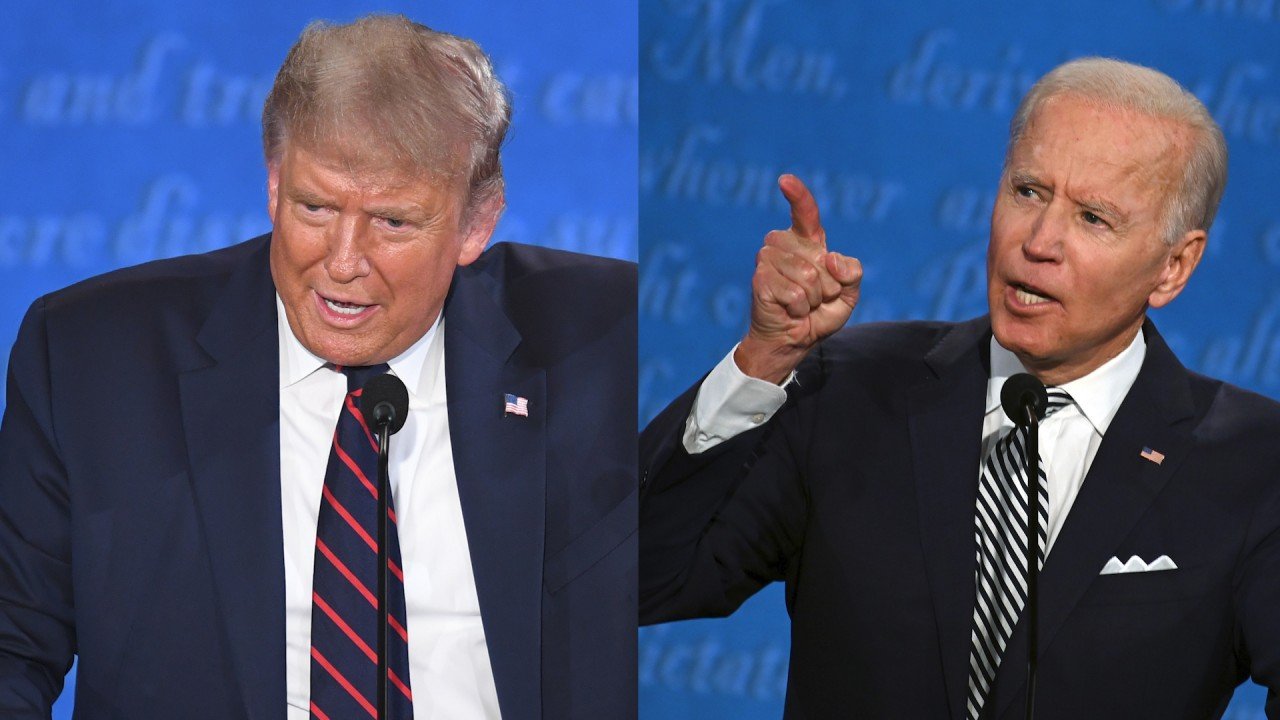
Donald Trump and Joe Biden’s first debate in the US presidential election set a bad example for my children – let alone Nigerian democracy.
If nothing else, the debate, described as “a national humiliation” and “an hour and a half of insults” proved that we Naija do not have the monopoly on politicians squabbling like children when they should be engaging with the issues that matter most to the people they serve.
But the American presidential race this week provided Nigeria with a very important lesson – transparency builds trust.
The New York Times this week obtained Donald Trump’s tax returns, revealing that a President whose reputation is built on his image as a billionaire businessmen has debts totalling $421m.
Many of these debts are due within four years, making me chuckle at the incredible idea of bailiffs knocking on the door of the White House!
The papers also reveal that Trump has avoided paying tax in 10 of the last 15 years, faces a tax bill of at least $72.9m and even spent $70,000 on his hair!
This causes nothing but damage to his carefully crafted image. Damage which could have been avoided if he had willingly released this information in a carefully controlled way.
In contrast, his opponent Joe Biden has this week voluntarily released 22 years of his tax returns, stating “the American people deserve transparency from their leaders”.
It is far too early to say what impact this will have on the overall election, but a snap poll from CNN showed that 60% of those asked said Biden won the debate, compared to just 28% who said Trump.
Why? Because trust matters. And it is here that Nigerian politicians can learn from America. Nigerians expect, and deserve a similar level of transparency.
As Governor Nasir El-Rufai last week acknowledged, most Nigerians think that politicians are “thieves”. 72% of us believe “most politicians are corrupt”.
Nigerians think that politicians all have something to hide, which is why I am urging them to prove that they don’t by following Joe Biden’s lead and publishing their tax returns.
At the digital democracy campaign we have made it easy for them. We have created a free app called Rate Your Leader which allows them to make information like this available to their electors at the touch of the button.
This way the people who elect them can see for themselves that their bank accounts are not full of kickbacks, backhanders, bribes and slush funds.
They are not part of some elite, untouchable political class. They are their neighbours, driven only by pubic services and a passion for their community. Believe me, sunlight is always the best disinfectant
Rate Your Leader also puts electors in direct contact with the elected, allowing both politicians and voters to contact each other person-to-person, helping both parties understand each other better and build real relationships based on trust.
Biden is not the only role model for Nigerian politicians I’ve been thinking about this week. Closer to home, there’s also Super Eagles soccer player William Troost Ekong.
Troost Ekong this week moved to the English side Watford. As he did, he used his social media to talk about his connections to the club, having not only gone to school nearby but watched the team play as a fan alongside his father-in-law, a lifelong Hornets fan – including a game against Liverpool where Odion Ighalo, another Nigerian hero, scored.
His posts were also positively commented on by other Watford players who have played alongside him at other clubs.
After less than a day at the club Troost Ekong, a Nigerian with a Dutch mother who moved to Watford from Italy having previously played in Turkey and Norway made the fans feel like he was one of them. Some even composed him a chant – “Troost Ekong – he’s one of our own”, which in Britain means “part of the family”.
That is the power of social media when used correctly, a power our politicians need to make maximum use of to combat their negative image and show us not only that they are worthy of our affection and trust, but people whose opinion we value feel the same way too.
Transparency doesn’t just mean showing you have nothing to hide. It means showing what you have to offer.
Joel Popoola is a Nigerian tech entrepreneur, digital democracy campaigner and is creators of the free Rate Your Leader app.


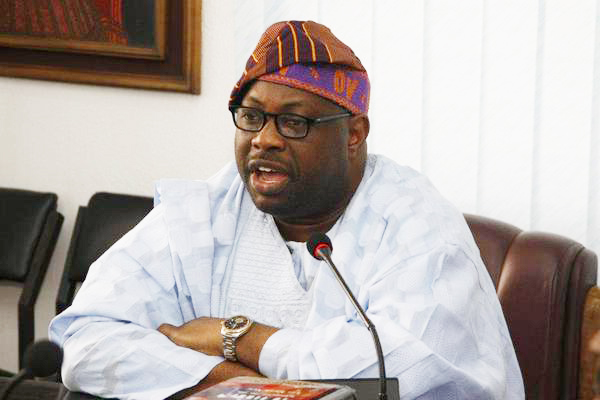
A chieftain of the African Democratic Congress (ADC), Chief Dele Momodu, has said no political permutation will save President Bola Tinubu in the 2027 presidential election, insisting that widespread hunger and hardship will determine the outcome.
Momodu stated this on Thursday during an appearance on Channels Television’s Politics Today, anchored by Seun Okinbaloye.
According to him, Nigerians across all regions and ethnic lines are united by economic hardship, which no amount of money or political calculation can overcome.
“The common factor now is the hunger in the land. No permutation can beat hunger. The Yorubas are suffering, the Hausas are suffering, the Igbos are suffering, everybody is suffering,” he said.
He argued that President Tinubu cannot buy the entire country, even if he was able to deploy money effectively in Lagos State politics in the past.
“Tinubu believes he can buy the whole of Nigeria, but my personal belief is that if he could buy the whole of Lagos, I doubt if he can use money to buy the whole of Nigeria,” Momodu stated.
The Ovation Publisher said Nigerians had become wiser and would collect any money offered to them during elections but still vote according to their conscience.
He cited the Osun State governorship election as a case study, noting that, despite the huge funds allegedly deployed, the people voted for Governor Ademola Adeleke.
“And a lot of people will take the money like they took it in Osun State. People’s eyes are wide open now. They brought a lot of money to Osun State, but they still lost the election to Ademola Adeleke,” he said.
Momodu also recalled that Tinubu lost Lagos State to Mr Peter Obi of the Labour Party in the 2023 presidential election, which he said proves that incumbency and financial muscle do not guarantee victory.
He maintained that President Tinubu would not win in 2027, claiming that many Nigerians could not imagine a second term for the administration.
“If you ask an average Nigerian today, do you trust Tinubu to conduct a free and fair election? 90 per cent will say no. Nobody trusts Tinubu, including his own supporters,” Momodu said.
On the detention of former Kaduna State Governor, Mallam Nasir El-Rufai, Momodu described him as a “prisoner of conscience” who is being persecuted because of his political influence.
“Nasir El-Rufai is a lion. They caged him because he is a lion. Even when a lion is caged, it is still a lion. They want him locked up until after 2027 because they fear his influence,” he said.
He disclosed that El-Rufai’s appointment as Deputy Chairman of the Atiku Abubakar Presidential Campaign Council was in honour of his sacrifice and resilience.
“It is a way of honouring his sacrifice because his travails are quite political in nature. That is why Nasir has become a prisoner of conscience. He is in the hands of a government that he helped to midwife,” Momodu added.
He said the 2027 election would be a referendum on hunger, hardship and governance, and not on political permutations.
Meanwhile, the Senior Special Assistant to the President on Digital Communications, Engagement and New Media Strategy, O’tega Ogra, has faulted Momodu’s comments.
Reacting to the interview, Ogra accused the opposition of embracing “perpetual negativity” and opposing government policies without objective assessment.
He said Momodu’s assertion ignored ongoing reforms and improvements recorded in key economic indicators, including foreign reserves, power generation and inflation management.
Ogra urged opposition figures to offer constructive criticism rather than painting a picture of total failure, stressing that President Tinubu would ultimately be judged by his reforms and track record.
The Tribune
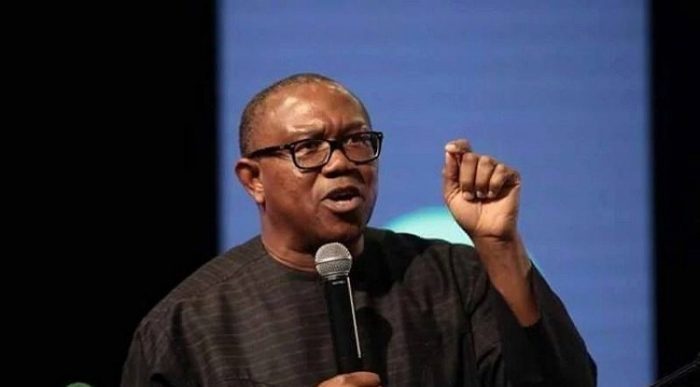
The Nigeria Democratic Congress (NDC) presidential candidate, Peter Obi, has denied asking Nigerians living in the United Kingdom to abandon relatives who depend on them for financial support, saying his message about hardship in Nigeria was distorted by political opponents.
Obi said he appreciates Nigerians in the Diaspora who make sacrifices to support their families at home, stressing that his concern is the country’s dependence on remittances to meet basic needs.
In a statement titled; “My Message Has Been Twisted”, posted on X on Tuesday, the former Governor of Anambra State clarified that he never asked Nigerians abroad to stop supporting their loved ones.
“I deeply appreciate Nigerians in the diaspora who work tirelessly and make enormous sacrifices to support their families back home,” he said.
“Their remittances pay for school fees, hospital bills, rent, and feeding expenses. Their patriotism and sacrifices deserve our profound respect. I never asked them to abandon their loved ones.”
Obi said his message was aimed at drawing attention to the economic conditions forcing millions of Nigerians to rely on relatives abroad for their survival.
“My concern is that Nigeria should not remain a country where millions depend on relatives abroad for basic survival,” he said.
“Our goal must be to build a nation that provides jobs, affordable healthcare, quality education, and economic opportunities for its citizens.”
He accused political opponents of misrepresenting his comments, insisting that his position is about addressing the causes of hardship rather than discouraging financial assistance to families.
“Political opponents may twist my message, but the truth remains clear: I am not asking Nigerians abroad to abandon their families. I am advocating for a Nigeria that will no longer abandon its own people,” he said.
The clarification followed backlash over comments Obi made during a town hall meeting with Diaspora supporters in Manchester on Sunday.
In a video that went viral, Obi urged Nigerians in the UK to think twice before giving money to relatives and others at home who ask them for financial assistance, arguing that such support could ease hardship without addressing its underlying causes.
“You have people at home in Nigeria today who are begging you for money. Tell them no!” he said.
Obi attributed the country’s economic difficulties to poor leadership, urging Nigerians abroad to encourage their relatives and friends at home to vote for leaders who would prioritise productivity and economic opportunities.
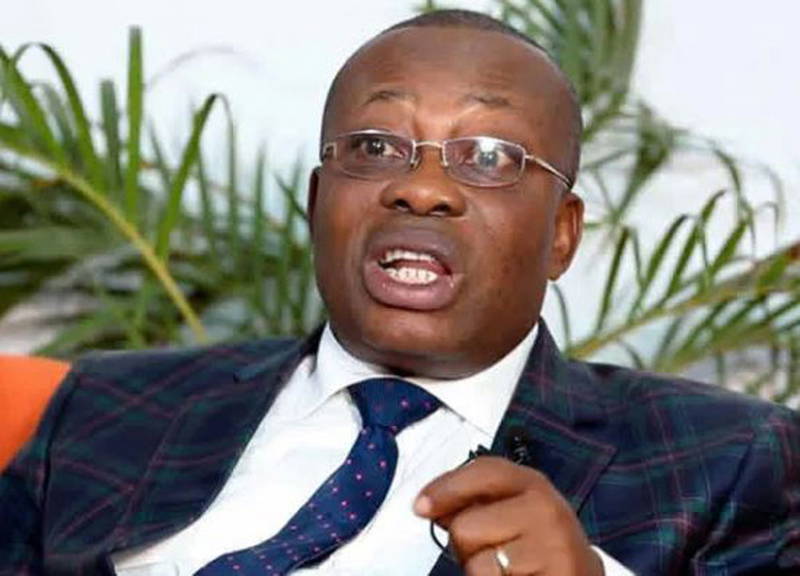
The Court of Appeal, Abuja Division, has dismissed the EFCC’s appeal and affirmed the ₦12 million compensation awarded to Dr. Monday Ubani, SAN, for his unlawful 21-day detention in 2019. The court also awarded ₦300,000 in costs against the Commission.
Ubani was detained after securing administrative bail for a client accused of jumping bail. Despite a court order directing the EFCC to release him conditionally or charge him with any alleged offence, the Commission failed to comply, prompting his lawyer, Chief Professor Mike Ozekhome, to institute a fundamental rights action in his favour.
On January 5, 2022, the Abuja High Court, presided over by Justice Sylvanus Oriji, ruled in Ubani’s favour. The EFCC appealed, challenging the trial court’s jurisdiction and the amount of compensation awarded.
In dismissing the appeal, the Court of Appeal rejected both arguments, holding that the compensation was justified and that the EFCC’s investigative powers do not permit arbitrary detention or disobedience of court orders.
The judgment reaffirms that law enforcement agencies remain subject to the Constitution and judicial authority. It also underscores the protection of fundamental rights, the limits of law enforcement powers and the consequences of unlawful detention.
Beyond the financial award, the decision highlights the responsibilities of sureties and the obligation of security agencies to obey court orders, making it a potentially significant reference in future fundamental rights litigation.


