
Metro
Virginity is Outdated, Says Doctor Who Raped 15-Year-Old Wife’s Niece

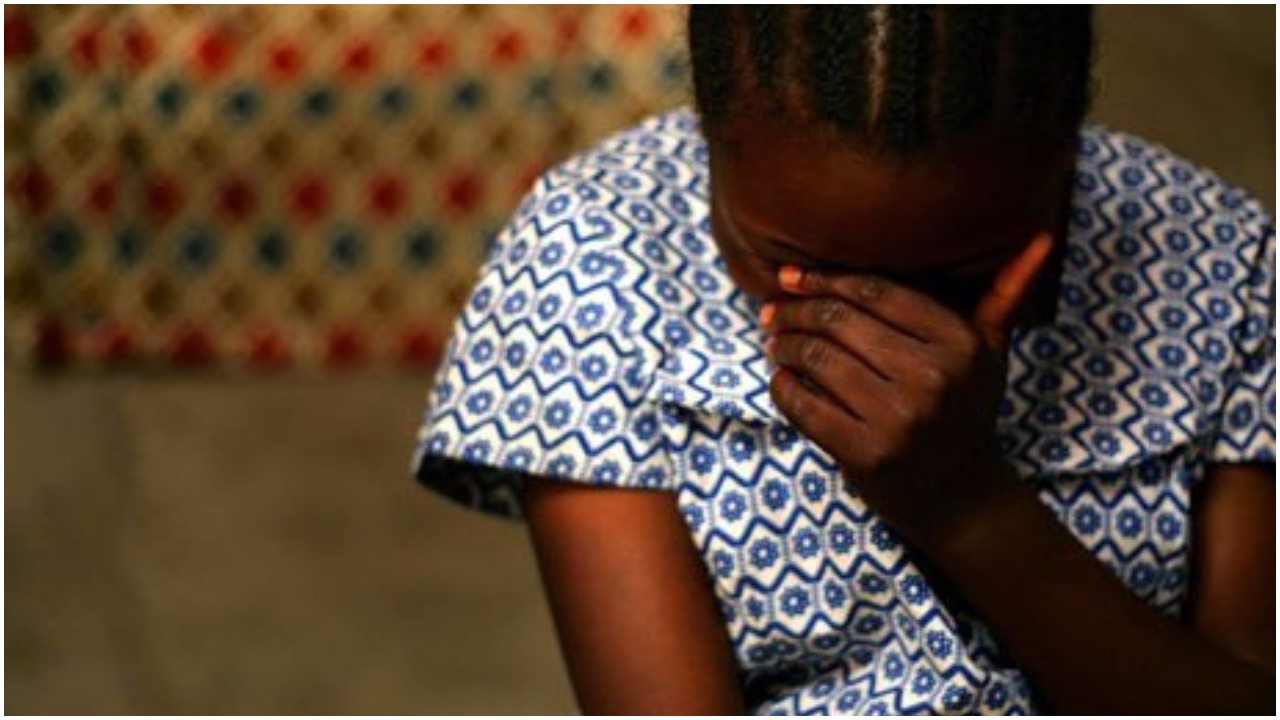
A child forensic specialist, Mrs Olabisi Ajayi-Kayode, on Tuesday, told a Lagos State Sexual Offences Court, Ikeja, that a 15-year-old minor allegedly defiled by her aunt’s husband, Dr Olufemi Olaleye, said the defendant told her virginity was outdated.
She stated that the victim also told her that Olaleye, the Medical Director of Optimal Cancer Care Foundation, after raping her, used tissue paper to whip off the blood that came out of her private parts.
Ajayi-Kayode, a lawyer who works with Cece Yara Foundation, said in her findings, she discovered that the child was introduced to sexual activities by Olaleye.
Olaleye is facing two counts of defilement and sexual assault by penetration of his wife’s niece.
The lawyer, who was led in evidence in chief by the Lagos State Director of Public Prosecutions, Dr Babajide Martins, said the victim narrated to her that the defendant started by putting his hand under her nightgown and touching her private parts.
She explained that the defendant would ask the victim to perform oral sex on him, adding that he usually perpetrated the act in a section of the sitting room not covered by the Closed Circuit Television camera.
Ajayi-Kayode, who testified before Justice Ramon Oshodi as the third prosecution witness, said the teenager mentioned to her that the defendant asked her if she was still a virgin.
She said, “He asked, ‘Are you still a virgin?’ I said, ‘I am’ and he said, ‘Why are you still a virgin? It’s no more in vogue; girls of 12, 13, and 14 years old are no longer virgins. As a medical doctor, I can cover for girls who lose their virginity and get pregnant. Well, the decision is yours.’
“Then he asked her that, ‘Can we be friends?’ And innocently, the girl said she replied that, ‘We are already friends.’
“We asked her if any other person had done this to her before, and she said no. The child said the first time the aunt’s husband had sex with her, it was painful and there was blood and he took tissue paper and whipped it off.”
The witness further narrated that the victim told her that on one particular occasion, the survivor was waiting by the security house based on the instructions of her aunt that she should not be staying alone inside the house, but when the defendant arrived, he asked her to follow him inside the house.
She said, “When they got inside the house, he asked her to prepare ‘amala’ for him. In the process of doing this, he came into the kitchen and took her to his study, had sex with her, and warned her not to tell anyone.
“She said it became overwhelming for her and she started soliloquising that she was tired of what the doctor was doing to her, not knowing that the driver heard her.”
Ajayi-Kayode added, “The aunt’s husband has been engaging the child in sexual activities over a period of time, not just once, and he used threat, and coercion.
“He used his disposition as the aunt’s husband to gain access to the child for sexual activity. And the threat and coercion were to maintain control over the child. He took advantage of the girl’s naivety by telling her that virginity is no longer in vogue.”
After the expert’s narration, the prosecution counsel asked the court to admit the witness’ findings and certificate of compliance in evidence.
During the cross-examination of the witness, the defence counsel, Babatunde Ogala, SAN, tried to fault her evidence, stating that she drew conclusions based on her interaction with the child.
She responded that she also spoke with a psychologist and the police.
When asked if she saw a medical report before speaking with the victim, she replied, “I didn’t see any medical report but the DPP told me about a medical report.”
Further hearing was adjourned till January 4, 2023.
The Punch


The operatives of Ondo State Security Network Agency aka Amotekun Corps, have arrested 39 suspected terrorists who allegedly fled Sokoto State following the “powerful and deadly” United States airstrikes targeting militants linked to the Islamic State (IS) group in North-western Nigeria.
The Commander of Amotekun Corps in Ondo State, Adetunji Adeleye, disclosed this on Tuesday in Akure while parading a total of 61 suspects apprehended across various parts of the State during the Yuletide period.
According to Adeleye, the 39 suspects claimed during interrogation that they escaped from Sokoto State and moved towards the South-West in the aftermath of the airstrikes.
“These 39 suspects themselves claimed they fled from the Sokoto area,” he told journalists.
He said the suspects, aged between 18 and 45 years, are currently undergoing profiling, adding that those found in possession of incriminating materials would be prosecuted according to the law.
Mr Adeleye further revealed that the Amotekun corps has intensified patrols and strengthened collaboration with sister security agencies, particularly along border communities linking Ondo State with Ekiti, Osun, Ogun, Edo, and Kwara states.
Giving a breakdown of the arrests, the Amotekun commander said that out of the 61 suspects paraded, 50 were arrested for various breaches of law and order, two for offences related to anti-open grazing laws, six for kidnapping-related crimes, while three were arrested for gender-based violence and rape.
He explained that the ember months patrol would officially end on Tuesday, but assured residents that security operations would not be relaxed, as Operation Le Jade Phase Two is scheduled to commence on January 1.
Adeleye added that the Amotekun Corps has also increased its 24-hour surveillance across the state, with the deployment of Amotekun Rangers to forest reserves.
He attributed the numerous arrests to sustained and coordinated efforts by officers and men of the Amotekun Corps to rid the state of criminal elements.
While commending Governor Lucky Aiyedatiwa for providing an enabling environment for effective security operations, Adeleye said the state government has continued to support security agencies without hesitation.
He also lauded the Nigeria Police, the Nigeria Security and Civil Defence Corps, the Nigerian Army, the Department of State Services (DSS), vigilante groups, and members of the public for their cooperation.
Providing details of some arrests, Adeleye said two suspects – Mustafa (34) and Philip (45) – were apprehended for kidnapping around the Ofosio area of Odigbo Local Government Area.
“In the Isua-Akoko axis, three suspects identified as Idris (18), Ibrahim Abdullahi (20), and Lawal Idris (23) were also arrested for alleged criminal activities.
On rape and assault cases, he disclosed that Daniel Ojo (19), Usman (33), and Bejide (41) were arrested in Isinkan for rape and for assaulting Amotekun officers.
“The corps also arrested suspected armed robbers identified as Ola Tunbosun (30), Ibrahim, and Shahidu in Akure North, Oba-Akoko, and Oba-Ile.
“The suspects were allegedly part of a robbery gang that recently stole a vehicle in Akure, with plans to transport it to Abuja for sale. The stolen vehicle, as well as a taxi reportedly used to rob unsuspecting passengers, were recovered and displayed during the parade,” he said.
Adeleye explained that the gang’s modus operandi involved operating in densely populated areas, picking up passengers, introducing another gang member as an extra passenger, and then using a firearm to dispossess victims of their belongings before pushing them out of the vehicle.
He advised members of the public to remain vigilant, particularly when boarding taxis without proper markings or readable registration numbers.
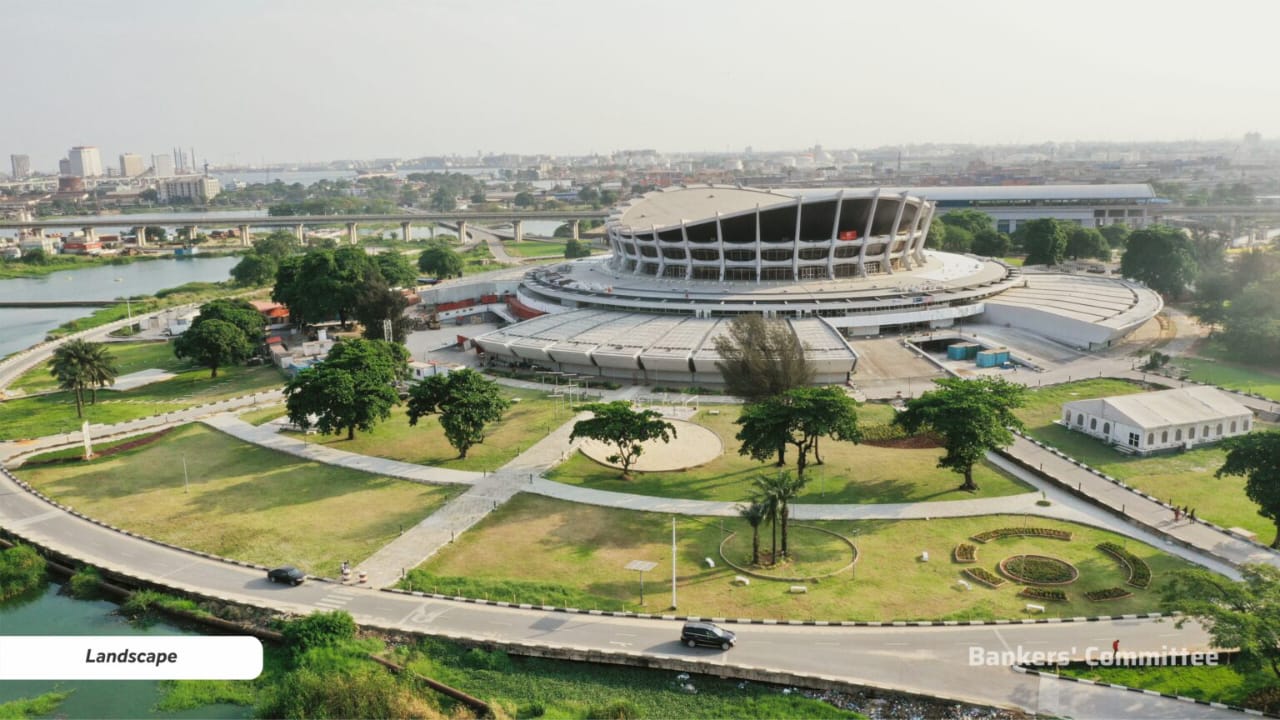
When the National Theatre Lagos first opened ahead of FESTAC ’77, an architectural marvel, a symbol of the cultural soul of a nation ready to introduce its artistic brilliance to the world. Modelled after the Varna Palace of Culture and Sports in Bulgaria and constructed between 1973 and 1976, the National Theatre was designed as an emblem of Nigeria’s ambition to be Africa’s cultural capital. Its 5,000-seat main hall, festival arena, exhibition spaces, and state-of-the-art acoustics made it one of the most sophisticated performance complexes on the continent.
Throughout the 1970s and 1980s, the Theatre became home to Nigeria’s most iconic productions, from Hubert Ogunde’s epic plays to international dance festivals, orchestral performances, film premieres, and global conferences. It was a beacon for African creativity, a place where culture, identity, music, and storytelling came alive. But by the early 2000s, the Theatre, though heavy with cultural memory, had fallen into disrepair. Years of inadequate maintenance, stalled concession agreements, and structural depreciation left the building struggling to meet modern technical and creative demands. The symbol of national pride had become a shadow of its past promise.
Recognising the scale of cultural loss and the opportunity embedded within it, the Bankers’ Committee, with Access Bank playing a pivotal role, initiated the largest cultural infrastructure revitalisation project in contemporary Nigeria. The decision was both strategic and patriotic: Nigeria’s creative industry, now contributing significantly to GDP through film, fashion, music, design, cultural tourism, and digital content, urgently needed a modern, centralised hub that could support global-standard production and creative entrepreneurship. Reviving the National Theatre would not only restore a national icon but also stimulate job creation, attract international collaborations, and reposition Lagos as a premier African creative economy hub.
The renewal of the National Theatre is therefore more than a restoration project; it is a necessary economic intervention, a cultural renaissance, and a visionary step toward building a more inclusive and future-ready Nigeria. And for Access Bank, supporting this transformation is a natural continuation of a long, deliberate commitment to art, culture, and creative empowerment.
Access Bank’s Legacy of Championing the Creative Economy
Well before Nigeria’s creative industry gained global recognition, Access Bank had positioned itself as a cultural investor and ecosystem builder. For over a decade, the Bank has supported transformational initiatives across music, visual arts, fashion, film, sustainability, and youth development.
Access Bank has helped spotlight emerging and established African artists on a global stage through partnerships and collaborations with platforms like ART X. The annual fair, now one of Africa’s most influential contemporary art events, has benefitted immensely from the Bank’s commitment to nurturing young talent, commissioning bold projects, and providing a meeting point for creators, collectors, and global art enthusiasts.
In film and entertainment, Access Bank has backed festivals, documentaries, youth-focused storytelling, and creative incubators, recognising that Nigeria’s cultural exports are among its most powerful global assets. Across literature, community theatre, design, and public art, the Access brand remains synonymous with innovation, creativity, and cultural elevation. The revival of the National Theatre is thus an extension of this commitment.
A Cultural Renaissance Rooted in National Development
The National Theatre project is designed as a two-phase undertaking. Phase One, already significantly advanced, focuses on restoring the original theatre structure. This includes upgrading the main stage, cinema halls, exhibition spaces, lighting systems, acoustics, seating, ventilation, and accessibility infrastructure. The goal is to return the iconic building to world-class functionality while preserving its historic architecture.
Phase Two introduces a modern Creative Industries Park, a multi-purpose development designed to house film production studios, music recording labs, fashion houses, IT and gaming centers, photography studios, coworking spaces, and training academies. This innovation hub is expected to host thousands of young creators annually, enabling them to produce, learn, collaborate, and scale ideas into globally competitive businesses.
With Access Bank’s involvement through the Bankers’ Committee, the project has attracted international partnerships, institutional investors, technical specialists, and creative collaborators. It is poised to become one of the most significant cultural and economic catalysts in West Africa.
In a world where creative exports have become a major source of national influence, from Nollywood films to Afrobeats, digital arts to global fashion, infrastructure is destiny. Nigeria’s young creators generate some of the world’s most consumed cultural content, yet the ecosystem has lacked the physical and institutional support systems needed to harness that potential fully.
The revitalised National Theatre is therefore a launchpad for Nigeria’s next creative era.
With Access Bank’s long-standing commitment to empowering Africa’s creative industries, the revival blends heritage with innovation, history with ambition, and art with economic development.
From art fairs to creative hubs, sustainability initiatives to youth empowerment, Access Bank continues to champion platforms that inspire, educate, and elevate communities across the country.
By supporting the transformation of the National Theatre, the Bank has once again placed itself at the heart of Nigeria’s cultural renewal, bridging past and future, preserving heritage, and building an ecosystem where creativity can thrive without limits.
Metro
Aare Emmanuelking Hails Akarigbo, Abiodun on 2025 Remo Day, Canvasses Sustained Cultural Progress
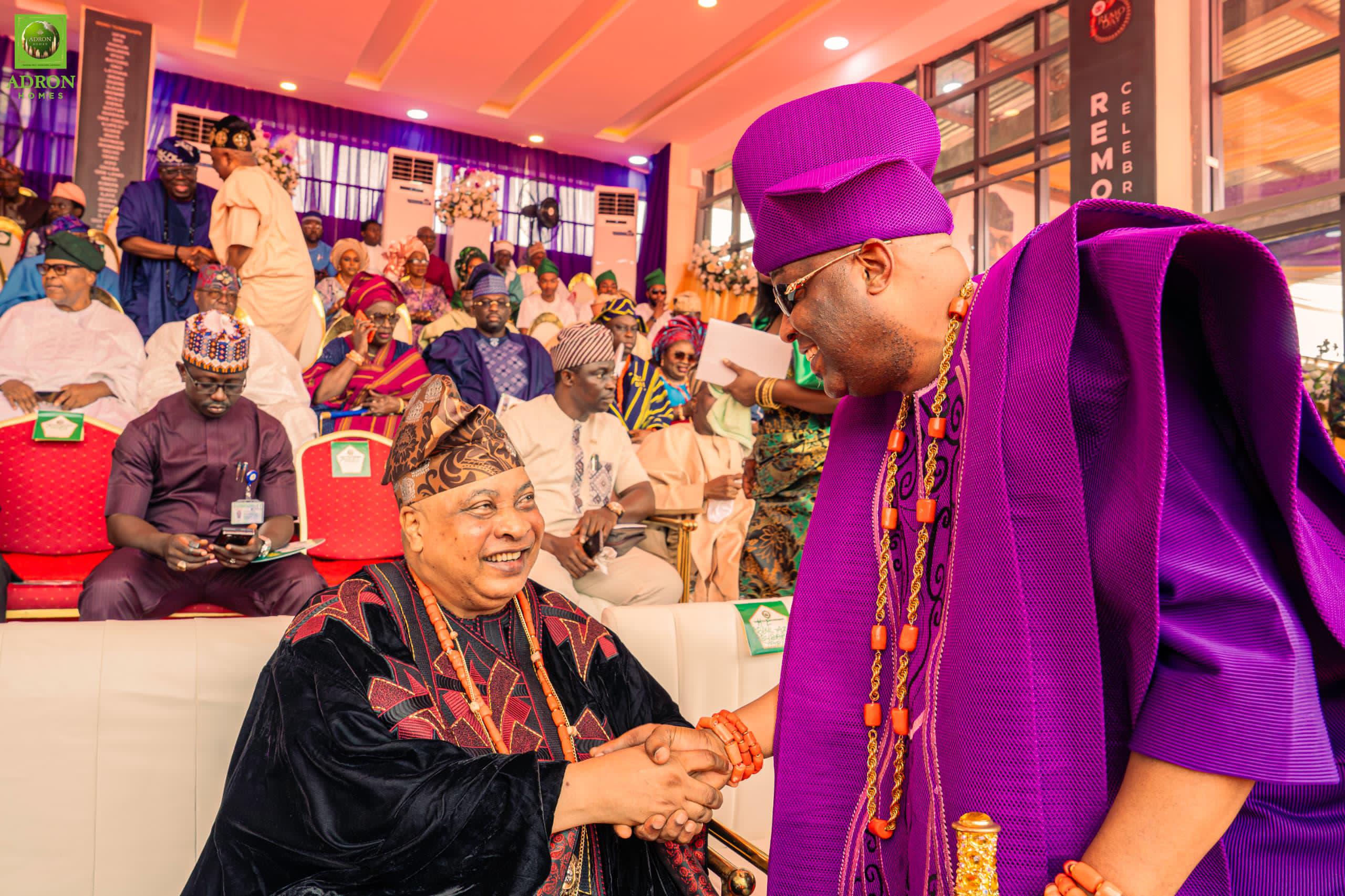
The Otun Akile of Remoland and Chief Executive Officer of Adron Group, Sir Aare Adetola Emmanuelking, KOF, has extended formal felicitations to the Akarigbo and Paramount Ruler of Remoland, His Royal Majesty, Oba (Dr.) Babatunde Adewale Ajayi, and all sons and daughters of Remoland on the occasion of the 2nd Remo Day Celebration, described the event as a significant affirmation of Remo heritage, unity, and progress.
In a goodwill message to mark the celebration, Aare Emmanuelking noted that Remo Day reflects the resilience, cultural pride, and collective aspiration of the Remo people, whose unity continues to drive sustainable growth and communal advancement.
He commended His Royal Majesty for his visionary leadership and praised the traditional institution’s stabilising role in promoting peace, cultural continuity, and good governance across Remoland.
Aare Emmanuelking also acknowledged the presence of the Executive Governor of Ogun State at the celebration, describing it as a demonstration of solidarity with the Remo people. He saluted the Governor’s purposeful leadership and commitment to good governance, noting the positive impact of his administration’s development policies across the state.
According to him, Remo Day transcends ceremony, serving as a symbolic homecoming that honours the sacrifices of the forebears while strengthening unity and shared responsibility for development.
He further applauded the contributions of Remo indigenes at home and in the diaspora, whose enterprise and collaboration continue to position Remoland as a centre of economic vitality and social harmony.
“As a proud son of Remoland, I am inspired by the unity and sense of purpose that define our people,” he stated, adding that the celebration should further deepen cohesion and accelerate sustainable development.
On behalf of his family, the Board of Directors, and the Management of Adron Group, he wished His Royal Majesty and all Remo sons and daughters a successful and memorable Remo Day celebration.
He concluded with prayers for the continued peace, prosperity, and development of Remoland and Ogun State, reaffirming his loyalty and commitment to the land and its people.


