
News
We Can Use Digital Connectivity to Cure Instability in Nigeria


- /home/rhoncare/pointblank.ng/wp-content/plugins/mvp-social-buttons/mvp-social-buttons.php on line 27
https://pointblank.ng/wp-content/uploads/2019/04/Digital-2-1000x600.jpg&description=We Can Use Digital Connectivity to Cure Instability in Nigeria', 'pinterestShare', 'width=750,height=350'); return false;" title="Pin This Post">
- Share
- Tweet /home/rhoncare/pointblank.ng/wp-content/plugins/mvp-social-buttons/mvp-social-buttons.php on line 69
https://pointblank.ng/wp-content/uploads/2019/04/Digital-2-1000x600.jpg&description=We Can Use Digital Connectivity to Cure Instability in Nigeria', 'pinterestShare', 'width=750,height=350'); return false;" title="Pin This Post">
By Joel Popoola
The only less stable countries than Nigeria are war zones. Our increasing digital connectivity must become the cure of this instability, not its cause.
There are only 10 countries in the world judged to be more unstable than Nigeria. Many of them – Syria and Yemen for example – are actual warzones.
It is in such an atmosphere of instability that misinformation can thrive.
In the past weeks, we have seen hundreds of Nigerians sharing online claims that the government has bought the major social network WhatsApp from Facebook for $7.3m in order to spy on us, and that the presidential residence, Aso Rock Villa, has burnt down.
I’m sure I don’t need to say this, but neither of those stories is true. The pictures purporting to show Aso Rock ablaze were in fact pictures of a market on fire in Ibadan, and Facebook is hardly likely to sell a company it bought for $22bn for $7.3m!
There was positive news for Nigeria however, this week when the National Bureau of Statistics (NBS) published figures showing that more Nigerians than ever have access to digital communications.
Mobile subscribers in Nigeria rose by almost 20m in 2020 – with digital connectivity in the South rising by 15.2% year-on-year.
On face value, these statistics show that Nigeria is making good progress towards becoming a modern digital nation, with all citizens able to take advantage of the educational, employment and engagement opportunities of the digital age.
But if these new users are receiving misleading or dangerous information on their devices it may only compound our political instability.
Voice and accountability is another international metric where Nigeria has a positive story to tell.
The international index for Voice and Accountability compares how citizens around the world perceive their freedom of expression, freedom of association, and a free media.
Nigeria is slowly but surely climbing up the rankings – we are still in the bottom half of the international league table, but we are undeniably heading in the right direction, with things a far cry from how they were in the days of military rule. We are currently ranked 121st. Twenty years ago, we were ranked 181st.
Increasing access to digital communications technology is a huge driver for this change. But we have to take steps to ensure that our increasing digital connectivity is the cure for political and social instability, not the cause or more.
At the digital democracy campaign I lead, we are determined to harness mobile technology to build credible links between government and governed.
One of our projects is a free smartphone app called Rate Your Leader. Rate Your Leader allows direct person to person communication between verified electors and verified politicians, allowing direct communication and collaboration.
Not only does Rate Your Leader allow voters to raise issues directly with the people with the power to address them, it also allows local leaders to send important messages direct to the people who need to receive them.
Rate Your Leader also allows users to rate their local leader on accessibility, responsiveness and credibility, allowing their friends, neighbours and peers to see at a glance that this is an information source that can be trusted.
Trust is important. There are those amongst us who deliberately share destabilising, damaging and dangerous information online because it aids their cause. They know how to grab our attention, and they know how to make their lives believable.
But they can only share this information from shady unverified sources. That is why it makes it so important that Nigerians know only to trust information from accounts who can prove that they are who they say they are and that have a legitimate reason to publish this information.
Nigerians know that recognised newspapers are – regardless of their politics – more rigorous and responsible in their reporting than random internet pages.
Now is the time to replicate that watermark of authority for social media accounts. Right now, there is next to nothing stopping anyone of us setting up an apparently official account on a major social media platform and beginning to broadcast lies. Enough people believe those lies, it will threaten the entire social fabric of our nation.
At Rate Your Leader we are trying to address this issue by creating credible channels of communication between voters and elected leaders.
The digital age means more Nigerians then ever have a voice. This is a national success. Now we must take steps to ensure that that success does not lead to national failure.
Joel Popoola is a Nigerian tech entrepreneur, digital democracy campaigner and creator of the Rate Your Leader app. You can reach Joel on Twitter @ JOPopoola


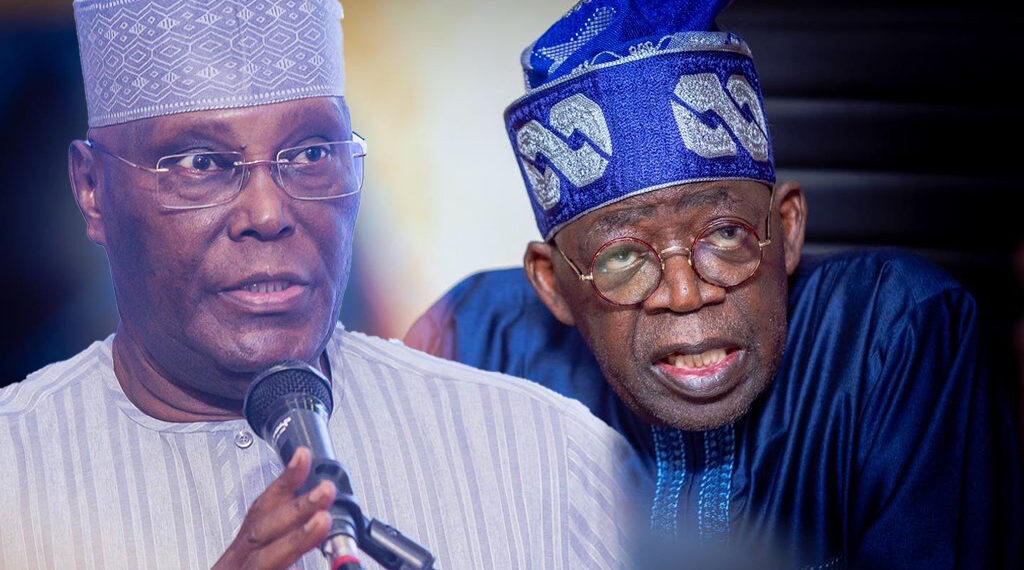
Former Vice President Atiku Abubakar has urged President Bola Tinubu to take immediate steps to reduce the cost of petrol, saying Nigerians are struggling with the combined impact of high energy, transportation and food prices.
Atiku made the call on Friday in Abuja during a press briefing on fuel prices, palliatives and the rising cost of living. His comments came amid renewed concerns over the effect of higher petrol prices on households and businesses.
The African Democratic Congress (ADC) presidential candidate said the removal of petrol subsidy in May 2023 placed additional pressure on families, workers, farmers and businesses.
He said the effect of higher petrol prices was not limited to motorists, as increased transportation and logistics costs had also pushed up the prices of food and other essential goods.
“When government makes energy expensive, it makes life expensive,” Atiku said.
The former vice president recalled that he had previously called for government intervention to reduce petrol prices, but said Tinubu had dismissed the proposal as showing “serious ignorance” of governance and the economy.
Atiku questioned whether the Nigeria Labour Congress (NLC), petroleum marketers, manufacturers and ordinary Nigerians who had raised concerns about rising costs could all be described as ignorant.
“When workers, producers, marketers and ordinary families are all raising the alarm, government must listen,” he said.
He said the government should be prepared to review its policies when their consequences become difficult for citizens to bear, adding that rising production costs were putting further pressure on manufacturers while families were finding it harder to afford basic goods.
Atiku also argued that government revenue and GDP figures did not necessarily reflect the economic reality facing ordinary Nigerians.
“If government receives more Naira while the citizen’s naira buys less food, less fuel, less electricity and less transportation, then bigger government revenues mean little to the family struggling to survive,” he said.
The ADC candidate urged Tinubu to use the remaining eight months of his first term to reduce the burden on Nigerians and consider any measure capable of lowering petrol prices, even if the proposal came from a political opponent.
“What matters to me is that Nigerians pay less,” Atiku said. “A sensible idea does not become a bad idea because it came from your opponent.”
He also offered to make his policy framework available to the Tinubu administration, saying Nigerians should not have to wait for a new government before benefiting from policies that could provide relief.
“If you need the framework, I will provide it. Implement it under your government. Give it whatever name you choose. Take the credit,” he said.
“I ask for only one thing: Let Nigerians breathe.”
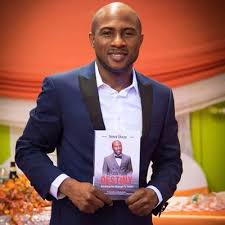
By Henry Ukazu
Dear Destiny Friends,
Passion and purpose are among the most debated topics in the human development space. It’s a grey area that has attracted a lot of attention. While some schools of thought believe it’s better to focus on passion, other schools of thought believe that it’s profitable for one to focus on a job that pays the bills.
According to the latter school of thought, passion doesn’t pay the bills. Well, depending on the schools of thought one subscribes to, I personally believe it pays more for one to pursue passion than profit, and I will explain in a minute.
I strongly believe passion is stronger than power because when one loves what one is doing, there’s an inherent strength that comes with it, but if one doesn’t like what they are doing, they’ll lack the moral strength to forge on.
Let me share a practical example with you. My late dad encouraged me to study Taxation Law at New York Law School, a major I didn’t like. He had the mindset that money rules the world, which I tend to believe because when money talks, the world “generally” seems to move around. That mindset and principle is relatable; however, it’s not applicable in other cases because there are some people or situations where money doesn’t move around.
My late dad believed it makes no sense for me to read a major and remain unemployable or poor. So, when I arrived in the United States, the economy was experiencing a recession, and there were no jobs at the time. So, while I was passionate about studying International Relations, Energy Law, or Communications Law, my late dad sat me down and said, based on the information he was receiving from his friends, these are great courses, but when I graduate, it will be hard to find a job because most people in those firms are laying off employees.
According to my late dad, his friends suggested that since I have a legal background, tax law is the only major I can study and be guaranteed a job because people and corporations will always file their tax returns. I initially objected to this advice because my brain is not wired for numbers. I really struggled to accept this advice because I hated numbers with passion.
My late dad would later tell me, you know we are from a humble background, and so we need money. My late dad would always say, “You wouldn’t want to study international law or communication, and the only thing you can do very well is speak English while remaining poor. One fact about my late dad was that he liked money to a stupor. According to him, after God, the most important thing in the world is money.
After much hesitation, I decided to study the major to make my late dad happy because I saw how happy he would be when I studied tax law. If truth be told, I wasn’t happy studying the major. I really struggled with the major. I managed to get a scholarship and graduated with a decent grade, but getting a job was challenging because employers could see that I didn’t like the major each time I went for an interview.
At the end of the day, I managed to get a job as a Case Manager for a private organization and later as the Legal Coordinator for the New York City Department of Correction. An important point to note here is that, after I left the tax firm, I was intentional about applying for jobs I was passionate about. Money to me was a secondary concern because I strongly believe that when you love what you do and you are good at it, money will surely find you.
I had to share this practical experience to give an insight into the importance of focusing on passion. Don’t get me wrong, money is good, but I personally feel there are more valuable things than money, and a perfect example is marrying a kind man as opposed to marrying a man with money, or marrying a lady with good character as opposed to marrying a lady with a good physique.
It’s instructive to note that when I began to focus on what I love to do, I had to spend time on honing my skills, developing myself by attending relevant training sessions and taking courses that would distinguish me from my contemporaries. It didn’t take long for me to receive recognition for my work. I was celebrated for being a trailblazing author of three books on television; I was interviewed by The New York Times in addition to meeting resourceful global leaders. In all sincerity, I doubt if I would have received accolades assuming I focused on taxation or doing what would give me money.
The moral of this analysis is that while profit is good, passion is much better because it will give one the necessary satisfaction and fulfilment they deserve. To understand how this works, one might make good money in a job but won’t be happy, but someone else might make little money and be happy in what they are doing. If research is done on what makes one happy, most people will likely say it is their passion or what they love to do that makes them happy as opposed to the job they do. It’s only a fragment of people who will attribute their happiness to the job they do, and that’s simply because they have truly figured out who they are or are probably happy and passionate about the work they do.
Let me explain a little: your profession is what you are trained to do as a doctor, lawyer, accountant, or engineer. Your vocation is what you are trained to do as a skilled worker or one with a 9-to-5 job, but your ministry is your calling, and that’s why you find your talent or gift and passion. So, one’s passion can be found in what they love to do.
When one’s profession is aligned with one’s vocation and ministry, then success is bound to be present because passion is at play.
It’s instructive to note that most of the great people I know in the world have become famous because they were doing what they love to do. I recently attended an award ceremony where my alma mater, Baruch College, celebrated alumni who have distinguished themselves. One of the award recipients, Ms. Doris Gonzalez, stated in her speech, “Of all the jobs I have had in my life, this is my best job. I really love my job”. I strongly believe there is a form of spiritual blessing and success that comes when one is happy doing what one is passionate about.
In conclusion, if one is desirous of succeeding in life, please endeavor to focus on your passion; if you can’t find it, explore what makes you happy. When you find what makes you happy, develop and monetize it, and in no distant time, opportunities and recognition will begin to triple in.
Henry Ukazu writes from New York. He works with the New York City Department of Correction as the Legal Coordinator. He’s the founder of Gloemi. He’s a Transformative Human Capacity and Mindset coach. He is also a public speaker, youth advocate, creative writer, and author of Design Your Destiny- Actualizing Your Birthright to Success, Unleash Your Destiny and The Six Pillars of Success. He can be reached via info@gloemi.com
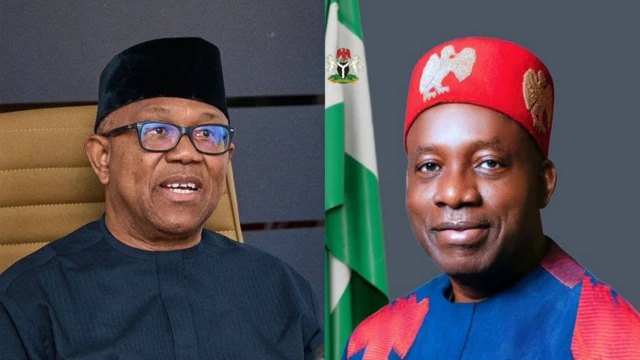
The Nigeria Democratic Congress (NDC) presidential candidate, Peter Obi, has released his handover document to counter the Anambra State Government’s claims that his administration left behind loans and other financial liabilities.
Obi’s challenge followed the release of his handover note, which showed the financial position of the State at the end of his administration.
The Interim National Coordinator of the Obedient Movement, Dr. Yinusa Tanko, published the handover document dated March 17, 2024, on Wednesday.
The document contained a summary of Anambra State’s financial position as of the close of business that day and showed a net positive balance of over N86 billion.
Tribune Online had earlier reported that the Anambra State Government said it is still repaying loans obtained by previous administrations, including those of former governors Peter Obi and Willie Obiano.
The Commissioner for Finance, Izuchukwu Okafor, disclosed this on Sunday while speaking on the Ndi Anambra podcast released by the government’s New Media team.
Okafor said the inherited loans remained part of the financial commitments of the current administration, despite the Soludo government’s decision not to obtain fresh commercial bank loans since taking office.
Obi, however, rejected the claim and asked the Soludo administration to provide evidence to support its position. He also said he would end his campaign for the 2027 presidency if the allegation could be proven.
The Anambra State Government later disputed Obi’s claim that he left office without outstanding debts or other unpaid financial obligations.
The government maintained that its records showed that some liabilities incurred during Obi’s administration, as well as obligations inherited by it, remained unpaid.
In a statement titled; “Gov Peter Obi and Record of Public Debt in Anambra: Facts Beyond Propaganda and Lies,” the Commissioner for Information and Value Reorientation, Law Mefor, described Obi’s position on the State’s debt profile as false.
Mefor said eight external loans connected to projects implemented during Obi’s administration, or inherited by it, were still outstanding.
According to him, the loans had a combined balance of $92.35 million, which the State government said was equivalent to N127.37 billion as of June 30, 2026.


