Connect with us

Headlines

We Have Finally Turned the Corner, the Worst is Over, Tinubu Tells Nigerians on 65th Independence Day Broadcast

Published

on

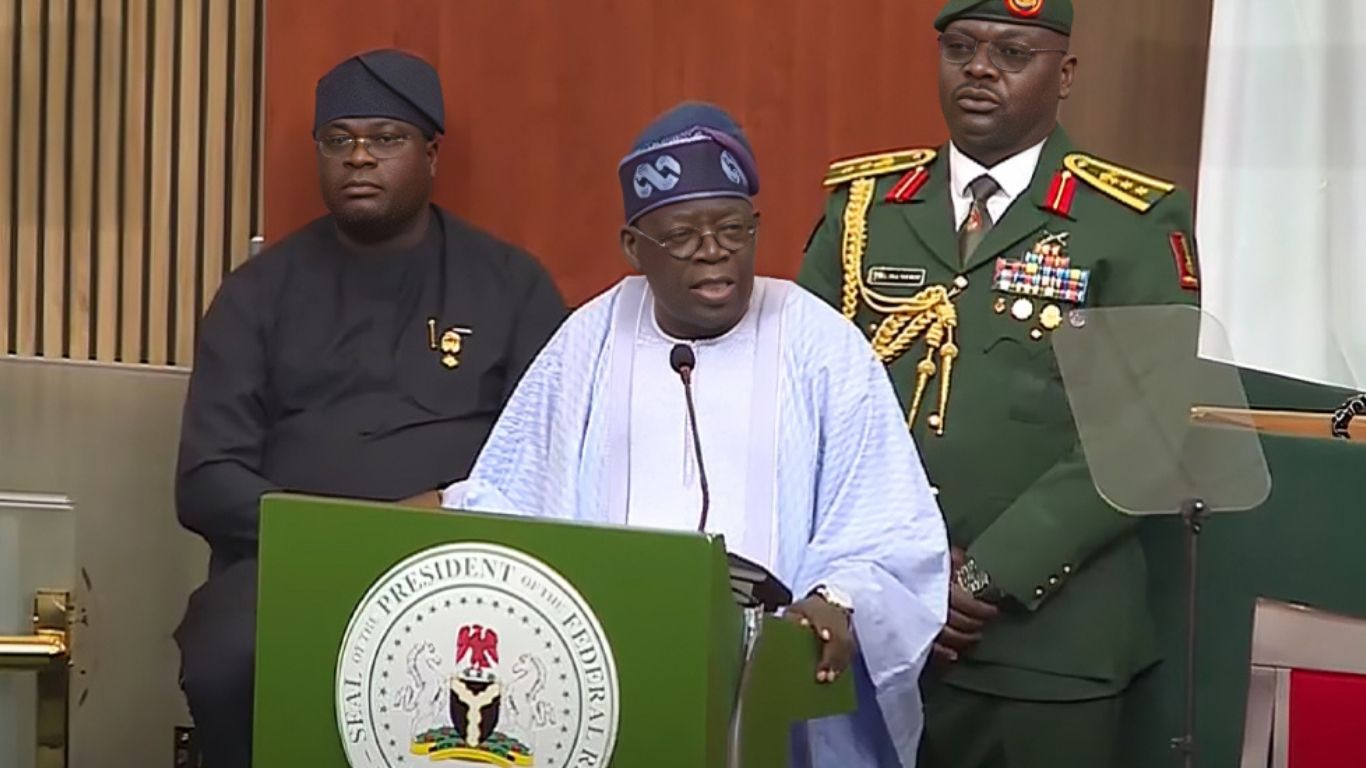
President Bola Tinubu on Wednesday morning insisted that the sacrifices of the last two years have started yielding results, promising that the country is now on the path of recovery and stability.

Assuring Nigerians that the nation’s economic storm was beginning to ease, Tinubu declared that the toughest phase of the reforms was behind the nation and saluted the citizenry for their endurance, support, and understanding.

In a nationwide broadcast on the occasion of Nigeria’s 65th Independence Anniversary, the President recalled that he inherited a near-collapsed economy when he took over the reins of power on May 29, 2023, but declared that the nation has finally turned the corner.

Tinubu stressed that as a result of the tough decisions his administration made, the federal and state governments, including local governments, now have more resources to take care of the people at the lower level of the ladder and to address their development challenges.

“Upon assuming office, our administration inherited a near-collapsed economy caused by decades of fiscal policy distortions and misalignment that had impaired real growth. As a new administration, we faced a simple choice: continue business as usual and watch our nation drift, or embark on a courageous, fundamental reform path. We chose the path of reform. We chose the path of tomorrow over the comfort of today. Less than three years later, the seeds of those difficult but necessary decisions are bearing fruit.

“In resetting our country for sustainable growth, we ended the corrupt fuel subsidies and multiple foreign exchange rates that created massive incentives for a rentier economy, benefiting only a tiny minority. At the same time, the masses received little or nothing from our Commonwealth. Our administration has redirected the economy towards a more inclusive path, channelling money to fund education, healthcare, national security, agriculture, and critical economic infrastructure, such as roads, power, broadband, and social investment programmes.

“These initiatives will generally improve Nigerians’ quality of life. As a result of the tough decisions we made, the federal and state governments, including local governments, now have more resources to take care of the people at the lower level of the ladder, to address our development challenges,” Tinubu emphasised.

Pointing out that Nigeria was racing against time, the Nigerian leader maintained that the country must build the roads it needs, repair the ones that have become decrepit, and construct the schools the children will attend and the hospitals that will care for the people.

Tinubu stated that his administration was making plans for the generations, lamenting that Nigeria does not have enough electricity to power its industries and homes today, or the resources to repair its deteriorating roads, build seaports, railroads, and international airports comparable to the best in the world, because it failed to make the necessary investments decades ago.

He added: “Our administration is setting things right. I am pleased to report that we have finally turned the corner. The worst is over, I say. Yesterday’s pains are giving way to relief. I salute your endurance, support, and understanding. I will continue to work for you and justify the confidence you reposed in me to steer the ship of our nation to a safe harbour.”

Under his leadership, Tinubu said that the economy is recovering fast, and the reforms he started over two years ago are delivering tangible results.

According to him, the second quarter 2025 Gross Domestic Product (GDP) grew by 4.23 per cent Nigeria’s fastest pace in four years and outpaced the 3.4 per cent projected by the International Monetary Fund (IMF).

Besides, the President boasted that inflation declined to 20.12 per cent in August 2025, the lowest level in three years, while the administration is working diligently to boost agricultural production and ensure food security, reducing food costs.

The President listed what he characterised as ‘12 remarkable economic milestones’ as a result of the implementation of sound fiscal and monetary policies by his government.

“We have attained a record-breaking increase in non-oil revenue, achieving the 2025 target by August with over N20 trillion. In September 2025 alone, we raised N3.65 trillion, 411 per cent higher than the amount raised in May 2023.

“We have restored Fiscal Health: Our debt service-to-revenue ratio has been significantly reduced from 97 per cent to below 50 per cent.

We have paid down the infamous ‘Ways and Means’ advances that threatened our economic stability and triggered inflation. Following the removal of the corrupt petroleum subsidy, we have freed up trillions of Naira for targeted investment in the real economy and social programmes for the most vulnerable, as well as all tiers of government.

“We have a stronger foreign reserve position than three years ago. Our external reserves increased to $42.03 billion this September the highest since 2019.

“Our tax-to-GDP ratio has risen to 13.5 per cent from less than 10 per cent. The ratio is expected to increase further when the new tax law takes effect in January. The tax law is not about increasing the burden on existing taxpayers but about expanding the base to build the Nigeria we deserve and providing tax relief to low-income earners,” Tinubu stressed.

According to him, Nigeria is now a net exporter, recording a trade surplus for five consecutive quarters, and is now selling more to the world than it is buying, a fundamental shift that strengthens the nation’s currency and creates jobs at home.

Nigeria’s trade surplus, the President stressed, increased by 44.3 per cent in Q2, 2025 to N7.46 trillion ($4.74 billion), the largest in about three years as goods manufactured in Nigeria and exported jumped by 173 per cent.

In the same vein, he stated that non-oil exports, as a component of Nigeria’s export trade, now represent 48 per cent, compared to oil exports, which account for 52 per cent, signalling that the country is diversifying its economy and foreign exchange sources outside oil and gas.

In the energy sector, he affirmed that oil production rebounded to 1.68 million barrels per day from barely 1 million in May 2023, attributing the increase to improved security, new investments, and better stakeholder management in the Niger Delta.

Furthermore, he said that the country has made notable advancements by refining petrol domestically for the first time in four decades and has also established itself as the continent’s leading exporter of aviation fuel.

“The Naira has stabilised from the turbulence and volatility witnessed in 2023 and 2024. The gap between the official rate and the unofficial market has reduced substantially, following FX reforms and fresh capital and remittance inflows. The multiple exchange rates, which fostered corruption and arbitrage, are now part of history. Additionally, our currency rate against the dollar is no longer determined by fluctuations in crude oil prices.

“Under the social investment programme to support poor households and vulnerable Nigerians, N330 billion has been disbursed to 8 million households, many of whom have received either one or two out of the three tranches of N25,000 each.

“Coal mining recovered dramatically from a 22 per cent decline in Q1 to 57.5 per cent growth in Q2, becoming one of Nigeria’s fastest-growing sectors. The solid mineral sector is now pivotal in our economy, encouraging value-added production of minerals extracted from our soil,” he noted.

Tinubu said the current administration was expanding transport infrastructure across the country, covering rail, roads, airports, and seaports, revealing that rail and water transport grew by over 40 per cent and 27 per cent, respectively.

On the 284-kilometre Kano-Kastina-Maradi Standard Gauge rail project and the Kaduna-Kano rail line, he stated that these infrastructure were nearing completion, while work is progressing well on the legacy Lagos-Calabar Coastal Highway and Sokoto-Badagry Highway.

According to him, the Federal Executive Council (FEC) recently approved $3 billion to complete the Eastern Rail Project.

Tinubu stated that the world has started taking notice of the government’s efforts, with sovereign credit rating agencies having upgraded their outlook for Nigeria, recognising its improved economic fundamentals.

The stock market, the President said, is experiencing an unprecedented boom, rising from an all-share index of 55,000 points in May 2003 to 142,000 points as of September 26, 2025, while at its last Monetary Policy Committee (MPC) meeting, the Central Bank slashed interest rates for the first time in five years, expressing confidence in the country’s macroeconomic stability.

As Nigerians reflect on the significance of the day and their journey of nationhood since October 1, 1960, Tinubu paid tributes to Nigeria’s founding fathers, including: Herbert Macaulay, Dr Nnamdi Azikiwe, Sir Abubakar Tafawa Balewa, Chief Obafemi Awolowo, Sir Ahmadu Bello, Margaret Ekpo, Anthony Enahoro, Ladoke Akintola, Michael Okpara, Aminu Kano, Funmilayo Ransome-Kuti, and other nationalists who believed it was Nigeria’s manifest destiny to lead the entire black race as the largest black nation on earth.

While Nigeria may not have achieved all the lofty dreams of its forebearers, the President assured that it has not strayed too far from them, stressing that the nation has made tremendous progress in economic growth, social cohesion, and physical development.

“Our country has experienced both the good and the bad times in its 65 years of nationhood, as is normal for every nation and its people,” he stated.

On security, the Nigerian leader stated that his administration was working diligently to enhance national security, ensuring the economy experiences improved growth and performance.

He said that the officers and men of the nation’s Armed Forces and other security agencies were working tirelessly and making significant sacrifices to keep Nigeria safe.

“They are winning the war against terrorism, banditry and other violent crimes. We see their victories in their blood and sweat to stamp out BokoHaram Terror in North-East, IPOB/ESN terror in South East and banditry and kidnapping.

“We must continue to celebrate their gallantry and salute their courage on behalf of a grateful nation. Peace has returned to hundreds of our liberated communities in North-west and North-east, and thousands of our people have returned safely to their homes,” he stated.

Speaking to young people, he described them as the future and the greatest assets of the country, urging them to continue to dream big, innovate, and conquer more territories in their various fields of science, technology, sports, and the art and creative sector.

He highlighted the impact of the Nigerian Education Loan Fund (NELFUND), positing that approximately 510,000 students across 36 states and the FCT have benefited from this initiative, covering 228 higher institutions.

“As of September 10, the total loan disbursed was N99.5 billion, while the upkeep allowance stood at N44.7 billion. Credicorp, another initiative of our administration, has granted 153,000 Nigerians N30 billion affordable loans for vehicles, solar energy, home upgrades, digital devices, and more.

“YouthCred, which I promised last June, is a reality, with tens of thousands of NYSC members now active beneficiaries of consumer credit for resettlement,” he disclosed, acknowledging that the reforms have come with some pains.

“Fellow Nigerians, I have always candidly acknowledged that these reforms have come with some temporary pains. The biting effects of inflation and the rising cost of living remain a significant concern to our government.

“However, the alternative of allowing our country to descend into economic chaos or bankruptcy was not an option. Our macro-economic progress has proven that our sacrifices have not been in vain. Together, we are laying a new foundation cast in concrete, not on quicksand.

“The accurate measure of our success will not be limited to economic statistics alone, but rather in the food on our families’ tables, the quality of education our children receive, the electricity in our homes, and the security in our communities. Let me assure you of our administration’s determination to ensure that the resources we have saved and the stability we have built are channelled into these critical areas.

“Today, the governors at the state level, and the local government autonomy are yielding more developments. Therefore, on this 65th Anniversary of Our Independence, my message is hope and a call to action.

“The federal government will continue to do its part to fix the plumbing in our economy. Now, we must all turn on the taps of productivity, innovation, and enterprise, just like the Ministry of Interior has done with our travel passports, by quickening the processing,” he added.

Arise News

Continue Reading
Advertisement


Click to comment

Leave a Reply

Your email address will not be published. Required fields are marked *

Headlines

Full Text of President Tinubu’s 2026 Democracy Day Address

Published

on

Fellow Nigerians

Today, we celebrate democracy and the enduring Nigerian spirit.

For 27 unbroken years, since May 29, 1999, Nigerians have chosen their leaders through the ballot, witnessed peaceful transitions of power, and resolved disagreements in courtrooms and legislative chambers—not through violence. We have experienced the longest stretch of civilian rule in our history. Our democracy is not perfect, but it is ours, and we must continue to defend and strengthen it.

In the coming days, Ekiti and Osun states will hold elections. I urge INEC, security agencies, and all parties to ensure these polls are peaceful and credible. Democracy fails when citizens doubt the process. To our National Assembly, Judiciary, the Press, and Civil Society: you are the guardrails of our republic. Criticise me, disagree with me, but never stop believing in Nigeria.

To our young people: Nigeria is your home and your future. Build here, code here, work here, and vote here. Every great nation was built by those who stayed to solve problems, not by those who abandoned ship.

To our armed forces, police, and intelligence services: Nigeria salutes your sacrifice. To our traditional rulers, faith leaders, and community heads: thank you for your support of peace and reconciliation. The government cannot do it alone.

Today, we honour the resilience of Nigerians who refused to surrender their faith in freedom, and the courage of those who stood firm against intimidation. We pay tribute to patriots who endured persecution, imprisonment, exile, and even death so that future generations could enjoy democracy. I salute labour leaders, journalists, activists, students, women, professionals, political leaders, and soldiers—both those who have passed and those still with us—for their patriotic contributions.

Though this year’s mood is dampened by the abduction of our children in Oyo and Borno, we remain hopeful for their safe return. Democracy without security is not solid enough. That is why this administration declared a security emergency and approved the recruitment of more than 50,000 new police officers and thousands of military recruits. Our 2026 budget commits N5.41 trillion—our largest ever—to defence and security. Our administration is ever ready to do much more to secure our people.

We have moved from training with our allies, the United States, France and other European countries, to precision targeting. In Arege, Borno State, we degraded ISWAP’s command centre. Terror-related deaths are down by 81% since 2015. Over 13,000 terrorists have been neutralised in the past year. But we also keep the door of surrender open. Over 124,000 fighters and dependents have laid down their arms since 2023 through Operation Safe Corridor.

To bandits, kidnappers, and sponsors of terror: Surrender or face the full force of the Nigerian State. These windows of surrender will not remain open forever. No mercy will be shown to those who trade in the blood of Nigerians.

At a time like this, let us not assign blame or point fingers. Crime has no ethnicity. We must stand united and be assured that the enemies of our nation shall soon be history. We will triumph over terror and continue to build a more prosperous nation.

June 12 occupies a sacred place in our national memory. It represents more than an election; it is a defining chapter in our story. We remember Chief M.K.O. Abiola, who won a pan-Nigerian mandate transcending ethnicity and religion. We remember Alhaja Kudirat Abiola.

We also remember Chief Gani Fawehinmi, Chief Bola Ige, Chief Alfred Rewane, Pa Abraham Adesanya, Chief Anthony Enahoro, Alhaji Balarabe Musa, Commodore Dan Suleiman, Dr. Beko Ransome-Kuti, Frank Kokori, Arthur Nwankwo, Chima Ubani, Shehu Musa Yar’Adua, and the many other heroes and heroines of democracy whose sacrifices helped secure the freedoms we enjoy today.

As beneficiaries of their struggle, we have a duty to strengthen and deepen the democratic institutions for which they fought. The greatest tribute we can pay is to build a Nigeria where freedom is protected, justice is upheld, opportunity is expanded, and government is accountable.

June 12, 1993, revealed the possibility of a true Nigerian nation. The heroes of June 12 secured political freedom. Our challenge is to secure economic freedom. Democracy must be felt in the quality of people’s lives—in opportunities for youth, in prosperous farmers, successful entrepreneurs, and the dignity of our workers.

The reforms we are undertaking were not chosen for ease, but for necessity. Three years ago, our public finances were under severe strain, investment was discouraged, and economic uncertainty threatened our future. We chose to act, embracing reforms to advance Nigeria’s economic freedom.

Since 2023, our reforms have restored stability and credibility to economic management. Federation revenues have risen, providing states and local governments with more resources for infrastructure, education, healthcare, and security. Fiscal transparency has improved, leakage has been reduced, and public funds are better directed to national priorities. Investor confidence has returned, with investments in agriculture, energy, manufacturing, technology, mining, transportation, and the creative industries growing.

Domestic refining capacity has increased, strengthening energy security and reducing our reliance on imported petroleum products.

By 2023, when we came on board, the electricity sector was characterised by chronic generation shortfalls, an unreliable gas supply, and transmission infrastructure so fragile that it could not evacuate available power. Distribution companies were burdened by massive losses and a metering deficit of over four million. Worst of all, the value chain was drowning in legacy debt. The result was a sector that generated less than the 13,500 Megawatts installed capacity, a sector that transmitted less than it generated, distributed less than it transmitted and collected revenue far below what it needed to sustain itself.

To address the problems besetting the sector, I signed the Electricity Act, which grants states authority to generate, transmit, and distribute power. The Presidential Power Sector Task Force is working hard to reduce the metering deficit. It has also been authorised to raise N4 trillion bond to settle verified legacy debts. The Rural Electrification Agency, supported by the World Bank and the African Development Bank, has deployed off-grid and mini-grid power to underserved communities, universities, markets, and hospitals. Electricity is a democratic dividend we owe every Nigerian. We intend to deliver it.

Across the country, infrastructure projects are connecting producers to markets and creating opportunities for enterprise and employment. The National Agricultural Development Fund is deploying 10,000 tractors over five years. Over 1,000 SMEs have been certified for export. Non-oil exports grew by 21% last year.

Yet, many Nigerians still face economic hardship. We remain focused on reducing inflation, expanding food production, creating jobs, improving living standards, rebuilding confidence in our economy, and creating conditions for sustainable prosperity.

We are moving from uncertainty to stability. The next phase is about accelerating growth and ensuring the benefits are felt in every home, every community, and every region. We believe that Democracy must be felt in the pocket.

Recognising that democracy is undermined when people do not feel its impact, my administration has sought financial autonomy for our 774 local councils. A fundamental challenge to our nation’s advancement has been ineffective local government administration. The insecurity we are addressing is partly due to the collapse of grassroots governance. The Renewed Hope Agenda is about ensuring that all Nigerians benefit from governance.

Every generation has a defining responsibility. The generation of our founding fathers secured independence—the generation of June 12 secured democracy. Our generation must secure prosperity.

Let us move forward together—rejecting division, cynicism, and despair; embracing unity, hope, and confidence. Let us build a Nigeria united by a common purpose, strengthened by diversity, where justice is accessible, liberty is secure, and opportunity is abundant.

Among the architects of modern democratic Nigeria, we honour General Shehu Musa Yar’Adua for his vision of national partnership. In recognition of his contributions, the Federal Government has approved the revitalisation and renaming of the completed Institute of Petroleum Studies, Kaduna, as the General Shehu Musa Yar’Adua University of Geological Sciences and Engineering Technology.

I am also pleased to announce national awards to the following Nigerians, who suffered persecution, endured indignities, exile, incarceration, and, at times, solitary confinement, so that we have democracy today.

Barrister Ayoka Lawani
Tunde Fagbenle
Oladele Alake
Olatunji Bello
Louis Odion
Segun Babatope
Sam Omatseye
Sir Ademola Osinubi
Bola Bolawole
Lade Bonuola
Femi Kusa
Debo Adeniran
Chief Ayo Opadokun
Chief Ralph Obiora
Ose Osayande
Barrister Osa Director
Prof. Sylvester Odion-Akhaine
Dr Arthur Nwankwo (Posthumous)
Dr Osagie Obayuwana
Dr Joe Okei-Odumakin
Barrister Titus Mann
Joe Igbokwe
Richard Akinnola
Ben Charles-Obi (Posthumous)
George Mbah
Dr Niran Malaolu
Major-General Ishola Williams (rtd)
Femi Aborisade
Jenkins Alumona
Gbemiga Ogunleye
Muyiwa Adekeye
Babajide Kolade-Otitoju
Ike Okonta

We also recognise the soldier-democrats of the June 12 struggle:
Major General MA Garba
Brigadier General Lawal Jaafaru Isa
Col Umar Farouk Ahmed;
Col Sambo Dasuki;
Col Lawan Gwadabe;
Brigadier Jonathan Ndam Temlong
Col Musa Shehu;
Major General Chris Eze;
Major General Harris Dzarma;
Col Isa Jibrin;
Maj. General Joseph Oshanupin;
Col Olusegun Oloruntoba, Olugbede of Gbede Kingdom)
Lieutenant Colonel Happy Kefas Bulus
Col J Okai;
Col Emmanuel Ndubueze;
Lt Col Yakubu Muazu
Brigadier Yahaya Abubakar, the Current Etsu Nupe, who is already the holder of the CFR title.

The honours list will be released in the next few days.

Fellow Nigerians, 27 years ago, many doubted democracy would survive here because of our diversity. Today, our diversity sustains our democracy. The road ahead is steep. But June 12 reminds us: Nigerians do not break. We bend, we bleed, but we do not break.

Let us renew our covenant: That the labours of our heroes past shall never be in vain, and that government of the people, by the people, for the people, shall not perish from this land.

May God bless the heroes of our democracy. May God bless the Federal Republic of Nigeria. May God continue to bless us all.

Happy Democracy Day.

BOLA AHMED TINUBU, GCFR
President and Commander-in-Chief of the Armed Forces Federal Republic of Nigeria

Continue Reading

Headlines

Davido Draws World Attention to Abducted Oyo Pupils and Teachers at FIFA Concert

Published

on

Davido wore a customised jacket bearing the names of abducted pupils and teachers during a FIFA World Cup concert.

Nigerian Afrobeats star Davido used his performance at the FIFA World Cup 2026 Countdown Concert in Los Angeles to draw attention to the abduction of 39 schoolchildren and seven teachers from Oriire Local Government Area of Oyo State.

The singer appeared on stage at the Crypto.com Arena wearing a customised black leather jacket carrying the message “BRING THEM HOME”. The jacket was covered with green circular badges bearing the names of the abducted pupils and teachers, turning his performance into a call for their safe return.

Images and videos shared by Davido showed the names displayed across the jacket before and during his headline performance at the concert. The campaign message was also accompanied by the hashtag #BringThemHome.

The pupils and teachers were abducted on May 15, 2026, when armed attackers stormed Community High School in the Ahoro-Esinele community of Oriire Local Government Area. The attackers kidnapped 39 pupils and seven teachers, including the school principal.

The attack also claimed the lives of school officials and a motorcyclist. The incident sparked concern across the country and renewed calls for stronger measures to protect schools and communities from attacks.

Davido’s outfit carried additional symbolism. According to campaign organisers, the names of victims believed to remain in captivity were written in white, while the names of those who lost their lives were displayed in red.

By using one of the biggest stages linked to the build-up to the 2026 FIFA World Cup, the singer brought international attention to a case that has continued to generate concern in Nigeria. His appearance has since attracted discussion on social media, with many supporters praising the effort to keep public attention on the abducted pupils and teachers.

The #BringThemHome campaign continues to call for intensified efforts to secure the release of those still being held and reunite them with their families.

Continue Reading

Headlines

June 12: Tinubu’s Govt Killing Democracy in Nigeria, Atiku Warns

Published

on

The presidential candidate of the opposition African Democratic Congress (ADC), Alhaji Atiku Abubakar, on Thursday, declared that the actions of the Bola Ahmed Tinubu-led All Progressives Congress (APC) administration contradicts the spirit, sacrifice, and legacy of June 12.

In a statement he personally signed and released to commemorate another Democracy Day on June 12, the former Vice President charged the citizens to stand up against bad governance, reject the politics of intimidation, and resist every manifestation of democratic backsliding.

He stressed that Nigerians must once again summon the courage of those who marched, protested, resisted, suffered, and sacrificed for freedom for June 12 to retain its meaning.

The Waziri Adamawa said over the past three years, Nigerians had witnessed a deliberate and coordinated effort to weaken, fragment, and neutralise opposition political parties ahead of the 2027 general elections.

He added that through manufactured leadership crises, orchestrated defections, political intimidation, and the abuse of state institutions, every credible opposition platform had come under sustained attack.

Atiku said institutions that ought to serve the Nigerian people impartially had increasingly been transformed into instruments of partisan warfare, adding that financial crimes agencies, the police, the National Assembly, and even segments of the judiciary have been deployed to harass, intimidate, and coerce opposition voices into submission or defection.

Part of the statement titled ‘June 12: On The March, Again’ read: “As Nigerians prepare to commemorate another Democracy Day on June 12, we do so under the darkening shadow of a systematic assault on the democratic space by the Bola Ahmed Tinubu-led APC administration.

“What ought to be a celebration of freedom, popular sovereignty, and constitutional governance has instead become an occasion for sober reflection on the steady dismantling of the very ideals that inspired our struggle against military dictatorship….

“The Electoral Act 2026 has further entrenched provisions that disproportionately favour the ruling party, while freedom of speech, freedom of association, and media independence have come under relentless assault.

“These actions strike at the very heart of democracy and stand in direct contradiction to the spirit, sacrifice, and legacy of June 12,” the former Vice President said.

The Waziri Adamawa, who said he spoke not as a distant observer but as one who paid a personal price in the struggle to enthrone democratic governance in our country, stressed that he resisted every attempt to be co-opted into military rule.

He said: “Alongside other patriots, I stood firmly against dictatorship and paid dearly for that conviction. My businesses were confiscated. An assassination attempt was launched against me and my family in Kaduna. Several police officers lost their lives in that attack, and I was forced into exile.

“In the historic June 12, 1993 presidential election—the foundation upon which this Democracy Day rests—I stepped aside for the late Chief Moshood Kashimawo Olawale Abiola to emerge as the presidential candidate of the Social Democratic Party and the eventual winner of that epochal election.

“The democracy we enjoy today was not gifted to us by benevolent rulers. It was won through sacrifice, courage, resistance, and blood. Politicians, pro-democracy activists, patriotic military officers, labour leaders, civil society organisations, students, journalists, and ordinary Nigerians united to confront military tyranny. Many paid the ultimate price. Chief MKO Abiola and Kudirat Abiola laid down their lives. So did Pa Alfred Rewane, Shehu Musa Yar’Adua, scores of journalists, students, activists, and countless unnamed heroes whose sacrifices paved the way for the democratic order we now risk taking for granted.”

He, therefore, expressed concern that Nigeria found itself confronted by a different but equally dangerous threat 27 years after the military returned to the barracks with what he called the emergence of an increasingly authoritarian civilian order.

He said: “Unlike military dictatorship, which ruled by decrees and brute force, this new authoritarianism seeks legitimacy through institutions it has steadily captured and weakened. Its methods may be more sophisticated, but its objective is the same: the concentration of power, the silencing of dissent, and the subversion of the will of the people.

“The warning signs are everywhere. A shrinking civic space. A compromised electoral environment. The intimidation of opposition figures. The weaponisation of poverty. The weakening of democratic institutions. The growing perception that the ruling party is more interested in retaining power at all costs than in governing for the benefit of Nigerians.

“This is why June 12 must remain more than a public holiday. It must remain a living reminder that democracy is never permanently won; it must be continually defended.”

Atiku underscored the need to ensure that the sacrifices of June 12 were not in vain, stressing that “We cannot celebrate the defeat of military dictatorship while tolerating the rise of civilian autocracy. We cannot honour the heroes of democracy while remaining silent as democratic institutions are weakened and captured.”

The presidential candidate of the ADC expressed his commitment to working with all Nigerians of goodwill—across political parties, civil society organisations, labour unions, professional bodies, youth groups, and the broader public—to resist these authoritarian tendencies and defend our constitutional democracy.

“Once again, Nigerians are called upon to stand up in defence of the Republic. The hard-won gains of democratic rule are being steadily eroded, and there is a growing and legitimate concern that the Tinubu administration is determined either to manipulate the outcome of the 2027 elections or undermine the democratic process itself if it cannot secure victory through the ballot….

“The task before us transcends partisan politics. It is a national duty….The struggle continues. And just as we marched before, we must be prepared to march again,” he further advised citizens.

Continue Reading