
Headlines
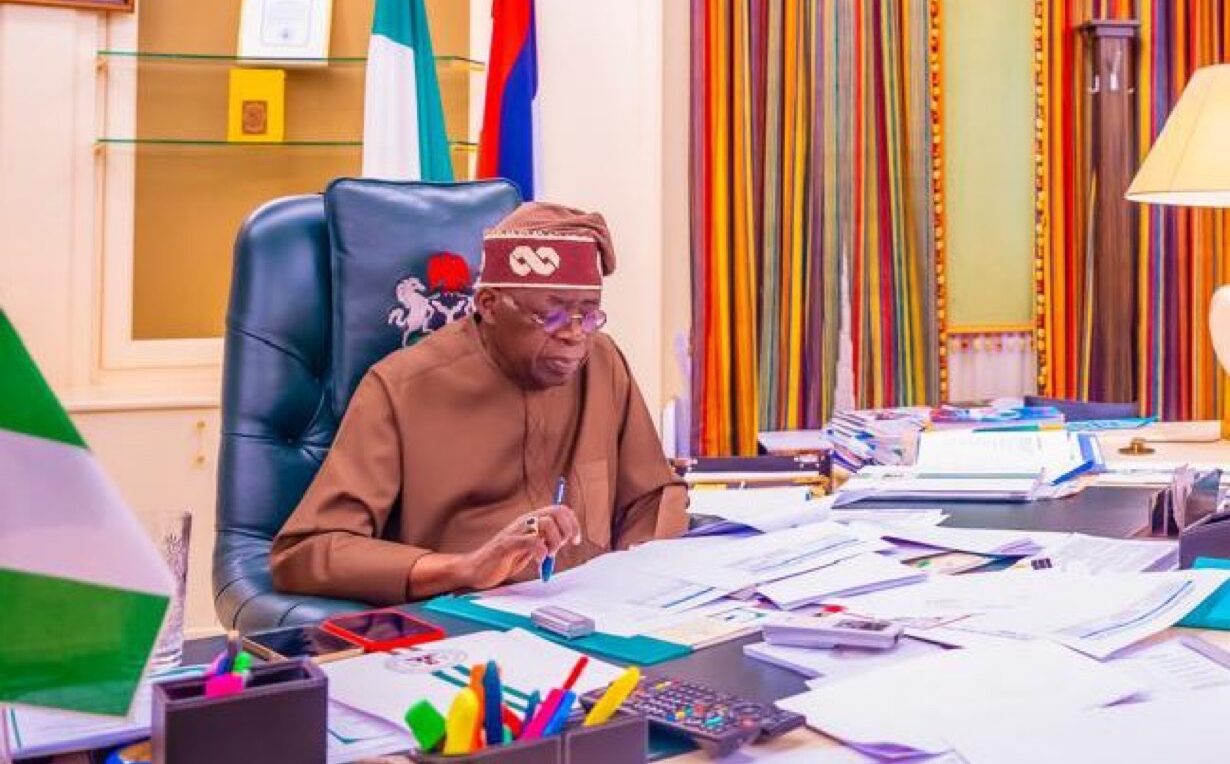
We Have Made Undeniable Progress, Tinubu Tells Nigerians on Second Anniversary (Full Speech)

- /home/rhoncare/pointblank.ng/wp-content/plugins/mvp-social-buttons/mvp-social-buttons.php on line 27
https://pointblank.ng/wp-content/uploads/2025/02/Tinubuue-e1729697176430-1000x600.jpg&description=We Have Made Undeniable Progress, Tinubu Tells Nigerians on Second Anniversary (Full Speech)', 'pinterestShare', 'width=750,height=350'); return false;" title="Pin This Post">
- Share
- Tweet /home/rhoncare/pointblank.ng/wp-content/plugins/mvp-social-buttons/mvp-social-buttons.php on line 69
https://pointblank.ng/wp-content/uploads/2025/02/Tinubuue-e1729697176430-1000x600.jpg&description=We Have Made Undeniable Progress, Tinubu Tells Nigerians on Second Anniversary (Full Speech)', 'pinterestShare', 'width=750,height=350'); return false;" title="Pin This Post">
Fellow Nigerians, as we mark the second anniversary of our administration, I salute your resilience and undaunted spirit. Two years ago, you entrusted me with the sacred responsibility to lead our nation at a time of historic challenges. Together, we have faced these headwinds with courage and determination.
The economic and general situation of the country I inherited required that we redirect the country’s affairs with a bold and new vision. I immediately implemented two necessary policies to stop our country from further drifting into the precipice. It was apparent that if the federal government and the other two tiers of government must remain viable and cater to the citizens’ welfare, we must do away with decades-long fuel subsidies and the corruption-ridden multiple foreign exchange windows. The two were no longer sustainable and have become a chokehold on our nation’s neck, strangling our nation’s future.
While our administration has implemented the reforms to restore and reinvigorate our national economy and strengthen our social fabric as a strong and united country, I must thank my fellow citizens for your unrelenting support and belief in the grand vision we share to uplift our nation and renew our collective hopes and aspirations.
We are halfway through the journey that began 24 months ago. Today, May 29, 2025, offers our administration the opportunity to share again how far we have gone and our progress in steering our country along the critical path of socio-economic development.
When we embarked on this journey, propelled by a burst of hope and abiding faith in Nigeria’s unity and progress, I made a pledge before God and fellow countrymen and women to confront Nigeria’s challenges head-on by rebuilding trust, fostering prosperity, and restoring our nation’s economic health. Today, I proudly affirm that our economic reforms are working. We are on course to building a greater, more economically stable nation.
Under our Renewed Hope Agenda, our administration pledged to tackle economic instability, improve security nationwide, reduce corruption, reform governance, and lift our people out of poverty.
While implementing the reforms necessary to strengthen our economy and deliver shared prosperity, we have remained honest by acknowledging some of the difficulties experienced by our compatriots and families. We do not take your patience for granted. I must restate that the only alternative to the reforms our administration initiated was a fiscal crisis that would have bred runaway inflation, external debt default, crippling fuel shortages, a plunging Naira, and an economy in a free-fall.
Inflation has begun to ease, with rice prices and other staples declining. The oil and gas sector is recovering; rig counts are up by over 400% in 2025 compared to 2021, and over $8 billion in new investments have been committed. We have stabilised our economy and are now better positioned for growth and prepared to withstand global shocks.
In 2025, we remain on track with our fiscal targets. Gross proceeds per barrel from crude oil are broadly aligned with our forecasts as we intensify our efforts to ramp up production. Our fiscal deficit has narrowed sharply from 5.4% of GDP in 2023 to 3.0% in 2024. We achieved this through improved revenue generation and greater transparency in government finances. In the first quarter of this year, we recorded over N6 trillion in revenue.
We have discontinued Ways & Means financing, which has been a major contributor to high and sticky inflation. The NNPC, no longer burdened by unsustainable fuel subsidies, is now a net contributor to the Federation Account. We are also achieving fuel supply security through local refining.
Our debt position is improving. While foreign exchange revaluation pushed our debt-to-GDP ratio to around 53%, our debt service-to-revenue ratio dropped from nearly 100% in 2022 to under 40% by 2024. We paid off our IMF obligations and grew our net external reserves by almost 500% from $4 billion in 2023 to over $23 billion by the end of 2024.
Thanks to our reforms, state revenue increased by over N6 trillion in 2024, ensuring that subnational governments can reduce their debt burden, meet salaries and pension obligations on a timely basis, and invest more in critical infrastructure and human capital development.
One of our administration’s most impactful achievements is our bold tax reform agenda, which is already yielding results. By the end of 2024, our tax-to-GDP ratio rose from 10% to over 13.5%, a remarkable leap in just one year. This was not by accident. It results from deliberate improvement in our tax administration and policies designed to make our tax system fairer, more efficient, and more growth-oriented.
We are eliminating the burden of multiple taxation, making it easier for small businesses to grow and join the formal economy. The tax reforms will protect low-income households and support workers by expanding their disposable income. Essential goods and services such as food, education, and healthcare will now attract 0% VAT. Rent, public transportation, and renewable energy will be fully exempted from VAT to reduce household costs further.
We are ending the era of wasteful and opaque tax waivers. Instead, we have introduced targeted and transparent incentives supporting high-impact manufacturing, technology, and agriculture sectors. These reforms are not just about revenue but about stimulating inclusive economic growth.
There is a deliberate focus on our youth, who a friendlier tax environment for digital jobs and remote work will empower. Through export incentives, Nigerian businesses will be able to compete globally. Our National Single Window project streamlines international trade, reduces delays, and enhances Nigeria’s competitiveness.
To promote fairness and accountability, we are establishing a Tax Ombudsman, an independent institution that will protect vulnerable taxpayers and ensure the system works for everyone, especially small businesses.
Most importantly, we are laying the foundation for a more sustainable future by introducing a new national fiscal policy. This strategic framework will guide our approach to fair taxation, responsible borrowing, and disciplined spending.
These reforms are designed to reduce the cost of living, promote economic justice, and build a business-friendly economy that attracts investment and supports every Nigerian. Together, we are creating a system where prosperity is shared, and no one is left behind.
We have breathed new life into the Solid Minerals sector as part of our efforts to diversify the economy. Revenue has increased phenomenally, and investors are setting up processing plants as the sector dumps the old pit-to-port policy and embraces a new value-added policy.
Over 1,000 Primary Health Centres are being revitalised nationwide. An additional 5,500 PHCs are being upgraded under our Renewed Hope Health Agenda. We are establishing Six new cancer treatment centres. Three are ready. We offer free dialysis services in pilot tertiary hospitals and subsidise the service in others. Under the Presidential Maternal Health Initiative, over 4,000 women have undergone free cesarean sections. Lastly, we have expanded Health Insurance Coverage from 16 million to 20 million within two years.
As a result of our bold and deliberate policies, the economy is growing stronger again. Real GDP rose by 4.6% in Q4 2024, with full-year growth of 3.4%. This is one of the strongest in a decade.
Without a responsive and reliable national security infrastructure that can protect lives and properties, our economy will not perform optimally, and those who seek to harm us will impair and disrupt our way of life. Our administration is committed to the security and safety of our people. For our government, protecting our people and their peaceful way of life is the utmost priority.
Since I assumed our country’s leadership, our administration has improved collaboration among security agencies, increased intelligence-driven operations, and better ensured the welfare of our armed forces and security personnel. I use this opportunity to salute the courage and everyday sacrifice of our service men and women. We may not always witness the tremendous efforts they make to keep us safe, but we benefit every day from the results of their dedication. Even if we do not thank them often enough, they willingly face danger so we can go about our lives freely and without fear.
Our military, police, and intelligence agencies are committed to always responding to emerging security threats and new challenges because it is the patriotic duty they owe a grateful nation.
Amid the new security challenges, we can report some successes. In some areas of the northwest, hitherto under the control of bandits, our gallant armed forces have restored order, reducing and eliminating threats to lives and livelihoods. With the success achieved, farmers are back tilling the land to feed us. Highways, hitherto dangerous for travellers, have become safer. Our security agencies have succeeded many times in rescuing the abducted citizens from the hands of their tormentors. I promise you, we shall remain vigilant, as I told security chiefs during the last meeting to up their game and collaborate to end this plague of evil men. Every Nigerian deserves to live without fear.
Outside of Security, we have prioritised human capital development as a central pillar of our national development strategy.
To this end, we have significantly expanded access to quality education through infrastructure investments and the student loan scheme to support indigent students in tertiary institutions. Through the Renewed Hope Health initiative, our administration has begun equipping health facilities and deploying skilled personnel to unserved areas. We are also strengthening our response to public health threats and implementing targeted social investment schemes.
Our youth empowerment initiatives include access to funds, skill development, and creating employment opportunities. Through our MSME support, we empower the next generation and bridge inequality. In our mission to empower the next generation, we have taken bold steps to place young Nigerians at the heart of national development. Nowhere is this more evident than at the National Agency for Science and Engineering Infrastructure (NASENI), where the current management is making giant strides. NASENI has embraced a digital-first approach, introduced real-time dashboards, and implemented end-to-end e-procurement through its Unified ERP System—setting a new governance benchmark for public institutions.
Through bold, high-impact programmes like Innovate Naija, Irrigate Nigeria, the Asset Restoration Programme, and the Renewable Energy and Innovation Park in Gora, NASENI drives inclusive industrialisation at scale. From assembling electric vehicles and reviving idle assets to launching Africa’s most advanced Rapid Diagnostic Kit Factory and training female drone engineers through the NASCAV programme, these initiatives are creating jobs, restoring dignity to work, and opening up a future of possibilities for our youth. This is the movement we promised—a government of action powered by the energy and innovation of young Nigerians.
Agriculture and food security are top priorities of our Renewed Hope Agenda. We have launched aggressive initiatives to boost local food production, support farmers, and stabilise food prices. We have also invested in mechanised farming by procuring thousands of tractors, other farming tools, and fertilisers.
Under the Renewed Hope Agenda, the federal government has continued with major road construction and rehabilitation projects across all geopolitical zones, from the Abuja-Kaduna-Zaria-Kano Dual Carriageway, the 9th Mile-Oturkpo-Makurdi Road, the Lagos-Calabar Coastal Highway, Abuja-Lokoja-Benin Road, Enugu-Onitsha Expressway, Oyo-OgbomosoRoad, Sokoto-Badagry Road, Enugu-Port Harcourt Expressway, Second Niger Bridge Access Road to Bodo-Bonny Road among hundreds of ongoing road projects across the country.
We have launched initiatives to improve electricity generation by upgrading generation and transmission infrastructure and investing in off-grid solar energy to power our homes, business premises, industries, schools and hospitals.
In the spirit of democracy and national renewal, we are preparing to welcome the world to Nigeria soon for the Motherland Festival. This landmark gathering will spotlight our rich heritage, dynamic creative industries, and the vibrant energy of our people. It will showcase Nigeria’s beauty through tourism, culture, and innovation, inviting the world to rediscover our nation.
The Nigerian diaspora plays a vital role in our national transformation. Their expertise, investment, and global perspective are key to shaping the future we seek. In recognition, the government has introduced policies like the diaspora bond and the non-resident Bank Verification Number to make it easier for Nigerians abroad to invest, engage, and contribute meaningfully to the country’s progress.
The Motherland Festival will bring together voices from across the continent and the diaspora in a decisive moment of unity and purpose, affirming that Nigeria is not only a leader in Africa but a committed global partner ready to engage, inspire, and lead.
Once again, I acknowledge the sacrifices many Nigerians have made and continue to make as we reposition our country, not just for today but for generations yet unborn. Our journey is not over, but our direction is clear. So is our resolve to tackle emerging challenges. By the Grace of God, we are confident that the worst is behind us. The real impact of our governance objectives is beginning to take hold. The future is bright, and together, we will build a stronger, more inclusive Nigeria that we can all be proud of.
Thank you all, and May God continue to bless the Federal Republic of Nigeria.


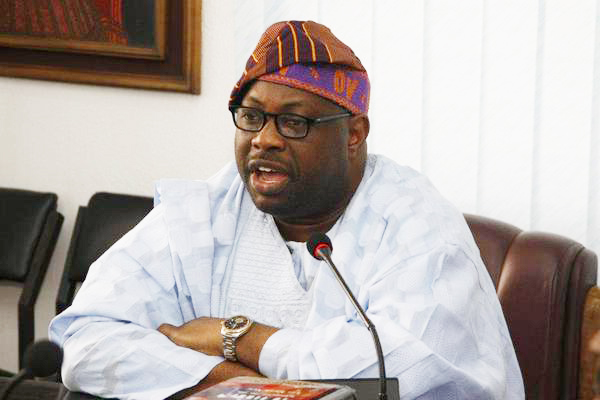
A chieftain of the African Democratic Congress (ADC), and Deputy Director of the Presidential Campaign Council, Chief Dele Momodu, has described former Vice-President Atiku Abubakar as the most nationally formidable and experienced among the leading contenders for the 2027 presidential election.
Momodu said Atiku’s experience at the national level distinguishes him from President Bola Tinubu and former Anambra State Governor, Peter Obi.
He stated this on Wednesday during an interview on Eagle 102.5 FM, Ilese-Ijebu, in Abeokuta.
“If you look at the antecedents of the three major candidates, between Atiku Abubakar and Peter Obi, you will see that Atiku is the most experienced. He has managed our country at the highest level,” he said.
Momodu traced Atiku’s political journey to the 1992 Social Democratic Party (SDP), presidential primary where he contested against late MKO Abiola and stepped down for him.
He said Atiku accepted the outcome without crisis even after he was not picked as Abiola’s running mate, describing it as a mark of true democratic temperament.
“He is the only one who started from around 1992, contested the SDP primary against Abiola and stepped down with uncommon equanimity. He did not make any noise,” Momodu said.
He noted that Atiku was among the founders of the Peoples Democratic Party, PDP, and served as Vice-President from 1999 to 2007.
Comparing Atiku with Obi, Momodu argued that while Obi’s best was demonstrated in Anambra, Atiku’s was at the presidency level managing the national economy.
“Peter Obi has tried his best in Anambra, while Atiku’s best is at the level of vice president controlling the economy of Nigeria. The difference is clear. He has matured in experience and exposure,” he said.
Momodu also said President Tinubu’s experience was largely limited to Lagos.
“What I’m trying to say is that Tinubu’s experience was limited to Lagos, and that is why when he became president, he thought Nigeria was Lagos. And he has found out now that Nigeria is not Lagos,” he said.
He argued that the current economic hardship under the present administration did not show prosperity, insisting Atiku remained better positioned to lead the country.
“Well, we are yet to see that prosperity, and if yesterday would determine today and tomorrow, it is obvious that Tinubu should retire now and let someone else do it,” Momodu added.
DailyPost
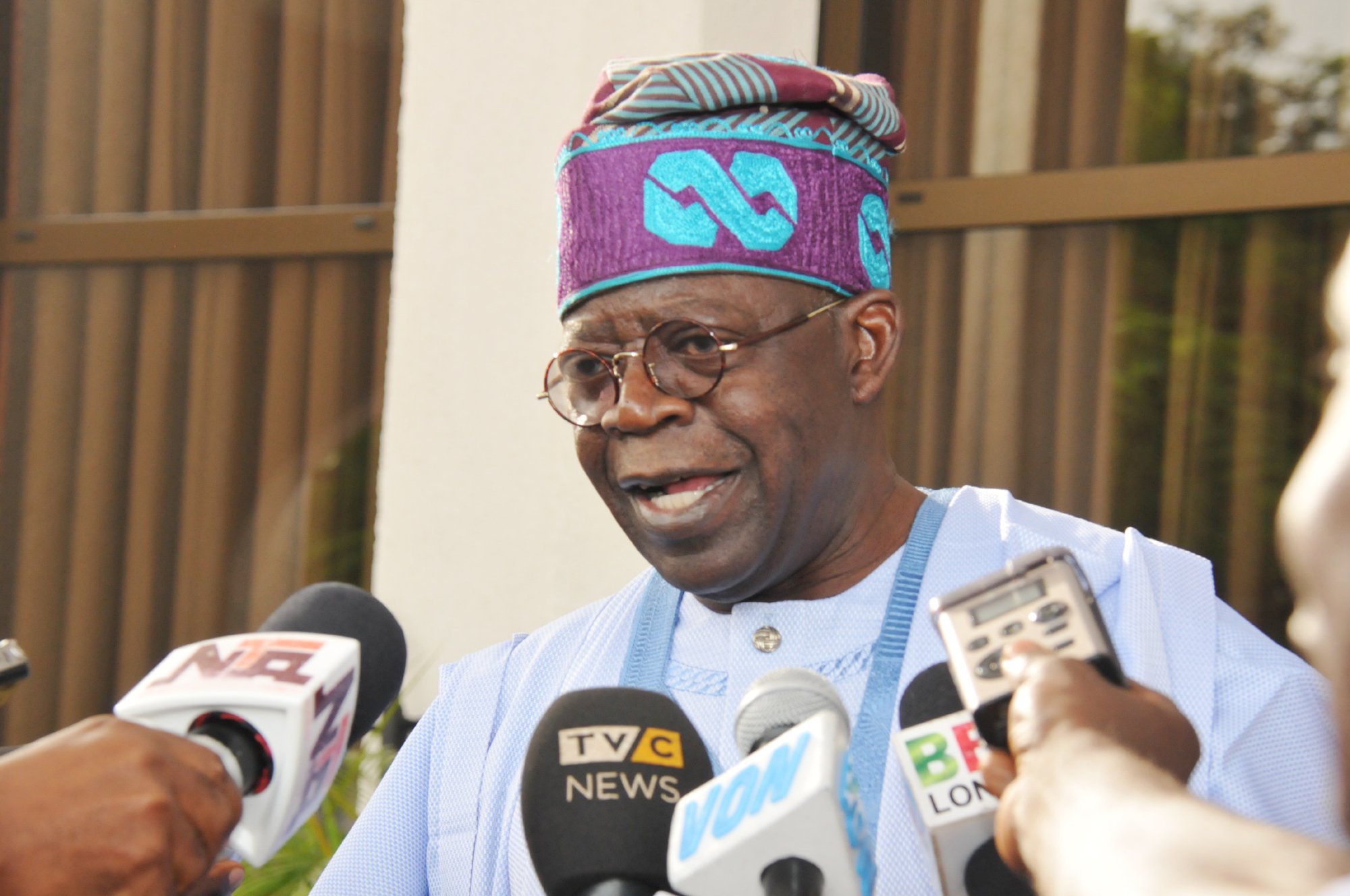
President Bola Tinubu says he has no regrets over the removal of petrol subsidy and other economic reforms introduced by his administration, insisting that Nigeria could not borrow its way to greatness.
Meanwhile, Minister of Finance and Coordinating Minister of the Economy, Taiwo Oyedele, has warned Nigerians against returning to petrol subsidy. He said the backtrack could trigger capital flight, undermining investor confidence and pushing the Naira to N3,000, N3,500 or even N4,000 per dollar.
But the Director of Media and Publicity of the African Democratic Congress (ADC) Presidential Campaign Council (PCC), Kola Ologbondiyan, challenged Oyedele to publish the economic model behind his warning that a return to fuel subsidy could push the naira to N4,000 per dollar.
The President spoke on Monday during the City Boys Movement retreat in Abuja, where he charged members of the group to mobilise support for his administration ahead of the 2027 general elections, insisting that the country’s future mattered more than the ambition of any individual candidate.
“No regrets,” Tinubu said, insisting that his administration would not be pushed back from its reform agenda.
He took a swipe at his political opponents, promising to restore the petrol subsidy, saying Nigeria could no longer afford to pay the fuel subsidy, and warning that reversing the policy would take the country back to an unsustainable economic path.
Defending his decision to remove the subsidy on his first day in office, Tinubu said the country was on the verge of financial collapse and could no longer afford the policy’s cost.
Tinubu also sought to reassure Nigerians about the direction of the economy, arguing that growth was steady and that the sacrifices associated with his reforms would ultimately offer citizens a future worth believing in.
Oyedele disclosed during a press briefing of the International Monetary Fund (IMF) and World Bank Annual Meetings in Bangkok, Thailand, yesterday, that investors had repeatedly questioned whether the government would abandon its reforms ahead of the next election cycle.
Ruling out the reversal of the government’s economic reforms, he maintained that any signal that Tinubu’s administration was contemplating or reinstating the subsidy would immediately affect financial markets, raise borrowing costs and worsen economic pressures on households.
“In all the meetings I have had, I came to a conclusion that the markets, including the domestic market, which you can read from the capital market, and the international market, have largely written off the opposition in Nigeria as unserious.
“If, for any reason, the President were to say we are merely considering the return of fuel subsidy, capital would react immediately, airfares would struggle, the naira would come under severe pressure, potentially moving towards 3,000, 3,500 or even 4,000.
The very fuel people want subsidised would become far more expensive in Naira terms,” Oyedele warned.
However, Ologbondiyan accused the Federal government of using fear to discourage debate on fuel subsidy, insisting that Nigerians deserve evidence, not alarming projections, on the potential economic consequences of restoring the policy.
Speaking to journalists, he described the minister’s warning as scaremongering and demanded that the government explain how it arrived at the projected exchange rate.
“The Minister of Finance is merely scaremongering. He cannot claim that a return to fuel subsidy will cause the naira to depreciate to N4,000 to the dollar without showing Nigerians the model behind that projection,” he said.
He questioned the reliance on investors’ concerns to oppose a subsidy’s return, challenging the government to identify the sources of the projections and disclose their calculations.
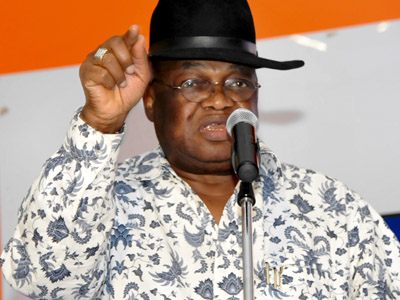
President Bola Tinubu has expressed sadness over the death of Ambassador Patrick Dele Cole, describing him as a distinguished diplomat, journalist, politician and public servant.
Cole died at 86.
In a statement on Saturday, Tinubu said Cole devoted his life to national service and brought distinction to his work in diplomacy, journalism and politics.
“His career reflected the enduring value of dialogue, tact, mutual respect and the pursuit of shared interests in advancing national development and international cooperation,” the President said.
Tinubu noted Cole’s contributions to Nigeria’s media landscape, particularly as Managing Director of the Daily Times, where he upheld the role of the press in holding public officials accountable, speaking truth to power and strengthening democratic governance.
“His legacy in journalism and public life remains an enduring part of our national story,” he said.
The President said at 86, Cole witnessed defining moments in Nigeria’s history and contributed to national development, adding that his life stands as a testament to experience, principled engagement and commitment to public good.
Tinubu extended condolences to Cole’s family, friends, professional associates and all whose lives he touched, praying that memories of his remarkable life will bring comfort and strength.
“May Almighty God grant Ambassador Cole eternal rest and give his family and all who mourn him the fortitude to bear this profound loss,” he said.


