Metro
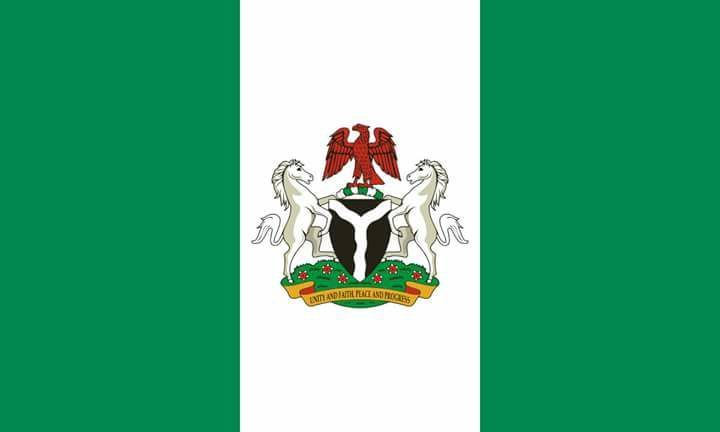
We Rise, We Shine: A Tribute to Nigeria at 66

- /home/rhoncare/pointblank.ng/wp-content/plugins/mvp-social-buttons/mvp-social-buttons.php on line 27
https://pointblank.ng/wp-content/uploads/2019/05/Nigeria.jpg&description=We Rise, We Shine: A Tribute to Nigeria at 66', 'pinterestShare', 'width=750,height=350'); return false;" title="Pin This Post">
- Share
- Tweet /home/rhoncare/pointblank.ng/wp-content/plugins/mvp-social-buttons/mvp-social-buttons.php on line 69
https://pointblank.ng/wp-content/uploads/2019/05/Nigeria.jpg&description=We Rise, We Shine: A Tribute to Nigeria at 66', 'pinterestShare', 'width=750,height=350'); return false;" title="Pin This Post">
By Tolulope A. Adegoke
“Sixty-six lanterns lit, and not one flame asked permission of the wind. That is the arithmetic of this land—where the storm arrives first and the light arrives anyway. We were not handed a smooth road; we were handed feet, and feet have always been enough. What others call odds, we call the weight that gives our stride its meaning. So let the doubter keep his ledger of our failures; we keep a different record—one written in the stubborn grammar of a people who wake up, try again, and refuse to hand their tomorrow to anyone else. This soil does not owe a blessing to the mouth that curses it. Speak well of her, then, not because she is finished, but because she is still becoming—and becoming is the holiest thing a nation can do. We rise. We shine. Not after the storm—inside it.” – Tolulope A. Adegoke, PhD
Introduction: The Audacity of a Nation’s Hope
There is a peculiar kind of strength that is born not in the absence of hardship, but in the furnace of it. It is the strength that refuses to be extinguished by the storms of adversity, the strength that looks at towering mountains and dares to imagine a path over them. This is the strength that defines Nigeria. As we mark sixty-six years of nationhood, we do not gather merely to recount the ease of our journey, for the road has been anything but smooth. Rather, we gather to celebrate a profound and unyielding resolve: the decision to rise, and in rising, to shine.
The story of Nigeria is not a fairy tale of uninterrupted triumph. It is a complex, textured narrative of a people learning to govern themselves, of a federation of over two hundred and fifty ethnic nationalities striving to forge a common destiny. It is a story punctuated by growing pains, by moments of national introspection, and by challenges that have tested the very fabric of our unity. Yet, it is precisely within this crucible that the Nigerian spirit has been refined. We rise, not because we are oblivious to our challenges, but because we have made a conscious, collective decision to be resilient—to confront our difficulties head-on and to overcome them.
The Anatomy of Nigerian Resilience
Resilience is a word often used lightly, but in the Nigerian context, it is a lived reality. It is the trader in Onitsha who, despite economic fluctuations, opens her stall at dawn with a smile and a prayer. It is the tech entrepreneur in Yaba who, against the backdrop of infrastructural deficits, codes the next solution for a global market. It is the teacher in a rural community who, with limited resources, inspires a generation to dream beyond their immediate horizons. It is the farmer in the Middle Belt who, season after season, plants seeds of hope in a land that has known both bounty and bloodshed.
This resilience is not a passive endurance; it is an active, creative force. It is the ingenuity that birthed the mobile money revolution, the Afrobeats genre that has taken the world by storm, and the Nollywood industry that tells our stories to a global audience. It is the intellectual prowess of our scholars, the indomitable spirit of our athletes, and the creative genius of our artists. When we say “We Rise,” we are acknowledging this irrepressible energy. We are affirming that no challenge—be it economic recession, security concerns, or social unrest—can permanently dim the light of a people determined to succeed.
The Certainty of Our Arrival
We are a nation in a hurry, yet we must also be a nation with the patience of a farmer. The journey to national greatness is not a sprint; it is a marathon. We may stumble. We may take a wrong turn. We may even, at times, feel like we are moving in circles. But the crucial thing is that we are moving. We are learning. We are evolving. The mistakes of yesterday become the lessons that inform the policies of today and the vision of tomorrow.
It may take a while, but it is certain that we will get it right. This certainty is not borne of arrogance, but of an unshakeable faith in the Nigerian project. It is rooted in the knowledge that a nation of such immense human and natural potential cannot be permanently held back. Our youth, our greatest asset, are increasingly innovative, globally connected, and fiercely patriotic. They are not waiting for a perfect Nigeria; they are actively building it, one startup, one social movement, one creative work at a time. The trajectory may be zigzag, but the destination—a prosperous, united, and equitable Nigeria—is non-negotiable.
Nigeria Shines Against All Odds
To shine against all odds is the quintessential Nigerian story. It is to excel on the global stage when the home front is fraught with difficulties. It is the Nigerian doctor performing groundbreaking surgeries abroad, the Nigerian professor leading research at top universities, the Nigerian artist headlining international festivals. These individual and collective successes are not anomalies; they are reflections of a national character that is intrinsically brilliant.
The Nigerian diaspora is a testament to this. From Houston to London, from Toronto to Dubai, Nigerians are making their mark, contributing to economies, cultures, and knowledge systems. They are not just surviving; they are thriving. And in their success, they carry a piece of home with them—a resilience, a vibrancy, a hustler’s spirit that is uniquely Nigerian. This is the light that shines, a beacon of what is possible when the Nigerian spirit is given room to flourish.
A Word on Cursing the Land
There is an ancient wisdom that is deeply relevant to our national conversation: the land that you curse may not be empowered or capable enough to bless you in return. To constantly disparage one’s country, to speak of it only in terms of its failures and to ignore its immense potential, is to poison the well from which one must drink. Patriotism is not blind allegiance; it is loyal, constructive criticism married to a deep and abiding love. It is the difference between a prophet of doom and a partner in progress.
We must be careful with our words. Our words shape our reality. If we speak of Nigeria only as a cursed land, we sow the seeds of despair in our own hearts and in the hearts of the next generation. Instead, we must speak of a land of promise, a land of resilient people, a land that is worthy of our best efforts and our most profound hopes. The same land that some dismiss is the land that has produced some of the world’s most remarkable minds and most vibrant cultures. To bless Nigeria is to bless ourselves, for our fate is inextricably linked to that of the nation.
Sixty-Six Years: A Commemoration of Hope
Sixty-six years is a significant milestone. It is a period that allows for reflection on how far we have come from the hopeful dawn of independence in 1960. We have weathered civil war, military dictatorships, and the turbulent transition to democracy. We have seen our economy rise and fall with the vagaries of oil prices. We have faced the scourge of terrorism and the challenges of internal security. Through it all, the Nigerian state has remained, and the Nigerian spirit has endured.
As we celebrate, we are not celebrating a finished product. We are celebrating a work in progress. We are celebrating the audacity of a people who, despite their differences, have chosen to remain together. We are celebrating the promise of a future that we can build together. We are celebrating the fact that, in the words of our national anthem, “the labours of our heroes past shall never be in vain.”
Conclusion: A Blessing for the Journey Ahead
God bless Nigeria. This is not just a phrase; it is a prayer. It is a petition for divine guidance, wisdom, and protection over our land and our leaders. It is a prayer for the healing of our divisions and the strengthening of our unity. It is a prayer that we may be wise stewards of the resources and talents with which we have been so abundantly endowed.
As we step into the next chapter of our national story, let us recommit ourselves to the principles of resilience, hope, and hard work. Let us be a generation that builds bridges rather than walls, that plants trees under whose shade we may never sit, and that speaks life into our nation rather than death.
We rise because we must. We shine because our light is too bright to be hidden. We overcome because our collective will is stronger than any challenge. It may take a while, but the destination is sure.
God bless the Federal Republic of Nigeria.
Happy 66th Independence Anniversary!
Dr. Tolulope A. Adegoke, AMBP-UN, is a globally recognized scholar-practitioner and thought leader at the nexus of security, governance, and strategic leadership. His mission is dedicated to advancing ethical governance, strategic human capital development, resilient nation-building, and global peace. He bridges the worlds of academic rigor and practical application, contributing to leadership discourse at the highest levels of policy and practice. He can be reached via: tolulopeadegoke01@gmail.com, globalstageimpacts@gmail.com


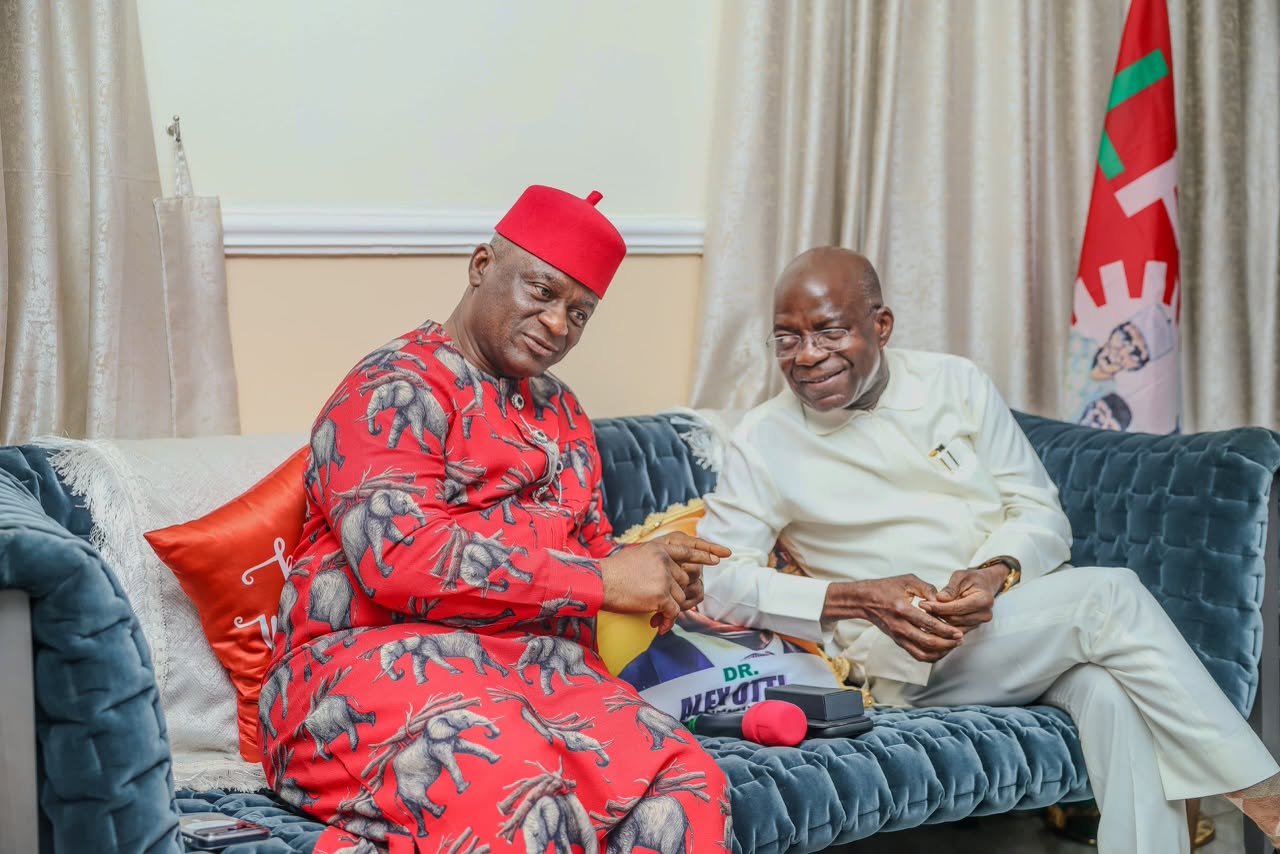
The Inspector-General of Police (IGP), Olatunji Disu, has assured Abia residents of improved security, pledging that the Nigeria Police Force would intensify efforts to protect lives and property across the State.
Disu gave the assurance during a courtesy visit to Governor Alex Otti at Government House, Umuahia, where he commended him for his sustained support to the police.
The IGP, who said he had received positive reports from the Commissioner of Police and the Assistant Inspector-General of Police on the State government’s assistance to the Force, promised that the police would reciprocate the gesture through improved service delivery.
“I want to thank you for all you have been doing for my officers. My Commissioner of Police has told me all you have been doing for us. The AIG too reiterated it. Thank you so much for it,” Disu said.
He assured the governor that the police would remain committed to tackling security challenges and ensuring the safety of residents.
“I will give you my word that we will continue to do our best to ensure proper policing so that people of the state will be able to sleep with their two eyes closed,” he said.
Disu explained that his visit to Abia was primarily to attend the traditional marriage ceremony of his orderly, Victor Nnah Sunday, at Amangwu, Abaki-Ndoki, in Ukwa East Local Government Area.
He, however, said he considered it necessary to pay homage to Otti, as the State’s Chief Security Officer, before proceeding to the wedding venue.
Responding, Otti commended the police leadership for its professionalism and prompt response to the state government’s requests for assistance in addressing security challenges.
“Thank you for what you do for the country. Thank you for the professionalism of the Force and for making everyone realise that the safety and security of the people is paramount.
“We have had instances where we called upon you and you responded swiftly,” the governor said.
Otti also praised the promotion of the immediate past Commissioner of Police in Abia to the rank of Assistant Inspector-General of Police (AIG), describing his service in the State as professional and tactful.
He said the former police commissioner demonstrated commitment in handling security matters, adding that although the state would have preferred to retain him, his elevation was a welcome development.
“He demonstrated professionalism and tact in the discharge of his duties. If not that it is a promotion, we would have resisted it, but we believe it is good for him to move on,” Otti said.
The governor expressed optimism that the officer would sustain his relationship with Abia despite his new position.
Otti also congratulated the IGP’s orderly on his traditional marriage, recalling that he had met him during an earlier encounter with the police chief.
The governor further commended Disu for what he described as his demonstration of national inclusiveness through the choice of aides and associates from different ethnic and geographical backgrounds.
He specifically noted that some of the IGP’s close aides hailed from different parts of the country, including Ohafia in Abia State.
Otti urged Nigerians to rise above ethnic and geographical sentiments, stressing that national unity would be strengthened when citizens saw themselves first as members of one country.
The IGP was accompanied on the visit by his wife, AIG Afolabi and some Commissioners of Police.
Members of the governor’s delegation included the Chief of Staff, Pastor Caleb Ajagba; Commissioner for Information, Prince Okey Kanu; Commissioner for Arts, Culture and Creative Economy, Dr. Matthew Ekwuribe; and other top government officials.

On Saturday, 7 November 2026, the Chinwe Bode-Akinwande (CBA) Foundation successfully hosted its annual Walk4Hope Charity Walk, bringing together individuals, corporate organisations, partners, customers and supporters in a collective show of solidarity for underprivileged widows and their children.
This year’s edition was particularly significant as it formed part of the Foundation’s 10th Anniversary celebration, marking a decade of purposeful intervention, advocacy and commitment to improving the lives of vulnerable women and children across Nigeria.
Walk4Hope is more than an annual charity walk. It is an awareness and fundraising initiative created to draw attention to the challenges faced by widows, including social discrimination, economic hardship, limited opportunities and the difficulties of providing for their children. Through the initiative, CBA Foundation continues to encourage individuals and organisations to take collective action towards creating a more supportive and inclusive society.
Since its establishment in 2015, CBA Foundation has remained committed to protecting, supporting and empowering underprivileged widows and their vulnerable children. Its interventions are driven by five key focus areas: women empowerment and capacity building, health interventions, nutrition, quality basic education and self-employment. Through these programmes, the Foundation provides opportunities for skills acquisition, business development, educational support and improved access to essential needs.
The 10th Anniversary celebration therefore represents more than a milestone, it is a reflection of the lives touched, communities reached and the collective commitment to ensuring that widows and their children are not left behind.
The Foundation extends its sincere appreciation to all participants, customers, volunteers, partners and supporters who came out, contributed and stood behind the Walk4Hope vision. Your presence and generosity helped make this year’s event a success.
Special appreciation goes to our sponsors and corporate partners:
FirstBank •Nominees · First Cap · First HoldCo · Nigerian Breweries · Nexra · Keskese · DigixPlus · Vyrus · EkoHotels · Truecaller · HopeStores
We are grateful to each of these organisations for their support and belief in our mission. We also extend a special thank you to all our customers and everyone who contributed in one way or another. Your support continues to strengthen our work and expand the reach of our interventions.
As we celebrate 10 years of impact, CBA Foundation remains steadfast in its mission to restore dignity, create opportunities and build a society where every widow and child has the support needed to live with hope and confidence.
Together, we can make a difference.
For more information about CBA Foundation, its programmes and opportunities to support its work, visit www.cbafoundation.org.

By Tolulope A. Adegoke
“They came searching for oil and found a nation; they stayed for minerals and discovered a people; they will remain for the harvest and inherit a future. Nigeria’s belly was never empty—it was waiting for the world to learn how to read its abundance. The renewed hope is not that Nigeria will rise, but that the world will finally recognise what has always been true: the Green White Green carries within its fold the seed of every nation’s tomorrow.”
Introduction: Reading the Abundance
For decades, the global narrative surrounding Nigeria has been stubbornly one-dimensional—a tale of paradox, of potential squandered, of a giant perpetually clearing its throat but never quite speaking. Yet, a dispassionate examination of empirical data, recent policy shifts, and geological realities reveals a different story. The Green White Green is not merely a flag of a nation struggling to find its footing; it is the standard of a sleeping giant now stirring with purpose. Nigeria’s metaphoric belly is not empty; it is filled to bursting with a diversity of resources—human, mineral, agricultural, and energy—that the world increasingly requires for its own survival. The renewed hope is not a political slogan; it is a quantifiable reality waiting to be harnessed. And for the early investor—whether institutional or individual, whether based in Lagos or London, Dubai or Toronto—this reality represents a narrowing window of opportunity that rewards those who move with discernment rather than those who wait for consensus.
The Hydrocarbon Bedrock and the Gas Dividend
While the world clamours for energy transition, the uncomfortable truth is that global energy security remains anchored in hydrocarbons. Nigeria’s position here is not merely significant; it is strategic. As of January 2026, the Nigerian Upstream Petroleum Regulatory Commission confirmed the nation’s total oil and condensate reserves at 37.01 billion barrels, alongside a staggering 215.19 trillion standard cubic feet of gas. To put this in perspective, the reserves life index stands at 59 years for oil and 85 years for gas, ensuring that Nigeria will remain a pivotal supplier to global markets for generations.
However, the story is no longer just about crude. The renewed hope is driven by a fundamental shift in how Nigeria manages these resources. The Petroleum Industry Act has moved the country from a stagnant regulatory environment to one that is attracting serious capital. Crude production has rebounded to approximately 1.6 to 1.7 million barrels per day, propelled by increased drilling activity and government-led initiatives to restore output.
What This Holds for Early Investors
The early investor in Nigeria’s upstream sector is not merely buying into a resource play; they are buying into a regulatory reset that has fundamentally altered the risk calculus. In August 2026, President Bola Ahmed Tinubu approved a landmark Deep Offshore Investment Framework designed to unlock up to US$50 billion in new investment by replacing project-by-project negotiations with a transparent, rules-based system. The framework begins with the approximately US$10 billion Bonga South West project and applies across multiple categories of qualifying developments, providing the certainty that globally mobile capital demands. For early movers, this represents an opportunity to enter at the ground floor of a revived deep-water province before competition intensifies.
Furthermore, the Nigerian Upstream Petroleum Regulatory Commission has announced the 2026 Licensing Round, offering 40 oil and gas blocks across land, shallow water, and deep-water terrains. The Commission’s chief executive has explicitly invited qualified Nigerian and international investors to “come and compete,” with full disclosure of evaluation methodology and beneficial ownership requirements—a signal that transparency is being institutionalised rather than merely promised. The immediate production upside is equally quantifiable: the Commission has identified more than 788,000 barrels per day of shut-in production across 63 operators, alongside offshore projects valued at an estimated $30 billion to $50 billion awaiting final investment decision . For the early investor with technical competence and financial capacity, these are not speculative figures; they are a pipeline of bankable opportunities.
The gas sub-sector offers perhaps the most compelling entry point for investors with a longer horizon. Nigeria sits on 215 trillion cubic feet of gas, yet daily production is barely 7 billion cubic feet . The government has completed major infrastructure projects to unlock gas supply and is advancing the Nigeria-Morocco Atlantic Gas Pipeline and Trans-Sahara Gas Pipeline, positioning Nigeria not merely as a domestic supplier but as a strategic corridor for European and regional demand. Early investors in gas processing, pipeline infrastructure, and liquefaction capacity are effectively securing a stake in the architecture of twenty-first-century African energy security.
The Silent Revolution in Solid Minerals
Perhaps the most compelling evidence of Nigeria’s renewed hope lies beneath the soil, in a sector long overshadowed by oil. In mid-2026, the federal government announced the discovery of a world-class polymetallic mineral province in Kaduna State, verified by the Nigerian Geological Survey Agency. This is not a minor find. It contains exceptionally high-grade deposits of platinum group metals, gold, nickel, copper, lithium, and rare earth elements—the very raw materials that power the global transition to electric vehicles, renewable energy infrastructure, and advanced electronics.
Simultaneously, an estimated 3.3 million metric tonnes of lithium reserves were unveiled at a site near Abuja, with the broader project hosting an estimated 94.8 million tonnes of mineral resources including lithium-bearing ore. This is the heartbeat of the twenty-first-century economy. While the world scrambles to secure supply chains for critical minerals, Nigeria has quietly positioned itself as an emerging destination. Crucially, the government has abandoned the old model of exporting raw ore. New licensing requirements mandate local processing and beneficiation, forcing investment into domestic value chains.
What This Holds for Early Investors
The lithium value chain presents a particularly instructive case study for early investors. Nigeria’s known lithium occurrences are concentrated in the North-Central and South-West geopolitical zones, with significant deposits in Nasarawa, Ekiti, Kwara, Kogi, Kaduna, Niger, and Oyo states. The principal lithium-bearing minerals identified include spodumene, lepidolite, petalite, and amblygonite—all recognised globally as important commercial sources of battery-grade lithium. The International Energy Agency projects that demand for lithium could grow by more than 40 times by 2040 under ambitious clean-energy scenarios, placing countries with commercially viable deposits in a strategically advantageous position.
For the early investor, the calculus is straightforward. Those who enter at the exploration and processing stage—rather than waiting for the sector to mature—can secure assets at valuations that do not yet reflect the full magnitude of global demand. The evidence of this opportunity is already materialising. Chinese investors have funded the bulk of Nigeria’s processing infrastructure, with a $600 million lithium processing plant near the Kaduna-Niger border planned to open and a $200 million lithium refinery on the outskirts of Abuja nearly completed, backed by firms including Jiuling Lithium Mining Company and Canmax Technologies. The government expects two additional processing plants in Nasarawa State. These are not pilot projects; they are the foundation of an industrial ecosystem.
The institutional architecture supporting these investments has also matured. The Electronic Mining Cadastral System (EMC+) has streamlined licensing into a fully digitised application process, while the newly launched Nigeria Minerals Decision Support System (NMDSS) provides critical hydrological, geological, and geographical data to assist investors in making informed decisions. The Minister of Solid Minerals Development, Dele Alake, has explicitly charged global mining giants—naming Glencore, Rio Tinto, and Rainbow Mines among others—to recognise Nigeria’s vast mineral resources and collaborate in their development. For early investors, the combination of de-risked licensing, transparent data, and government advocacy represents a rare alignment of conditions.
The Agricultural Engine and the Demographic Dividend
The world’s survival hinges not just on minerals, but on food and human capital. Here too, Nigeria’s belly is full. Agriculture contributes approximately 26 percent to Nigeria’s Gross Domestic Product and provides employment for more than 70 percent of the population across the agricultural value chain. The government has projected that agriculture could account for up to 30 percent of the nation’s one-trillion-dollar economy ambition, translating to approximately $300 billion.
What This Holds for Early Investors
The agricultural opportunity for early investors is anchored in a structural reality: Nigeria possesses 79 million hectares of arable land, of which only about 40 percent is currently cultivated. The productivity gap is equally pronounced. Yields for several Nigerian crops average between 1.3 and 1.5 tonnes per hectare, compared with approximately 11 tonnes per hectare recorded in Egypt under irrigation. Nigeria remains the world’s largest producer of cassava, with annual output estimated at 63 million metric tonnes, yet average yields of six to seven tonnes per hectare remain far below the nation’s capacity.
For the early investor, these gaps are not liabilities; they are arbitrage opportunities. The Federal Government has unveiled a $78.5 billion investment portfolio** featuring 65 projects across key sectors, including agriculture and agro-processing, which alone requires **$9.8 billion. The incentives are explicit: 100 percent foreign ownership, full capital repatriation, and tax credits designed to attract global investors. These are not aspirational policy statements; they are codified instruments available to those who move early.
The momentum is already visible on the ground. At COP31 in November 2026, Nigeria signed a $3 million agreement for a climate-smart greenhouse project in Kano State, deploying approximately 1,000 climate-adapted greenhouses for tomato production under the Special Agro-Industrial Processing Zones programme. The Bank of Agriculture will provide $1.5 million in structured financing for participating farmers, while Turkish firm Direkci Group will contribute another $1.5 million in private-sector financing and technology. The partners have agreed to a joint performance review after nine months, with a possible commercial expansion valued at a minimum of $30 million. For early investors in agro-processing, greenhouse technology, and structured agricultural finance, this is a template that can be replicated across multiple value chains and geographies.
The demographic dimension amplifies the agricultural opportunity. With an estimated population of 230 million—projected to reach between 450 and 500 million by 2050—Nigeria possesses the largest youth demographic on the African continent, with more than half of its people aged under 30 . Each year, 3.5 million young Nigerians enter the labour market, one of the largest waves of youth entering the workforce anywhere in the world. For early investors in labour-intensive sectors—agro-processing, manufacturing, digital services—this represents a structural cost advantage that will only deepen as global labour markets tighten.
A Strategic Partner for Global Stability
The empirical evidence converges on a single conclusion: Nigeria is not asking for charity; it is offering partnership. The financing gaps are real. Nigeria’s Third Nationally Determined Contribution estimates that $337 billion will be required between 2026 and 2035 to deliver its climate and sustainability commitments. The nation’s tax-to-GDP ratio of approximately 15.5 percent remains below regional benchmarks, limiting the government’s capacity to fund priority sectors and respond to shocks.
What This Holds for Early Investors
But these figures represent opportunity, not desperation—and the macro environment is stabilising in ways that directly benefit early entrants. By early 2026, the divergence between the official Nigerian Foreign Exchange Market and the parallel market rate narrowed to less than 2 percent on average. Foreign exchange reserves climbed to a 13-year high of $50.45 billion in February 2026, providing roughly 9.7 months of import cover. This liquidity surge was supported by the removal of FX restrictions on 44 items and a resurgence in foreign portfolio inflows—a signal that the currency risk that once deterred investors is being actively managed.
The capital markets are also opening. The Securities and Exchange Commission has announced plans to introduce an African depositary-receipt framework to attract foreign companies and investors, as part of a strategy to triple the market’s size to 750 trillion naira ($562 billion) by 2036** . The plan targets an increase in annual diaspora investment from **$4 billion to $10 billion** over the next decade, with assets managed by collective investment schemes rising from **$5.6 billion to $56 billion. For early investors in Nigerian equities and fixed income, this represents a structural expansion of the investor base and liquidity pool that will lift valuations across the market.
The proof of concept is already visible. The Dangote Petroleum Refinery is using global depositary receipts to reach investors outside Nigeria through an IPO seeking to raise approximately $2.1 billion, with the offering extended to allow participation from more African markets. For the early investor, this is not merely a single transaction; it is a demonstration that Nigerian assets can be structured to access global capital at scale. Those who establish positions before the depositary-receipt framework is fully operational will be participating in a market that is being deliberately redesigned to accommodate them.
The Window and the Warning
For the early investor, the Nigerian opportunity carries a temporal dimension that cannot be ignored. The conditions that make Nigeria attractive—reformed regulatory frameworks, transparent licensing, currency stabilisation, and a government actively courting foreign capital—are the product of deliberate policy choices made in the past three years. They are not permanent features of the landscape; they are the result of a specific political configuration that has prioritised investment climate over short-term extraction.
The licensing rounds will close. The deep offshore framework will be fully subscribed. The lithium processing capacity will be built out by those who move now. The agricultural corridors will be secured by investors who recognise that food security is the next frontier of global strategic competition. The demographic dividend, too, has a window: the United Nations projects that Nigeria’s working-age population will expand by more than 100 million people within 25 years, but if this surge is not absorbed into productive employment, the same demographic advantage could become a liability.
The early investor, therefore, is not merely seeking returns; they are participating in the construction of a new economic architecture. They are betting not on Nigeria’s resources alone, but on the proposition that a nation of 230 million people, endowed with oil and gas, lithium and gold, arable land and a youthful workforce, and governed by a administration that has staked its legitimacy on attracting capital, represents the most compelling growth story of the coming decade.
Conclusion: The Harvest is Ready
The belly is full. The harvest is ready. The world would do well to take notice—and the early investor would do well to move before the notice becomes consensus. Nigeria’s renewed hope is not a promise deferred; it is a destiny being unveiled, block by block, refinery by refinery, policy by policy. For those who read the abundance correctly, the Green White Green is not merely a flag to be admired from a distance. It is an invitation to participate in the most consequential economic transformation of the twenty-first century.
Note: This write-up draws on official regulatory announcements, government policy documents, and verified industry reporting from 2026. The figures cited are sourced from the Nigerian Upstream Petroleum Regulatory Commission, the Federal Ministry of Solid Minerals Development, the Securities and Exchange Commission, the African Development Bank, the World Economic Forum, and other institutional sources. Early investors are advised to conduct independent due diligence and engage with qualified legal and financial advisers before committing capital.
Dr. Tolulope A. Adegoke, AMBP-UN, is a globally recognized scholar-practitioner and thought leader at the nexus of security, governance, and strategic leadership. His mission is dedicated to advancing ethical governance, strategic human capital development, resilient nation-building, and global peace. He bridges the worlds of academic rigor and practical application, contributing to leadership discourse at the highest levels of policy and practice. He can be reached via: tolulopeadegoke01@gmail.com, globalstageimpacts@gmail.com