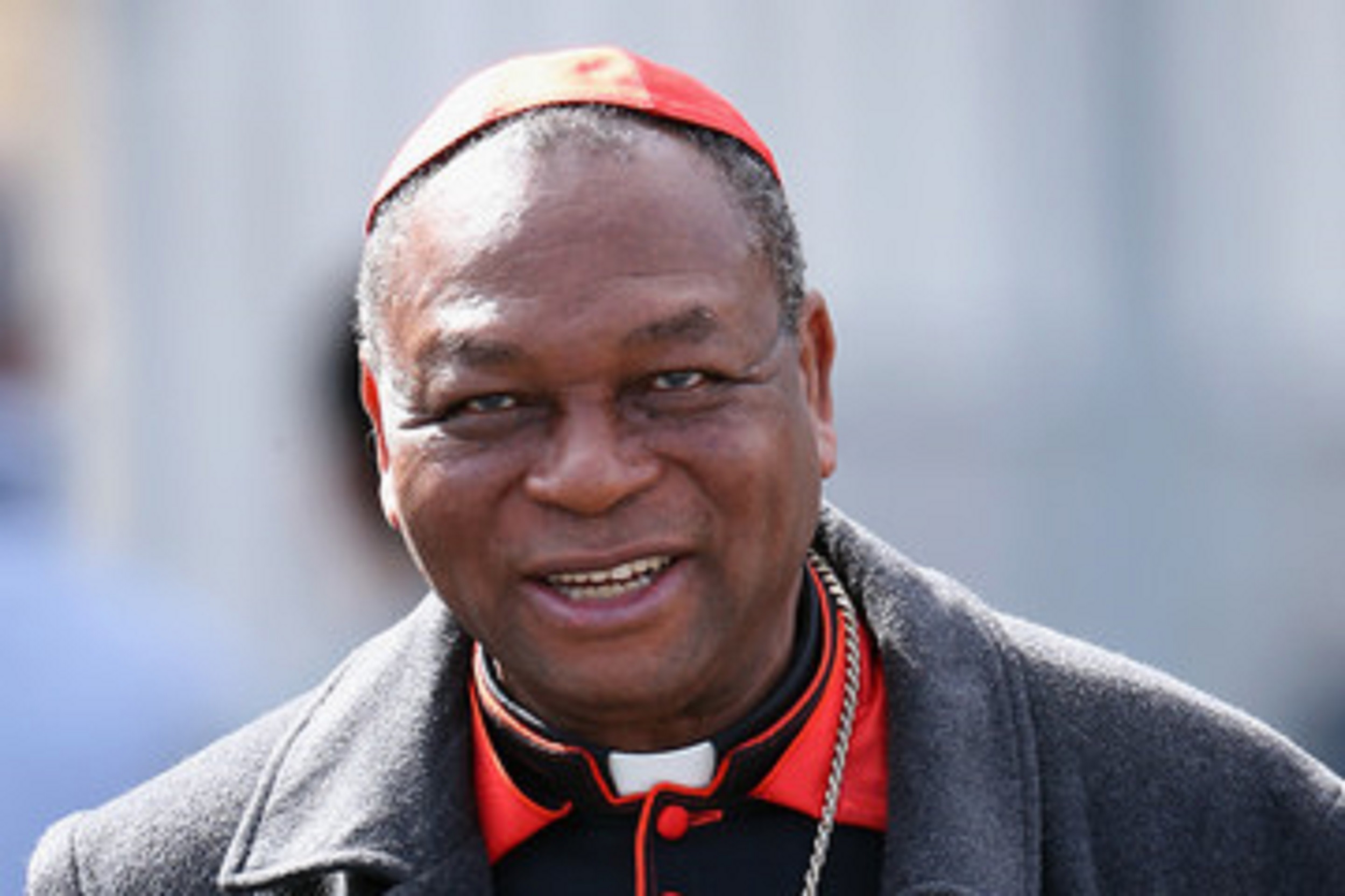
The Catholic Archbishop Emeritus of Abuja, Cardinal John Onaiyekan, has fired back at the Presidency over its criticism of his public account of a meeting between Catholic bishops and President Bola Tinubu, declaring that he did not appear on national television to please the government and was not afraid of anyone.
The 82-year-old cleric said he appeared on Arise News to tell Nigerians what he believed was the truth about the issues discussed during the bishops’ engagement with the President, insisting that neither his age nor criticism from government officials would silence him.
Onaiyekan spoke in a video shared by Symfoni TV on Wednesday, weeks after the Presidency criticised his decision to publicly disclose aspects of the meeting between the Catholic Bishops’ Conference of Nigeria (CBCN) and Tinubu.
“I didn’t go to Arise to please the government, or to just please people, but to tell the truth. That’s all I stand for,” Onaiyekan said.
He also dismissed attacks against him on social media, saying he had no reason to engage those criticising him because other Nigerians had already responded on his behalf.
“I don’t have to respond to those attacking me on social media because other Nigerians have spoken on my behalf,” he said.
The cleric went further, declaring that he was not concerned about the possibility of being embarrassed or intimidated because of his advanced age.
“I cannot be embarrassed. I’m 82 years old; nobody can embarrass me. And I’m not afraid of anybody. Nobody, at this stage now, are they going to arrest me, carry me to where?” he declared.
Senior Special Assistant to President Bola Tinubu on Media and Publicity, Temitope Ajayi, who said his criticism of Cardinal John Onaiyekan was not intended to disrespect the cleric.
The controversy that followed a July 28 meeting between Tinubu and a delegation of the CBCN at the State House, Abuja.
The delegation was led by the CBCN President, Archbishop Matthew Man-Oso Ndagoso of Kaduna, and included Onaiyekan, Cardinal Peter Okpaleke, Bishop Matthew Kukah of Sokoto and other senior Catholic clerics.
During the meeting, the bishops raised a number of issues concerning the state of the nation, including economic hardship, insecurity, democracy, preparations for the 2027 elections, religious freedom and the return of mission schools.
Three days later, Onaiyekan appeared on Arise News and publicly recounted aspects of the engagement while speaking about the concerns expressed by the Catholic leadership over the condition of the country.
His comments subsequently attracted criticism from the Presidency. The President’s Senior Special Assistant on Media and Publicity, Temitope Ajayi, criticised the disclosure of details from the meeting, describing the engagement as a private interaction.
The Presidency’s reaction sparked a debate over the extent to which details of engagements between government and religious leaders should remain confidential, particularly when the discussions concern matters of public interest.
Onaiyekan, however, has maintained that his intervention was neither personal nor intended to embarrass the government. The cleric rejected any suggestion that he had presented a personal opinion during his television appearance.
According to him, the issues he discussed reflected the collective position of the Catholic bishops who participated in the engagement with the President.
“No, mind you, I didn’t talk on my own now. I spoke on behalf of my fellow bishops,” he said.
Onaiyekan disclosed that the bishops had prepared a joint statement containing the issues he subsequently discussed during the television interview.
“We drafted a statement which contained all that I said in the interview. So, all the bishops of Nigeria spoke that way. It was their voice I was echoing,” he stated.
Onaiyekan also emphasised that Catholic bishops remained entitled to speak within their respective dioceses about issues affecting Nigerians.
“I cannot speak on behalf of other religious leaders. Everybody has their own job to do, but many of the other religious leaders have supported us,” Onaiyekan said.
Onaiyekan also broadened his comments beyond the dispute with the Presidency, stressing that the economic difficulties confronting Nigerians could not be dismissed as a disagreement between the government and religious leaders.
He said the widespread poverty and suffering in the country affected everyone.
“When it comes to what is happening to Nigeria, the poverty, the suffering, we are all in the same boat now, abi?” he asked.
The cleric urged Nigerians not to take the country’s remaining space for public criticism and expression for granted.
“And we are still lucky in this Nigeria that we can still talk. We shouldn’t take that for granted. There are many countries in Africa where no bishop dares to talk like we do here,” he said
Meanwhile, Ajayi has sought to draw a line under the controversy, saying his earlier response to Onaiyekan was not intended to disrespect the Catholic cleric or the church.
Ajayi made the clarification during an interview on Arise TV on Thursday, days after criticising Onaiyekan for publicly discussing the details of the closed-door meeting between Tinubu and the CBCN.
The presidential aide said the matter had been resolved and insisted that there was no intention to disparage the respected cleric.
“Well, I think that episode has been closed. Cardinal Onaiyekan is a respected clergy and a statement in his own right,” Ajayi said.
He explained that his intervention was aimed at providing a different interpretation of the account given by the cardinal, rather than questioning his standing in the church or wider society.
“My response to him did not in any way disrespect him or disrespect his standing in the society and the church. He’s one of the leaders of the faith,” Ajayi said, adding that he only sought to offer another perspective on the account of the meeting between the bishops and the President.
“I only tried to provide a different perspective from his own account of the bishop’s encounter with the president, and I think that point has been made. And I think it’s not something we really want to dwell further on,” he said.