
Headlines
We’ve Arrested Abdulrasheed Maina, Son, Says DSS


- /home/rhoncare/pointblank.ng/wp-content/plugins/mvp-social-buttons/mvp-social-buttons.php on line 27
https://pointblank.ng/wp-content/uploads/2019/08/DSS.jpg&description=We’ve Arrested Abdulrasheed Maina, Son, Says DSS', 'pinterestShare', 'width=750,height=350'); return false;" title="Pin This Post">
- Share
- Tweet /home/rhoncare/pointblank.ng/wp-content/plugins/mvp-social-buttons/mvp-social-buttons.php on line 69
https://pointblank.ng/wp-content/uploads/2019/08/DSS.jpg&description=We’ve Arrested Abdulrasheed Maina, Son, Says DSS', 'pinterestShare', 'width=750,height=350'); return false;" title="Pin This Post">
Nigeria’s State Security Service (SSS) on Wednesday confirmed its arrest of the former Chairman of the Presidential Task Team on Pension Matters (PRTT), Abdulrasheed Maina.
In a statement issued by its spokesperson, Peter Afunanya, the agency said it arrested Mr Maina and his 20-year-old son, Faisal, at the Pennsylvania Avenue Hotel, Utako, Abuja, on September 30.
The secret police said Mr Faisal tried to resist arrest after he pulled out a pistol, but was, however, disarmed and arrested.
It further said that the arrest followed a request by the Economic and Financial Crimes Commission, (EFCC) to the Service to assist in the apprehension of the suspect.
The EFCC had earlier declared Mr Maina wanted over fraud allegations regarding the use of funds meant for Nigerian pensioners.
“Maina was arrested in the company of his 20-year-old son, Faisal Abdulrasheed Maina, who unsuccessfully tried to resist the arrest,” the DSS said.
“The lad even pulled a pistol against the security agents involved in the operation,” the statement read.
“He was, however, disarmed and arrested. He is a final year student at the Canadian University of Dubai where he is studying Telecoms Engineering.
”Items recovered from the suspects include a pistol with live ammunition, a bulletproof Range Rover SUV, a BMW Saloon car, foreign currencies, a Phantom 7 drone, and sensitive documents.”
The SSS further stated that the suspects and the recovered items will be handed over to the EFCC for further investigations and further actions.
The Federal Civil Service Commission had dismissed Mr Maina in 2013 for absconding from duty, following a recommendation by the office of the Head of Service.
On the Run
Mr Maina was in 2012 accused of leading a massive pension fraud scheme amounting to more than N100 billion. Ironically, he had been drafted by the then Goodluck Jonathan administration in 2010 to sanitise a corrupt pension system.
The Senate Joint Committee on Public Service and Establishment and State and Local Government Administration, which investigated the allegations, indicted Mr Maina and issued a warrant of arrest on him.
Mr Maina sued the Senate and the then Inspector-General of Police, Mohammed Abubakar, and thereafter went into hiding after being declared wanted by the police.
He was dismissed from the civil service for allegedly absconding from duty and attempting to evade arrest and charged to court.
He was on July 21, 2015, charged by the EFCC, alongside the former Head of Service, Stephen Oronsaye, and two others with fraud. While Mr Oronsaye and the two other accused were in court and pleaded not guilty to the charge, Mr Maina remained at large.
Nothing was heard of him until shortly after the emergence of President Buhari in 2015 when members of his defunct Presidential Task Team on Pension Reforms offered to work with the then incoming administration.
The team, which addressed a press conference in Abuja, said its work would be easier under Mr Buhari, known for his anti-corruption stand.
PREMIUM TIMES found in October 2017 that the new government secretly reinstated and promoted Mr Maina.
Amid a nationwide outrage ignited by the disclosure, President Buhari ordered the immediate sack of Mr Maina.
It later became clear Mr Maina was reinstated with the knowledge of the then Minister of Interior, Abdulrahman Dambazau, and Minister of Justice, Abubakar Malami. The then Head of Service, Winifred Oyo-Ita, said the decision was taken without her approval.
Mrs Oyo-Ita in a leaked memo to the Chief of Staff to the President, Abba Kyari, said she warned Mr Buhari against the reinstatement.
Mr Maina himself said his reinstatement was ordered by President Buhari.
Premium Times


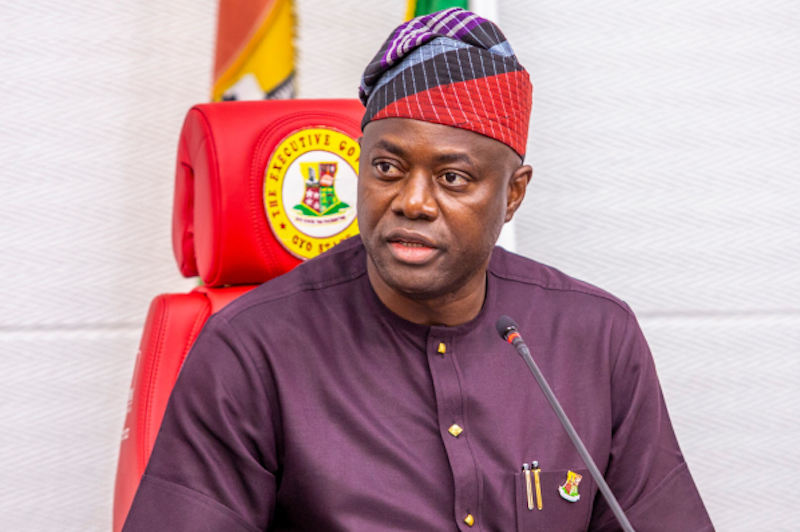
The Allied Peoples Movement (APM) presidential candidate, Seyi Makinde, on Thursday, criticised President Bola Tinubu’s “Emi Lokan” slogan ahead of the 2027 presidential election.
Makinde said Nigerians do not need “turn-by-turn nepotism”, arguing that voters should be free to decide who becomes the country’s next president in 2027.
The Oyo State governor spoke during the APM’s town hall meeting in Akure, Ondo State.
Makinde asked: “How can someone say ‘Eemi lokan’ in a country like Nigeria? You were given the opportunity. If you recall the 1999 presidential election, the South-West voted massively for Baba Olu Falae, but the rest of Nigerians voted for Baba Obasanjo. So, this is not an issue that only the South-West can resolve; it is an issue we must address collectively as Nigerians.
“We do not want ‘turn-by-turn nepotism’, nor do we want a situation where people say, ‘I will vote for projects because it is my turn’. You will not finish those projects, and when it becomes someone else’s turn, they will do the same thing. We will end up with a Nigeria where we cannot get value for the resources belonging to Nigerians.
“The Reset Nigeria agenda is about building a country where infrastructure development supports economic growth and addresses the concerns of young people and women.
“Once we fix our economy, no zone will be left behind, and no demographic group will be left behind.”
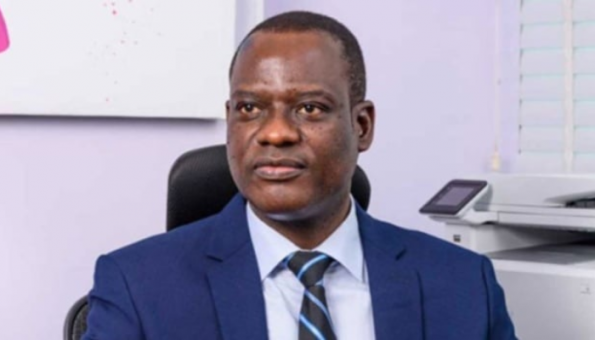
Minister of Finance and Coordinating Minister of the Economy, Taiwo Oyedele, has denied saying the Federal government will introduce a fuel tax when the economy stabilises and income levels improve.
In a post on X on Tuesday, Oyedele said his remarks during an interview with ARISE News was misrepresented, insisting that a “fuel tax is not on the table.”
However, during the interview with Rotus Odiri, ARISE News Business Correspondent, on the sidelines of the 2026 International Monetary Fund and World Bank annual meetings in Bangkok, Thailand, Oyedele said the tax would come when income levels improve enough for Nigerians to accommodate it.
He said taxes account for between 20 and 80 percent of pump prices in some countries, while many African countries impose between six and 10 different taxes on fuel products.
He said introducing fuel tax while petrol was still subsidised would have been counterproductive because government would effectively be paying the tax itself.
According to him, imposing the tax immediately after removal of petrol subsidy would be insensitive to Nigerians.
“The objective should be that instead of trying to suppress prices, which hasn’t worked for us, it hasn’t worked for any country in the world, not one. Instead of trying to suppress prices, think about how to grow income faster than prices rise,” Oyedele said.
“That’s how you bring prosperity and grow the middle class and that is exactly what we are doing as led by Mr. President himself.
“At the appropriate time, when the economy has stabilizes and income level will be able to accommodate it, those taxes will come. Not because we want to impose taxes,” he added.
In his Tuesday post, the minister reiterated that introducing a fuel tax at this time would be insensitive following removal of petrol subsidy, describing reports that government will introduce the levy when the economy stabilises as “fake news.”
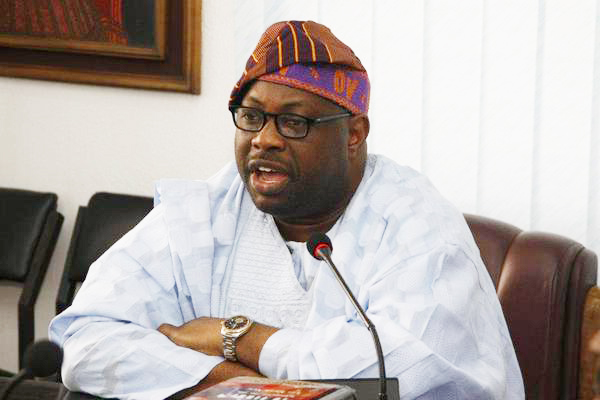
A chieftain of the African Democratic Congress (ADC), and Deputy Director of the Presidential Campaign Council, Chief Dele Momodu, has described former Vice-President Atiku Abubakar as the most nationally formidable and experienced among the leading contenders for the 2027 presidential election.
Momodu said Atiku’s experience at the national level distinguishes him from President Bola Tinubu and former Anambra State Governor, Peter Obi.
He stated this on Wednesday during an interview on Eagle 102.5 FM, Ilese-Ijebu, in Abeokuta.
“If you look at the antecedents of the three major candidates, between Atiku Abubakar and Peter Obi, you will see that Atiku is the most experienced. He has managed our country at the highest level,” he said.
Momodu traced Atiku’s political journey to the 1992 Social Democratic Party (SDP), presidential primary where he contested against late MKO Abiola and stepped down for him.
He said Atiku accepted the outcome without crisis even after he was not picked as Abiola’s running mate, describing it as a mark of true democratic temperament.
“He is the only one who started from around 1992, contested the SDP primary against Abiola and stepped down with uncommon equanimity. He did not make any noise,” Momodu said.
He noted that Atiku was among the founders of the Peoples Democratic Party, PDP, and served as Vice-President from 1999 to 2007.
Comparing Atiku with Obi, Momodu argued that while Obi’s best was demonstrated in Anambra, Atiku’s was at the presidency level managing the national economy.
“Peter Obi has tried his best in Anambra, while Atiku’s best is at the level of vice president controlling the economy of Nigeria. The difference is clear. He has matured in experience and exposure,” he said.
Momodu also said President Tinubu’s experience was largely limited to Lagos.
“What I’m trying to say is that Tinubu’s experience was limited to Lagos, and that is why when he became president, he thought Nigeria was Lagos. And he has found out now that Nigeria is not Lagos,” he said.
He argued that the current economic hardship under the present administration did not show prosperity, insisting Atiku remained better positioned to lead the country.
“Well, we are yet to see that prosperity, and if yesterday would determine today and tomorrow, it is obvious that Tinubu should retire now and let someone else do it,” Momodu added.
DailyPost


