
Personality in Focus
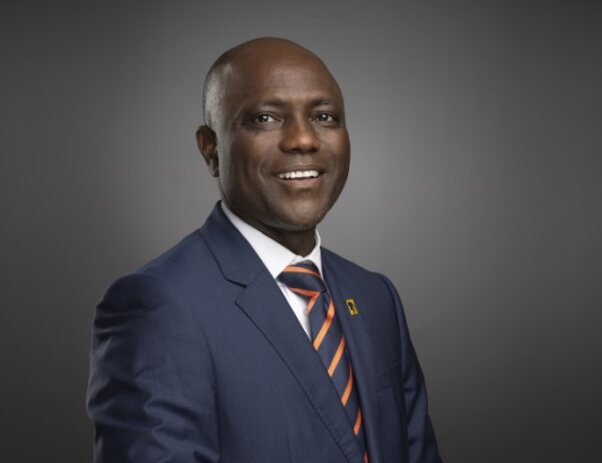
When Legacy Meets Preparedness: Olusegun Alebiosu As CEO, FirstBank Group

- /home/rhoncare/pointblank.ng/wp-content/plugins/mvp-social-buttons/mvp-social-buttons.php on line 27
https://pointblank.ng/wp-content/uploads/2024/05/Segun-Alebiosu-Ag.-CEO-FirstBank-1.jpg&description=When Legacy Meets Preparedness: Olusegun Alebiosu As CEO, FirstBank Group', 'pinterestShare', 'width=750,height=350'); return false;" title="Pin This Post">
- Share
- Tweet /home/rhoncare/pointblank.ng/wp-content/plugins/mvp-social-buttons/mvp-social-buttons.php on line 69
https://pointblank.ng/wp-content/uploads/2024/05/Segun-Alebiosu-Ag.-CEO-FirstBank-1.jpg&description=When Legacy Meets Preparedness: Olusegun Alebiosu As CEO, FirstBank Group', 'pinterestShare', 'width=750,height=350'); return false;" title="Pin This Post">
What happens when legacy meets preparedness? What results from such a combination? Let us not be in a hurry to put forward any answers yet. Instead, let us consider first the opposite situation: When legacy meets unpreparedness.
The world abounds in examples of this distressing situation. A dynasty that has built wealth from generation to generation, with its illustrious heirs providing generational leadership, finds itself in a strange phase where an ill-prepared heir takes over the reins and in that same generation, not the next, wipes out the entire family fortune built over several generations.
We see the same thing with nations. History is replete with examples of great nations built by great leaders, which slid into oblivion when they were hit by arguably the greatest misfortune that ever befalls humanity – bad leadership. It is the reason American author and leadership expert John Maxwell asserts, “Everything rises and falls with leadership.”
As with nations, so with organisations. We see organisations that have thrived for decades and over several generations, get a new leader who is not prepared for such leadership, and the leader pushes the organisation to the brink of collapse.
Contrast this picture with the situation at Nigeria’s most enduring corporate organisation with the most amazing legacies of firsts, First Bank of Nigeria Limited, which witnessed a leadership transition about a year ago. Faced with a number of quality options in and outside the then management team, the decision-makers at the bank and its parent company FBNHoldings, now First HoldCo Plc, had to be clear-minded about who could become the new Chief Executive Officer of FirstBank Group.
Equally important as the need for continuity was the non-negotiable requirement for capacity to manage the ship of the 130-years-plus institution to sustain its enviable legacies and consolidate the gains made in recent years. The search was for someone with a steady head and hands (talk of risk control and mitigation), in addition to an excellent track record of sterling performance and achievements.
Fortunately, fate was on their side. They did not have to look outside. Right there before them was someone who understood all kinds of risks and how to control and mitigate them. He had been with FirstBank since 2016 when he joined as Group Executive / Chief Risk Officer. Then in January 2022 he was elevated to Executive Director / Chief Risk Officer and Executive Compliance Officer.
This man has given nearly three decades of his working life to the banking and financial services industry. He has under his belt a rich tapestry of cross-functional experience in credit risk management, financial planning and control, credit and marketing, and trade. His cross-functional exposure also includes corporate and commercial banking, agriculture financing, oil and gas, transportation, including aviation and shipping, and project financing
Meet Olusegun Alebiosu, the man history had prepared and the one decision-makers chose among the quality options. He was appointed substantive Chief Executive Officer of FirstBank Group in June 2024, having acted in that capacity since April 2024 when the former CEO left.
Determined to build on the bank’s legacies while navigating the ever-changing landscape of the financial services industry, Alebiosu has shown unwavering commitment to lead the bank through a transformative period that places emphasis on strategic consolidation, technological advancement and market expansion.
Alebiosu’s approach to sustaining the legacies of firsts at FirstBank, which has been at the vanguard of accelerating Nigeria’s digital payments as the first bank to issue over 13 million cards to customers, draws from his vast professional experience which began with Oceanic Bank Plc, now Ecobank Plc, in 1991. Between then and joining FirstBank in 2016, he had worked at Coronation Merchant Bank as Chief Risk Officer, at African Development Bank Group as Chief Credit Risk Officer and at United Bank for Africa as Group Head, Credit Policy and Deputy Chief Credit Risk Officer.
Under one year of his appointment as substantive CEO of FirstBank, Alebiosu’s strategic consolidation efforts have demonstrated that he is a worthy successor, not an ill-prepared or unprepared one, proving the decision-makers right. Understanding the critical role of its human capital in sustaining the bank’s legacies, Alebiosu has invested himself and the bank’s resources in promoting staff welfare.
A comprehensive review of the bank’s compensation structure was undertaken to position it within the 75th percentile of the industry, making the bank more retentive of, and attractive to, the best talents. The highest number of staff promotions across various grades in the last five years has happened under Alebiosu’s watch, with 1,654 employees being elevated in one single promotion cycle.
Under his leadership, over 2,186 new hires have been recruited across key functions and subsidiaries, with a large number of them deployed to the sales function to ensure that retail customers are adequately served. Staff are now more engaged based on the high employee engagement score of 86% achieved in the April 2025 WorkBuzz survey, indicating remarkable progress in the bank’s multi-pronged efforts to promote a positive and inclusive workplace culture.
This drive to reinforce a culture of inclusion and recognition has been accentuated by the launch of a group-wide culture transformation initiative with the goal of embedding the core values of integrity, excellence and innovation. It has also been strengthened by a renewed focus on inclusion, collaboration and high performance. Also contributing was the staging of a FirstBank Employee Appreciation Day 2025 featuring, among others, a personalised appreciation video message from the CEO to all employees across the group throughout Africa and beyond. The inclusion message is further boosted by the launch of the inaugural edition of the bank’s pioneering initiative, Mandarin Language School, to bolster the bank’s expansion in the Asian market.
Expansion is a critical plank in FirstBank’s new strategic planning horizon, under Alebiosu’s leadership. Taking off this 2025, the plan seeks to reinforce the bank’s market dominance across all operational regions and it includes deliberate expansion into new markets within and outside Africa.
Beyond geographical and horizontal expansion, Alebiosu’s plan has also targeted a skyward expansion. Or how else does one describe the groundbreaking ceremony in March 2025 for the bank’s new green-certified, 44-storey iconic head office building in Eko Atlantic City, Lagos State?
Alebiosu is also prioritising the acceleration of process automation in recognition of the importance of digital transformation. It is a massive push for technological advancement that includes adopting robotics technology and artificial intelligence at scale, to give the bank an unassailable competitive advantage among its peers in the industry.
The bank has deployed digital tools to enhance seamless account opening and optimised backend systems and customer service delivery. Two additional Digital Experience Centres (DXCs) have been launched – one at Lekki Admiralty Way, Lagos State and the other at its UNN branch, Nsukka, Enugu State. Also, the bank’s agent network has expanded to over 280,000, a 50,000 increase from the 230,000 agents it had in 2023.
As expected, shareholders, among other stakeholders, have been observing the strides the bank has been making under Alebiosu’s leadership, with a keen eye on the numbers. Fortunately, again, the bank’s results for the financial year ended December 2024 speak volumes, with after-tax profit of its parent company rising to the highest point it has reached in the last 12 years, according to the company’s latest financial statement.
In recognition of his achievements within such a short period and his exemplary leadership, Alebiosu was honoured at the World Business Outlook Awards as “Banking CEO of the Year – Nigeria 2025”. He has also been honoured with the “Special African Banking Leadership Award” by African Leadership Magazine. This was in 2024.
The story of Alebiosu’s leadership at FirstBank has clearly been one of preparedness meeting legacy. Working with the board and management team, he has consistently sustained the bank’s legacies and also consolidated its recent gains in ways that will ensure the gains keep compounding. FirstBank, more than ever before, is poised for greater intra- and intercontinental growth and impact in the years ahead.
This piece is contributed by Aniekan Ezekiel


Personality in Focus
Glo Celebrates Igwe Nnaemeka Achebe with Royal Banquet As 2026 Ofala Festival Ends
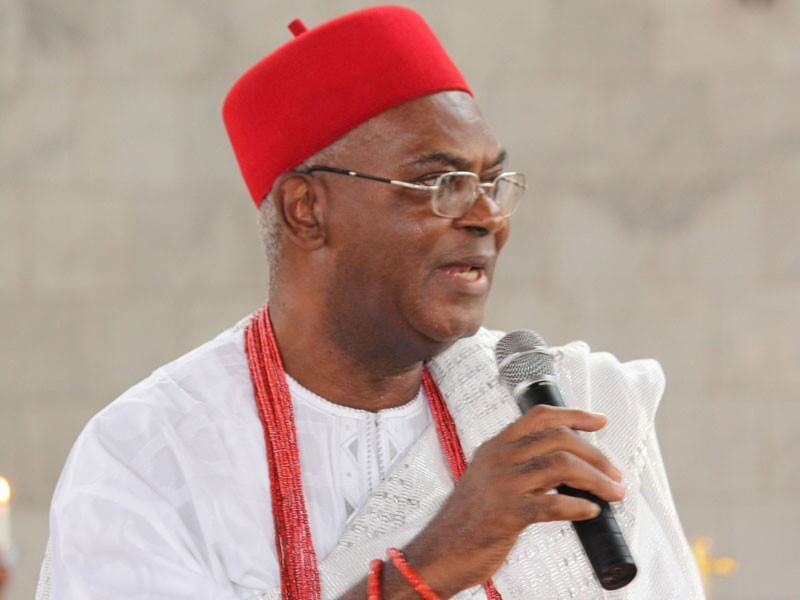
Globacom brought the 2026 Ofala Festival to a magnificent close on Wednesday with a royal banquet in honour of the Obi of Onitsha, His Majesty Igwe Alfred Nnaemeka Achebe.
The elegant gathering, attended by the monarch, members of his cabinet, Globacom’s trade partners and high-net-worth customers, marked the grand finale of the festival sponsored by the telecommunications and digital solutions company.
Speaking at the occasion, Globacom’s Divisional Head, South-East, Mike Ehumadu, said the event underscored the enduring significance of partnerships between corporate organisations and traditional institutions in preserving Nigeria’s cultural legacy and sustaining the traditions that give communities their distinctive identity.
He congratulated Igwe Achebe, the Ofala Festival organising committee and the people of Onitsha on the successful celebration of the 2026 edition, reaffirming Globacom’s commitment to initiatives that celebrate Nigeria’s cultural diversity, strengthen community bonds and project the country’s rich heritage to a wider international audience.
The evening unfolded as a vibrant tapestry of music, comedy and cultural entertainment. Guests were treated to performances from Aniweta Mazeli, Boy o Boy and the Groove Band, while comedian MC Ezegetive infused the gathering with laughter. The performers brought their artistry to bear on the occasion, enriching its atmosphere and creating cherished moments for the royal household, community leaders and other distinguished guests.
In further recognition of the competitive spirit, discipline and communal solidarity displayed by the various Onitsha age grades during the festival, Globacom rewarded winners of the different competitions with cash prizes and trophies. The gesture acknowledged not merely their achievements but also the collective pride and sense of belonging that animate the Ofala tradition. It also presented hundreds of bags of special Basmati rice to all the members of the different age grade associations.
Globacom’s sustained association with Ofala exemplifies the capacity of purposeful private-sector investment to preserve cultural heritage while broadening the social and economic benefits of traditional festivals.
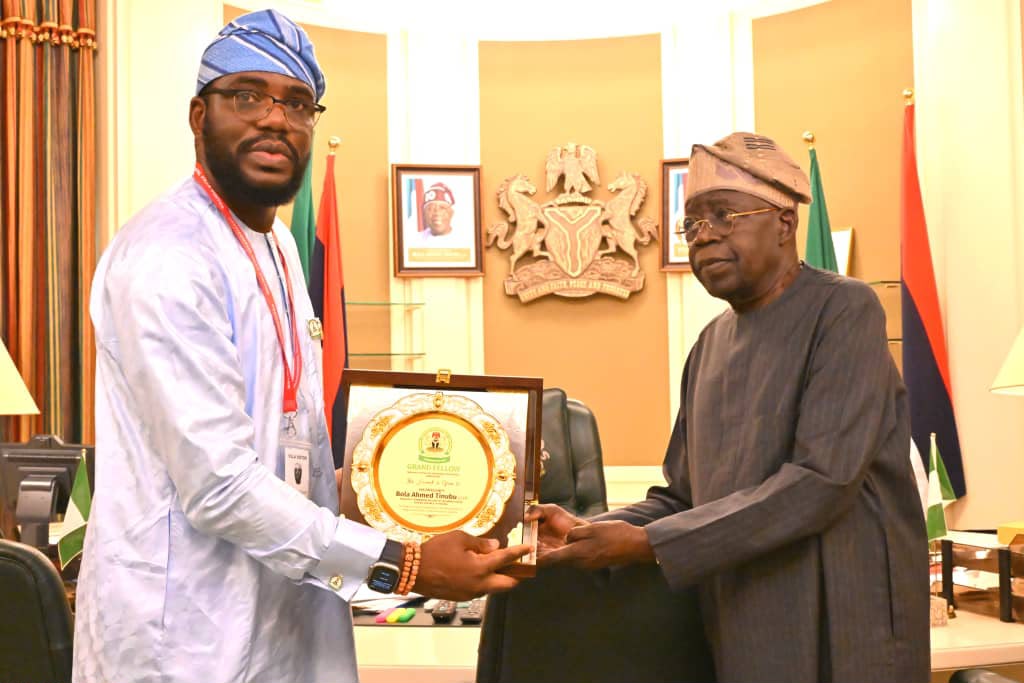
President Bola Ahmed Tinubu has reaffirmed his commitment to supporting the growth of Nigeria’s tourism and hospitality industry following a meeting with the Director-General and Chief Executive Officer of the National Institute for Hospitality and Tourism (NIHOTOUR), Aare Abisoye Fagade, FNHT, FRPA, FIMC.
During the meeting, Aare Fagade briefed the President on ongoing reforms across the tourism, hospitality and travel sector, focusing on professional standards, skills development and the implementation of the NIHOTOUR Act 2022 to strengthen service quality, accountability and industry competitiveness.
As part of the engagement, the NIHOTOUR Director-General presented President Tinubu with the Grand Fellow of National Hospitality and Tourism (GFNHT), the highest singular honour in Nigeria’s tourism sector, conferred by NIHOTOUR.
The President’s pledge of continued support underscores the importance of tourism as a driver of economic diversification, job creation, investment and enterprise development.
Speaking on the significance of the meeting, Aare Fagade said tourism must be recognised not merely as leisure and recreation, but as an economic sector capable of creating opportunities for Nigerians and contributing meaningfully to national prosperity.
He noted that NIHOTOUR’s reforms are designed to strengthen professional competence, improve industry standards and establish a credible regulatory environment in which businesses can thrive and investment can grow.
“Our responsibility is to build the professional and institutional foundations that will enable Nigeria’s tourism potential to translate into jobs, investment and sustainable economic growth. The President’s continued support is important to advancing these reforms and positioning the sector for greater national impact,” Fagade said.
The engagement aligns with the objectives of President Tinubu’s Renewed Hope Agenda, particularly economic diversification, employment generation and the development of productive non-oil sectors.
NIHOTOUR reaffirmed its commitment to working with government and private-sector stakeholders to build a more professional, competitive and globally recognised tourism industry that delivers lasting value to Nigerians.
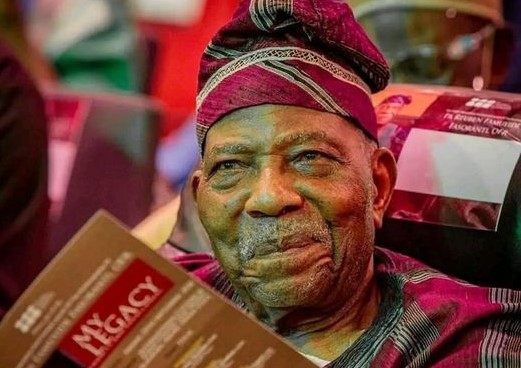
The national leader of the Pan Yoruba social-political organisation, Pa Reuben Famuyide Fasoranti, is dead.
The revered elder statesman and Afenifere chieftain passed away at the age of 100, which he celebrated May 11, 2026.
Born on May 11, 1926, in Uso, Ondo State, Pa Fasoranti was one of the major twines holding together the Yoruba nation and a bridge linking the politics of the First Republic to the present democratic order in the South West and in the country.
His political trajectory was rooted in progressivism and Yoruba ideals, having imbibed the political philosophy of Chief Obafemi Awolowo through th Action Group and later the Unity Party of Nigeria.
During the Second Republic, he served as Commissioner of Finance in the old Ondo State between 1979 and 1983. He later rose to become the leader of Afenifere following the death of Chief Abraham Adesanya, his predecessor.
A foremost Yoruba leader, Pa Fasoranti was one of the NADECO leaders whom the regime of the late General Sani Abacha attempted to assassinate in 1996.
He is regarded as symbol of the never-dying spirit of resistance against forces of tyranny and oppression with his politics never about himself but the advancement of his people, philosophy upheld by his resilience in the face of visible danger and personal losses, including the killing of his daughter by herders on the Benin-Ore road some years ago.
A teacher by training, he attended Ondo Boys’ High School, Yaba Higher College in Lagos, and the University College, Ibadan, where he bagged a higher degree in English/Geography.
He taught at his alma mater, Ondo Boys’ High School, and later served as Principal of Oyemekun Grammar School and Iju-Itaogbolu Grammar School. His dedication to education persisted after retirement, as evidenced by his establishment of Omolere Nursery and Primary School and Akure High School.
“His counsel, fatherly guidance and principled stand on issues of justice and good governance will be sorely missed. He lived a fulfilled life and left indelible footprints of honour and legacy for generations to come,” the Governor stated.
Meanwhile, Governor Lucky Aiyedatiwa, has described the late patriarch as a beacon of wisdom, integrity and selfless service whose century-long life was marked by uncommon commitment to the development of Ondo State, Yorubaland and Nigeria at large.
He said, “On behalf of the Government and the good people of Ondo State, I commiserate with the Fasoranti family, the people of Akure Kingdom and the entire State over this great loss. May his gentle soul rest in perfect peace.”
Until his death, Pa Fasoranti remained a towering figure in Yoruba politics and a strong advocate for the unity of the Yoruba people, the supremacy of Yoruba ideals and the betterment of the lot of his people.
He is survived by his children and grandchildren, as well as a legacy of service, integrity and leadership.
The Guardian


