
News
Why is Nigerian Democracy Still Old-Fashioned When Garri Seller Already Takes Payment by Phone


- /home/rhoncare/pointblank.ng/wp-content/plugins/mvp-social-buttons/mvp-social-buttons.php on line 27
https://pointblank.ng/wp-content/uploads/2019/05/Market.jpg&description=Why is Nigerian Democracy Still Old-Fashioned When Garri Seller Already Takes Payment by Phone', 'pinterestShare', 'width=750,height=350'); return false;" title="Pin This Post">
- Share
- Tweet /home/rhoncare/pointblank.ng/wp-content/plugins/mvp-social-buttons/mvp-social-buttons.php on line 69
https://pointblank.ng/wp-content/uploads/2019/05/Market.jpg&description=Why is Nigerian Democracy Still Old-Fashioned When Garri Seller Already Takes Payment by Phone', 'pinterestShare', 'width=750,height=350'); return false;" title="Pin This Post">
By Joel Popoola
Nigeria is still a very young democracy, but our democratic representatives and institutions continue to feel extremely old – and nowhere can we see this more clearly than in the recent explosion in the use of electronic payments.
An unprecedented number of Nigerians are making the change to paying for every day goods and services using electronic devices – using their mobile phones in particular.
According to figures from the Nigeria Inter-Bank Settlement System nearly 59 trillion Naira of payments were made electronically in the first quarter of 2021.
This is a rise of 88% on the first quarter of 2020!
It is almost a decade since the Central Bank of Nigeria launched a cashless policy aiming to modernise the way our nation pays for goods and services, with the aim of creating a more inclusive and efficient system, which is cheaper to use, more transparent and less open to corruption.
As late as last year observers where stating that “the glass for electronic payments in Nigeria is no longer empty, but it is still not yet full” – but that glass is now filling rapidly.
There is no reason to think that the woman selling garri down your street will be taking payments by mobile phone within the next couple of years – if she isn’t already.
As financial technology expert Sola Fanawopo has noticed however, this move to electronic payments has been led by citizens – not by government.
He has said: “At the citizens level, digitisation has increased, but at the level of the government, it is still very low, and without government, we are wasting our time”.
In terms of technology, the people of Nigerian have entered the age of the car. But our government acting like horses and carts are here to stay.
There is no doubt that Covid-19 had a huge impact on influencing the shift towards a cashless Nigeria and helping Nigerians get used to the idea of digital payments. During the Covid-19 lockdown many of us have had no choice but to switch to digital banking when bank branches were closed. And people found it faster and simpler.
The COVID-19 pandemic also saw impressive efforts from government to make palliative payments electronically – and saw the government take impressive and important steps to enhance the transparency and governance Covid-related spending, including the publication of procurement plans and notices for all emergency response activities including the names of companies awarded contracts and the owners of those companies.
Not only can we not go back to out-dated systems, our politicians need to be as transparent and as accountable as these governmental bodies.
That is the goal at the digital democracy campaign I head. Our campaign is determined to improve accountability and transparency in Nigerian politics. And this is why we created the free Rate Your Leader app.
Rate Your Leader puts registered voters in direct person-to-person contact with their local decision makers, making them justify every decision they make and every penny they spend and making them truly accountable to the people they serve.
And if their voters don’t like the answers they get, they can rate their politicians badly for everyone to see.
Decades of underwhelming, underperforming government has led Nigeria to where we are today. Many Nigerians do not trust their leaders. To too many they are self-interested and self-serving. This is not true in my experience, but like it or not, many Nigerians think this way.
Digital communication can improve that situation.
In 2021, we live our lives online. We shop, socialise, learn, work and even date there. Our politics and our political institutions need to take advantage of the opportunities of the digital age to become more accessible, transparent and responsive – and to make themselves relevant to the people they serve.
But too much of our public payment, welfare and public transport infrastructure remains entirely cash-based. Cash is of course practically untraceable – making corruption a lot easier in any system that relies upon it.
Minimising the use of cash in public life could be an important step towards restoring Nigerian’s trust in the democratic process.
And maximising the use of digital communication to build bridges between electors and elected is an equally important route towards achieving the same goal.
Joel Popoola is a Nigerian technology entrepreneur, digital democracy campaigner and is the creator of the Rate Your Leader app.


The Leader of INRI Evangelical Spiritual Church, Primate Elijah Ayodele, on Sunday described President Bola Tinubu as an incompetent leader, stressing that Nigeria has yet to experience what it means to be an independent nation because of bad leadership.
In a statement signed by his media aide, Osho Oluwatosin, Primate Ayodele claimed Nigeria has independence of hardship and hunger, explaining that the government complains more than provides solutions to the nation’s problems.
Primate Ayodele wrote: “We are not fully independent. It’s an independence of stagnancy and hunger. Tinubu isn’t competent to be a president, so there is no way the people will enjoy independence.
“Our government complains a lot when they are supposed to provide solutions. This independence is meant for rethinking, but the president isn’t ready for it.”
The prophet stated that there is no freedom in whatever is happening in Nigeria, noting that a Muslim-Muslim ticket doesn’t indicate freedom but bondage.
He warned that the only way Nigeria can have true independence is by restructuring. He, however, noted that the Nigerian government is not ready for that conversation.
“There is no freedom in whatever we are doing; a Muslim-Muslim ticket is no independence, it is bondage. The only way we can have independence is through restructuring, but the government isn’t ready for that. In terms of infrastructure, health, economy, and other indices, it’s simply bondage,” he said.
Continuing, Primate Ayodele described the Nigerian government as selfish, saying that is the reason citizens have yet to experience what it feels like to be independent.
He further blasted the government for not having plans for the younger generation. “The government is selfish and careless; it is not a government that is arranged or organised, and that is why we are still in the process of independence; we have not fully attained it.
“There is no amount of prayers that can help us if we have bad leadership; our independence has been commercialised and sabotaged. This is a country with no plans for the younger generation.”
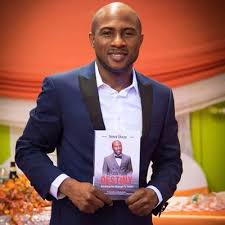
By Henry Ukazu
Dear Destiny Friends,
In the last two editions, we discussed passion and profit, and identified the relativity of the two. Today, however, the sensitive issue of love will be our target.
As powerful as love is, it can also be controversial. This is because there are many angles to it. Some people believe in love in contrast to the views of some others, however. While some think love is blind, others are of the opinion that love might not be blind afterall. The latter school of thought believes that one must love with common sense as opposed to being foolishly in love.
But while love is often described as a verb because it’s action-oriented functions, one cannot say they love someone or something without investing time and resources in them. As a matter of fact, a school of thought says that if you want to know a person, look at how the person spends their time.
Regardless of the aisle one belongs to, I strongly believe that true love exists. The only challenge most people have is that they love the wrong people, and they haven’t found people who truly love them for who they are. Today, I pray that what we love, loves us back.
I also believe that no one is too busy to do the needful. If anyone wants to check on you or be with you, they will make an intentional effort to reach out. I say this because no one is too busy to pick your call or even reply your message. If you reach out to anyone, and they are not available to pick up your call, they will surely make out time to revert to you, if for any reason, you are relevant to them.
To understand this message, imagine US President Donald Trump, Elon Musk, or even an idol whom you rever calling you; would you give them an excuse for not picking or returning their call? If my thinking is right, one will make a conscious effort to return the call at the earliest possible time.
One may wonder why I took time to explain love in this context; well, the answer is not far-fetched: love is the centerpiece of everything we do in life. If you love your job, your business, your academics, your relationship, your God, and your life, you’ll be intentional in harnessing it. You won’t want to lose it. According to Myles Munroe, whatsoever you mismanage, you’ll lose it. So, love is not an exception.
As mentioned earlier, when you love something, you’ll invest time and resources into it. To understand the concept of let love lead, we shall be discussing love as it relates to career, business, academics, relationships, God, and personal life.
Love and Career:
To understand one’s interests, look at what they spend their time on. It’s sad to see people who work in roles they are not passionate about just because they want to pay their bills. When you love your career, trust me, you won’t feel like you are working. As a matter of fact, one will not feel the stress of waking up every day to go to work. One can tell who loves their job by the way they do their work.
Love and Business
This is another interesting area of life. Most people engage in business that pays the bills; however, I believe if one has discovered who they are, they can make a living by focusing on their God-given talent to develop a business. For instance, I’m passionate about counselling, youth development, mentoring, and public speaking. Instead of working in roles in big industries that can pay me big money, I started my company, Global Empowerment and Mentoring Initiative, which is focused on Human Capacity Development to enable me to fulfil my heart desire and passion. I believe anyone passionate about something can creatively find a way to turn it into a business, and people will be paid for it.
Love and Academic
Another interesting area where we can allow love to lead is our academics. Just like love starts in the family, fulfillment in a career starts from the major one studies in college. This is simply because when we choose a major we love, it will lead us to an industry that’s befitting for our major. One of the reasons why a lot of people feel stressed, frustrated, depressed, and have suicidal thoughts is simply because they don’t like their major and where they work.
Trust me, if one loves their major and their work, they won’t think of taking their life. We have seen cases where they have money but are not happy with their job.
Love and Relationship
This is one of the most interesting areas of life to know if one truly loves. In our contemporary society, it’s almost impossible to find genuine love. However, it’s still possible for one to find true love, but it will be very rare. Most people will love you for what they will gain from you. Love ought to be symbiotic as opposed to being parasitic. When there’s love between two people, many of the fights that exist in relationships won’t exist.
For instance, one of the most debatable and controversial issues in marriage is the 50- 50 contributions. Some men support the idea of 50-50 because they also contribute to cooking, taking care of children, and other household chores which traditionally belong to women. Women, on the other hand, differ.
According to them, it’s the duty of the man to provide for the family. According to them, it makes no sense for them to contribute and also give men the respect they deserve. This set of women goes as far as saying that bathing a child and doing household chores are all part of being a responsible man. The narrative seems to be changing.
Here is my position. Where there’s love and understanding in a relationship or marriage, who provides and who manages won’t really bother. A man who loves his family (wife and children) won’t see cooking, bathing his children, and still gives his wife money as work. And a woman who truly loves her husband won’t see paying the bills as work when the man is incapacitated; neither will it make her disrespect her husband because he’s not financially stable to support the family, because they are committed to the relationship.
I can go on and on about love, but the fact and truth remains: when true love is at the center of the marriage or relationship, partners won’t even discuss if it is his money or her money, because both parties are one.
Love and God
This is another interesting area to know the mindset of someone. As Christians, we are advised to love God as we love ourselves. We can’t claim to love God and do things that are contrary to what God loves. In the same way, we can’t claim to love someone and hurt them. When we love, people can see it without us speaking. A typical example is the parable of the good Samaritan.
Love and Life:
Life is love and love is life. The summary of our life can be seen in how we live our life. Whether we are talking about education, career, business, health, personal development, family, relationship/marriage, entertainment, vocation, skill, finance, spiritual, etc. Love can be understood through how we live and love because everything rises and falls in life.
In summary, I know there are many twists to life; I suggest that, in whatever we do, let’s allow love to lead.
Henry Ukazu writes from New York. He works with the New York City Department of Correction as the Legal Coordinator. He’s the founder of Gloemi. He’s a Transformative Human Capacity and Mindset coach. He is also a public speaker, youth advocate, creative writer, and author of Design Your Destiny: Actualizing Your Birthright to Success, Unleash Your Destiny, and The Six Pillars of Success. He can be reached via info@gloemi.com
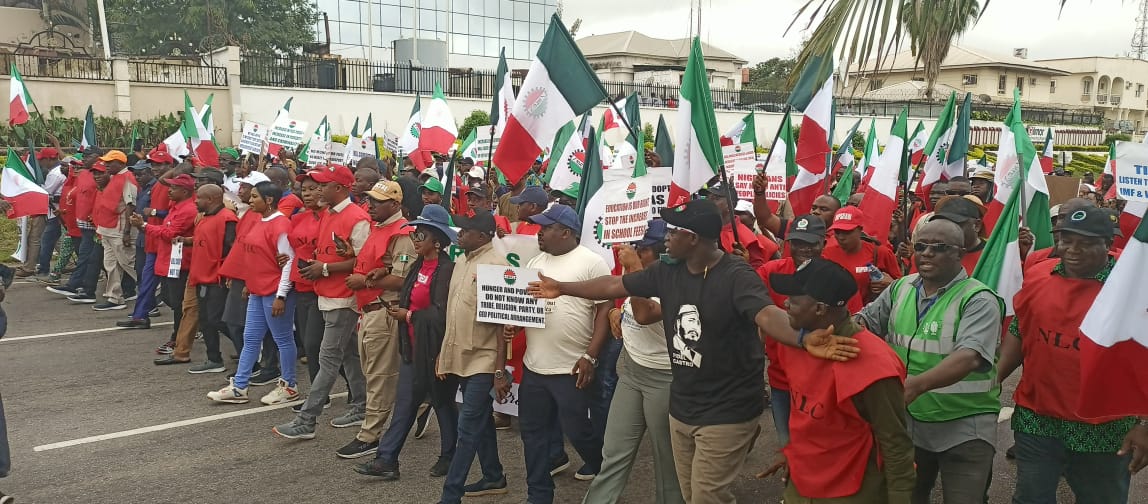
Public servants across Nigeria are set to shut down government offices and other public services from midnight on Friday, October 2, as the Joint National Public Service Negotiating Council (JNPSNC), Trade Union Side, begins a three-day warning strike over the worsening cost of living and what it described as the Federal government’s failure to respond to workers’ demands.
The warning strike is scheduled to run from Friday, October 2, to Sunday, October 4, 2026.
The JNPSNC formally activated the action in a circular dated October 1 and signed by its National Secretary, Comrade Olowoyo Gbenga. The circular was addressed to the national presidents and general secretaries as well as State chairmen and secretaries of the council’s affiliate unions.
Titled “Declaration of Three (3) Day Warning Strike; Action With Immediate Effect,” the circular recalled the council’s earlier position that workers would proceed with the strike if President Bola Tinubu fails to address its requests contained in a September 21 letter.
“Consequent upon the above, the strike shall start with effect from midnight of Friday, 2nd October, 2026 to Sunday, October 4th, 2026,” the council stated.
It directed public servants in the Federal, State and local government services to join the action, saying the economic and mental hardship being experienced by workers, their dependants and vulnerable Nigerians had become increasingly difficult to bear.
The council’s decision followed a September 30 deadline it had issued to the Federal Government over three major demands: a reduction in the price of petrol, an immediate wage award and the commencement of negotiations for a new national minimum wage.
The JNPSNC had earlier said the issues should be addressed before or through President Tinubu’s Independence Day address. It subsequently proceeded with the strike notice after the deadline elapsed.
At the heart of the dispute is the JNPSNC’s demand for an immediate reduction of the pump price of Premium Motor Spirit, popularly known as petrol, to N500 per litre.
The council has argued that the high cost of petrol has translated directly into higher transportation costs and, consequently, increased prices of food and other essential goods and services.
In its earlier statement, the council said petrol prices were ranging from about N1,450 to N2,000 per litre, with prices reportedly reaching N2,500 in some locations.
It proposed government intervention to reduce the landing cost of petrol and support domestic refining. It also called for crude oil to be made available to the Dangote Refinery and modular refinery operators on appropriate terms to boost domestic refining and help reduce the cost of petroleum products.
The second major demand is an immediate wage award for Nigerian workers. JNPSNC wants the Federal government to approve the payment as an emergency measure to cushion workers and their dependents against the effects of the current cost-of-living crisis.
The council is also demanding the immediate constitution of a tripartite committee to begin negotiations for a new national minimum wage ahead of 2027.
The unions are seeking a minimum wage of not less than N500,000 under the next wage arrangement.
According to the council, beginning the negotiations early would help prevent delays in negotiating, legislating and implementing the new wage when the current arrangement becomes due.
The demand comes as organised labour continues to argue that inflation and rising household expenses have significantly weakened the purchasing power of workers.
The strike will commence less than 24 hours after President Tinubu delivered his Independence Day address to mark Nigeria’s 66th anniversary.
In the address, the President acknowledged that the country’s economic journey had been difficult and said many Nigerians had experienced hardship. He nevertheless defended the economic reforms undertaken by his administration, arguing that they were necessary to correct longstanding weaknesses in the economy.
The JNPSNC action comes amid similar concerns raised by the Nigeria Labour Congress (NLC) in its Independence Day statement.
The NLC called for an immediate reduction in petrol prices, a nationwide wage award and the commencement of negotiations for a new national minimum wage.
The labour centre said rising transportation costs were feeding into the prices of food, rent, school fees and other necessities, while inflation had eroded the real value of workers’ wages. It also linked the current cost-of-living pressures to the increase in petrol prices following the removal of subsidy in 2023.
The NLC further called for the implementation of tax relief measures it said had been agreed with the Federal government, a reduction in the cost of governance and greater transparency in the management of public resources.
It also demanded the immediate constitution of a tripartite committee to negotiate a new wage standard for 2027, arguing that the N70,000 minimum wage had already been significantly eroded by inflation.
The JNPSNC comprises several unions representing workers across the public service, including the Nigeria Civil Service Union, Medical and Health Workers Union, Association of Senior Civil Servants of Nigeria and National Association of Nigerian Nurses and Midwives.
Others are the Amalgamated Union of Public Corporations, Civil Service Technical and Recreational Employees; Nigeria Union of Public Service, Reportorial, Secretarial, Data Processors and Allied Workers; National Union of Printing, Publishing and Paper Products Workers; and National Union of Agriculture and Allied Employees.
The October 1 circular directed the unions’ national and state structures to disseminate the strike notice and mobilise members for compliance.


