
Featured
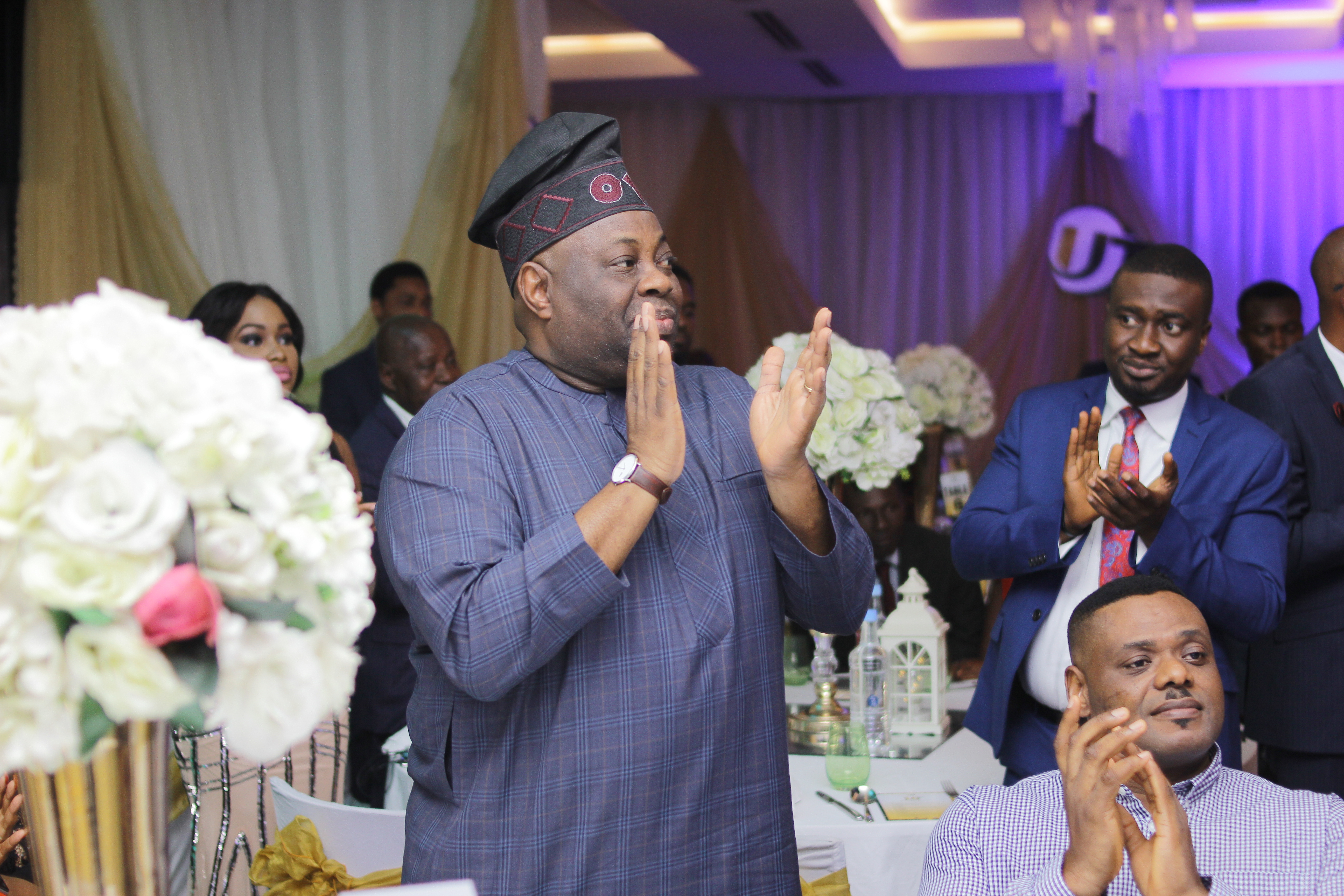
Why Nigeria Must Avoid Another Civil War by Dele Momodu

- /home/rhoncare/pointblank.ng/wp-content/plugins/mvp-social-buttons/mvp-social-buttons.php on line 27
https://pointblank.ng/wp-content/uploads/2019/06/IMG_1578-1000x600.jpg&description=Why Nigeria Must Avoid Another Civil War by Dele Momodu', 'pinterestShare', 'width=750,height=350'); return false;" title="Pin This Post">
- Share
- Tweet /home/rhoncare/pointblank.ng/wp-content/plugins/mvp-social-buttons/mvp-social-buttons.php on line 69
https://pointblank.ng/wp-content/uploads/2019/06/IMG_1578-1000x600.jpg&description=Why Nigeria Must Avoid Another Civil War by Dele Momodu', 'pinterestShare', 'width=750,height=350'); return false;" title="Pin This Post">
Fellow Nigerians, I have decided to write on this topic today because of the dangerous giddiness I observe in many of our young ones today, especially on social media. I have no doubt that many of them love our country so passionately but are disappointed in how messy things have been. Many have struggled to go to school hoping to find something meaningful to do thereafter but no such luck. Many have become frustrated and despondent and desperate in the process. The resultant effect naturally is deep seated resentment and anger. But I read somewhere that “anger beclouds reasoning” more often than not. Someone needs to plead with those who think war is a tea party to perish the thought. It is not a game and to fit it into language which our youths of today will probably understand, it is not a video game. No matter how angry we were in our younger days, (and I was a pioneer JAMBITE in 1978, some 41 odd years ago), we tried hard to avoid bloodshed even when security forces fired at us, as they still do till this day. And compared to war, such confrontations are child’s play!
Even if war must come as the very last resort, there must be a method to madness. War should never be fought for the sake of war. One must ask the pertinent questions: what are we fighting for, the objectives; who is leading the war and will they come out on the battlefield with members of their own family or send others out as Guinea pigs; what guarantees have we that even if we win, which cannot ever be guaranteed, we can win with minimum collateral costs and damages? That is why we have what is called a pyrrhic victory, a victory so devastating and debilitating that it might as well have been a defeat! And in a civil war, there is ultimately no victor or vanquished because the protagonists all bear the scars for a very long time. Those who participated in and survived the Nigerian civil war will tell you of the emotional pain, anguish and torture that they still suffer till today alongside the physical injuries and wounds. We have examples of other wars fought across the globe and we know their outcomes. Even where victory has been proclaimed in some of them, we feel the aftershocks and aftermath much later on and wonder why, if it was all so in vain, we ever got involved in the process.
True, war is sometimes unavoidable, but I don’t think Nigeria or Nigerians can afford, or survive another round of a bloody civil war. Of course, it is not just the fact that such a war is likely to lead to the disintegration of the country, because some people will claim that this is what they want in any event, it is the nature of the disintegration that must be feared and avoided. We have become too divided along ethnic lines that we may need to create tens and tens of nations out of present-day Nigeria. Each of the so-called majority tribes in Nigeria have their own local internecine battles being fought with the minority ethnic groups. Just as some majority tribes insist they want to secede or break away because they cannot stand other tribes lording it over them, so also the smaller clans which will have become bigger groups in a vastly reduced sub-region will complain about the overlordship of the new majority tribe in any new nation. Our people are never satisfied or content. There will always be room and avenue for complaints. It is therefore not going to be as simple as many of those calling for war think to conceptualise the numerous nations that will be birthed by a war-ravaged Nigeria.
I have been privileged to read voraciously about the history of wars globally. What pains me the most is that after the insanity that started every war calms down, the antagonists would usually sit down across a table, and dialogue with one another having agreed to a conversation they had rejected out of hand in the past, in their collective stupidity. Many of them would later come back to preach about the importance of unity after wasting so many innocent lives, but never the lives of those close to them. Those ones are usually ensconced in safety in far-away climes.
Apart from reading, I have travelled through several war-torn zones and saw first-hand the vestiges of mutually acquired suspicion and the destruction and calamity that ensued following the seeming intractable disputes that had led to the field of battle. I was in Sierra Leone in 2001 and visited Port Loko and Mange, towns or villages that were ravaged and devastated by the war that raged with so much venom that hands and arms were amputated by whether you were wearing long sleeves or short sleeves. I wondered what on earth could have led to such meanness, wickedness and evil. I also travelled to Liberia where, again, I visited our soldiers who controlled ten of the 15 counties in the country, at the time. The story was quite similar to that of Sierra Leone. No compassion, no sympathy, no empathy. There was looting, raping and murder all in the name and disguise of war. Evildoers in these countries took refuge under the umbrella of war to unleash their bestial nature on poor unsuspecting citizens who despite their pleas and entreaties were massacred in their thousands with great mirth and debauchery accompanying the sickening killings and rapes.
I have also travelled to Rwanda many times in the last couple of years and can authoritatively confirm that no country should ever experience such a pogrom or genocide for any reason. The carnage, bloodbath and ethnic cleansing that I heard about seemed to come out of stories one reads in novels and fantasies only that I saw and met those who had been unfortunate to be victims of a macabre example of man’s inhumanity to man.
I’m particularly worried that many of those shouting war, war, war in Nigeria hardly know the meaning of it. My visits to the Kigali Genocide Memorial convinced me that we are playing with naked fire. I see too many similarities to how the conflagration started in Rwanda. Before the two main rivals in the ethnic jingoism knew what was happening, they had started a war that wasted too many lives. I passed through that museum again some days ago and still had tears in my eyes. I ran into many Nigerians and wished they will all go back as Peace Ambassadors having witnessed the harm and suffering that a war of attrition such as that being espoused by some of our youths and aged elders can bring.
Nearer home, I have seen the effect that a mini war can have in the Ife-Modakeke crisis of the 1980’s. Close friends and families suddenly became sworn enemies. People used the opportunity to settle old scores. Young men were slain for apparently no reason. Those who provided the guns and ammunition, the petrol and the lighters for the killings and arson that took place hid their closest and dearest from the blood-letting that ensued. When the dust settled the discerning members of both communities sat down to wonder what it was all about. However, the damage had been done! Till this day, just as there is mutual distrust and suspicion amongst the various majority tribes of Nigeria, so also is there such distrust and suspicion between the Ifes and the Modakekes.
It is so disheartening that many of those controlling the appurtenances of power in our country today once fought for the unity of Nigeria during the civil war of 1967 to 1970. How come they have forgotten the monstrosity and monumental tragedy that befell Nigeria at that unfortunate moment? Why can’t these leaders realise that our country deserves better than to be governed in such petty manner as we now are doing? Why can’t they concentrate on the onerous tasks of nation building instead of nation wrecking? Nigeria is a great country that will become greater still if we stop fanning the ethnic embers and concentrate on building a thriving successful nation. Our diversity should be our strength and not a weakness or an albatross around our neck. Without any doubt, the price of peace is always cheaper than the cost of war. Anarchy will never lead to progress and development. It can only worsen or situation.
However, all the blame cannot be laid at the doorstep of our leaders, especially those in government. I see middle-aged people who were young people at the time, and were unfortunate childhood participants, actors or spectators in disaster that was the Nigerian civil war. This is because in reality, no region was spared. The civil war did not in fact begin in 1967, its genesis was in the mutiny and subsequent military putsch of January 1966. The January 1966 affair became a raging inferno once the retaliatory coup of July 1966 took place and given the egos and youthful exuberance of our military leaders at the time, it was no wonder that they committed to going down the slippery slope of war rather than discourse. One would have thought that with age and maturity, those leaders who are alive, and were active participants in the turmoil that embroiled Nigeria in those crazy days, would reflect and ensure that nothing of that nature ever occurs again in our country. However, it is sad to see that some of them are in the forefront of the agitation for war as means of resolving what is after all a political issue.
The buck still stops at the table of our leaders, especially the President, Muhammadu Buhari. He needs to work harder at reassuring the nation that he means well for Nigeria and that he respects all Nigerians as equals no matter where they come from. For the moment and at this present time in our history, the President must not only recognise the existence and utility of all regions, regardless of their part in his electoral success, he must integrate them. It is not too difficult to do. Our Constitution already provides the foundation for any determined leader to seize the moment and take the initiative. There is provision for Federal Character in most appointments and although this has sometimes been used to crown mediocrity over merit, in the hands of an astute manager, it can be used to assuage and heal old wounds and to kickstart the country’s journey towards living in harmony and unity.
I believe that we must learn to be tolerant towards each other. Some of the complaints about our leaders’ stem from the intolerance and impatience on both sides. This is justified because of our history which our leaders have never properly addressed. At the same time, I also believe that our leaders must focus mainly on the real ills of our society especially poverty, education and unemployment. Dealing decisively with these matters will lead to our youths being more discerning and deciding not to be cannon fodder for anybody. There must come a time when it should not matter where successive Presidents come from or indeed whether they come from the same parts as their deputies. What should matter is merit and good governance. This can only be achieved when those leading us abandon the seeming toga of ethnic overlords that they are adorned with, when it is not their style or portion. This they can only do by transparently demonstrating that they are true nationalists and patriots and will treat all Nigerians the same irrespective of their ethnic backgrounds.
That is the future, our future, not war, secession or disintegration.


A member of the Nigeria Union of Petroleum and Natural Gas Workers (NUPENG), Comrade Tope Ajagbe, has described as lies reports been circulated by the National Union of Edible Oil Tanker Drivers of Nigeria (NUEOTDN).
According to a statement, the member said “their baseless allegations, seen in the online edition of The Nation newspaper of Wednesday, September 16, 2026, are malicious, misleading, and deliberately intended to create panic within Nigeria’s product supply and distribution chain.”
He further wrote:
We strongly urge the Federal Government, law enforcement agencies, regulatory authorities, and other critical stakeholders to treat this orchestrated falsehood as an act of economic sabotage. NUEOTDN must be cautioned to desist from overheating the polity and maligning the reputation of NUPENG.
It is important to note that NUPENG leadership has consistently sought peaceful resolution of disputes between NUEOTDN and the Amalgamated Union of Wharf Truck Owners of Nigeria/Wharf 302 Products and Beverages Association of Tanker Drivers, who operate dedicated food-grade trucks. Unfortunately, NUEOTDN has repeatedly rejected conciliation efforts and continues to spread misinformation.
NUPENG operations are conducted with strict compliance to all relevant safety, environmental, and regulatory frameworks. We work closely with Federal Road Safety Corps (FRSC), Nigerian Midstream and Downstream Petroleum Regulatory Authority (NMDPRA), and other statutory agencies to ensure our practices meet the highest standards of public safety and consumer protection.
Our drivers undergo regular training, inspections, and certification to guarantee adherence to national and international best practices.
We categorically condemn NUEOTDN’s falsehoods and reaffirm that NUPENG remains a legally recognized and responsible union committed to professionalism, integrity, and the welfare of Nigerians.
We call on the Federal Government, regulators, law endorsement agencies and the public to disregard these unfounded claims and recognize NUPENG as a union that stands for responsibility, compliance, and national development.
It is also important to emphasize that any dedicated petroleum tanker found engaging in illegal activities, particularly in the lifting or distribution of edible products, must be apprehended by law enforcement agencies and made to face the full weight of the law. NUPENG remains a law-abiding union and will not condone any member involved in acts of illegality.

President Bola Ahmed Tinubu has been projected to emerge victorious in the 2027 presidential election, with a new political forecast giving him 20 states against nine for former Vice President Atiku Abubakar and eight for NDC candidate Peter Obi.
The projection was made by the Political Intelligence Group (PIG) of Politico.ng, which assessed the current political landscape and projected how the three major political figures could perform if the presidential election were conducted under the circumstances prevailing at the moment.
According to the projection, Tinubu would have a clear advantage over his major rivals, although the group acknowledged that the political situation could change significantly before the actual election.
The forecast places Tinubu strongly in the South-West while also giving him important victories outside the region. Atiku is projected to maintain considerable strength across parts of Northern Nigeria, while Obi is expected to retain support in selected areas where he performed strongly during the 2023 presidential election.
Tinubu Projected to Win 20 States
According to PIG, Tinubu is currently projected to win 20 states, making him the leading candidate in the forecast.
The president is expected to dominate the South-West, with all six states in the region projected to fall into his column. The region remains politically significant because of its voting strength and Tinubu’s long-standing political influence there.
Tinubu is also projected to win Lagos State in the 2027 presidential election. This would mark a change from the 2023 presidential election, when Tinubu lost Lagos State to Peter Obi.
The latest projection says that Tinubu would regain the state in 2027. Lagos has been central to his political career and remains one of the country’s most important electoral territories.
The inclusion of Kano among the states projected to go to Tinubu is one of the more striking aspects of the forecast. Kano is one of Nigeria’s largest states by voting population and has traditionally been an important battleground during presidential elections.
A victory in Kano would provide Tinubu with a major northern foothold and could strengthen his ability to build a broad national coalition beyond his traditional South-West base.
Tinubu’s eventual performance, however, could depend heavily on how Nigerians assess his administration by 2027.
Economic conditions, inflation, employment, security, infrastructure and the cost of living could influence voters’ decisions. The administration’s policies and its ability to communicate its achievements may also become important campaign issues.
Religion and ethnicity could also play a role in the political calculations. Nigeria’s voting patterns are sometimes influenced by regional, ethnic and religious considerations, although these factors compete with economic and political issues.
Atiku Projected to Win 9 States
PIG projects that Atiku Abubakar would win nine states in the 2027 presidential election.
The former vice president is expected to perform strongly in Northern Nigeria, with Kaduna State projected to go to him alongside several states in the North-East and North-West.
Atiku’s strength in the region could be connected to his established political network and his previous presidential campaigns. His ability to mobilise support across northern states could make him one of Tinubu’s strongest competitors in the region.
Another issue that could influence Atiku’s support is his position on fuel subsidy.
Atiku has advocated a review of the current fuel subsidy policy and has spoken about measures aimed at reducing the burden of petrol prices on Nigerians. If the high cost of transportation and living remains a major concern by 2027, such a promise could appeal to voters who want immediate relief from rising household expenses.
However, the fuel subsidy debate is likely to be more complicated than simply promising cheaper petrol.
Voters may want to know where the money required to fund the subsidy would come from and whether restoring or expanding the policy would be financially sustainable. Questions surrounding government revenue, public spending and the opportunity cost of subsidy payments could therefore become major campaign issues.
Religion and ethnicity may also influence Atiku’s support in some areas, particularly where regional identity remains politically important. However, these factors cannot be assumed to determine how every voter will behave.
The strength of Atiku’s campaign could ultimately depend on whether he can combine his northern support with meaningful backing from other parts of the country.
Obi Projected to Win 8 States
Peter Obi is projected to win eight states, according to the Politico.ng forecast.
The projection also places the Federal Capital Territory in Obi’s column. Edo State is another state where the Labour Party candidate is expected to emerge victorious.
Obi’s projected support reflects the political base he developed during the 2023 presidential election, when he performed strongly in several parts of the country.
His campaign has continued to appeal particularly to voters seeking political change and a different approach to governance. Economic management, accountability, public spending and the need for greater efficiency in government are likely to remain central to his political message.
However, Obi’s challenge could be expanding his support beyond the areas where he has historically performed strongly.
The 2027 election is expected to be highly competitive, and the emergence of new political alliances could significantly change the distribution of votes.
If opposition parties eventually cooperate or form a coalition, the calculations surrounding Tinubu, Atiku and Obi could change dramatically. Likewise, defections, the choice of running mates and the strength of party structures could influence the final outcome.
Religion and ethnicity could also feature in the contest, particularly as politicians seek to build geographically and demographically balanced tickets. Nevertheless, voters could also prioritise issues such as economic hardship, security, employment and government performance.
Projection Could Still Change
PIG’s forecast should not be interpreted as the final result of the 2027 presidential election.
The group reportedly indicated that if the election were held in September under the political circumstances currently prevailing, the APC would win.
Under that scenario, Tinubu would secure 20 states, Atiku would win nine, while Obi would take eight.
However, the actual election is still ahead, giving the major political players considerable time to change the current political equation.
The economy could improve or deteriorate. Petrol prices could become a bigger or smaller issue. New alliances could emerge, and candidates could gain or lose popularity.
The debate over fuel subsidy could become particularly important if Nigerians continue to struggle with transportation costs and the broader cost of living. Atiku’s position could therefore become a significant campaign talking point, while Tinubu would likely defend the economic direction of his administration.
Beyond economic issues, regional interests, religion, ethnicity and political identity are likely to remain part of the broader electoral calculations.
For now, however, the Politico.ng projection places Tinubu in the strongest position with 20 states, followed by Atiku with nine and Obi with eight.
The coming months and eventual campaign season will determine whether those numbers remain intact or whether Nigeria’s political landscape produces another major realignment before voters finally head to the polls in 2027.
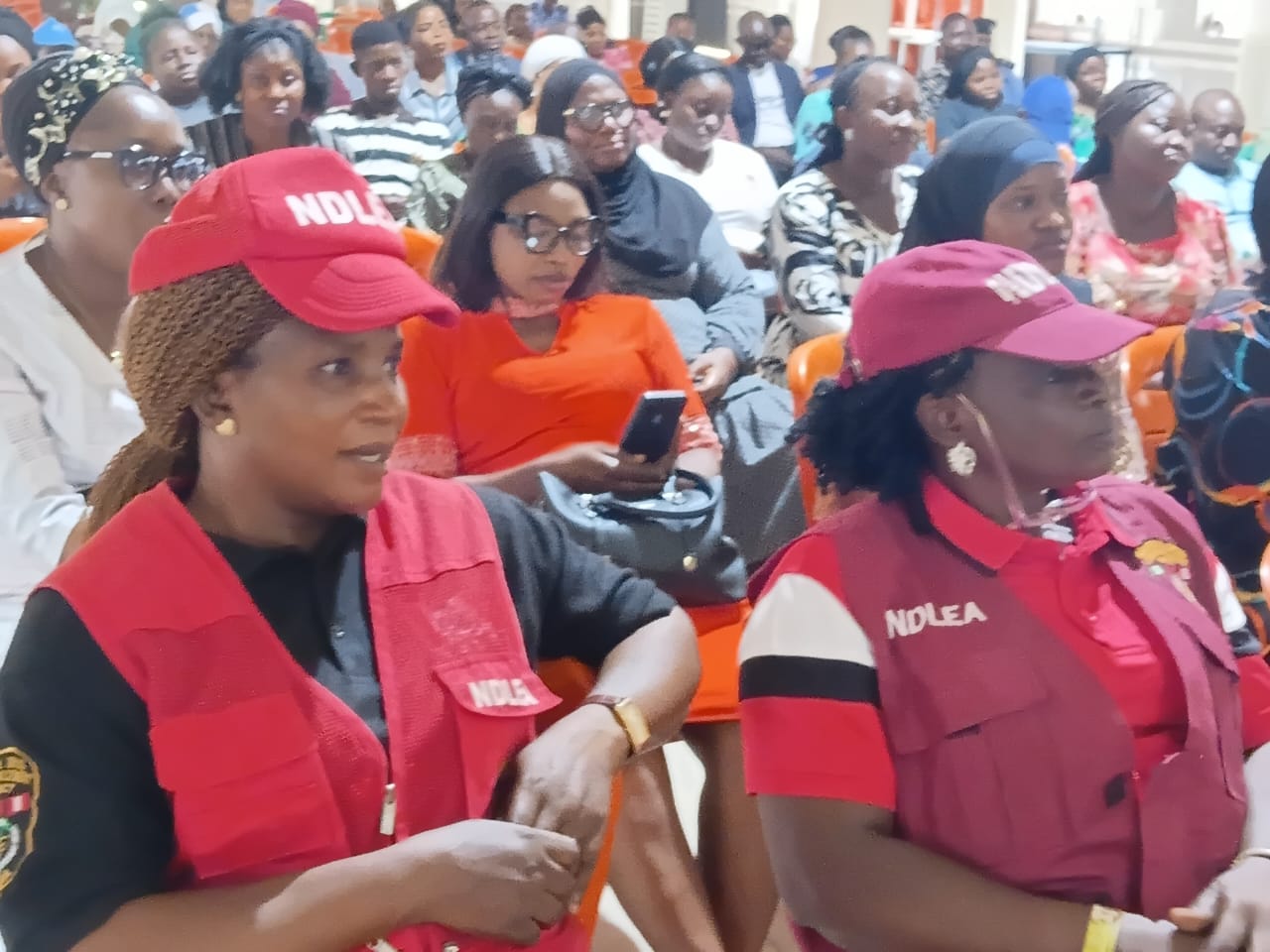
The Homat Megalite Event Centre, Igbogbo Road, Ikorodu, was filled to capacity penultimate Friday as Bottomline Media hosted the 2nd edition of the Ikorodu School Summit & Awards
With the theme, “Combating the Menace of Poor Orientation and Moral Decadence in Society,” the summit brought together students, teachers, school owners, parents, faith leaders, and security chiefs for a day of truth-telling, awards, and renewed commitment to rebuilding values in the society.
Supported by Education District II and LASUBEB, the summit has quickly become one of Ikorodu’s most important platforms for education, character, and community security.
The event recorded a strong presence from Nigeria’s security institutions. The Lagos State Commissioner of Police, CP Fatai Taiwo, was represented by the Area N Area Commander, Ijede, with the DPO, Igbogbo Police Station, CSP Akinola Clement who deployed full police security for summit also in attendance.
Speaking on behalf of the CP, the Area Commander commended Bottomline Media for the initiative and said there is an urgent need to “start early in educating the younger ones on moral uprightness.”
“An intelligent student without purpose and character will become an intelligent criminal,” he warned. He challenged society to pay more attention to values than to criminal success. “We celebrate criminal success at the expense of values. That must change if we want a safer Nigeria.”
The National Drug Law Enforcement Agency, NDLEA, Ikorodu Area Command, led by DCN Jonax David, delivered a hard-hitting lecture on the dangers of illegal and abusive drugs. The agency linked drug abuse directly to moral decadence and rising crime rates across the country.
NDLEA called on parents, schools, religious leaders, and teachers to do more in prevention and early intervention. The session left students asking questions and teachers requesting follow-up sensitization in schools.
Guest Speaker, Pastor Lanre Temenu, Pastor, Chapel of Transfiguration, COT Solution Centre, LASUTECH, anchored the moral conversation. His message on discipline, purpose, and right orientation resonated with audience who filled the hall from various discipline.
Dr. Henry Obidi anchored the programme with professionalism and energy, ensuring the day ran seamlessly from opening to the final award.
Proprietor of Homat Schools, Alhaji Olawale Amusa, hosted the summit at the Homat Megalite Event Centre, providing the venue that made the large turnout possible.
The awards segment was the emotional high point. Seven Prominent individuals and institutions were honoured and received a full 60-second standing ovation from the audience.
60-Second Standing Ovation Honorees
1. CP Fatai Tijani: Commissioner of Police, Lagos State Command
2. Lagos State Ministry of Education
3. Lagos State Ministry of Information & Strategy
4. Femi Falana, SAN , Legal luminary
5. Hon. Jimi Benson Member, House of Representatives, Ikorodu Federal Constituency
6. Senator Mukhail Adetokunbo Abiru, Senator, Lagos East Senatorial District
7. Ikorodu Division Peace & Security Initiative, Ikorodu
Champion of Moral Excellence & Societal Values Award
1. Lawrence Obilana: Proprietor, Meaning Resources School
2. Owenaze Blessing Ella: Managing Director, Unique Prella Schools
3. Pastor Lanre Temenu: Pastor, Chapel of Transfiguration, COT Solution Centre, LASUTECH
4. Princess Mulikat Fehintola Sanni, CEO, Mulifelong Motors
Excellence Recognition Award
Hon. Deen Sanwola, Mrs. Eyitayo Mojisola Olawunmi, Alhaji Taiwo Abiodun Odumbo, Dr. Henry Obidi, Alhaji Olawale Amusa.
Dr. Hakeem Babatunde Shittu: Executive Chairman, LASUBEB, Mr. Adesegun Ogundeji – Director of Public Affairs, Ministry of Information & Strategy, Dr. Bishop Joseph Edoro, Mr. Omotayo Layemo Sanni – Tutor-General/Permanent Secretary, Education District II, Hon. Mobolaji Abubakre Ogunlende, DCN Jonax David – Area Commander, NDLEA Ikorodu, and Engr. Mukadas Opeodu.
Education & School Excellence Awards
1. Miss Oyebode Sekinat Kofoworola, Civil Service Senior Model College, Igbogbo – _Outstanding Teacher of the Year_
2. Government Senior Model College, Owutu – _Outstanding Secondary School in Output_
3. Miss Alabi Taiwo Patience, Ikorodu Junior Grammar School – _Best Innovative School_
4. Lagos State Girls Junior Model College, Agunfoye – _Outstanding School with Best Learning Environment_
5. Mrs. Bolanle Moronkola Esho, Lagos State Civil Service Junior Model College, Igbogbo – _Best Education Administrator_
From the packed hall to the interactive Q&A, the summit achieved its goal: to confront poor orientation head-on and equip the next generation with character to match their intelligence.
Arthur Igbolaju Richard, Convener, Ikorodu School Summit & Awards 2.0 and CEO, Bottomline Media, said the goal is to make the summit an annual movement. “When students hear from the Police, NDLEA, Lawyers, teachers, and faith leaders in one room, the message is clear: society is watching, and society cares. We will keep building this table.”
With Education District II, LASUBEB, NDLEA, and the Nigeria Police on board, Ikorodu School Summit & Awards 2.0 ends as more than an event. It ends as a call to action.
#IkoroduSummit2.0 #ValuesFirst #BottomlineMedia


