
News
Why Nigerians Find Fault with Corruption Fight Amid Buhari’s World Acclaimed Efforts


By Joel Popoola
Here’s irony for you: Nigerian politics has a better reputation with international experts than it does with Nigerians.
We all know that when it comes to reputation, the Nigerian government can be its own worst enemy.
Whether it’s accidentally appointing dead men to government commissions, or copying entire laws off the internet like a naughty schoolboy, our political class has kept us laughing for longer than Papa Ajasco!
That’s why many Nigerians will be surprised to hear of research from the University of Edinburgh Global Integrity’s Anti-Corruption Evidence (ACE) programme, which shows how much better Nigeria is getting at tackling corruption.
The study reports that the prosecution of high-level corruption cases in Nigeria has noticeably improved in recent years with “key legislative reforms, as well as innovations and pragmatic adaptations undertaken by prosecutors and investigators (underpinning) much of this progress”.
The international academic observers even describe the Economic and Financial Crimes Commission (EFCC) as “a robust and effective agency”.
The report concludes:
“By looking at evidence of what is actually happening, rather than relying on apocryphal accounts or worn-out stereotypes; policymakers, practitioners, civil society and international partners can work together more effectively to support effective anti-corruption law enforcement practice in Nigeria.”
The President Muhammadu Buhari-led administration obviously understand how important these changes are to the government’s national and international reputation and performance. It is therefore, believed that the government will prioritised these changes in the coming days.
Sadly, Nigerians themselves are not as impressed with the progress being made.
The Pew Research centre reports that more than seven-in-ten Nigerians (72%) believe the statement “most politicians are corrupt” describes our country well, and six-in-ten say it describes Nigeria “very well.”
Just 39% of Nigerians are satisfied with the way democracy is working in our country – with 60% not satisfied – and 57% stating their belief that no matter who wins an election, things do not change very much for Nigerians.
And as Nigerians, we have to face facts; there’s a reason people feel this way. The international Corruption Perception Index (CPI) still ranks us 146 out of 180 countries, making us the 34th most corrupt country on Earth. One online poll even suggested that 80% of Nigerians think that placing is deserved.
As the Acting Chairman, EFCC, Mr. Ibrahim Magu, stated recently that: “Corruption is a huge burden to our nation. It has spread to insecurity, poverty, unemployment, falling standard of education, weak access to affordable health care, falling infrastructure and so many others.”
What is to be done?
Well, the ACE study recommends that Nigeria’s main anti-corruption agencies; the EFCC, ICPC, and CCB should “increase transparency as well as intensify collaboration and information sharing with other government agencies and non-governmental partners”.
I believe that this recommendation should be followed throughout Nigerian government. And that’s where technology comes in.
Nigerians need to see the progress that is being made. And in the twenty-first century, people increasingly find information they get from their peers to be the most credible. But to many Nigerians, the political class feels far away and irrelevant. It doesn’t have to be that way. The power to change is in our hands. Literally!
26 million Nigerians voted in the last presidential election. 24 million have social media accounts.
39% of Nigerians voted in the last presidential election. 46% have a Facebook account.
Online and on handheld devices, are increasingly where connections are made in modern Nigeria.
My Digital Democracy project was established to make electors and elected true peers, connecting people with their elected officials via their phones using our free Rate Your Leader app. The app also allows leaders to explain direct to the people they serve– without any sort of spin or fake news distortion – what decisions they have made, why they have made them, and how it affects local people.
This in turn leads to greater levels of trust in a political class that the voters can see are working for them, and accountable to them.
Another survey reported that almost half of Nigerians believe that corruption cannot be defeated.
It can, but not before our political class takes important steps to improve its image through greater accountability and transparency.
But thanks to smartphone technology, that can be done from the comfort of their homes, with the touch of a button.
Joel Popoola is a Nigerian tech entrepreneur, digital democracy campaigner and creator of the Rate Your Leader app.


Nigeria’s former Minister of Petroleum Resources, Mrs. Diezani Alison-Madueke, has reacted to her acquittal by a London court after bribery charges brought against her were dismissed.
The Southwark Crown Court in London, United Kingdom, on Wednesday acquitted the former minister of all charges, including five counts of accepting bribes and one count of conspiracy to commit bribery.
Reacting to the judgment, Alison-Madueke expressed relief and said she and her family had endured years of emotional distress over the case.
Speaking to News Central, she said she has remained in the United Kingdom since the legal proceedings began 11 years ago.
She said: “I’m just thankful to God, it’s been arduous, almost 11 years. It’s been traumatic not just for me but for my family, friends, my 93-year-old mother in Port Harcourt and for my son.
“It has been a hard journey, but I tell you this, God will always do as He will. God will be God and God is not a man that He should lie; when He promises you something, He will see it through.
“For almost 11 years I have been here. I did my job to the best of my ability.”

The lawmaker representing the Federal Capital Territory (FCT), at the Senate, Ireti Kingibe, says she did not see any report that led to the suspension of Kogi Central Senator, Natasha Akpoti-Uduaghan.
Kingibe made this disclosure on Wednesday when she featured in an interview on Arise Television’s ‘Prime Time’.
She said she was at a retreat with Edo North Senator, Adams Oshiomhole, when she heard about the report.
“I never saw the report that led to Natasha’s suspension. I was at a retreat. I had earlier stated that I was there with three or four other senators who are members of the committee.
“We attended the Committee on Petitions and Public Complaints, signed the attendance register, and I later left for the tax reform retreat, which I considered more important at the time.
“It affects my constituents much more than disciplining a senator, and I figured that the other people who were not part of that committee would take care of it.
“I even complained to other Senators, specifically to Senator Enyinnaya Abaribe. I complained to him very bitterly that I had not seen that report. I didn’t see it then. I have not seen it till now,” she said.
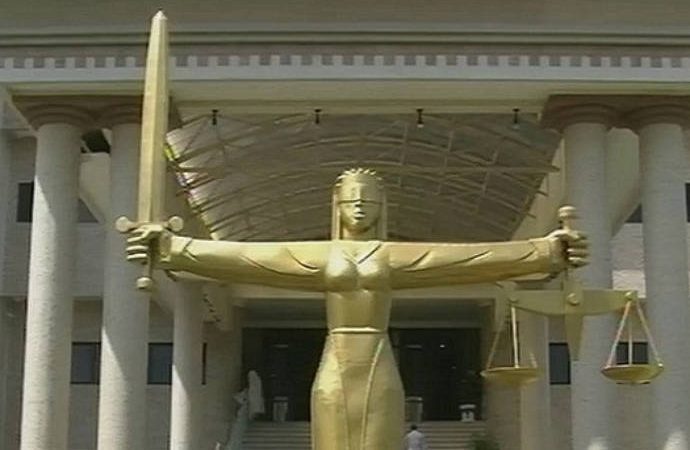
The Independent National Electoral Commission (INEC) has asked the Court of Appeal in Abuja to stay the execution of the judgment that ordered the deregistration of the African Democratic Congress (ADC) and four other political parties.
The Commission also threw its weight behind a notice of appeal lodged by the political parties.
Addressing a three-member panel of the appellate court on Tuesday, the electoral body said it was shocked by the decision of Justice Peter Lifu of the Federal High Court in Abuja to deliver the judgment despite an order that stopped him from doing so.
INEC, through its team of lawyers led by Mr. Haliru Mohammed, decried that it was not notified that the judgment would be delivered, saying it only heard about the court’s decision through media reports.
“My Lords, we are aware of an order that this court made on May 22, which stopped the delivery of the judgment of the lower court, which was initially reserved for delivery on June 5.
“We were not aware of any notice from the court regarding the delivery of the judgment. We only saw it as breaking news in the media.
“We therefore do not oppose the application of the appellant to stay the execution of the judgment.”
Likewise, counsel to the ADC, Mr. Shuaibu Aruwa, SAN, told the appellate court that Justice Lifu notified the party of the delivery of the judgment via WhatsApp.
Insisting that the decision of the high court was an invitation to anarchy, counsel to the ADC urged the appellate court to invoke its powers and sanction Justice Lifu for disrespecting the judicial hierarchy.
“Sincerely, my Lords, a lot has happened to the judiciary and this profession. What the trial judge did was dare this Court of Appeal by insisting that no one could arrest his judgment, even after his attention was drawn to the stay order from this court.
“The action of the trial judge calls for swift and extraordinary measures from this court. We have come to the stage where this court should press the reset button.
“We are calling on this court to exercise disciplinary jurisdiction under Section 6 of the 1999 Constitution, as amended.
“We urge this court to take disciplinary steps by immediately suspending that judgment. This court has the power to protect its own integrity. We pray this court suspends the judgment immediately without further delay,” ADC’s lawyer submitted.
The other parties also drew the attention of the appellate court panel to the fact that on June 20, INEC would conduct by-elections across six states of the federation.
They contended that if the judgment were not stayed, it would create problems across the country, maintaining that the Court of Appeal has inherent powers to act in a supervisory capacity and not allow its orders to be disregarded by lower courts.
The appellate court is still hearing submissions from the other parties in the matter.
It will be recalled that aside from the ADC, the other parties the high court directed INEC to deregister are the Action Peoples Party (APP), Action Alliance (AA), Accord Party (AP), and Zenith Labour Party (ZLP).
According to the court, the five political parties failed to meet the constitutional requirements to warrant their continued existence and participation in future elections.
It barred INEC from further according recognition to the parties, accepting nominations of candidates from the affected parties, or giving effect to their activities for the purpose of participating in the 2027 general elections.
Moreover, Justice Lifu ordered the defendants to stop parading themselves as registered political parties in the country.
He held that there was merit in a suit filed against them by the National Forum of Former Legislators (NFFL).
The group, in the suit marked FHC/ABJ/CS/2637/2026, prayed the court to determine whether INEC has a constitutional obligation to remove political parties that fail to meet the electoral performance thresholds set out in Section 225A of the 1999 Constitution (as amended), as reinforced by the Electoral Act 2022 and INEC’s regulations.
It was the position of the plaintiff that the five political parties listed as defendants had persistently failed to meet the constitutional benchmarks required to retain their registration.
The former legislators stressed that the requirements include winning at least 25 per cent of votes in a state during a presidential election or securing at least one elective seat at the national, state, or local government level.
They told the court that the ADC and the four other parties performed poorly in both the 2023 general elections and by-elections conducted by INEC, thereby failing to win seats across key tiers of government.


