
Headlines
Why We Increased Tinubu’s Salary to N8m Per Month – RMAFC

- /home/rhoncare/pointblank.ng/wp-content/plugins/mvp-social-buttons/mvp-social-buttons.php on line 27
https://pointblank.ng/wp-content/uploads/2022/11/Naira-1000x600.jpg&description=Why We Increased Tinubu’s Salary to N8m Per Month – RMAFC', 'pinterestShare', 'width=750,height=350'); return false;" title="Pin This Post">
- Share
- Tweet /home/rhoncare/pointblank.ng/wp-content/plugins/mvp-social-buttons/mvp-social-buttons.php on line 69
https://pointblank.ng/wp-content/uploads/2022/11/Naira-1000x600.jpg&description=Why We Increased Tinubu’s Salary to N8m Per Month – RMAFC', 'pinterestShare', 'width=750,height=350'); return false;" title="Pin This Post">
The Revenue Mobilisation Allocation and Fiscal Commission (RMAFC) has adjusted the remuneration of President Bola Tinubu, Vice President Kashim Shettima, and other political and judicial officeholders by 114 per cent.
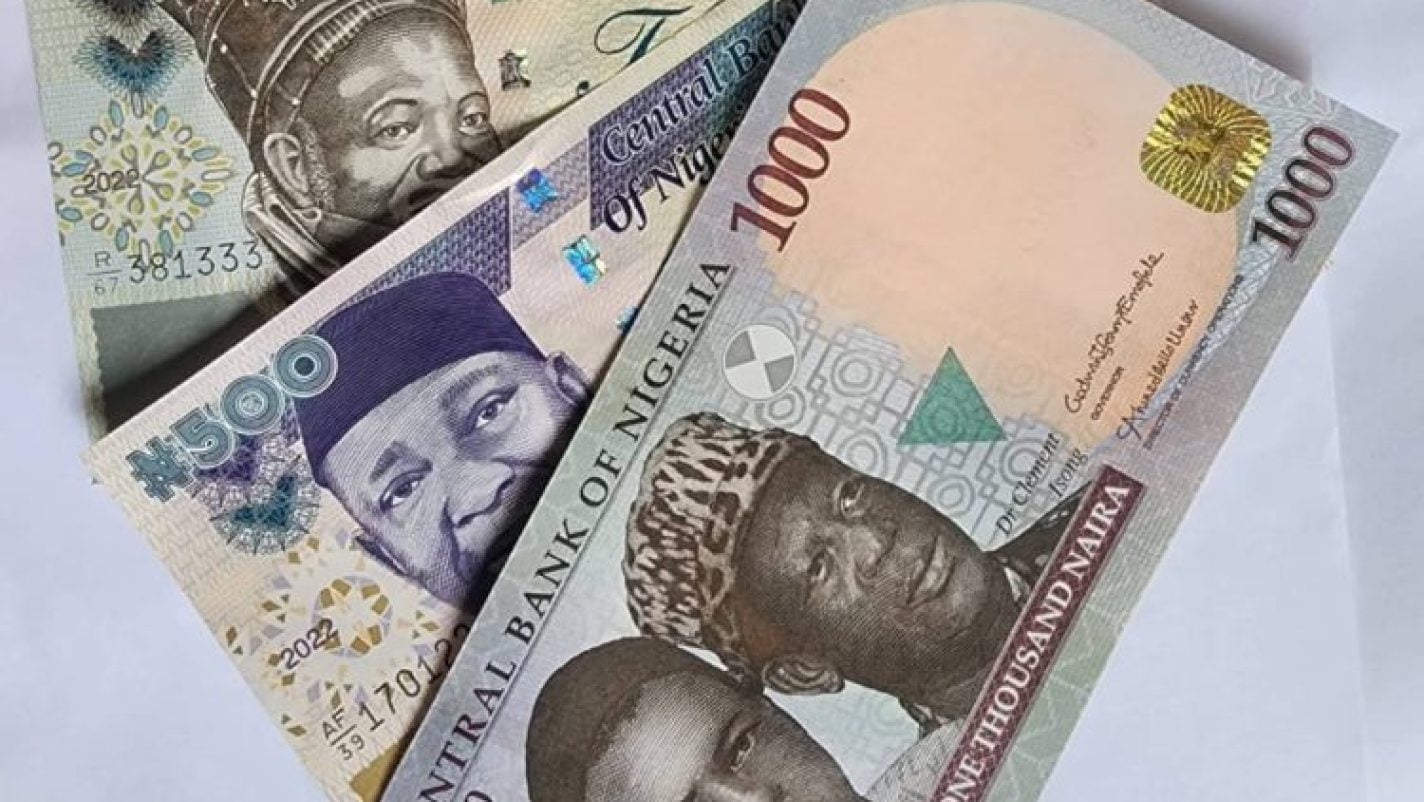
Mr Tinubu will earn N8,013,527 monthly, a 114 per cent increase from former President Muhammadu Buhari’s monthly salary of N3,514,705, according to a report presented by RMAFC chairman, Muhammadu Shehu, on Tuesday in Birnin Kebbi.
Mr Shehu presented the reports of the reviewed remuneration package to Kebbi State Governor Nasir Idris.
The RMAFC chairman, represented by the federal commissioner, Rakiya Tanko-Ayuba, presented the report to the governor during a courtesy visit at the Government House, Birnin Kebbi.
Mr Shehu said the move was in line with paragraph 32(d) of Part 1 of the Third Schedule of the 1999 Constitution, which empowers the commission to review the remuneration of political office holders.
Recalling that the last review of the remuneration was carried out in 2007, Mr Shehu said the commission held a public hearing in all the geopolitical zones to deliberate on the review of remuneration packages on February 1.
The chairman said the commission reviewed the remuneration packages in the reports based on subjective and objective criteria.
“The subjective criteria reflected the various expressions by stakeholders through memoranda received, opinions expressed during the zonal public hearings and responses to questionnaires administered.
“The objectives of the criteria were obtained from analysis of macro-economic variables, particularly the Consumer Price Index (CPI),” he noted.
He added that the commission was also guided by some principles, including equity and fairness; risk and responsibilities; national order of precedence; motivation and tenure of office.
Mr Shehu said concerning allowances and fringe benefits, the commission recommended that the existing allowances be maintained at the current levels since that would translate to higher provisions in actual amounts when applied on the reviewed annual basic salary.
The chairman explained that concerning the judicial office holders, the commission considered introducing three new allowances.
He listed the allowances to include “Professional Development Assistant: This is to allow for the provision of two law clerks to all judicial officers in the country.
“Long Service Allowance: This is to guarantee seniority/hierarchy between officers who have been on the bench for a minimum of five years and those that are appointed newly as well as Restricted or Forced Lifestyle: This is to take care of the nature of the lifestyle of judicial officers while in active service.”
Mr Shehu said the commission recommended January 1, 2023, as the effective date for implementing the reviewed remuneration packages.
He urged the 36 states Houses of Assembly to hasten efforts to amend relevant laws to allow for upward review of remuneration packages for political, judicial and public officers.
The work by the State Houses of Assembly will allow for the commencement of implementation of the reviewed remuneration packages for political, public and judicial officers.
The state governor with his deputy, Abubakar Tafida; speaker of the Kebbi State House of Assembly, Muhammadu Ankwai; acting chief judge of the state, Umar Abubakar; the SSG, Yakubu Tafida; head of service, Safiyanu Bena; and the chief of staff, Attahiru Maccido, keenly listened to the presentation.
The governor pledged that the committee under his chairmanship would justly look into the report and convey the same to the appropriate quarters for necessary action.
NAN


Key leaders of Nigeria’s opposition, including former Vice President Atiku Abubakar and former Governor of Anambra State, Peter Obi, are expected to attend the First Summit of Nigeria’s Opposition Political Parties, convened by the G100, on Monday, August 31, 2026, at the Yar’Adua Centre, Abuja.
The summit, under the theme, “A Framework for Opposition Cooperation and Coordination,” will bring together the leadership of six major opposition parties to begin structured negotiations on the terms, institutions and principles upon which they may cooperate ahead of the 2027 general election.
In a statement signed by G100 Convener, Salihu Moh. Lukman, the group said the meeting is not meant to decide presidential candidacy in one sitting, but to establish a formal architecture for transparent and collective negotiations.
“The first question before party leaders is not who leads the ticket. It is what we are, together, prepared to do for this country,” the statement said.
The summit follows the G100’s publication on 2 August 2026 of the Doctrine of a Necessary Democratic Opposition, and weeks of consultations with the African Democratic Congress (ADC), Allied Peoples Movement (APM), Nigeria Democratic Congress (NDC), Peoples Democratic Party (PDP), Peoples Redemption Party (PRP) and Social Democratic Party (SDP).
Those talks produced a shared briefing document that identified areas of convergence while acknowledging the parties’ distinct histories and interests.
“At the centre of the consultations was a common recognition of the need for a credible, organised and competitive democratic opposition, and a willingness to engage the difficult questions that meaningful cooperation ahead of 2027 will require,” Lukman stated.
Among the proposals before the summit is the creation of five specialised Working Groups.
If approved, the groups will have four weeks to develop the principal documents and agreements needed to give institutional form to opposition cooperation.
“Cooperation does not require any party to disappear into another. The first question before party leaders is not who leads the ticket. It is what we are, together, prepared to do for this country.
“The First Summit is not intended to determine, in a single sitting, questions of presidential candidacy or the final form that opposition cooperation may take. Its immediate purpose is more fundamental, to establish and authorise a formal architecture through which those questions can be negotiated collectively, transparently and in good faith.
“Each participating political party is expected to attend with a delegation of leaders and key stakeholders, drawn from its national leadership and other relevant constituencies within the party. These delegations will participate fully in the deliberations of the Summit, ensuring that the process extends beyond the principal party leaders and draws upon a broader representation of political experience, perspectives and interests.
“Among the proposals before the Summit will be the establishment of structures that will facilitate negotiations and cooperation and five specialised Working Groups. Subject to the decisions of the participating parties, these bodies will be mandated to develop, within four weeks, the principal documents and agreements required to give institutional form to opposition cooperation,” the statement added.
Each party is expected to attend with a delegation drawn from its National Working Committee (NWC) and other key constituencies.
Expected participants at the summit are national chairmen and NWC members of ADC, APM, NDC, PDP, PRP, SDP; presidential candidates and running mates of the participating parties; and G100 signatories and members of the Minority Caucus of the House of Representatives.
The G100 said it is convening the summit as a facilitator and observer, not as a substitute for the constitutional authority of the parties.
“The decisions arising from this process will remain the responsibility of the parties themselves,” the statement added.
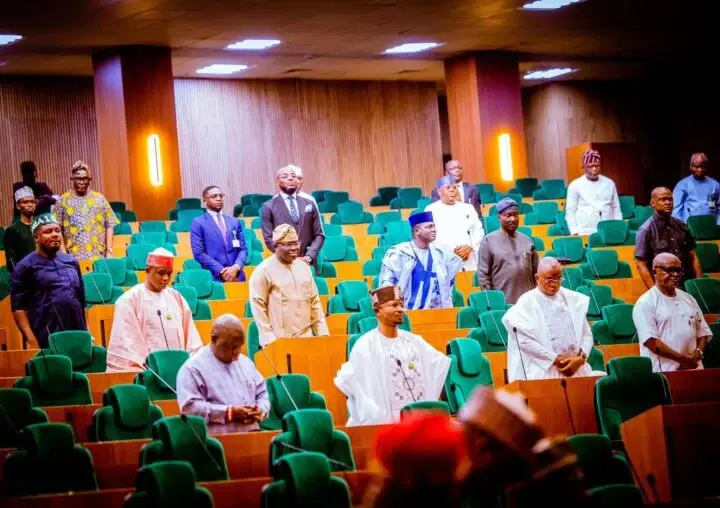
The Minority Caucus of the House of Representatives has called on President Bola Ahmed Tinubu to take immediate and decisive action to end the escalating wave of terrorism and banditry across Northern Nigeria.
In a statement issued on Thursday amid growing attacks on communities, the caucus said the scale of killings, kidnappings and displacement had become intolerable, urging the President to deploy a sustained and coordinated security operation to reclaim territories controlled by terrorists and criminal gangs.
The lawmakers, in the statement signed by Hon. Fredrick Agbedi, leader minority caucus, and Hon. Afam Victor Ogene minority caucus spokesperson, cited recent attacks in several northern states, including Plateau, Niger, Sokoto, Kaduna and Katsina, where dozens of residents have reportedly been killed or abducted.
In Mangu Local Government Area of Plateau State, the caucus said more than 20 people were killed in recent attacks, including at least 23 victims in one incident. In Niger State, armed men reportedly attacked communities in Borgu Local Government Area and abducted more than 60 worshippers during Friday prayers.
The caucus also cited the killing of at least 40 people in Ungushi community, Kebbe Local Government Area of Sokoto State, including the Chief Imam, Imam Aliyu, as well as the death of at least 30 people in an attack on Naridon village in Kaura Local Government Area of Kaduna State.
According to the lawmakers, continued bandit attacks and reprisals in Katsina State have further deepened fear among residents.
The situation in Borno State was also highlighted, with the caucus expressing concern over schoolchildren who have remained missing months after their abduction.
“This is no longer a situation that can be addressed principally through statements of condemnation after every attack,” the caucus said, insisting that Nigeria needs an “intelligence-led” and sustained security response.
The lawmakers urged Tinubu to replicate on a larger scale the strategy that led to the rescue of schoolchildren and teachers abducted in Oriire Local Government Area of Oyo State.
They called for affected areas to be placed under intensive security operations, with security forces directed to dominate the territory and conduct sustained operations against terrorist and bandit hideouts, forests and criminal enclaves.
The caucus stressed that such measures should target the operational space of criminal groups rather than innocent civilians.
“We are calling on the President to lock down the affected theatres of operation, dominate the territory and sweep the forests, hideouts and criminal enclaves where terrorists and bandits operate. Such an operation must be intelligence-led, professionally executed and sustained until the criminal elements are neutralised and the abducted citizens rescued.
“We are not asking the President to lock down innocent Nigerians. We are asking the Commander-in-Chief to lock down the operational space of terrorists and bandits, deny them freedom of movement, cut off their supply lines and communications and deploy overwhelming force against those who have turned parts of the North into killing fields and centres of mass abduction,” the lawmakers said.
They also urged the President to visit Zamfara State and travel to Illela to engage directly with communities affected by insecurity, arguing that Nigerians need to see their President physically present in areas suffering from attacks and abductions.
The Minority Caucus further called for extraordinary funding for the security campaign, proposing that the Federal Government consider drawing $5 billion from the nation’s external reserves if necessary.
“If funding is an issue, the government should draw $5 billion from the nation’s external reserves for an extraordinary national security intervention. The primary purpose of government is the welfare and security of the people and no expenditure can be more fundamental than protecting the lives and livelihoods of Nigerian citizens,” the caucus said.
The lawmakers welcomed the recent increase in the salaries of members of the Armed Forces, describing it as an important step towards improving the welfare and morale of soldiers. However, they urged the President to immediately forward the necessary amendment to the 2026 Appropriation Act and a Supplementary Appropriation Bill to the National Assembly.
They said the National Assembly should be prepared to reconvene, if necessary, to ensure that the salary increase is implemented without bureaucratic delays.
The statement also addressed the detention of former Kaduna State Governor, Nasir El-Rufai, which it said “has increasingly assumed the character of a political persecution.”
The caucus demanded his immediate release, arguing “our concern is not merely about one individual. It is about the credibility and consistency of the Federal Government’s anti-corruption campaign. The composition of the APC Presidential Campaign Council and the prominent roles occupied within that political structure by individuals who have themselves been the subject of serious corruption allegations and public controversy, has made a mockery of the government’s claim to be pursuing a principled and even-handed war against corruption.
“It is difficult for the government to demand public confidence in its anti-corruption campaign when the political architecture through which the President seeks the mandate of Nigerians included individuals whose records and allegations have raised serious questions about the integrity of that campaign.”
The Minority Caucus said Nigerians needed action rather than condolences and called on President Tinubu to use his constitutional authority and the country’s security resources to protect citizens.
“The bloodshed in Northern Nigeria must stop. The abducted must be rescued. The terrorists and bandits must be defeated,” the caucus said.
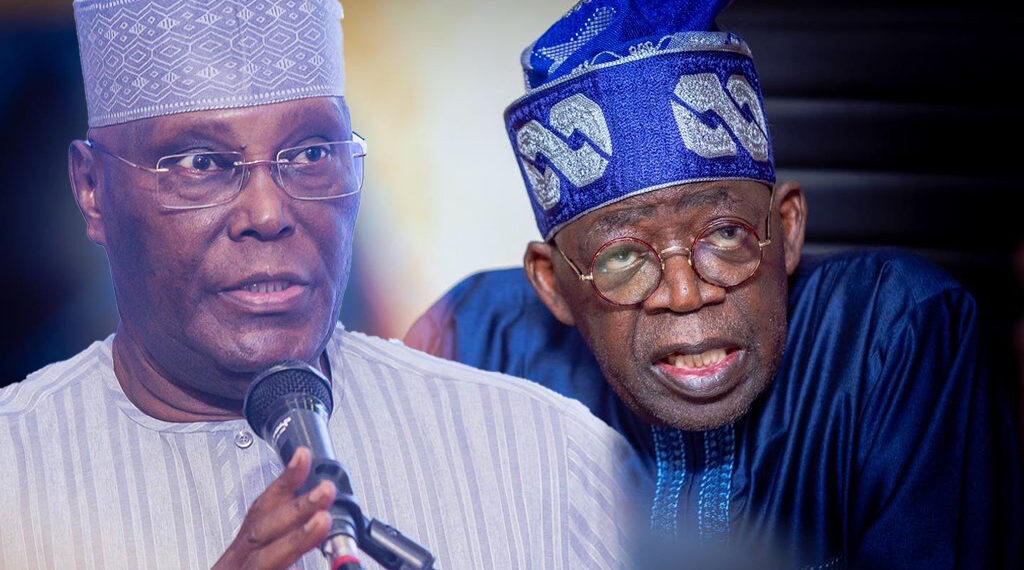
Former Vice President Atiku Abubakar has dared the President Bola Tinubu administration to investigate him (Atiku) over allegations of wrongdoing in the $16 billion power sector fund, saying recycled accusations should not be used to avoid accountability for subsidy savings.
Reacting on Wednesday through his Senior Special Assistant on Public Communication, Phrank Shaibu, Atiku described the sudden revival of old allegations on power, privatisation and public assets as a ploy to divert attention from pressing questions about the management of public resources.
“The National Assembly investigated the power projects. I was never invited to answer any allegation of wrongdoing,” Atiku said.
“Yes, I chaired the National Council on Privatisation as Vice President. But on the power project, I disagreed with its concept and did not preside over its implementation. The responsible minister did. The same applies to the Aluminium Smelter matter.”
The presidential candidate of the African Democratic Congress (ADC) said he had consistently called for investigation into any claim against him since leaving office in 2007.
“I have repeatedly asked to be investigated. I left office in 2007 and have spent much of the period since then opposing governments in power. If there is evidence that I stole public money, why has no government produced it before a court?
“It is still not too late. Investigate me. Invite me. Produce the evidence. Prosecute me if you have a case. But propaganda cannot substitute for evidence,” he said.
Atiku argued that the attacks intensified because he has been demanding transparency on the funds saved from fuel subsidy removal.
“They removed subsidy from the poor and promised that the sacrifice would free resources for development. Nigerians accepted extraordinary pain on that promise.
“Today, petrol is more expensive, transportation is more expensive, food is more expensive and the purchasing power of the Nigerian worker has been devastated.
“Meanwhile, government revenues have increased, while fiscal incentives, waivers, tax credits and concessions continue to be available to powerful economic interests.
“So our question remains brutally simple: Where is the people’s money?” he asked.
According to him, government cannot withdraw relief from ordinary Nigerians while granting concessions to the wealthy and then claim that intervention for the poor is “economically irresponsible.”
“You cannot take relief away from the poor, celebrate the resulting revenue and then tell the same impoverished citizens that government intervention on their behalf is economically irresponsible while interventions benefiting powerful interests are called incentives. That hypocrisy is precisely what we are challenging,” Atiku stated.
He said no amount of “sponsored social-media mudslinging” would silence him from demanding accountability.
“The people who removed subsidy from the poor cannot frighten us into silence by resurrecting allegations that governments with all the investigative machinery of the Nigerian state have had nearly two decades to establish.
“If you have evidence against Atiku, bring it. If you have a case, prosecute it.
“But if you have neither, stop manufacturing distractions and answer Nigerians: You removed the subsidy. You collected the savings. Where is the money?”


