
Headlines
Widespread Anger, Condemnations As Tinubu Increases Petrol Price to N617


- /home/rhoncare/pointblank.ng/wp-content/plugins/mvp-social-buttons/mvp-social-buttons.php on line 27
https://pointblank.ng/wp-content/uploads/2023/06/rRThuonq-Tinubu-2.jpg&description=Widespread Anger, Condemnations As Tinubu Increases Petrol Price to N617', 'pinterestShare', 'width=750,height=350'); return false;" title="Pin This Post">
- Share
- Tweet /home/rhoncare/pointblank.ng/wp-content/plugins/mvp-social-buttons/mvp-social-buttons.php on line 69
https://pointblank.ng/wp-content/uploads/2023/06/rRThuonq-Tinubu-2.jpg&description=Widespread Anger, Condemnations As Tinubu Increases Petrol Price to N617', 'pinterestShare', 'width=750,height=350'); return false;" title="Pin This Post">
There was widespread anger on Tuesday, following the hike in the pump price of Premium Motor Spirit, popularly called petrol, by the President Bola Tinubu-led administration. The Nigerian National Petroleum Company Limited (NNPCL) and other oil marketers had announced the price hike across the country.
In Abuja and Ondo State, for instance, the cost of petrol jumped from about N537/litre to between N617 and N630/litre, forcing the cost of transportation to skyrocket within hours, and leaving thousands of passengers stranded in many cities.
The Nigeria Labour Congress, Trade Union Congress and many other citizens lambasted the President Bola Tinubu-led Federal Government for being so tough on citizens by allowing the continued hike in the price of petrol.
Although the NNPCL and the Nigerian Midstream and Downstream Petroleum Regulatory Authority, both Federal Government entities, explained that market forces caused the hike in petrol price, since the commodity had been fully deregulated, Nigerians expressed frustrations over the continued sharp increase in the cost of the product.
Independent oil marketers confirmed the increase in the cost of the commodity, as they stated that any shift in price by NNPCL stations was an indication of a rise in the pump price of PMS.
“This is because NNPCL is still the major importer of petrol into Nigeria currently, though other marketers are gradually importing the commodity. The price this (Tuesday) morning at some NNPCL stations is N617/litre,” the Secretary, Independent Petroleum Marketers Association of Nigeria, Abuja-Suleja, Mohammed Shuaibu, told The Punch.
Tinubu had during his inaugural address on May 29, announced that subsidy on petrol had ended, a development that led to the jump in the price of the commodity from N198/litre to over N500/litre on May 30, 2023.
Since the withdrawal of subsidy on petrol and the floating of the naira against the dollar, marketers had continued to explain that the cost of PMS could rise to as high as N700/litre.
Similarly, the rise in the cost of crude oil in the international market has also triggered further hike in petrol price, as crude is the product from which PMS and other refined petroleum products are produced.
In Abuja, on Tuesday morning, motorists besieged filling stations that were still dispensing at N540/litre, but as the news of the hike in price by NNPCL stations filtered in, many independent outlets shut their stations.
Others immediately commenced the adjustment of their pumps to reflect the new price.
The Nigeria Labour Congress on threatened to take “matters into its own hands” following the decision by the NNPCL to hike petrol price and the Federal Government’s plan to distribute N8,000 monthly to 12 million poor households in the country.
The NLC in a statement issued by its National President, Joe Ajaero, accused the Tinubu-led government of taking from the poor to pay the rich and unleashing suffering, hardship and sorrow upon Nigerians.
It said it had restrained itself from making further comments publicly on the vexatious issues around the recent but unfortunate unilateral hike in the price of petrol, which was in the guise of “the so-called subsidy withdrawal.”
The statement read in part, “However, the government of Nigeria seems to have been misled into believing that resorting to impunity and imperiousness in governance in a democracy is a beneficial option as it pursues its stated and unstated objectives.
“It is this belief that we are sure has continued shaping the actions of this government since its inauguration on May 29, 2023, to continue inflicting mindless and heartless pains on the populace one after the other without the decency of embracing the tenets of democracy which requires wide and deep stakeholder consultations on weighty matters of state.”
The NLC stated that Nigerians would remember that the Federal Government had called for dialogue in the aftermath of its disastrous forlorn trajectory in the astronomical increase in petroleum product price “and our subsequent call for a nationwide industrial action.”
It said, “We were also witnesses to the actions of the Federal Government in procuring an unholy injunction from the courts which were served us in Gestapo style by trucks laden with fully armed soldiers and policemen.
“In all of these provocations, we remained committed to the principles of the rule of law, good conscience and democracy so that we can continue to be the moral compass for leaders in the public space. This explained our decision to suspend action on the proposed strike.”
The labour union, however, stated that rather than reciprocate the goodwill of Nigerian workers, the Federal Government insisted on threading the path of dictatorship and seeking to impoverish the people further by taking steps that could only be described as robbing the people of Nigeria to pay and feed the rich.
They bemoaned the price hike, lamenting that the situation would further impoverish the citizens
“NNPC fuel price is now N617 /litre. I hope you are enjoying the renewed shege?” a popular tweep, Nefferetti with Twitter handle @firstladyship wrote.
@PoojaMedia wrote, “President Tinubu needs to address the nation NOW. Hunger is walking on the streets of Nigeria.”
Another user, @trending_medic, said, “Fuel at N617/litre and dollar hitting N835/$. Thank God it’s only Obidients that will suffer it.”
@OfficialUdiBoy wrote, “Fuel has gone up to N617, renewed hope has turned to renewed shege. E go touch everybody until we get the mandate back.”
On his part, @YemieFash said, “The same petrol that was N190/litre two months ago is N617/litre. Is this the renewed hope?.”
“Not up to a month and Tinubu times are this hard!! No way in hell I am buying fuel for N617. Once my phone goes off now na till NEPA bring light next,” @KhaleedSZN wrote.
@SodiqTade wrote, “Dear Tinubu Boys, A litre of fuel is now selling for N617, almost two months after the removal of subsidy by Tinubu. Do you still think the N8,000 per household will cushion the possible effects of this new price? It seems Nigerians have entered one chance with this mandate.”
@Shayor19 said, “N617/litre and we are going to just adapt and move on like nothing happened? We are gradually missing Buhari right now.”
On his part, @sirvicbrown, wrote, “When Tinubu said he was going to continue from where Buhari stopped, many of us didn’t really understand. Am sure it is clear now?”
Also contributing, @The_D1amond said, “The economy is not funny anymore… This is proof that it’s not getting better anytime soon. The government is against us, the economy is also against us. If you know what’s best for you, start investing in online skills that would help you earn in dollars.”
The Punch


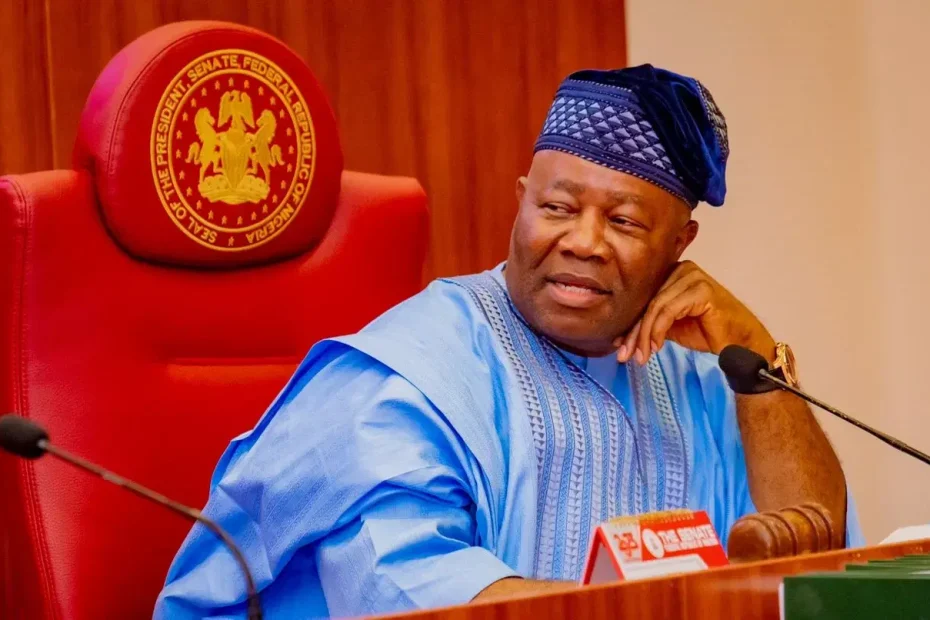
President of the Senate, Godswill Akpabio has dismissed calls for President Bola Tinubu to hand over power to Vice President Kashim Shettima, saying there is no leadership vacuum despite the President’s continued working vacation abroad.
Speaking on Tuesday, in Akwa Ibom State, while commissioning road projects executed by Governor Umo Eno, Akpabio addressed public concern over Tinubu’s three-week holiday, which was recently extended by one week. He insisted the President remains fully in office and continues to carry out his constitutional duties.
“I am the Senate President, and I am not the acting President of Nigeria, because President Tinubu is still in power. He is on a working leave, and there is no absence in Aso Rock. The world is a global village, and one can give instructions over the internet. So, why are people complaining?” he retorted.
Akpabio emphasized that only his office can declare a presidential vacancy and that no such condition currently exists. “Right now, there is no vacancy. Asiwaju Tinubu is still in power, and he is still running the affairs of Nigeria,” he added.
To underscore the President’s continued engagement, Akpabio disclosed of recent diplomatic contacts, including communications with French President Emmanuel Macron.
His remarks may have finally put to bed, unnecessary concerns raised by critics who claim the extended absence has hindered governance. Invoking modern communication, Akpabio argued a “remote” presidency can still function effectively.
The Presidency has not provided a formal return date for President Tinubu. Akpabio’s comments, however, signal a united stance within the ruling All Progressives Congress (APC) aimed at quelling speculation about a leadership crisis.
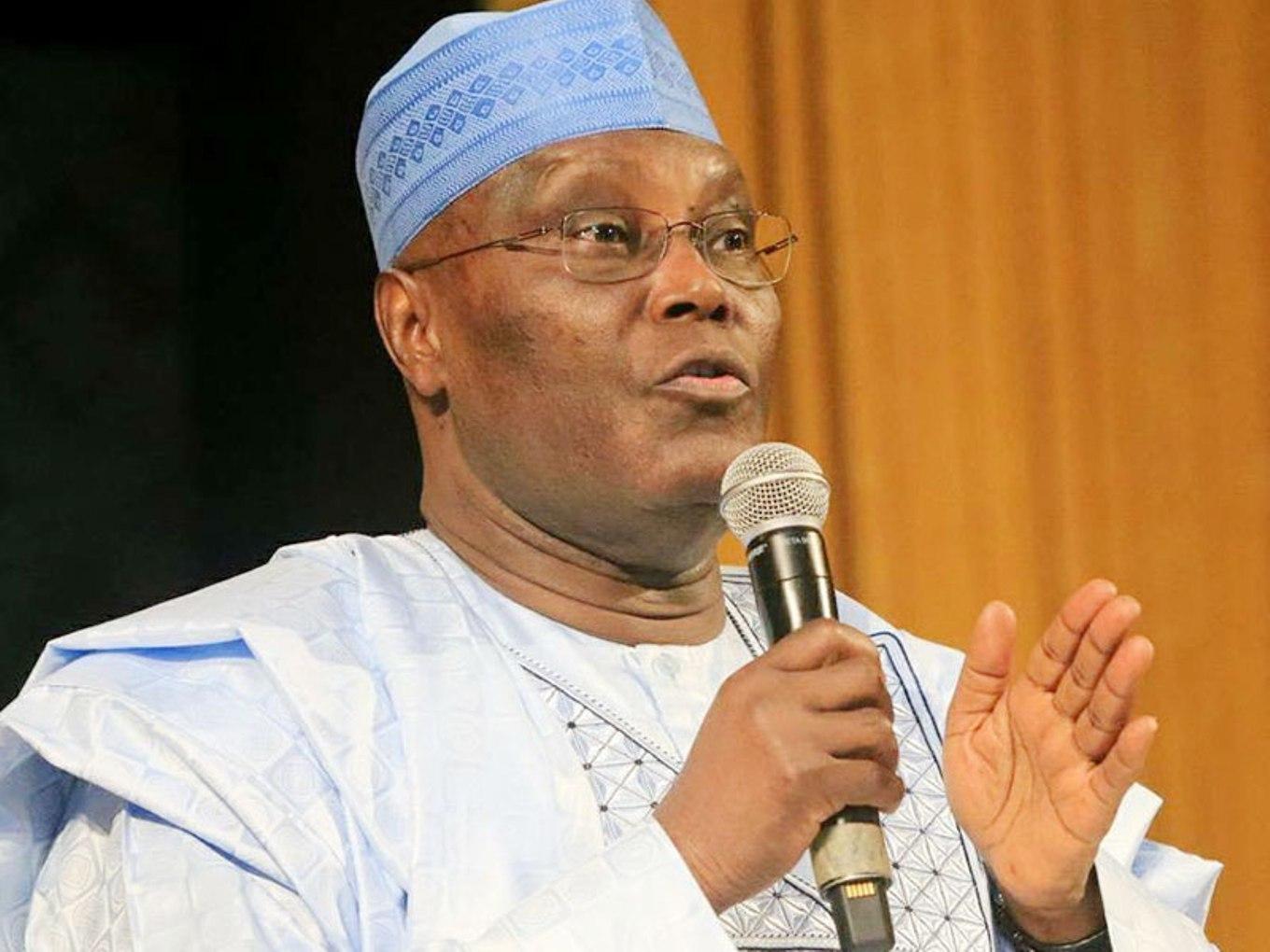
Former Vice President Atiku Abubakar has asked the Presidency and the National Assembly to clarify who is constitutionally exercising the powers of President Bola Ahmed Tinubu following the expiration of the 21-day period announced for the President’s annual vacation.
Recall that Tinubu left Nigeria on August 30 for a three-week annual vacation in Europe. The President’s absence coincided with Vice President Kashim Shettima’s official engagements outside the country, including his current representation of Nigeria at the 81st United Nations General Assembly in New York.
In a personally signed statement on Monday, Atiku argued that the expiration of the 21-day period had raised questions under Section 145 of the 1999 Constitution regarding the transfer of presidential powers.
Section 145(1) provides for the President to transmit a written declaration to the President of the Senate and the Speaker of the House of Representatives when proceeding on vacation extending beyond a specified period or when otherwise unable to perform the functions of his office.
Atiku said Nigerians had not been shown any such declaration transferring presidential functions to Shettima.
“President Tinubu left Nigeria on 30 August. The Presidency publicly announced a three-week vacation. Yet, to date, Nigerians have not been shown any constitutional letter transmitting presidential authority to Vice President Kashim Shettima.
“The 21 days have now elapsed. If such a letter exists, the Presidency should publish it immediately,” Atiku said.
The 2027 African Democratic Congress (ADC) presidential candidate, said the constitutional provision also addresses a situation where the President fails to transmit the required declaration.
He referred to Section 145(2), which provides that where the President is unable or fails to transmit the declaration within 21 days, the National Assembly can, by a simple majority in each chamber, mandate the Vice President to perform the functions of President as Acting President.
Atiku therefore asked the National Assembly to explain whether the constitutional procedure had been activated.
“If it does not, then the constitutional mechanism contemplated by Section 145(2) has been triggered, and the National Assembly owes Nigerians an explanation as to why it has not acted.
“This is not a matter of political convenience. It is a matter of constitutional order,” he said.
Atiku further drew attention to Shettima’s presence in New York, where he is leading Nigeria’s delegation to the 81st United Nations General Assembly based on the President’s directive.
Atiku said the situation raised a question about who was exercising presidential authority in Nigeria and under what constitutional instrument.
“So again: who is exercising presidential authority in Nigeria today, and under what constitutional instrument?” he asked.
The former Vice President also criticised what he described as reliance on informal indications of presidential activity while the President remains abroad.
“Nigeria cannot be governed by assumptions. It cannot be governed by presidential social-media posts from Europe.
“It cannot be governed by photographs from private dinners at the Élysée Palace.
“It cannot be governed on autopilot,” he said.
Atiku also said President Tinubu should be in the country at a time like this, linking his concerns to recent domestic developments in the country, including the deaths of 37 Nigerians in the custody of the Nigeria Security and Civil Defence Corps in Minna.
He said the incident had led to investigations, suspensions and calls for independent scrutiny.
He also raised concerns about petrol prices, claiming that the product was selling for as much as ₦1,500 per litre in some parts of the country.
“These are not ordinary times. Yet the President is abroad. The Vice President is abroad.
“The Senate President is abroad. And Nigerians have not been told, in the clear constitutional language required of a serious democracy, who is exercising the powers of the President,” Atiku said.
Atiku acknowledged the diplomatic significance of Tinubu’s private dinner with French President Emmanuel Macron in Paris but argued that Nigeria’s governance responsibilities could not be suspended while the President was abroad.
“President Tinubu’s private dinner with President Emmanuel Macron in Paris may serve diplomatic purposes. But Nigeria itself cannot be placed on vacation.
“The Constitution does not recognise a ‘working vacation’ as an alternative system of presidential succession.
“It provides a procedure. That procedure must be obeyed,” he argued.
Atiku consequently called on the Presidency to disclose whether Tinubu transmitted the declaration required under Section 145(1) before leaving Nigeria.
He also asked the President of the Senate and the Speaker of the House of Representatives to state whether they received such a communication.
“If no declaration was transmitted within the constitutionally stipulated period, the National Assembly must explain why the procedure provided by Section 145(2) has not been activated,” he said.
Atiku concluded that the issue was bigger than the President’s personal movements, arguing that Nigerians were entitled to know who was constitutionally responsible for the exercise of presidential powers.
“Nigeria is bigger than any President.
“At a time of severe economic hardship, rising energy costs, security challenges and the shocking deaths of citizens in government custody, the country deserves visible, accountable and constitutionally grounded leadership.
“The question will not disappear: Who, constitutionally, is in charge of Nigeria?” Atiku questioned.
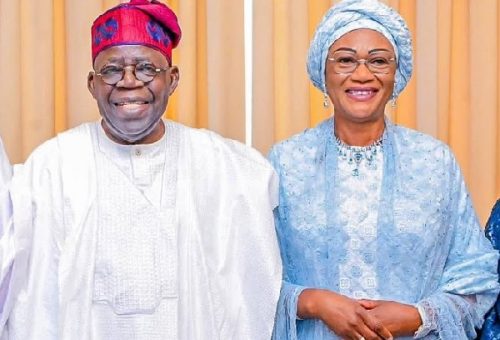
President Bola Tinubu has celebrated his wife, Oluremi, on her 66th birthday, describing her as his “truest friend and confidante”.
In a birthday tribute to the First Lady on his verified X handle on Monday, Tinubu praised her patience, courage, compassion and unwavering support throughout their years together.
The President, who described Oluremi as the woman who had stood by him through different seasons of his life, said she had shared his burdens and provided counsel during difficult moments.
“Today, I celebrate the woman who has walked beside me with patience, grace and uncommon courage. Àwọn àgbà sọ pé, ‘Ìyàwó rere ni adé ọkọ rẹ̀.’ A good wife is her husband’s crown,” he said.
Tinubu said Oluremi had given practical meaning to the biblical description of a virtuous woman, adding that she had remained a source of strength and understanding to him.
“The burdens that were mine to bear often found their way onto your shoulders. The thoughts I could not put into words somehow found their way to you.
“In difficult times, when the future was uncertain, you stayed calm beside me and prayed with me,” he stated.
The President described the First Lady as his “truest friend and confidante”, saying she was never afraid to offer him honest counsel.
“I call you my truest friend and confidante because you speak the truth plainly, even on the days I would rather not hear it,” Tinubu said.
He also praised Oluremi for her role in raising their children and grandchildren, saying her values of faith and kindness had shaped the family.
“Our home bears the lasting imprint of your devotion. Our children and grandchildren have grown beneath the shelter of your prayers. They carry your values of faith and kindness wherever life takes them,” he said.
Tinubu also highlighted the First Lady’s humanitarian activities, recalling her work through the New Era Foundation and the Renewed Hope Initiative.
“Nigerians know you for your compassion, kindness, generosity of spirit and steadfast faith. I have watched you touch lives quietly and consistently, offering hope and support to those in need,” he said.
He added that her initiatives had supported young people, widows, elderly citizens and women farmers across the country.
“From the New Era Foundation during our years in the saddle in Lagos to the Renewed Hope Initiative today, your care has reached many young boys and girls, widows, elderly citizens, and women farmers across the country,” the President stated.
Tinubu also acknowledged Oluremi’s advocacy for people affected by tuberculosis and other diseases, describing her as a compassionate advocate and determined champion.
He said her compassion transcended ethnic, regional and religious boundaries.
“For you, compassion has never recognised the boundaries of tribe, region or religion,” he said.
Reflecting on their years together, Tinubu said their shared experiences, including difficult decisions and sacrifices, had strengthened their relationship.
“A long journey teaches a man the true value of a good partner. We have travelled a long road together. I think of the difficult decisions we talked through for hours and the sacrifices no one else saw.
“Laughter and prayer carried us through many of them,” he said.
The President said he would choose Oluremi again if given the opportunity to relive his life.
“If life returned me to the beginning, I would choose the same road that led me to you. Through every mile, my heart has always remained at home with you,” Tinubu said.
The President wished the First Lady many more years in good health and happiness.
“Happy 66th birthday, my darling Oluremi. I pray that God Almighty will grant you many more years in good health and joy,” he said.


