
Headlines
Wike Accuses Lamido, Others of Causing PDP’s 2015 Election Loss

- /home/rhoncare/pointblank.ng/wp-content/plugins/mvp-social-buttons/mvp-social-buttons.php on line 27
https://pointblank.ng/wp-content/uploads/2019/04/Wike-1000x600.jpg&description=Wike Accuses Lamido, Others of Causing PDP’s 2015 Election Loss', 'pinterestShare', 'width=750,height=350'); return false;" title="Pin This Post">
- Share
- Tweet /home/rhoncare/pointblank.ng/wp-content/plugins/mvp-social-buttons/mvp-social-buttons.php on line 69
https://pointblank.ng/wp-content/uploads/2019/04/Wike-1000x600.jpg&description=Wike Accuses Lamido, Others of Causing PDP’s 2015 Election Loss', 'pinterestShare', 'width=750,height=350'); return false;" title="Pin This Post">
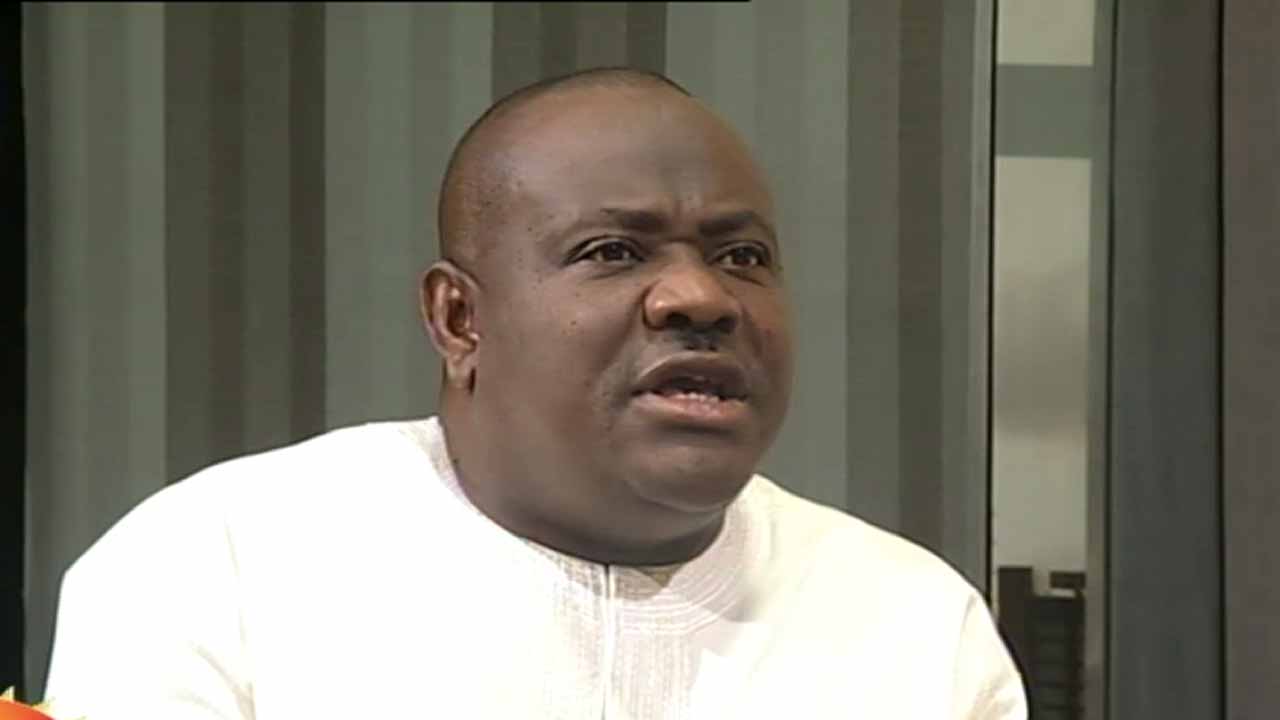
Rivers State Governor, Nyesom Wike, has taken a swipe at the former Governor of Jigawa State, Sule Lamido, saying the latter has lost relevance politically.
Lamido had while speaking on Channel’s Television ‘Politics Today’ on Tuesday night said there was no need for any reconciliation between Wike and the Peoples Democratic Party presidential candidate, Atiku Abubakar, saying nobody wronged the Rivers governor.
But Wike in a statement through his media aide, Kelvin Ebiri, on Wednesday, described the comments credited to Lamido as disgusting and disdainful.
The statement reads,” We have observed with disgust the disdainful remarks made by the former governor of Jigawa State, Alhaji Sule Lamido about Rivers State Governor, Nyesom Ezenwo Wike, during his recent interview on Channels television.
“While, we cannot deny that Alhaji Lamido has an inalienable right to his personal opinion, we wish to declare that he, however, lacks the right to malign governor Wike, whose immense contributions to the sustenance of the Peoples Democratic Party are not in dispute.
“It is rather appalling that at a time when concerted efforts are being made by lovers of true democracy and the unity of the party, to resolve some inherent contradictions plaguing the PDP, Alhaji Lamido and his cohorts, who have since lost their relevance in the polity, are busy creating friction and schism.”
He said Wike has never claimed to be the custodian of the over three million votes in Rivers state.
“But as the leader of the PDP and good people of Rivers State, anyone who underrates the governor’s political pedigree or dares to ignore his influence in the state and beyond will be doing so at his own peril.
“We wish to remind Alhaji Lamido that governor Wike has never left anyone in doubt about his capacity to sway the voters in Rivers state in a direction that benefits the people and the state, in overall.
“When he speaks, Rivers people will listen, no doubt. Perhaps, Alhaji Lamido thinks Nigerians are suffering from selective amnesia to have forgotten in a hurry, the ignoble role he and his cohorts played between 2014 and 2015, that culminated in the defeat of the PDP in the 2015 general election.
“We hope that he is not up in such scheme again to cause a repeat of that history. Otherwise, if Alhaji Lamido has any modicum of conscience, he won’t be making disparaging comments about governor Wike, whom many have described as the pillar of the PDP since 2015,” he added.
Continuing, he said, “We wish to state without equivocation that no well-meaning member of the PDP will describe governor Wike as ‘insignificant’ in the affairs of the PDP. With all modesty, only persons plagued by schizophrenia psychosis will ascribe any form of relevance to Alhaji Lamido, under whose leadership the PDP has woefully lost two governorship elections in Jigawa State in quick succession.
“Under Lamido’s watch, as a governor of Jigawa State in 2015, the APC governorship candidate, Mohammed Badaru Abubakar, scored a total 648,045 votes to defeat his PDP opponent, Malam Aminu Ringim, who scored a total 479, 447 votes. Worst still, in 2019, governor Abubakar polled 810,933, while the PDP candidate scored 288,356.
“Such records depict that Alhaji Lamido cannot and does not have such political following that will benefit the PDP. Those who want electoral victory for the PDP are not dampening the morale required for a political offensive at APC, but Alhaji Lamido is cracking the wall of unity badly.
“Let it be told that in 2015, governor Wike, as an opposition candidate in Rivers State polled 1,029,102 votes to defeat the then ruling APC governorship candidate, Dakuku Peterside, who managed to garner a paltry 124,896 votes.
“And in 2019, the governor also won by landslide. These are marks of political sagacity and determination to keep PDP at a leading pedestal.
“So, as the 2023 general elections beckon, we wish to advise Alhaji Lamido to redeem his battered political image by delivering Jigawa State to the PDP, if he can,” the statement read.
The Punch


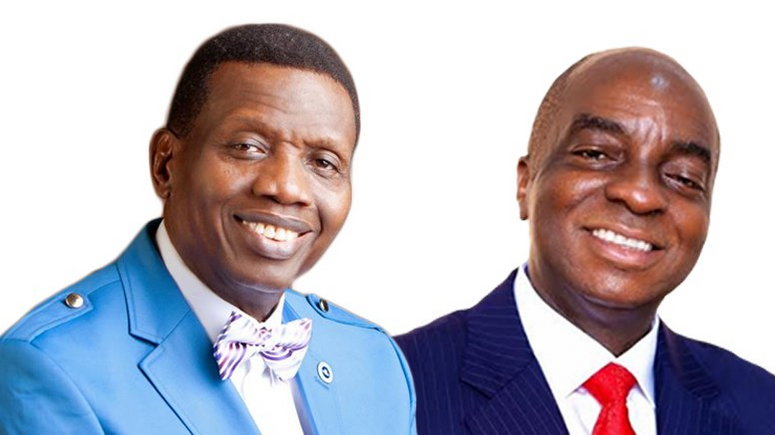
The General Overseer of Redeemed Christian Church of God (RCCG), Pastor Enoch Adeboye, and Founder of Living Faith Church Worldwide, Bishop David Oyedepo, have thanked U.S. President Donald Trump for recent military action against terrorism in Nigeria, urging Washington to do more to halt the unrelenting attacks.
Both clerics spoke at the “Faith Heroes Award Gala” in Washington D.C. on June 26, 2026, organised by Save Nigeria Group USA, SNGUSA, with the US-Nigeria Civil Society Coalition.
The event honoured Trump, Congressmen Chris Smith and Riley Moore, and other advocates of religious freedom in Nigeria.
Addressing a packed audience of activists, policymakers and faith leaders at the Hilton Garden Inn, Capitol Hill, Adeboye said the scale of violence has moved beyond what any religious leader can handle alone.
“Terrorism is now at my doorstep,” he said. “If you want to help us, help us more.”
The RCCG leader, who had faced criticism for not speaking out earlier, said he chose “spiritual warfare” instead of public escalation. He noted that Trump’s December strikes on terrorist camps did not surprise him because the U.S. President had warned of consequences.
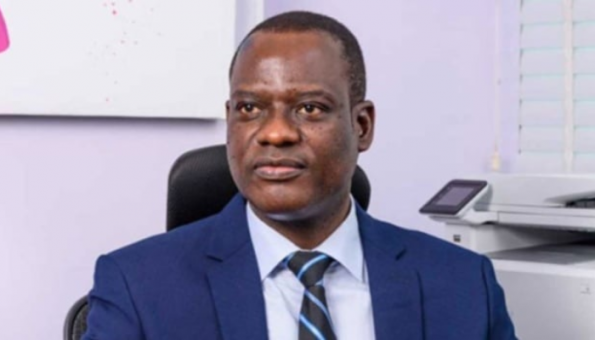
The Minister of Finance and Coordinating Minister of the Economy, Taiwo Oyedele, on Thursday said Nigeria’s revenue challenge lies in expanding the tax net rather than increasing tax rates, stressing that the country needs more taxpayers, not higher taxes.
Oyedele spoke in Abuja while receiving the leadership of the Chartered Institute of Taxation of Nigeria during a courtesy visit to the Federal Ministry of Finance at the end of the Institute’s maiden National Tax Awareness Day, which featured a road walk and taxpayer sensitisation at Wuse Market as well as a visit to the headquarters of the Nigerian Revenue Service.
The awareness campaign coincided with one year since President Bola Tinubu signed Nigeria’s landmark Tax Reform Acts into law on June 26, 2025.
Commending the Institute for supporting the Federal Government’s tax reform agenda, Oyedele said public misunderstanding of taxation remained one of the biggest obstacles to improving compliance. According to him, many Nigerians still believe that whenever the government talks about taxation, it is simply seeking to collect more money from citizens.
“We are still not getting enough revenue from taxes; it is not about increasing taxes, but making sure that those who are supposed to pay taxes pay.
We want to promote fairness in tax administration,” he said.
The minister added that getting Nigeria’s tax system right would have a transformative impact on national development. He also urged the Institute to establish annual awards to recognise the country’s most compliant taxpayers as a way of encouraging voluntary tax compliance.
Earlier, the tax awareness campaign commenced at Wuse Market, where the 17th President of the Chartered Institute of Taxation of Nigeria, Innocent Ohagwa, said the initiative was introduced to bridge the information gap surrounding the country’s tax reforms and improve voluntary compliance.
He explained that although the reforms had been in force for one year, many Nigerians were still uncertain about the changes and how they would affect businesses and individuals.
“The laws have been signed, implementation has begun, yet many taxpayers and stakeholders are still grappling with what has changed, what remains the same, and how these provisions affect their businesses and personal affairs,” he said.
According to Ohagwa, widespread misconceptions have continued to fuel anxiety, with some people believing the reforms introduced new taxes across all aspects of economic activity, while others assume they were designed solely to raise government revenue.
He, however, said the reforms contain significant reliefs and incentives for both individuals and businesses. Among the benefits, he said, individuals can now claim rent relief of up to 20 per cent of annual rent paid, subject to a maximum of N500,000, while essential goods and services, including food, education, healthcare, electricity transmission, and non-oil exports, now enjoy zero-rated Value Added Tax treatment.
He added that compensation for loss of employment or personal injury now attracts higher tax exemption thresholds. For businesses, Ohagwa said companies with annual turnover not exceeding N100m and fixed assets of not more than N250m are exempt from Companies Income Tax, Capital Gains Tax, and the Development Levy.
“This means thousands of small businesses can now reinvest in growth, job creation, and innovation,” he said.
He added that targeted tax incentives had also been introduced for agriculture, aquaculture, dairy production, cocoa processing, and animal feed manufacturing, while eligible investors could benefit from tax credits under the Economic Development Incentive.
Despite the incentives, the CITN president reminded taxpayers that compliance remained a legal obligation.
“Compliance is not a burden; it is a civic duty. It is our collective contribution to nation-building. And taxation works best when there is trust — taxpayers must fulfil their obligations, while the government must uphold accountability, transparency and the effective use of public resources,” he said.
He urged traders, entrepreneurs, and business owners to obtain Tax Identification Numbers, keep proper records, file accurate returns on time, and seek professional guidance from the Nigerian Revenue Service, the FCT Internal Revenue Service, or members of the Institute whenever necessary.
Explaining the rationale for the awareness campaign, Ohagwa said the Institute approved an annual National Tax Awareness Day after observing that many Nigerians remained uninformed about the reforms despite ongoing sensitisation.
He said Wuse Market was deliberately chosen because it represented one of the country’s key grassroots commercial hubs where taxpayer education was most needed, adding that the campaign was held in June because it coincides with the peak filing period for many corporate taxpayers.
After the market sensitisation, the CITN delegation proceeded to the headquarters of the Nigerian Revenue Service, where both organisations reaffirmed their commitment to strengthening tax awareness, voluntary compliance, and the implementation of Nigeria’s tax reforms.
Receiving the delegation on behalf of the Executive Chairman of the NRS, Dr Zacch Adedeji, the Executive Director, Finance and Corporate Services, Mohammed Abubakar, described the occasion as significant because it marked one year since the signing of the country’s landmark tax reform legislation.
“That historic milestone signalled the beginning of a new era in Nigeria’s tax administration, one anchored on simplicity, fairness, transparency, efficiency, and service delivery,” he said.
According to Abubakar, the reforms are intended to build a tax administration system that is trusted, technology-driven, and responsive to the needs of taxpayers and businesses.
He added that sustainable revenue mobilisation depends not only on enforcement but also on public awareness and confidence in tax institutions. “Taxpayers are more likely to comply when they understand their obligations, appreciate the value of taxation and have confidence in the institutions administering our tax laws,” he said.
The visit also highlighted the Service’s digital transformation agenda, with officials pointing to initiatives such as Rev360 and other technology-driven platforms aimed at delivering more efficient tax administration.
Also speaking, the Group Director, Medium Tax Group, Dr Gbenga Daniel, said the NRS would continue collaborating with professional bodies to deepen taxpayer education and improve service delivery.
“The Nigerian Revenue Service values its longstanding partnership with CITN. Together, our institutions share a common vision of improving tax administration and fostering voluntary compliance for national development,” he said.
The reception brought together Executive Directors of the NRS, members of the CITN Governing Council, senior management staff, tax professionals, and industry stakeholders before the delegation proceeded to the Federal Ministry of Finance for the courtesy visit, where Oyedele urged Nigerians to embrace the country’s evolving tax system through greater compliance rather than misconceptions about higher taxation.
In June 2025, President Bola Tinubu signed four sweeping tax reform bills into law, including the Nigeria Tax Act and related statutes that together overhaul decades-old tax statutes and modernise the country’s tax system.
The Punch
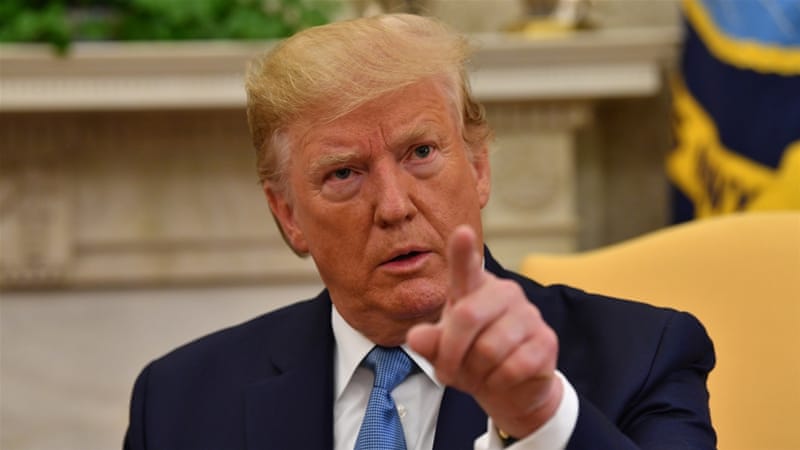
U.S. President, Donald Trump, has threatened to impose a 100 per cent tariff on imports from any country that introduces a digital services tax (DST) targeting American technology companies.
In a statement posted on his Truth Social platform on Friday, Trump warned that countries introducing or maintaining digital services taxes on U.S. tech firms would face immediate retaliatory tariffs on all goods exported to the United States.
“Any country that imposes such a Tax will immediately be met with a 100% TARIFF on any Goods sent to the United States of America,” Trump declared, insisting that digital services taxes unfairly single out American businesses and undermine U.S. economic interests.
The latest warning is aimed primarily at several European countries that have adopted or are considering digital services taxes on multinational technology companies such as Apple, Google, Meta, Amazon, and Microsoft.
Washington has long argued that such taxes disproportionately target U.S.-based firms while discriminating against American innovation.
Trump also asserted that the proposed 100 per cent tariff would supersede existing and future trade agreements, signalling a more confrontational trade policy if countries proceed with taxing revenues generated by U.S. technology giants within their borders.
France became the first major economy to introduce a digital services tax in 2019, prompting repeated threats of retaliatory tariffs from Washington.
Other countries, including the United Kingdom, Italy, Spain, Austria, and Canada, have either implemented or proposed similar measures while negotiations continue under the Organisation for Economic Co-operation and Development (OECD) to establish a global framework for taxing multinational corporations.
The OECD’s two-pillar international tax agreement was designed to reduce unilateral digital taxes by allocating a greater share of multinational profits to countries where earnings are earned while establishing a global minimum corporate tax


