
Headlines
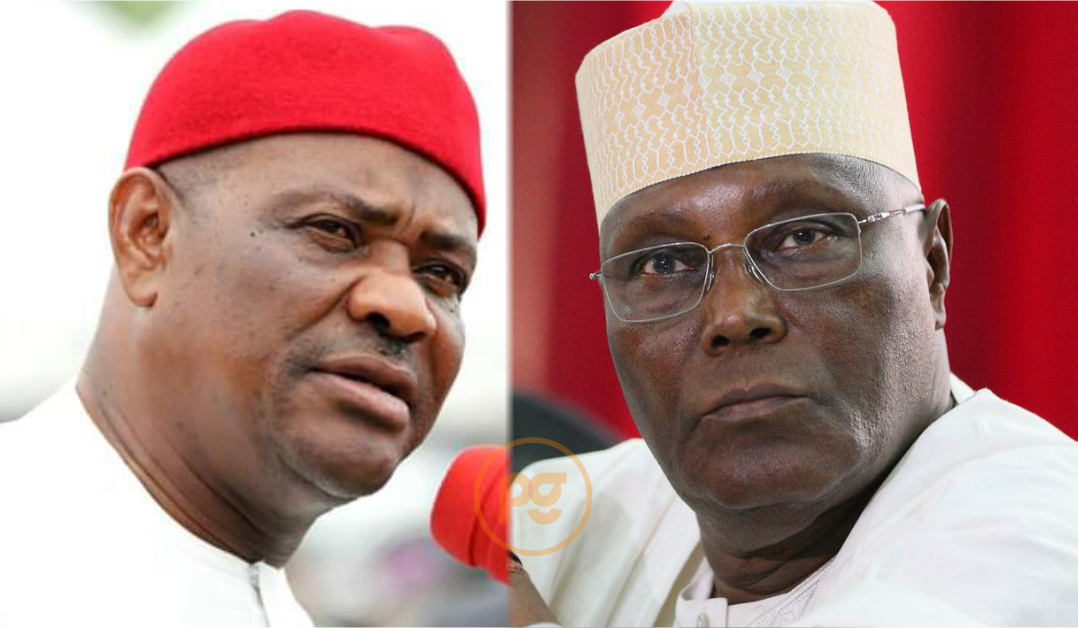
Wike Goes for Broke, Sues Atiku, Tambuwal over PDP Presidential Ticket

- /home/rhoncare/pointblank.ng/wp-content/plugins/mvp-social-buttons/mvp-social-buttons.php on line 27
https://pointblank.ng/wp-content/uploads/2022/08/Atiku-and-Wike-1000x600.png&description=Wike Goes for Broke, Sues Atiku, Tambuwal over PDP Presidential Ticket', 'pinterestShare', 'width=750,height=350'); return false;" title="Pin This Post">
- Share
- Tweet /home/rhoncare/pointblank.ng/wp-content/plugins/mvp-social-buttons/mvp-social-buttons.php on line 69
https://pointblank.ng/wp-content/uploads/2022/08/Atiku-and-Wike-1000x600.png&description=Wike Goes for Broke, Sues Atiku, Tambuwal over PDP Presidential Ticket', 'pinterestShare', 'width=750,height=350'); return false;" title="Pin This Post">
Governor Nyesom Wike of Rivers State has sued the presidential candidate of the Peoples Democratic Party, Atiku Abubakar; the Sokoto State Governor, Aminu Tambuwal; and the PDP over the conduct of the presidential primary of the party that was held was in Abuja on May 28 and May 29, 2022.
In the suit marked FHC/ABJ/CS/782/2022, Wike and a PDP chieftain, Newgent Ekamon, are listed as the plaintiffs. In the originating summons, the PDP is listed as the first respondent while the Independent National Electoral Commission is the 2nd respondent. Tambuwal and Atiku are listed as the 3rd and 4th respondents respectively.
During the PDP presidential primary, when aspirants were asked to address delegates, Tambuwal had asked them to vote for him only to return moments later to ask them to vote for Atiku.
At the primary, Atiku polled 371 votes while Wike and Bukola Saraki garnered 237 and 70 votes respectively. After the convention, the National Chairman of the PDP, Iyorchia Ayu, described Tambuwal as the “hero of the convention.”
In the originating summons, Wike and his co-applicant asked the court to determine eight issues including whether the purported transfer of Tambuwal’s votes to Atiku by the PDP was illegal and void.
The plaintiffs asked the court to determine if Tambuwal lost his claim to votes the moment he stepped down for Atiku.
He asked the court to determine whether Tambuwal “having stepped down during the primaries ought to lose his votes.”
Wike and Ekamon argued that should these issues be determined in their favour, the court should grant nine reliefs including a declaration that the purported transfer of Tambuwal’s votes to Atiku be declared null and void.
The plaintiffs are also seeking a declaration that the PDP acted negligently and in bad faith by assigning the Sokoto governor’s votes to Atiku at the primary.
They prayed the court to “cancel the transfer of votes and a corresponding order restraining the 3rd respondent (Tambuwal’s) withdrawal in the primary was done after voting had commenced.”
The applicants also prayed the court to declare that the PDP and Atiku took undue advantage of Tambuwal’s withdrawal when they allowed the Sokoto governor to persuade delegates to vote for the former Vice-President in the primary.
Wike and Ekamon asked the court to order INEC to reject or remove Atiku from “its list of candidates in the 2023 presidential election.”
They are also seeking an order commanding the PDP to recount the votes of the primary that was held on May 28 and May 29.
Lastly, the applicants are seeking an order of the court “directing the 1st respondent (PDP) to declare the 2nd applicant (Wike), a presidential aspirant in the May 28 and May 29 primary as the winner of the aforesaid primary with a corresponding order directing the 1st respondent (PDP) to forward his name as the candidate to contest the presidential election in 2023.”
In a supporting affidavit he deposed to, Ekamon noted that he was a member of the PDP and attested to the fact that Wike won the presidential election.
He maintained that Tambuwal withdrew from the contest after voting had commenced and directed that his votes be assigned to Atiku.
“The third respondent (Tambuwal) speaking twice before stepping down from the contest, persuaded all his delegates who were going to vote for him to vote for the 4th respondent (Atiku).
“The 1st (PDP) and 4th (Atiku) respondents who also wanted the votes desperately agreed with the 3rd (Tambuwal) and assigned 3rd (Tambuwal) respondent’s votes to the 4th (Atiku) respondent and increased his votes to win the 2nd applicant (Wike).
“The 2nd applicant (Wike) won the primaries if the votes of the 3rd respondent (Tambuwal) had not been transferred or assigned to the 4th respondent (Atiku).
The PUNCH learnt that the court processes had been served on the PDP at its Wadata Plaza headquarters located at Wuse Zone 5 while a copy had also been delivered to Atiku’s Campaign office in Maitama and the Sokoto State Government’s Liaison Office by the court bailiff.
Wike has been at loggerheads with Atiku and Tambuwal since his defeat in the presidential primary.
“If I wanted to scuttle the convention, I could have done that and I told them… I have never seen how people can violate procedures and guidelines. Somebody had spoken. It is only at that point he was speaking that he could say I have withdrawn. You don’t call him back,” Wike had said.
After the primary, Atiku had been advised to pick Wike as his running mate. However, the former Vice-President decided to nominate Governor Ifeanyi Okowa as his running mate, a move that further deepened the crisis in the party.
Wike and his clique of governors have reportedly demanded the resignation of the PDP national chairman as a condition for them to campaign for Atiku. They argued that the all top positions in the party are being occupied by northerners and Ayu, who is from the North-Central must resign as a concession to the South.
However, Ayu has maintained that he would only resign after Atiku emerges the winner of the Presidential election next year.
When contacted on the telephone, the National Publicity Secretary of the PDP, Debo Ologunagba, said he was unaware of the case and thus could not comment on it.
“I’m just hearing about this case from you. I have not seen the process and thus cannot comment on it,” he said.
Also, Atiku’s Spokesman, Paul Ibe, said his principal had not yet been served and thus could not comment on the matter.
“We are not aware of the case and have not been served. When we are served, we will respond appropriately. However, the response will be done in the proper manner and not through the media,” Ibe said.
Effort to reach Wike on his mobile telephone proved abortive, as it indicated that the calls were being forwarded, even as he had yet to respond to a text message sent to his mobile as of the time of filing this report on Thursday night.
Similarly, Mr. Kelvin Ebiri, Special Assistant on Media to the Governor could not be reached as his mobile phone was not connecting, even as he had yet to reply to a text and WhatsApp message sent to him as of the time of filing this report.
The Punch


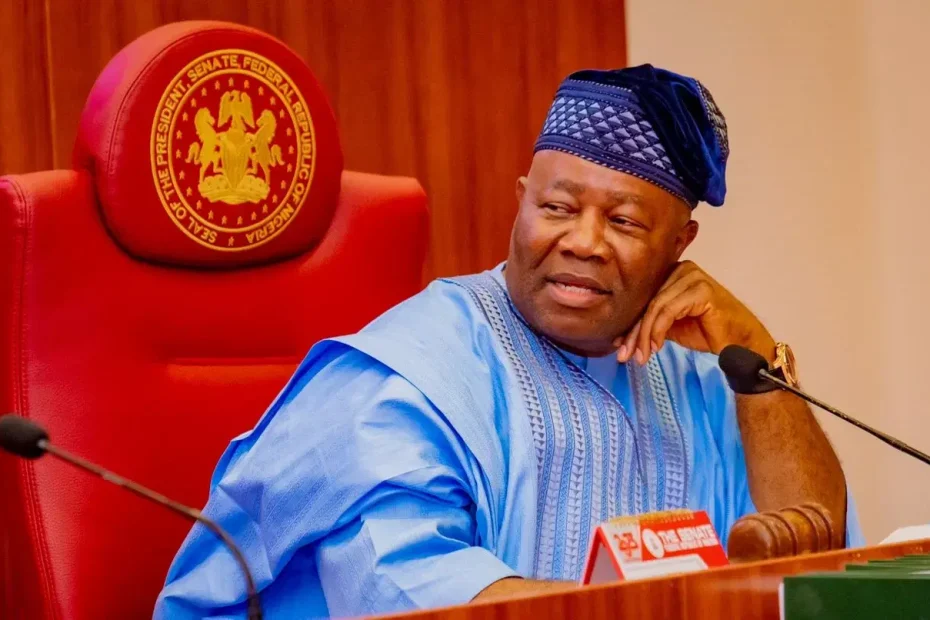
President of the Senate, Godswill Akpabio has dismissed calls for President Bola Tinubu to hand over power to Vice President Kashim Shettima, saying there is no leadership vacuum despite the President’s continued working vacation abroad.
Speaking on Tuesday, in Akwa Ibom State, while commissioning road projects executed by Governor Umo Eno, Akpabio addressed public concern over Tinubu’s three-week holiday, which was recently extended by one week. He insisted the President remains fully in office and continues to carry out his constitutional duties.
“I am the Senate President, and I am not the acting President of Nigeria, because President Tinubu is still in power. He is on a working leave, and there is no absence in Aso Rock. The world is a global village, and one can give instructions over the internet. So, why are people complaining?” he retorted.
Akpabio emphasized that only his office can declare a presidential vacancy and that no such condition currently exists. “Right now, there is no vacancy. Asiwaju Tinubu is still in power, and he is still running the affairs of Nigeria,” he added.
To underscore the President’s continued engagement, Akpabio disclosed of recent diplomatic contacts, including communications with French President Emmanuel Macron.
His remarks may have finally put to bed, unnecessary concerns raised by critics who claim the extended absence has hindered governance. Invoking modern communication, Akpabio argued a “remote” presidency can still function effectively.
The Presidency has not provided a formal return date for President Tinubu. Akpabio’s comments, however, signal a united stance within the ruling All Progressives Congress (APC) aimed at quelling speculation about a leadership crisis.
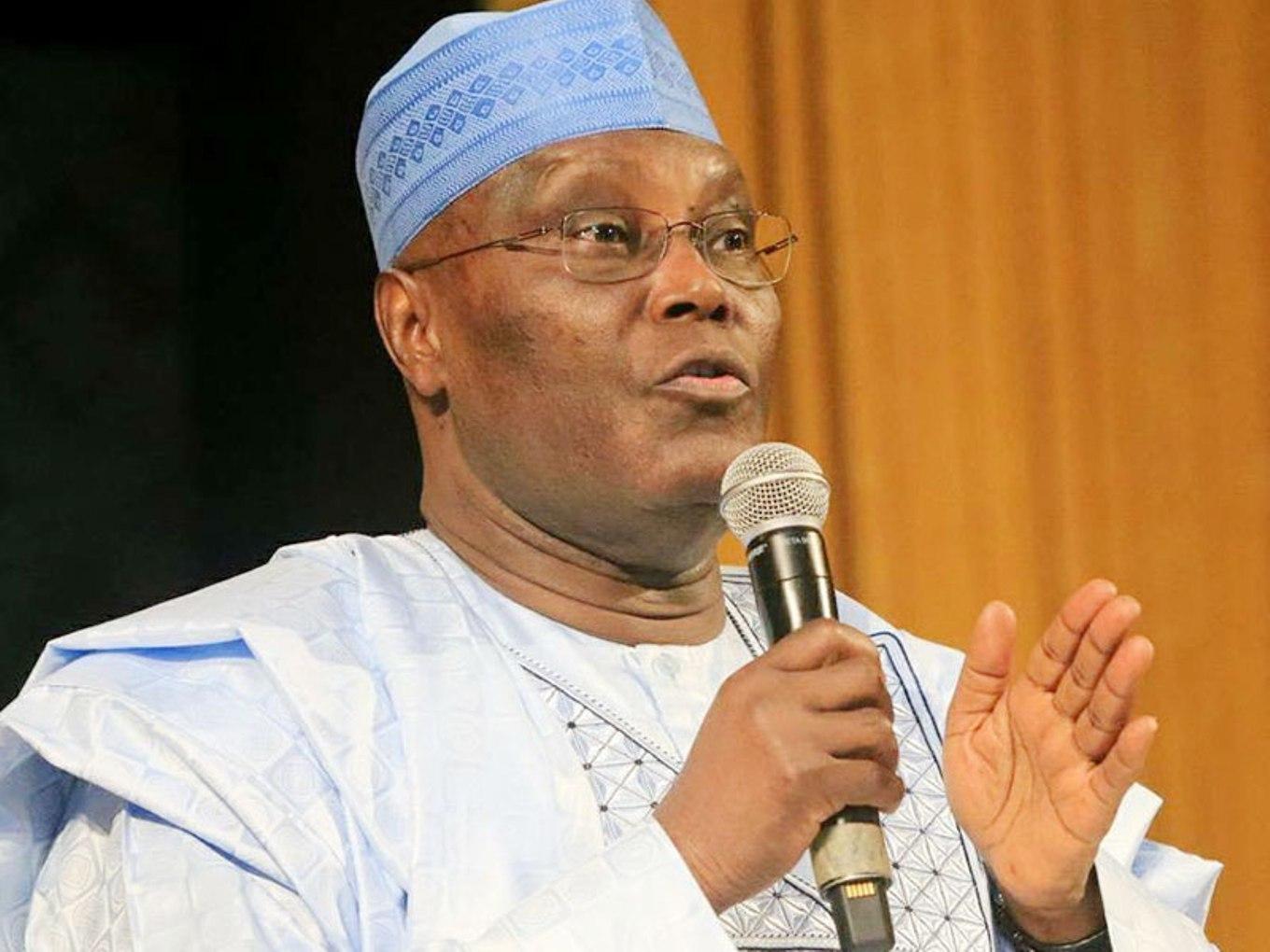
Former Vice President Atiku Abubakar has asked the Presidency and the National Assembly to clarify who is constitutionally exercising the powers of President Bola Ahmed Tinubu following the expiration of the 21-day period announced for the President’s annual vacation.
Recall that Tinubu left Nigeria on August 30 for a three-week annual vacation in Europe. The President’s absence coincided with Vice President Kashim Shettima’s official engagements outside the country, including his current representation of Nigeria at the 81st United Nations General Assembly in New York.
In a personally signed statement on Monday, Atiku argued that the expiration of the 21-day period had raised questions under Section 145 of the 1999 Constitution regarding the transfer of presidential powers.
Section 145(1) provides for the President to transmit a written declaration to the President of the Senate and the Speaker of the House of Representatives when proceeding on vacation extending beyond a specified period or when otherwise unable to perform the functions of his office.
Atiku said Nigerians had not been shown any such declaration transferring presidential functions to Shettima.
“President Tinubu left Nigeria on 30 August. The Presidency publicly announced a three-week vacation. Yet, to date, Nigerians have not been shown any constitutional letter transmitting presidential authority to Vice President Kashim Shettima.
“The 21 days have now elapsed. If such a letter exists, the Presidency should publish it immediately,” Atiku said.
The 2027 African Democratic Congress (ADC) presidential candidate, said the constitutional provision also addresses a situation where the President fails to transmit the required declaration.
He referred to Section 145(2), which provides that where the President is unable or fails to transmit the declaration within 21 days, the National Assembly can, by a simple majority in each chamber, mandate the Vice President to perform the functions of President as Acting President.
Atiku therefore asked the National Assembly to explain whether the constitutional procedure had been activated.
“If it does not, then the constitutional mechanism contemplated by Section 145(2) has been triggered, and the National Assembly owes Nigerians an explanation as to why it has not acted.
“This is not a matter of political convenience. It is a matter of constitutional order,” he said.
Atiku further drew attention to Shettima’s presence in New York, where he is leading Nigeria’s delegation to the 81st United Nations General Assembly based on the President’s directive.
Atiku said the situation raised a question about who was exercising presidential authority in Nigeria and under what constitutional instrument.
“So again: who is exercising presidential authority in Nigeria today, and under what constitutional instrument?” he asked.
The former Vice President also criticised what he described as reliance on informal indications of presidential activity while the President remains abroad.
“Nigeria cannot be governed by assumptions. It cannot be governed by presidential social-media posts from Europe.
“It cannot be governed by photographs from private dinners at the Élysée Palace.
“It cannot be governed on autopilot,” he said.
Atiku also said President Tinubu should be in the country at a time like this, linking his concerns to recent domestic developments in the country, including the deaths of 37 Nigerians in the custody of the Nigeria Security and Civil Defence Corps in Minna.
He said the incident had led to investigations, suspensions and calls for independent scrutiny.
He also raised concerns about petrol prices, claiming that the product was selling for as much as ₦1,500 per litre in some parts of the country.
“These are not ordinary times. Yet the President is abroad. The Vice President is abroad.
“The Senate President is abroad. And Nigerians have not been told, in the clear constitutional language required of a serious democracy, who is exercising the powers of the President,” Atiku said.
Atiku acknowledged the diplomatic significance of Tinubu’s private dinner with French President Emmanuel Macron in Paris but argued that Nigeria’s governance responsibilities could not be suspended while the President was abroad.
“President Tinubu’s private dinner with President Emmanuel Macron in Paris may serve diplomatic purposes. But Nigeria itself cannot be placed on vacation.
“The Constitution does not recognise a ‘working vacation’ as an alternative system of presidential succession.
“It provides a procedure. That procedure must be obeyed,” he argued.
Atiku consequently called on the Presidency to disclose whether Tinubu transmitted the declaration required under Section 145(1) before leaving Nigeria.
He also asked the President of the Senate and the Speaker of the House of Representatives to state whether they received such a communication.
“If no declaration was transmitted within the constitutionally stipulated period, the National Assembly must explain why the procedure provided by Section 145(2) has not been activated,” he said.
Atiku concluded that the issue was bigger than the President’s personal movements, arguing that Nigerians were entitled to know who was constitutionally responsible for the exercise of presidential powers.
“Nigeria is bigger than any President.
“At a time of severe economic hardship, rising energy costs, security challenges and the shocking deaths of citizens in government custody, the country deserves visible, accountable and constitutionally grounded leadership.
“The question will not disappear: Who, constitutionally, is in charge of Nigeria?” Atiku questioned.
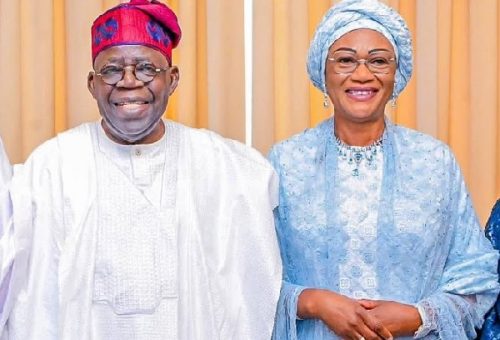
President Bola Tinubu has celebrated his wife, Oluremi, on her 66th birthday, describing her as his “truest friend and confidante”.
In a birthday tribute to the First Lady on his verified X handle on Monday, Tinubu praised her patience, courage, compassion and unwavering support throughout their years together.
The President, who described Oluremi as the woman who had stood by him through different seasons of his life, said she had shared his burdens and provided counsel during difficult moments.
“Today, I celebrate the woman who has walked beside me with patience, grace and uncommon courage. Àwọn àgbà sọ pé, ‘Ìyàwó rere ni adé ọkọ rẹ̀.’ A good wife is her husband’s crown,” he said.
Tinubu said Oluremi had given practical meaning to the biblical description of a virtuous woman, adding that she had remained a source of strength and understanding to him.
“The burdens that were mine to bear often found their way onto your shoulders. The thoughts I could not put into words somehow found their way to you.
“In difficult times, when the future was uncertain, you stayed calm beside me and prayed with me,” he stated.
The President described the First Lady as his “truest friend and confidante”, saying she was never afraid to offer him honest counsel.
“I call you my truest friend and confidante because you speak the truth plainly, even on the days I would rather not hear it,” Tinubu said.
He also praised Oluremi for her role in raising their children and grandchildren, saying her values of faith and kindness had shaped the family.
“Our home bears the lasting imprint of your devotion. Our children and grandchildren have grown beneath the shelter of your prayers. They carry your values of faith and kindness wherever life takes them,” he said.
Tinubu also highlighted the First Lady’s humanitarian activities, recalling her work through the New Era Foundation and the Renewed Hope Initiative.
“Nigerians know you for your compassion, kindness, generosity of spirit and steadfast faith. I have watched you touch lives quietly and consistently, offering hope and support to those in need,” he said.
He added that her initiatives had supported young people, widows, elderly citizens and women farmers across the country.
“From the New Era Foundation during our years in the saddle in Lagos to the Renewed Hope Initiative today, your care has reached many young boys and girls, widows, elderly citizens, and women farmers across the country,” the President stated.
Tinubu also acknowledged Oluremi’s advocacy for people affected by tuberculosis and other diseases, describing her as a compassionate advocate and determined champion.
He said her compassion transcended ethnic, regional and religious boundaries.
“For you, compassion has never recognised the boundaries of tribe, region or religion,” he said.
Reflecting on their years together, Tinubu said their shared experiences, including difficult decisions and sacrifices, had strengthened their relationship.
“A long journey teaches a man the true value of a good partner. We have travelled a long road together. I think of the difficult decisions we talked through for hours and the sacrifices no one else saw.
“Laughter and prayer carried us through many of them,” he said.
The President said he would choose Oluremi again if given the opportunity to relive his life.
“If life returned me to the beginning, I would choose the same road that led me to you. Through every mile, my heart has always remained at home with you,” Tinubu said.
The President wished the First Lady many more years in good health and happiness.
“Happy 66th birthday, my darling Oluremi. I pray that God Almighty will grant you many more years in good health and joy,” he said.


