
Headlines
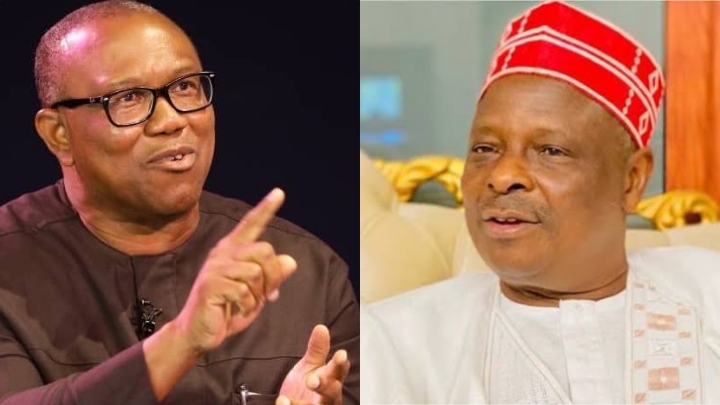
Will Kwankwaso Dump Obi?

- Share
- Tweet /home/rhoncare/pointblank.ng/wp-content/plugins/mvp-social-buttons/mvp-social-buttons.php on line 69
https://pointblank.ng/wp-content/uploads/2023/01/Obi-and-Kwankwaso.jpg&description=Will Kwankwaso Dump Obi?', 'pinterestShare', 'width=750,height=350'); return false;" title="Pin This Post">
By Eric Elezuo
The Nigerian political circle is fast taking shape as the 2027 presidential election draws closer. As a result, permutations regarding who contests for what position, and under what platform is gaining momentum.
From every indication, three political parties have so far shown cause as the main platforms of choice, that is if feelers from the reviving Peoples Democratic Party (PDP) and its newest bride, former President Goodluck Jonathan, are anything to ignore.
The parties are the ruling All Progressives Congress (APC), the erstwhile coalition group, African Democratic Congress (ADC) and the freshly introduced Nigerian Democratic Congress (NDC). One common denomination attached to these political parties is that they all congresses.
Among the three frontline parties is the NDC, whose life was recently enhanced with the inclusion of two south and north politicians; Mr Peter Obi, who contested under the umbrella of the Labour Party in 2023, and unarguably made serious in-roads even as a newcomer, and Alhaji Rabiu Kwankwaso, who contested under the New Nigeria People’s Party (NNPP). Kwankwaso’s influence was restricted to his native Kano State, but garnered a total of 1.4 million votes across boards. Today, the two politicians are joining forces in what has been termed Obi-Kwankwaso (OK) Movement to attempt to wrestle power from President Bola Tinubu. Both are also bringing with them their vocal movements; the Obidients and the Kwankwasiyya.
But analysts, stakeholders and observers alike have various considered the alliance of the two political heavyweights, wondering if the marriage is of strange bedfellows that may discard each other in the nearest future, or if there is any iota of seriousness among them that can lead to materializing its lofty objectives.
Recall that on Sunday, May 3, the duo of Obi and Kwankwaso dumped the ADC, and joined the NDC, blaming external interference and unending litigation that may hinder aspirants in the party from actualising their aspirations in 2027.
The move comes just nine months after Obi, Kwankwaso and the defacto leader of the coalition, Alhaji Atiku Abubakar joined the ADC. However, from available indices, the coalition quickly became mired in legal battles over party leadership. Obi blamed the new obstacles set before the party were direct consequences of the Tinubu-led Federal Government.
“The same Nigerian state and its agents that created unnecessary crises and hostility within the Labour Party that forced me to leave now appear to be finding their way into the ADC,” Obi had said while being received by the NDC leadership.
It is important to out on record that various voices speaking for Tinubu and federala Government have denied that they have in the quagmire that befell ADC, or has been trying to sabotage opposition parties.
Speaking afterwards, both men called for national unity, greater opportunities for young people, and an end to the infighting that has plagued Nigeria’s opposition.
However, their decision risks upsetting allies within the coalition built around the ADC, which had been positioning itself as the main vehicle for opposition unity.
Some figures within the bloc have privately expressed a sense of betrayal, raising fresh doubts about whether Nigeria’s fragmented opposition can sustain a coordinated challenge against President Tinubu, who celebrated his 74th birthday in March.
Across sectors, platforms and political corners, the influence of the Obi-Kwankwaso combination continues to grow given the political terrain a new agenda for discussion.
However, many stakeholders, among whim the very informed, have said that the union may end as abruptly as it started, stressing that political equilibrium or exigency are mostly not determined by absolutely loyalty, but most of the times by self interest and aggradizement. This, they said may turn out to be the hallmark of Alhaji Kwankwaso.
Some have reasoned that the five years age difference between Obi and Kwankwaso, with Kwankwaso having the upper hand, the academic superior of the former Kano governor, and his lengthier days in his political sojourn may form the criteria for him to refuse whatever arrangement already on the ground, including playing the running mate fiddle to Obi.
But even at that, it is important to note that Barack Obama was 47 years old when he became president, and his Vice, Joe Biden, was 66 years old. So Kwankwaso is not going to set a world record as vice that is older than his principal? Definitely not.
Another group has hinted that Kwankwaso is only oiling his own personal path to 2031, when the coast will be ripe for the candidate of northern extraction to vie for the presidency.
“Consequently, his intention is far from working for Obi’s victory nor Atiku, for neither of the two can conveniently bow out in 2031. The only person permitted by law not to seek election in 2031 is President Tinubu, if he wins the 2027 election. So, conveniently, any ambitious person with eye on the presidency will definitely want Tinubu to win,” a source told The Boss.
Another school of thought has hinted that with the sudden interest of Goodluck Jonathan in the presidency, the path may be cleared for Kwankwaso to deputize for Jonathan instead of Obi. However, as at the time that membership registration register was closed on May 10, 2026, Jonathan was a member of the Turaki-led PDP while Kwankwaso is still in the NDC.
But Kwankwaso in his speech during the inaugural convention of the NDC insisted that the presidency should be zoned to the South, noting that the south should be allowed to complete its eight years tenure. Whether he meant that for his new party, or for the Tinubu administration, the speech explains in details:
Fellow Nigerians,
It is with immense pleasure and a deep sense of fulfilment that I address you today on this historic occasion of the National Convention of our great party, the Nigeria Democratic Congress (NDC), in Abuja.
Ladies and Gentlemen, Nigeria stands at a critical crossroads. The world is undergoing a profound geopolitical shift, yet our nation has been caught unprepared, largely because of poor leadership. Instead of positioning Nigeria to seize emerging opportunities, bad governance has left us bearing the brunt of global changes.
We are witnessing a sharp decline in the quality of life. Insecurity has created widows and orphans across the land. Millions have been displaced from their homes. Investments are fleeing, critical infrastructure is neglected, the education system is collapsing, and harsh economic policies have been imposed on citizens without meaningful safety nets or relief.
Yet Nigeria’s history teaches us that in our most challenging moments, visionary alliances have provided the way forward. In 1954, a historic partnership was formed between the Northern Elements Progressive Union (NEPU), led by Aminu Kano and the National Council of Nigeria and the Cameroons (NCNC), led by Nnamdi Azikiwe to achieve national unity.
Again, in 1960, against steep odds, Dr Nnamdi Azikiwe’s National Council of Nigeria and the Cameroons (NCNC) formed a coalition with the Northern People’s Congress (NPC) to birth our independence.
In the Second Republic, the alliance between Shehu Shagari and Alex Ekwueme under the National Party of Nigeria (NPN) helped restore civilian rule and national unity after years of military dictatorship.
It is therefore with great sense of unity and solidarity, that as a loyal party member, I support the decision to zone the presidential ticket of the NDC to the South, so that it allows the region to complete its turn in producing national leadership.
This represents a true opportunity for true national healing. We shall work in abidance with the party’s agreement to ensure fairness and federal character in all ramifications.
This party shall also ensure to change the way things are done today by prioritising leadership without ethnic jingoism and religious favouritism.
The leadership standard we shall set will therefore restore Nigeria’s dignity and will guarantee that our citizens at home and the diaspora will be treated with respect and dignity.
Lastly, we can only achieve that by continuing to mobilise to register with INEC to vote, and the NDC to belong to this noble cause. Please register, today.
Thank you.
Long Live the Nigeria Democratic Congress!
Long Live the Federal Republic of Nigeria!
From every indication, the dumping of Obi by Kwankwaso may remain a page in a fiction narrative, since it is absolutely impossible for more defections to occur at this time, according to the new Electoral Act 2026.
However, the page of whether he is totally in support of Obi as his principal, still remains unwritten and blank. What is obvious is the two, by present political exigency, may lead the charge as NDC attempt to dislodge Tinubu as president, and also stop Alhaji Atiku Abubakar, who may lead the ADC attack, from making any headway.
By May 30 according to Independent National Electoral Commission (INEC) table, all flag bearers would have been known and observers are throwing their hats in the ring to predict another 3-horse race, exactly as witnessed in 2023.
What would change would depend heavily on the homework every candidate has done prior to this time, and the alliances created on and off the political circle.
But would Kwankwaso Dump Obi at this time, the answer is likely in the negative. The level of cohesion he is willing to give is what however, that is still contentious about.
Time is almost at hand!


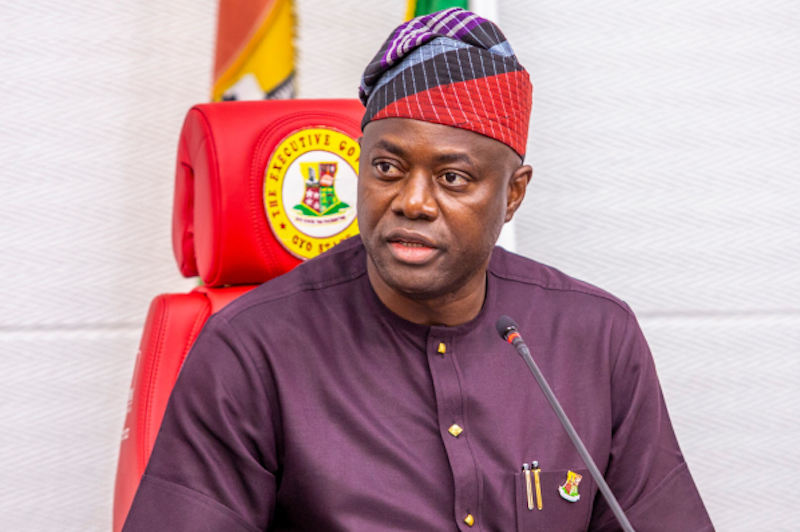
The Allied Peoples Movement (APM) presidential candidate, Seyi Makinde, on Thursday, criticised President Bola Tinubu’s “Emi Lokan” slogan ahead of the 2027 presidential election.
Makinde said Nigerians do not need “turn-by-turn nepotism”, arguing that voters should be free to decide who becomes the country’s next president in 2027.
The Oyo State governor spoke during the APM’s town hall meeting in Akure, Ondo State.
Makinde asked: “How can someone say ‘Eemi lokan’ in a country like Nigeria? You were given the opportunity. If you recall the 1999 presidential election, the South-West voted massively for Baba Olu Falae, but the rest of Nigerians voted for Baba Obasanjo. So, this is not an issue that only the South-West can resolve; it is an issue we must address collectively as Nigerians.
“We do not want ‘turn-by-turn nepotism’, nor do we want a situation where people say, ‘I will vote for projects because it is my turn’. You will not finish those projects, and when it becomes someone else’s turn, they will do the same thing. We will end up with a Nigeria where we cannot get value for the resources belonging to Nigerians.
“The Reset Nigeria agenda is about building a country where infrastructure development supports economic growth and addresses the concerns of young people and women.
“Once we fix our economy, no zone will be left behind, and no demographic group will be left behind.”
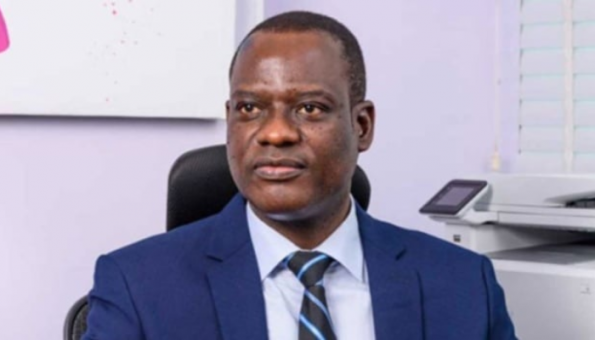
Minister of Finance and Coordinating Minister of the Economy, Taiwo Oyedele, has denied saying the Federal government will introduce a fuel tax when the economy stabilises and income levels improve.
In a post on X on Tuesday, Oyedele said his remarks during an interview with ARISE News was misrepresented, insisting that a “fuel tax is not on the table.”
However, during the interview with Rotus Odiri, ARISE News Business Correspondent, on the sidelines of the 2026 International Monetary Fund and World Bank annual meetings in Bangkok, Thailand, Oyedele said the tax would come when income levels improve enough for Nigerians to accommodate it.
He said taxes account for between 20 and 80 percent of pump prices in some countries, while many African countries impose between six and 10 different taxes on fuel products.
He said introducing fuel tax while petrol was still subsidised would have been counterproductive because government would effectively be paying the tax itself.
According to him, imposing the tax immediately after removal of petrol subsidy would be insensitive to Nigerians.
“The objective should be that instead of trying to suppress prices, which hasn’t worked for us, it hasn’t worked for any country in the world, not one. Instead of trying to suppress prices, think about how to grow income faster than prices rise,” Oyedele said.
“That’s how you bring prosperity and grow the middle class and that is exactly what we are doing as led by Mr. President himself.
“At the appropriate time, when the economy has stabilizes and income level will be able to accommodate it, those taxes will come. Not because we want to impose taxes,” he added.
In his Tuesday post, the minister reiterated that introducing a fuel tax at this time would be insensitive following removal of petrol subsidy, describing reports that government will introduce the levy when the economy stabilises as “fake news.”
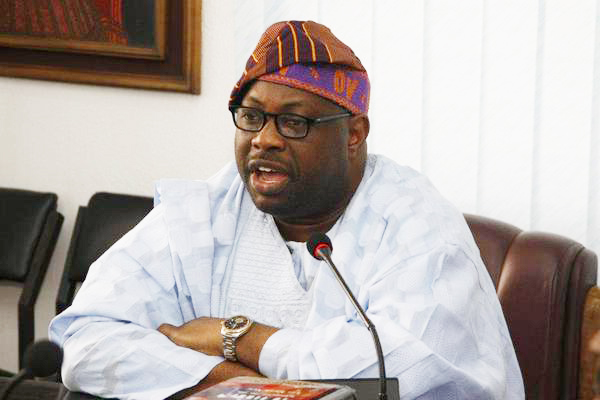
A chieftain of the African Democratic Congress (ADC), and Deputy Director of the Presidential Campaign Council, Chief Dele Momodu, has described former Vice-President Atiku Abubakar as the most nationally formidable and experienced among the leading contenders for the 2027 presidential election.
Momodu said Atiku’s experience at the national level distinguishes him from President Bola Tinubu and former Anambra State Governor, Peter Obi.
He stated this on Wednesday during an interview on Eagle 102.5 FM, Ilese-Ijebu, in Abeokuta.
“If you look at the antecedents of the three major candidates, between Atiku Abubakar and Peter Obi, you will see that Atiku is the most experienced. He has managed our country at the highest level,” he said.
Momodu traced Atiku’s political journey to the 1992 Social Democratic Party (SDP), presidential primary where he contested against late MKO Abiola and stepped down for him.
He said Atiku accepted the outcome without crisis even after he was not picked as Abiola’s running mate, describing it as a mark of true democratic temperament.
“He is the only one who started from around 1992, contested the SDP primary against Abiola and stepped down with uncommon equanimity. He did not make any noise,” Momodu said.
He noted that Atiku was among the founders of the Peoples Democratic Party, PDP, and served as Vice-President from 1999 to 2007.
Comparing Atiku with Obi, Momodu argued that while Obi’s best was demonstrated in Anambra, Atiku’s was at the presidency level managing the national economy.
“Peter Obi has tried his best in Anambra, while Atiku’s best is at the level of vice president controlling the economy of Nigeria. The difference is clear. He has matured in experience and exposure,” he said.
Momodu also said President Tinubu’s experience was largely limited to Lagos.
“What I’m trying to say is that Tinubu’s experience was limited to Lagos, and that is why when he became president, he thought Nigeria was Lagos. And he has found out now that Nigeria is not Lagos,” he said.
He argued that the current economic hardship under the present administration did not show prosperity, insisting Atiku remained better positioned to lead the country.
“Well, we are yet to see that prosperity, and if yesterday would determine today and tomorrow, it is obvious that Tinubu should retire now and let someone else do it,” Momodu added.
DailyPost


