
Business
World Earth Day: Unity Bank, RESWAYE Clean Lagos Beach, Plant Trees


- /home/rhoncare/pointblank.ng/wp-content/plugins/mvp-social-buttons/mvp-social-buttons.php on line 27
https://pointblank.ng/wp-content/uploads/2022/05/IMG_0884_SgvMlc6-1000x600.jpeg&description=World Earth Day: Unity Bank, RESWAYE Clean Lagos Beach, Plant Trees', 'pinterestShare', 'width=750,height=350'); return false;" title="Pin This Post">
- Share
- Tweet /home/rhoncare/pointblank.ng/wp-content/plugins/mvp-social-buttons/mvp-social-buttons.php on line 69
https://pointblank.ng/wp-content/uploads/2022/05/IMG_0884_SgvMlc6-1000x600.jpeg&description=World Earth Day: Unity Bank, RESWAYE Clean Lagos Beach, Plant Trees', 'pinterestShare', 'width=750,height=350'); return false;" title="Pin This Post">
In commemoration of this year’s World Earth Day, Unity Bank Plc in partnership with 3 non-government organisations – Recycling Scheme for Women and Youth Empowerment, RESWAYE, MEDIC and KBG – has conducted a beach cleaning exercise as part of its commitments to promoting environmental sustainability.
No fewer than 200 members of staff, as well as over 100 members of RESWAYE thronged the venue of the cleaning exercise – the Lagos Kids Beach Garden within the Oba Elegushi beach environs – where they picked and removed over 100,000 plastic bottles from the beach to make the beach safer and reduce ocean pollution.
The Bank also carried out a tree planting exercise across the country, as the Staff of the Bank across the bank’s branches nationwide planted at least one tree.
Speaking at the event, the Group Head, Risk Management, Unity Bank Plc, Mr. Chris Nwambu said that the World Earth Day initiatives are part of the Bank’s corporate social responsibility aimed at leading major collaborative initiatives for climate action.
Citing recent reports on ocean pollution, he decried that “of the over 300 million tons of plastic waste ends up in ocean’s yearly, an estimated 8 million tons of plastic enters our oceans. There are 5.25 trillion pieces of plastic waste estimated to be in our oceans. While 70% of our debris sinks into the ocean’s ecosystem, 15% floats, and 15% lands on our beaches.”
He added that such activity as the collaboration and partnership by organizations would play a vital role in reducing the threats of ocean plastics and thereby reduce the climate risks they pose to the earth.
He reiterated that Unity Bank will continue to be very aggressive in terms of environmental protection and sustainability commitments, adding that “in line with the Bank’s agribusiness strategic focus over the past couple of years, the Bank has granted access to credit to businesses in greenhouse farming and metal recycling to the tune of 3.25 billion naira”.
He said, “But beyond supporting sustainability-related business, the operations of the Bank have adopted sustainable practices in the way we carry out daily activities as a matter of corporate culture. As of today, thirty-one branches of the bank are running on Hybrid Solar Solution while 70% of our 416 ATMs Bank-wide are powered by hybrid solar solutions with a projection to migrate an additional 15% to hybrid solar solutions before the end of 2022.
“The reduction of carbon emissions by the bank since migrating branches and ATMs locations to Hybrid Solar Energy in 2018 now totals 21,631kg of Carbon Dioxide, saved monthly.”
Unity Bank has over time promoted corporate and business philosophy that encourages low paper usage, recycling and adoption of renewable energy through increased investment in solar-powered branches and ATMs.


Business
UBA Secures Court Order Against Vitol, Four Others in $242m Petroleum Products Diversion Claim
A Lagos State High Court, last Thursday, granted interim preservative orders of Mareva Injunction against Vitol SA – a Switzerland based Energy Trading company, and four other shipping companies in favour of United Bank for Africa Plc.
The bank alleged Vitol of wrongful release of cargoes of petroleum products which were consigned to the order of United Bank for Africa Plc in the Bills of Lading.
Addressing the Court, Bode Olanipekun, SAN, lead counsel for United Bank for Africa, urged the Court to grant the interim preservative orders against Vitol and the other shippers.
In a ruling on the application, the presiding judge, Honourable Justice K. A. Jose (Mrs.) granted three prayers in UBA’s application, including requests to restrain the dissipation of assets and dealings with funds up to the disputed amount by Vitol S.A.
“Prayers 1–3 are granted as prayed against the 2nd Respondent only,” the judge ruled.
The application was brought pursuant to Order 43 Rule 1 of the High Court of Lagos State (Civil Procedure) Rules 2019 and the Lagos State High Court Practice Direction No. 2 of 2019.
UBA is seeking to contend in the substantive proceedings that Vitol SA and the owners of the vessels, are liable for alleged conversion, misrepresentation and negligence arising from the non-delivery of the petroleum products.
UBA also cited 34 financial institutions and public agencies, including commercial banks, merchant banks, microfinance banks, the Nigerian Ports Authority and the Nigeria Customs Service, in connection with the application.
In an affidavit supporting the application, UBA’s Group Head of Recoveries and Remedial Management, Anthony Chilaka, stated that the bank issued a letter of credit for the benefit of Vitol SA to facilitate a petroleum products transactions.
UBA alleged that the cargo was transported to Nigeria and that the vessels’ masters issued several bills of lading.
The bank further alleged that Vitol subsequently endorsed the bills of lading “to the order of” UBA and handed over the original copies to it.
UBA maintained that the endorsement entitled it to take possession of the cargo upon completion of the voyage.
However, Chilaka stated that the bank had not received the gasoil despite the completion of the voyage.
“The applicant has not been given possession of the gasoil despite completion of the voyage,” the affidavit stated.
UBA alleged that the cargo was instead, applied to the use of another party, contending that the respondents’ failure to deliver it amounted to conversion and negligence.
The bank argued that the respondents had obligations arising from the transaction and the endorsement of the shipping documents, which it claimed were not fulfilled.
The bank alleged that the cargoes associated with those transactions were also diverted to the use of other parties after their voyages, rather than delivered to UBA.
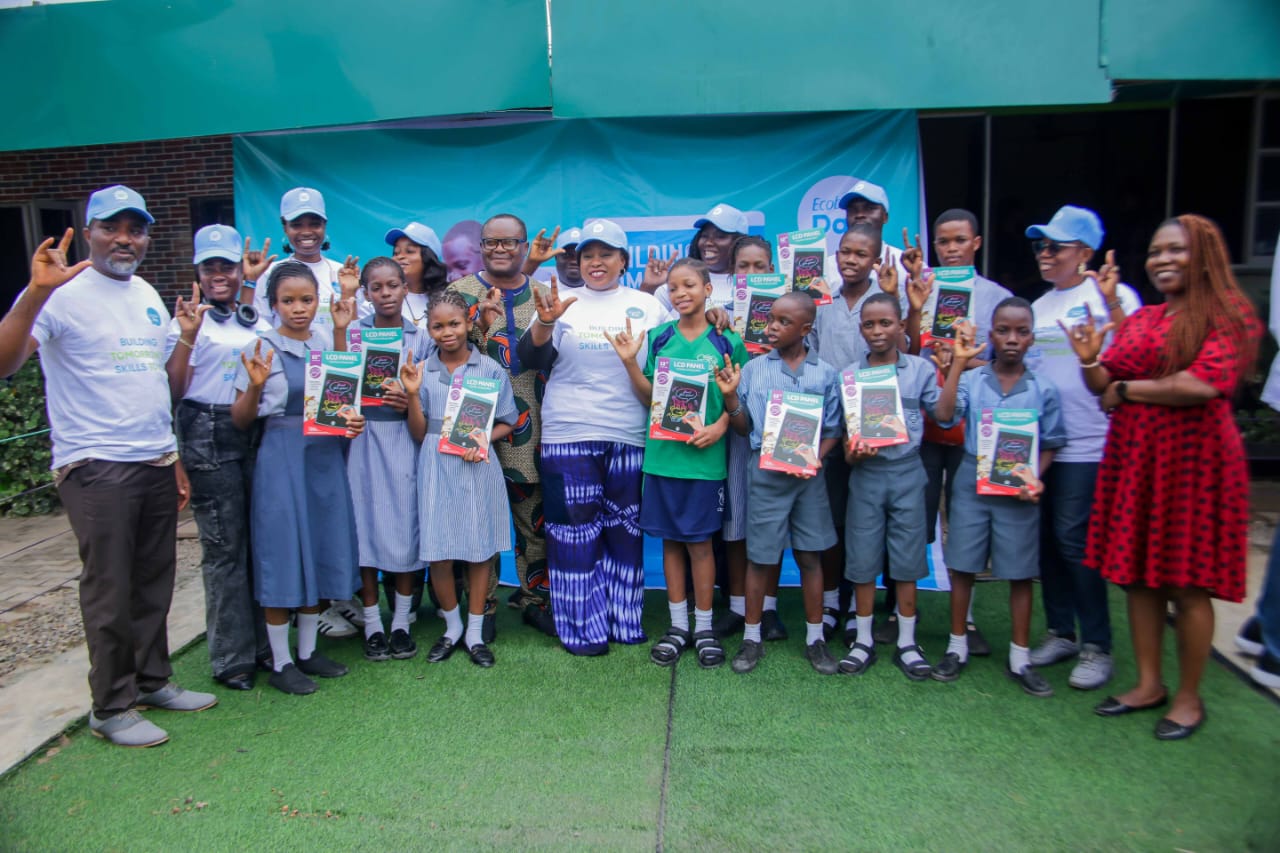
Ecobank Nigeria has commemorated the 14th edition of Ecobank Day, its flagship Group-wide Corporate Social Responsibility (CSR) initiative, across four regions of the country, reaffirming its commitment to empowering communities through education and digital inclusion.
The selected schools include: Hope Fountain Foundation for the Deaf, Agege, Lagos; Ibadan School for the Deaf, Ibadan; Special Secondary School for the Deaf, Odakpu, Onitsha, and Kaduna State Special Education School, Kaduna.
This year’s Ecobank Day was celebrated under the theme, “Digital Education,” with a focus on equipping persons with disabilities and young people with essential digital skills that can enhance their educational, personal, and career development in today’s technology-driven world.
The initiative underscores Ecobank’s commitment to extending its impact beyond banking by helping to equip Africa’s youth with the digital and artificial intelligence (AI) skills required to succeed in the future economy.
As part of the programme, Ecobank employees visited selected schools across the four regions, where they conducted digital literacy sessions and donated learning materials and educational resources to support students’ development and prepare them to thrive in an increasingly digital world.
Speaking during the commemoration, the Managing Director/Regional Executive, Ecobank Nigeria, Bolaji Lawal said: “It is a pleasure to join you today as we commemorate the 14th edition of Ecobank Day, our Group-wide Corporate Social Responsibility initiative dedicated to creating meaningful impact across the communities we serve. “Ecobank Day reflects our commitment to being more than a bank. It demonstrates our dedication to empowering people and contributing to sustainable development across Africa.”
Bolaji noted that digital education has become increasingly important in bridging knowledge gaps and creating opportunities for young people, particularly those living with disabilities, enabling them to participate fully in today’s digital economy.
School proprietors and administrators who participated in the programme commended Ecobank for the initiative, describing it as a timely intervention that will help broaden students’ access to digital knowledge and opportunities.
They expressed appreciation to the Bank for investing in the future of young people and supporting inclusive education within their communities.
For 14 years, Ecobank Day has served as an annual platform for Ecobank employees across Africa to give back to society through impactful volunteer activities that address critical social challenges.
The initiative continues to demonstrate the Bank’s dedication to fostering sustainable development and creating lasting positive change across the communities where it operates.
Fidelity Bank Plc has won two honours at the 2026 BusinessDay Banks and Other Financial Institutions (BAFI) Awards.
The bank’s Managing Director and Chief Executive Officer, Dr Nneka Onyeali-Ikpe, received the Award for Excellence in Banking Leadership, while Fidelity Bank was named Best Bank in Oil and Gas Financing.
The awards were presented at the 14th BAFI Awards held recently at the Civic Centre, Victoria Island, Lagos.
According to BusinessDay Media Limited, the leadership award recognises banking executives who have delivered institutional growth, strengthened shareholder value, promoted innovation and inclusion, and contributed to the development of Nigeria’s financial services sector.
Onyeali-Ikpe thanked the organisers and dedicated the award to Fidelity Bank’s customers, board, management and employees.
“I am deeply honoured to receive the Award for Excellence in Banking Leadership. I sincerely thank BusinessDay Media Limited for this recognition and dedicate it to our valued customers, whose trust and support have strengthened and inspired me throughout my career.
“The African philosophy of Ubuntu teaches us, ‘I am because we are.’ In that spirit, this honour also belongs to the board, management and staff of Fidelity Bank Plc, whose dedication and professionalism continue to drive our vision of a stronger, more innovative and customer-focused financial institution,” she said.
Onyeali-Ikpe has more than three decades of banking experience spanning retail, corporate and commercial banking, treasury and business development. Since becoming the Chief Executive Officer, she has led Fidelity Bank through sustained growth and an expansion of its international operations, including the acquisition of the former Union Bank UK, now FidBank UK Limited.
The Best Bank in Oil and Gas Financing award recognised Fidelity Bank’s support for projects across Nigeria’s energy value chain.
The bank financed the development of an onshore crude oil export terminal at the Otakikpo Marginal Field in Rivers State. It also supported the Pinnacle Oil and Gas Terminal in Lekki and part-financed a 23,000-cubic-metre liquefied petroleum gas carrier for Temile Development Company Limited.
Fidelity Bank also participated in the $3bn SNEPCo Contractor Finance Facility, which provides naira and dollar financing to indigenous contractors working on SNEPCo projects.
The projects are expected to strengthen local participation, petroleum product distribution, gas availability and critical energy infrastructure.
The two awards underscore Fidelity Bank’s growing profile in the financial services industry and its role in financing sectors critical to Nigeria’s economic development.


