
Personality in Focus
World Leaders Expected As Vatican Sets Saturday for Pope Francis’ Funeral

- /home/rhoncare/pointblank.ng/wp-content/plugins/mvp-social-buttons/mvp-social-buttons.php on line 27
https://pointblank.ng/wp-content/uploads/2025/04/93f2ad70-f213-11ef-861d-c9c8c10a1f63.jpg.webp&description=World Leaders Expected As Vatican Sets Saturday for Pope Francis’ Funeral', 'pinterestShare', 'width=750,height=350'); return false;" title="Pin This Post">
- Share
- Tweet /home/rhoncare/pointblank.ng/wp-content/plugins/mvp-social-buttons/mvp-social-buttons.php on line 69
https://pointblank.ng/wp-content/uploads/2025/04/93f2ad70-f213-11ef-861d-c9c8c10a1f63.jpg.webp&description=World Leaders Expected As Vatican Sets Saturday for Pope Francis’ Funeral', 'pinterestShare', 'width=750,height=350'); return false;" title="Pin This Post">
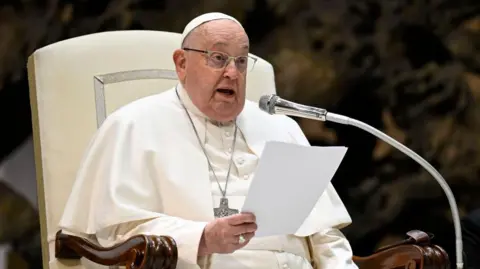
The funeral for Pope Francis will be held on Saturday, the Vatican announced on Tuesday, as world leaders from US President Donald Trump to Ukraine’s Volodymyr Zelensky said they would attend to honour the Catholic leader.
The Argentine pontiff, 88, died on Monday from a stroke, less than a month after returning home from five weeks in hospital battling double pneumonia.
His funeral, which is expected to draw huge crowds, will take place at 10:00 am (0800 GMT) on Saturday in the square in front of St Peter’s Basilica at the Vatican.
Francis’s coffin — which he previously ordered should be of wood and zinc — will then be taken inside the church and from there to the Rome basilica of Santa Maria Maggiore for burial.
The date was set by the first so-called “general congregation” of cardinals on Tuesday morning, which kicked off a centuries-old process that culminates in the election of a new pontiff within three weeks.
Earlier, the Vatican published the first images of the pontiff in his open coffin, ahead of its transfer to St Peter’s Basilica on Wednesday at 9:00 am (0700 GMT), to lie in state.
The pope’s body was photographed during a service Monday evening in the chapel of Casa Santa Marta, the Vatican residence where he lived during his 12-year papacy, and where he died.
Francis was wearing his red papal vestments, a mitre on his head and had a rosary between his fingers.
Tributes have poured in from around the globe for Francis, a liberal reformer who took over following the resignation of German theologian Benedict XVI in 2013.
His home country, Argentina, prepared for a week of national mourning while India began three days of state mourning on Tuesday — a rare honour for a foreign religious leader in the world’s most populous nation.
Heads of state and royalty are expected for his funeral, due to be held at St Peter’s Basilica, with Trump and France’s Emmanuel Macron the first to announce they would attend.
On Tuesday, a source at the Ukrainian presidency told AFP that Zelensky, too, would come to Rome.
Cardinals of all ages are invited to the congregations, although only those under the age of 80 are eligible to vote for a new pope in the conclave.
The conclave should begin no less than 15 and no more than 20 days after the death of the pope.
Simple tomb
The pope’s body was moved into the Santa Marta chapel on Monday evening, and his apartment formally sealed, the Vatican said.
Francis, who wore plain robes and eschewed the luxury of his predecessors, has opted for a simple tomb, unadorned except for his name in Latin, Franciscus, according to his will released Monday.
In chosing to be buried in Rome’s Santa Maria Maggiore basilica, he will become the first pope in more than 100 years to be laid to rest outside the Vatican.
His death certificate released by the Vatican said Francis died of a stroke, causing a coma and “irreversible” heart failure.
He had been discharged from Rome’s Gemelli hospital on March 23 and ordered to spend at least two months resting.
But Francis, who never took a holiday and delighted in being among his flock, made numerous public appearances in recent days.
He appeared exhausted on Sunday during the Easter celebrations, but nevertheless greeted the crowds in his popemobile in St Peter’s Square.
Argentine football great Lionel Messi hailed his compatriot — himself a huge fan of the beautiful game — for “making the world a better place”.
On Monday evening, thousands of faithful, some bringing flowers or candles, flocked to St. Peter’s Square at sunset to pray for Francis.
He “tried to get people to understand it doesn’t matter your sexual orientation, your race, it doesn’t matter in the eyes of God”, Mateo Rey, 22, a Mexican student, told AFP.
“I think that’s the closest to what Jesus intended.”
Born Jorge Bergoglio, Francis was the first pope from the Americas and the first Jesuit to lead the worldwide Catholic Church.
An energetic reformer, he sought to open the Church to everyone and was hugely popular — but his views also sparked fierce internal opposition.
In 12 years as pope, Francis advocated tirelessly for the defence of migrants, the environment, and social justice without questioning the Church’s positions on abortion or priestly celibacy.
Outspoken and stubborn, Francis also sought to reform the governance of the Holy See and expand the role of women and lay people, and to clean up the Vatican’s murky finances.
Faced with revelations of widespread child sex abuse in the Church, he lifted pontifical secrecy and forced religious and lay people to report cases to their superiors.
However, victims’ groups said he did not go far enough.
AFP


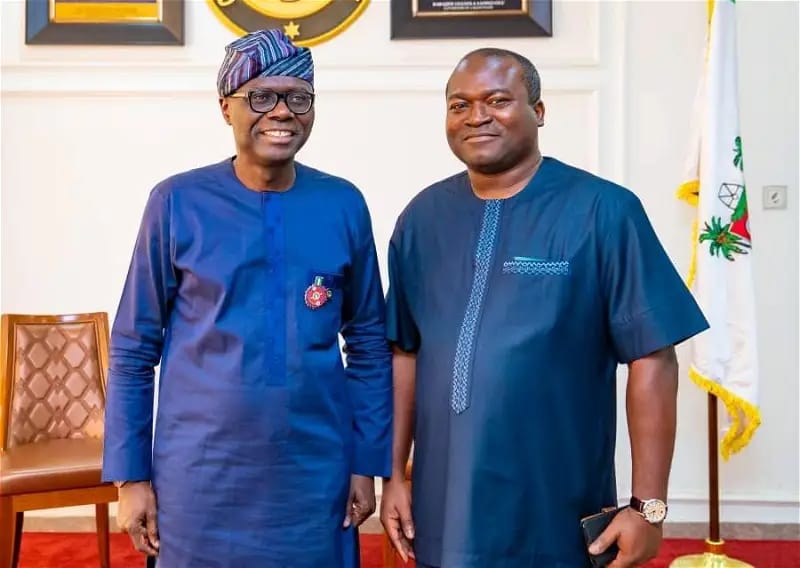
The Governor of Lagos State, Mr. Babajide Sanwo-Olu, has congratulated the Executive Secretary and Chief Executive Officer of the Lagos State Security Trust Fund (LSSTF), Dr. Ayodele Ogunsan, on his 50th birthday.
Governor Sanwo-Olu, in a statement issued on Monday by his Special Adviser on Media and Publicity, Mr Gboyega Akosile, described Ogunsan, an entrepreneur and security expert, as a seasoned administrator and a dedicated, passionate public official.
The Governor praised Ogunsan for his transformational leadership and dedication, which have significantly impacted the Lagos State Security Trust Fund (LSSTF) since he assumed office as Executive Secretary and Chief Executive Officer in October 2025.
He said: “On behalf of my family, the government, and the people of Lagos State, I congratulate the Executive Secretary and Chief Executive Officer of the Lagos State Security Trust Fund, Dr. Ayo Ogunsan, on his 50th birthday.
“Dr. Ogunsan is a seasoned administrator who has used his knowledge and experience to bring about transformation in the security sector through the Lagos State Security Trust Fund.
“I commend Dr. Ogunsan for his leadership and commitment in different capacities. He has contributed positively towards the improvement of security as Chairman of the Police Campaign Against Cultism and Other Vices (POCACOV) in Lagos State, Patron of the Police Community Relations Committee (PCRC), member of the Board of Trustees, and now Executive Secretary and Chief Executive Officer of LSSTF.
“As Dr Ayo Ogunsan celebrates his Golden Jubilee, I pray that the Almighty God continues to bestow upon him wisdom and knowledge to steer the ship of the Lagos State Security Trust Fund and render more service to humanity and our dear Lagos State.”
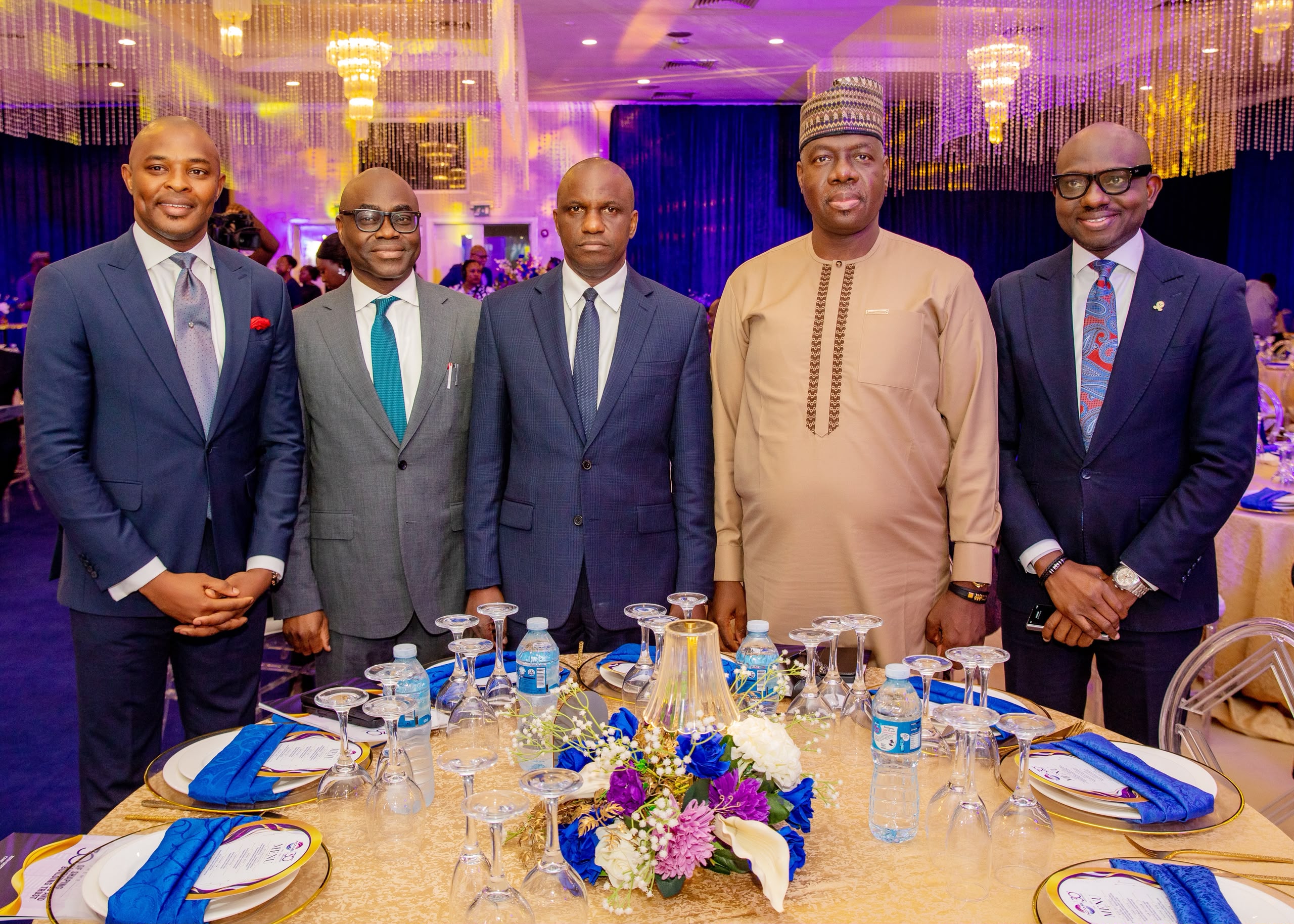
Association of Corporate Communication and Marketing Professionals in Banks (ACAMB) has marked 30 years of shaping narratives and building trust in Nigeria’s banking industry, with regulators and industry leaders calling on communication professionals to make credibility, clarity, Innovation and ethical conduct central to the future of financial services.
The association celebrated the milestone at an anniversary gala night in Lagos on September 30, 2026, bringing together, senior officials of the Central Bank of Nigeria (CBN), the Chartered Institute of Bankers of Nigeria (CIBN), the Nigeria Inter-Bank Settlement System (NIBSS), United Bank for Africa (UBA), Optimus Bank and industry leaders alongside communication and marketing heads, from banks across the country.
Speaking at the event, President of ACAMB, Jide Sipe, said, over three decades, the association has played and continued to play a critical role in helping banks communicate with the public, manage crises and protect institutional reputation.
“For 30 years, our members have stood between the banks and the public they serve. They explain policy, manage crises and protect reputations, often under intense pressure and in real time,” Sipe said.
“We have remained consistent, from gatekeepers to strategic drivers in actualising growth, positive brand perception, aligning business values to customer needs, customer satisfaction and loyalty”
All this have to great extent catalysed the growth trajectory of the financial sector and to that, we feel a sense of pride, worthy of celebration,
He said the association would continue to strengthen the capacity of its members as the communications profession evolves, with greater focus on artificial intelligence, data and digital media, as well as mentorship for young professionals entering the industry.
“Though the tools have changed since 1996, but the mandate remains same. We continue to earn trust, one credible message at a time, and we will guard it with the same discipline for the next 30 years and beyond,” he added.
While giving his address, Chairman of the occasion and 24th President of CIBN, Dele Alabi, described ACAMB’s 30-year journey as a testament to perseverance, professionalism and one that made far reaching impact the financial services industry should be proud of.
Alabi, who also commended Sipe’s leadership and recalled their years together at Ecobank Group, said ACAMB had helped strengthen communication, reputation and trust across the banking sector.
“Thirty years of shaping narratives and building trust reflects ACAMB’s critical role in strengthening communication, enhancing reputation and fostering trust across the financial services industry,” he said.
He urged communication professionals to embrace innovation without compromising ethics, in line with the CIBN’s IMPACT vision, which is built around inclusion, membership, professionalism and ethical conduct, accountability, competences & skills, and technology.
Representing the Deputy Governor of the CBN, Philip Ikeazor, the Acting Director, Corporate Communications and Investor Relations, Hakama Sidi Ali, said the banking industry was moving beyond stabilisation towards broader institutional transformation.
She challenged communication professionals to prioritise clarity over cleverness and to view customers as the ultimate test of the effectiveness and credibility of their communication.
“The credibility you carry into a crisis is built in quiet periods,” she said.
Delivering the keynote address, Managing Director/Chief Executive Officer of NIBSS, Premier Oiwoh, said the growth of digital banking had made trust even more critical, as financial services increasingly moved to mobile and digital platforms.
He noted that NIBSS had built Africa’s first mature instant payment system 15 years ago, adding that the evolution of digital banking had made trust a fundamental requirement for the continued growth of the financial system.
“Banking is all about trust. Without trust, banking cannot stand,” Oiwoh said.
Delivering a goodwill message on behalf of the Group Managing Director/CEO of UBA, Oliver Alawuba, the bank’s Group Head, Marketing and Corporate Communications, Alero Ladipo, commended ACAMB for creating a platform that brings communication professionals together across competing institutions.
“Thirty years is more than a milestone. It is evidence of relevance, resilience and the ability to evolve,” Ladipo said.
She noted that while banks compete in the market, communication professionals have a shared responsibility to strengthen confidence in the banking industry and maintain public trust in the financial system.
“Competition may separate us in the market, but there are moments when the industry must speak with a shared sense of responsibility,” she added.
Managing Director/CEO, Optimus Bank, Ademola Odeyemi, also commended ACAMB for it’s yeoman contributions over the years and shared vision, it has continued to effectively articulate on behalf of the banks, a feat that has helped the financial sector thrive collectively.
The anniversary celebration also featured networking sessions and recognition of professionals who have contributed to the growth of banking communication in Nigeria over the past three decades.
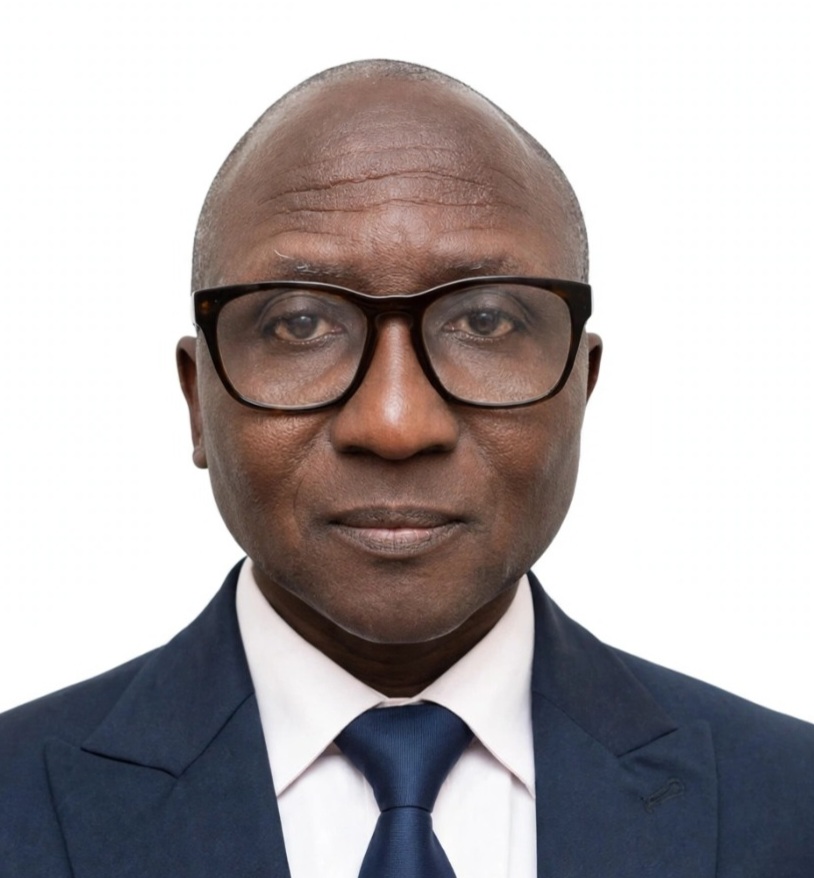
The West African Examinations Council, WAEC, has appointed Dr Amos Josiah Dangut as its new Registrar and Chief Executive Officer.
Dangut served as Head of the Nigeria National Office from October 2023 until September 2026.
In a statement on Thursday by the Head of Public Affairs, WAEC Headquarters, Accra, Demianus G. Ojijeogu, the Council said Dangut, a Nigerian, will serve a five-year tenure from October 2026 to September 2031. He succeeds Alhaji Pateh Bah of The Gambia.
His appointment was ratified by Council, the international governing board of WAEC, at its 74th Annual Meeting held in Accra, Ghana, in March 2026. He assumed office as the 14th Registrar to Council on October 1, 2026.
Born on October 2, 1967, Dangut holds a Bachelor of Agriculture in Animal Production (1991), Master of Science in Animal Science (1994), Doctor of Philosophy in Animal Science (2017), and Master of Education in Administration and Planning (2020).
He began his career in education in 1994 at St. Louis College, Jos, where he served as a WAEC examiner before joining the Council in 1998.
An astute test developer and administrator, he has served in various capacities, including Assistant Registrar, Test Development Division, Ogba, Lagos; Head of Examinations Security and Deputy Branch Controller, Uyo and Bauchi; Branch Controller, Yola; Controller, Post-Examinations Department; Zonal Coordinator, Ikeja; and Deputy Registrar, Head of National Office.
With over two decades of experience, Dangut is noted for leveraging Information and Communications Technology to improve test development, administration and post-test activities.
As Head of National Office, he championed key innovations including the rollout of Computer-Based WASSCE, serialization of question papers and introduction of a Digital Electronic Marking System. He also oversaw the Digital Certificate Portal, WAEC E-Study Platform, Digital Records Archive, and systems for examination logistics and monitoring of examiners.
During his career, he received commendation from the Nigeria Examinations Committee for his handling of examination matters from 2000 to 2006, and an Award for Meritorious Service from the Ondo State Government during his NYSC year.
He has served on the boards of the Nigerian Educational Research and Development Council, NERDC, Joint Universities Preliminary Examinations Board, JUPEB, Joint Admissions and Matriculation Board, JAMB, and Grange Educational Foundation, and represented WAEC at the Joint Consultative Committee on Education and the National Council on Education.
Dangut has publications in international and national journals and has presented papers at several conferences. He is currently the Regional Representative of the West African Sub-region on the Executive Board of the Association for Educational Assessment in Africa, AEAA.
He is a Fellow of the Science Teachers Association of Nigeria, STAN, and member of the Nigeria Institute of Management, NIM.


