
Headlines
World Leaders Present As Catholics Lay Pope Francis to Rest in Santa Maria Maggiore Basilica


- /home/rhoncare/pointblank.ng/wp-content/plugins/mvp-social-buttons/mvp-social-buttons.php on line 27
https://pointblank.ng/wp-content/uploads/2025/04/download-1000x600.webp&description=World Leaders Present As Catholics Lay Pope Francis to Rest in Santa Maria Maggiore Basilica', 'pinterestShare', 'width=750,height=350'); return false;" title="Pin This Post">
- Share
- Tweet /home/rhoncare/pointblank.ng/wp-content/plugins/mvp-social-buttons/mvp-social-buttons.php on line 69
https://pointblank.ng/wp-content/uploads/2025/04/download-1000x600.webp&description=World Leaders Present As Catholics Lay Pope Francis to Rest in Santa Maria Maggiore Basilica', 'pinterestShare', 'width=750,height=350'); return false;" title="Pin This Post">
Hundreds of thousands of mourners and world leaders including US President Donald Trump packed St Peter’s Square on Saturday for the funeral of Pope Francis, “pope among the people” and the Catholic Church’s first Latin American leader.
Some waited overnight to get a seat in the vast square in front of St Peter’s Basilica, with the Vatican reporting some 250,000 people attended, in an outpouring of support for the Argentine pontiff.
More than 50 heads of state were also present at the solemn ceremony, including Trump — who met several world leaders in a corner of the basilica beforehand, notably Ukraine’s Volodomyr Zelensky, in their first face-to-face since their Oval Office clash in February.
The crowds applauded as the pope’s coffin was carried out of the basilica by white gloved pallbearers, accompanied by more than 200 red-robed cardinals, and then again as it was taken back after the approximately two-hour mass.
Francis, who died on Monday aged 88, was “a pope among the people, with an open heart”, who strove for a more compassionate, open-minded Catholic Church, Cardinal Giovanni Battista Re said in his funeral homily.
There was applause again from the masses gathered under bright blue skies as he hailed the pope’s “conviction that the Church is a home for all, a home with its doors always open”.
Francis sought to steer the centuries-old Church into a more inclusive direction during his 12-year papacy, and his death prompted a global outpouring of emotion.
“I’m touched by how many people are here. It’s beautiful to see all these nationalities together,” said Jeremie Metais, 29, from Grenoble, France.
“It’s a bit like the centre of the world today.”
Italian and Vatican authorities mounted a major security operation for the ceremony, with fighter jets on standby and snipers positioned on roofs surrounding the tiny city state.
After the funeral, the pope’s simple wooden coffin was put onto a white popemobile for a slow drive through the streets of Rome to the basilica of Santa Maria Maggiore, where he will be buried.
The funeral sets off the first of nine days of official Vatican mourning for Francis, who took over following the resignation of Pope Benedict XVI in 2013.
After the mourning, cardinals will gather for the conclave to elect a new pope to lead the world’s 1.4 billion Catholics.
Many of Francis’s reforms angered traditionalists, while his criticism of injustices, from the treatment of migrants to the damage wrought by global warming, riled many world leaders.
Yet the former archbishop of Buenos Aires’s compassion and charisma earned him global affection and respect.
“His gestures and exhortations in favour of refugees and displaced persons are countless,” Battista Re said.
He recalled the first trip of Francis’s papacy to Lampedusa, an Italian island that is often the first port of call for migrants crossing the Mediterranean, as well as when the Argentine celebrated mass on the border between Mexico and the US.
Trump’s administration drew the pontiff’s ire for its mass deportation of migrants, but the president has paid tribute to “a good man” who “loved the world”.
Making the first foreign trip of his second term, Trump sat among dozens of leaders from other countries — many of them keen to bend his ear over a trade war he unleashed, among other subjects.
The White House said Saturday that the president had a “very productive” meeting with Zelensky before the funeral, while a second meeting was planned after, the Ukrainian presidency said.
Kyiv published a photo of the encounter, the two men sitting face to face in red and gold chairs in the basilica, as well as another showing Zelensky huddled with Trump, Britain’s Keir Starmer and French President Emmanuel Macron.

In the homily, Battista Re highlighted Francis’s incessant calls for peace, and said he urged “reason and honest negotiation” in efforts to end conflicts raging around the world.
“‘Build bridges, not walls’ was an exhortation he repeated many times,” the cardinal said.
Trump’s predecessor Joe Biden also attended the funeral, alongside UN Secretary General Antonio Guterres, Germany’s Olaf Scholz, Italy’s Giorgia Meloni, and Lebanon’s Joseph Aoun.
Israel — angered by Francis’s criticism of its conduct in Gaza — sent only its Holy See ambassador. China, which does not have formal relations with the Vatican, did not send any representative.
Italian mourners Francesco Morello, 58, said the homily about peace was a “fitting, strong and beautiful message”.
Of the world leaders gathered, Morello noted: “He could not bring them together in life but he managed in death.”
Simple tomb
Francis died of a stroke and heart failure less than a month after he left hospital where he had battled pneumonia for five weeks.
He loved nothing more than being among his flock, taking selfies with the faithful and kissing babies, and made it his mission to visit the peripheries, rather than mainstream centres of Catholicism.
His last public act, the day before his death, was an Easter Sunday blessing of the entire world, ending his papacy as he had begun it — with an appeal to protect the “vulnerable, the marginalised and migrants”.
The Jesuit chose to be named after Saint Francis of Assisi, saying he wanted “a poor Church for the poor”, and eschewed fine robes and the papal palace.
Instead, the Church’s 266th pope lived at a Vatican guesthouse and chose to be interred in his favourite Rome church — the first pontiff to be buried outside the Vatican walls in more than a century.
Catholics around the world held events to watch the proceedings live, including in Buenos Aires, where Francis was born Jorge Bergoglio in the poor neighbourhood of Flores in 1936.
“The pope showed us that there was another way to live the faith,” said Lara Amado, 25, in the Argentine capital.
Francis asked to be put inside a single wooden coffin to be laid in a simple marble tomb, marked only with the inscription “Franciscus”, his name in Latin.
Francis’s admirers credit him with transforming perceptions of the Church and helping revive the faith following decades of clerical sex abuse scandals.
He was considered a radical by some for allowing divorced and remarried believers to receive communion, approving the baptism of transgender believers and blessings for same-sex couples, and refusing to judge gay Catholics.
But he also stuck with some centuries-old dogma, notably holding firm on the Church’s opposition to abortion.
Francis strove for “a Church determined to take care of the problems of people and the great anxieties that tear the contemporary world apart”, Battista Re said.
“A Church capable of bending down to every person, regardless of their beliefs or condition, and healing their wounds.”


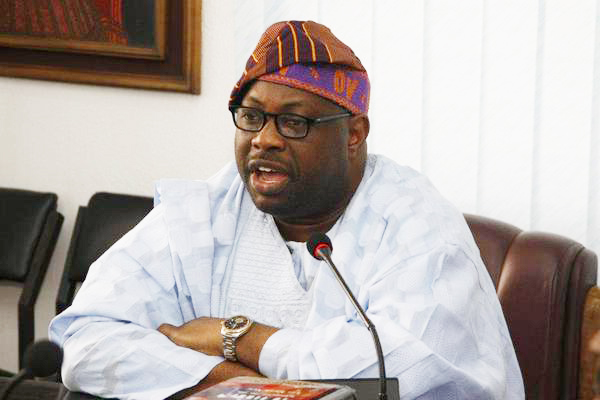
A chieftain of the African Democratic Congress (ADC), and Deputy Director of the Presidential Campaign Council, Chief Dele Momodu, has described former Vice-President Atiku Abubakar as the most nationally formidable and experienced among the leading contenders for the 2027 presidential election.
Momodu said Atiku’s experience at the national level distinguishes him from President Bola Tinubu and former Anambra State Governor, Peter Obi.
He stated this on Wednesday during an interview on Eagle 102.5 FM, Ilese-Ijebu, in Abeokuta.
“If you look at the antecedents of the three major candidates, between Atiku Abubakar and Peter Obi, you will see that Atiku is the most experienced. He has managed our country at the highest level,” he said.
Momodu traced Atiku’s political journey to the 1992 Social Democratic Party (SDP), presidential primary where he contested against late MKO Abiola and stepped down for him.
He said Atiku accepted the outcome without crisis even after he was not picked as Abiola’s running mate, describing it as a mark of true democratic temperament.
“He is the only one who started from around 1992, contested the SDP primary against Abiola and stepped down with uncommon equanimity. He did not make any noise,” Momodu said.
He noted that Atiku was among the founders of the Peoples Democratic Party, PDP, and served as Vice-President from 1999 to 2007.
Comparing Atiku with Obi, Momodu argued that while Obi’s best was demonstrated in Anambra, Atiku’s was at the presidency level managing the national economy.
“Peter Obi has tried his best in Anambra, while Atiku’s best is at the level of vice president controlling the economy of Nigeria. The difference is clear. He has matured in experience and exposure,” he said.
Momodu also said President Tinubu’s experience was largely limited to Lagos.
“What I’m trying to say is that Tinubu’s experience was limited to Lagos, and that is why when he became president, he thought Nigeria was Lagos. And he has found out now that Nigeria is not Lagos,” he said.
He argued that the current economic hardship under the present administration did not show prosperity, insisting Atiku remained better positioned to lead the country.
“Well, we are yet to see that prosperity, and if yesterday would determine today and tomorrow, it is obvious that Tinubu should retire now and let someone else do it,” Momodu added.
DailyPost
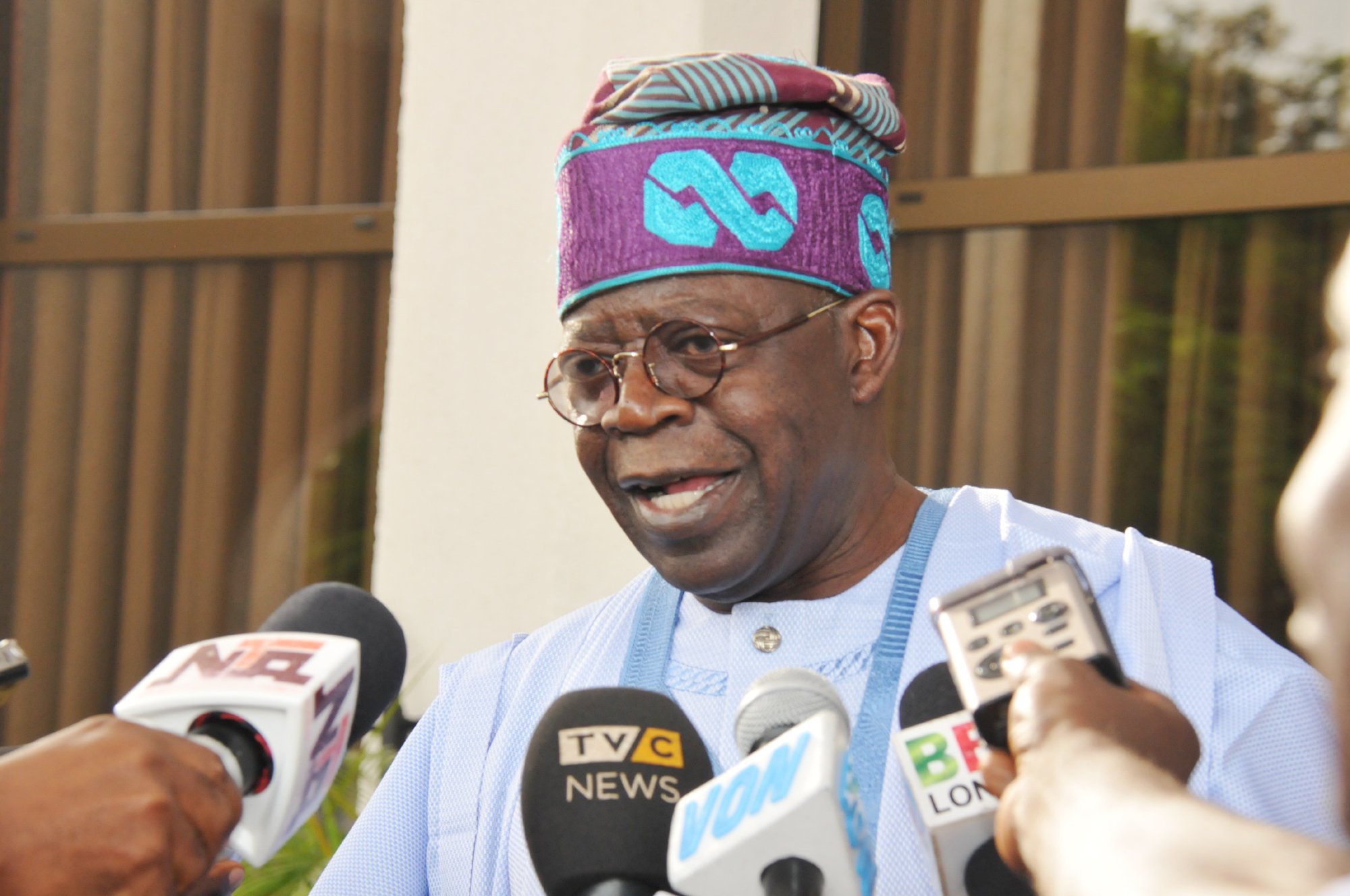
President Bola Tinubu says he has no regrets over the removal of petrol subsidy and other economic reforms introduced by his administration, insisting that Nigeria could not borrow its way to greatness.
Meanwhile, Minister of Finance and Coordinating Minister of the Economy, Taiwo Oyedele, has warned Nigerians against returning to petrol subsidy. He said the backtrack could trigger capital flight, undermining investor confidence and pushing the Naira to N3,000, N3,500 or even N4,000 per dollar.
But the Director of Media and Publicity of the African Democratic Congress (ADC) Presidential Campaign Council (PCC), Kola Ologbondiyan, challenged Oyedele to publish the economic model behind his warning that a return to fuel subsidy could push the naira to N4,000 per dollar.
The President spoke on Monday during the City Boys Movement retreat in Abuja, where he charged members of the group to mobilise support for his administration ahead of the 2027 general elections, insisting that the country’s future mattered more than the ambition of any individual candidate.
“No regrets,” Tinubu said, insisting that his administration would not be pushed back from its reform agenda.
He took a swipe at his political opponents, promising to restore the petrol subsidy, saying Nigeria could no longer afford to pay the fuel subsidy, and warning that reversing the policy would take the country back to an unsustainable economic path.
Defending his decision to remove the subsidy on his first day in office, Tinubu said the country was on the verge of financial collapse and could no longer afford the policy’s cost.
Tinubu also sought to reassure Nigerians about the direction of the economy, arguing that growth was steady and that the sacrifices associated with his reforms would ultimately offer citizens a future worth believing in.
Oyedele disclosed during a press briefing of the International Monetary Fund (IMF) and World Bank Annual Meetings in Bangkok, Thailand, yesterday, that investors had repeatedly questioned whether the government would abandon its reforms ahead of the next election cycle.
Ruling out the reversal of the government’s economic reforms, he maintained that any signal that Tinubu’s administration was contemplating or reinstating the subsidy would immediately affect financial markets, raise borrowing costs and worsen economic pressures on households.
“In all the meetings I have had, I came to a conclusion that the markets, including the domestic market, which you can read from the capital market, and the international market, have largely written off the opposition in Nigeria as unserious.
“If, for any reason, the President were to say we are merely considering the return of fuel subsidy, capital would react immediately, airfares would struggle, the naira would come under severe pressure, potentially moving towards 3,000, 3,500 or even 4,000.
The very fuel people want subsidised would become far more expensive in Naira terms,” Oyedele warned.
However, Ologbondiyan accused the Federal government of using fear to discourage debate on fuel subsidy, insisting that Nigerians deserve evidence, not alarming projections, on the potential economic consequences of restoring the policy.
Speaking to journalists, he described the minister’s warning as scaremongering and demanded that the government explain how it arrived at the projected exchange rate.
“The Minister of Finance is merely scaremongering. He cannot claim that a return to fuel subsidy will cause the naira to depreciate to N4,000 to the dollar without showing Nigerians the model behind that projection,” he said.
He questioned the reliance on investors’ concerns to oppose a subsidy’s return, challenging the government to identify the sources of the projections and disclose their calculations.
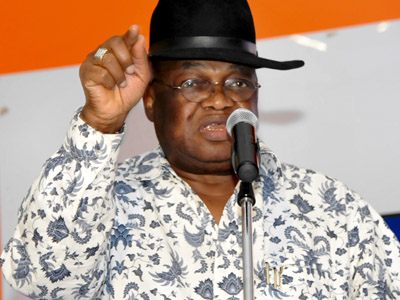
President Bola Tinubu has expressed sadness over the death of Ambassador Patrick Dele Cole, describing him as a distinguished diplomat, journalist, politician and public servant.
Cole died at 86.
In a statement on Saturday, Tinubu said Cole devoted his life to national service and brought distinction to his work in diplomacy, journalism and politics.
“His career reflected the enduring value of dialogue, tact, mutual respect and the pursuit of shared interests in advancing national development and international cooperation,” the President said.
Tinubu noted Cole’s contributions to Nigeria’s media landscape, particularly as Managing Director of the Daily Times, where he upheld the role of the press in holding public officials accountable, speaking truth to power and strengthening democratic governance.
“His legacy in journalism and public life remains an enduring part of our national story,” he said.
The President said at 86, Cole witnessed defining moments in Nigeria’s history and contributed to national development, adding that his life stands as a testament to experience, principled engagement and commitment to public good.
Tinubu extended condolences to Cole’s family, friends, professional associates and all whose lives he touched, praying that memories of his remarkable life will bring comfort and strength.
“May Almighty God grant Ambassador Cole eternal rest and give his family and all who mourn him the fortitude to bear this profound loss,” he said.


