Connect with us

Headlines

World Teachers’ Day: Let’s Celebrate Our Teachers

Published

on

By Eric Elezuo

In 1994, the world came up with a programme aimed at acknowledging and celebrating the efforts of the men and women, who have added value to existence through training and moulding of minds towards competing in the world and enhancing the wellbeing of the people. That programme was caged in October 5 of every year, and declared World Teachers’ Day.

Also known as International Teachers Day, the day is celebrated to “commemorate the signing of the 1966 UNESCO/ILO Recommendation concerning the Status of Teachers, which is a standard-setting instrument that addresses the status and situations of teachers around the world.

“This recommendation outlines standards relating to education personnel policy, recruitment, and initial training as well as the continuing education of teachers, their employment, and working conditions. World Teachers’ Day aims to focus on “appreciating, assessing and improving the educators of the world” and to provide an opportunity to consider issues related to teachers and teaching.”

The UNESCO cites that everyone can help by celebrating the profession, by generating awareness about teacher issues and by ensuring that teacher respect is part of the natural order of things. Schools and students, for instance, are expected to prepare an occasion for teachers during this day.

Some countries like India, however, celebrate the day on September 5 in honour of Dr. Sarvepalli Radhakrishnan. The tradition started from 1962. This is the when Dr. Radhakrishnan was born. He was a philosopher, scholar, teacher, and politician and his dedicated work towards education made his birthday an important day in the history of India.

One day, his students and friends requested him to allow them to celebrate his birthday in a lavish way. In return he said that it would be his pride and honor if they celebrate his birthday in respect of all teachers. And since then, September 5 is celebrated as Teacher’s Day.

In most places across the globe, especially Nigeria, teachers and teaching are viewed as an all comers profession. In fact, it is seen as a profession only those who could not find a job dabble in. Consequently, managers of the school system have, and continued to treat shabbily teachers in their employ.

It is worthy of note that there is hardly a notable professional today, who did not pass through a teacher. But while they glory in opulence, the brains behind their emergence continue to languish in penury.

It is high time we gathered and developed more and better policies to cater for the needs of the teachers and the teaching profession. Days are gone when the reward of the teacher is absolutely considered to be in heaven. Everybody’s reward is in heaven, but there’s an element of reward being enjoyed here on earth, and teachers should be part of it.

Consequently, on this auspicious day set aside to celebrate the thankless duties of the teacher, it is imperative that government look again towards the welfare of the proverbial ‘chalk profession’ and make their lives more meaningful. It is the outlook of the teacher that makes even his pupil to despise the teaching profession.

Visit a classroom today, no matter the level, and ask the pupils what they would wish to be in future. You won’t be surprised to note that only a handful, and in some cases none will mention teaching. Professions like law, medicine, journalism, aviator and many others will readily flew out of the mouths. No one wants to be a teacher because the life of a teacher is practical ‘hell’. he is paid the worse of salaries; he sits on the worse of furniture to do his duties; his square hole office is highly dilapidated and worse still, he is highly malnourished, and it shows.

Let us today seek out one teacher, and if you can more than one and appreciate him with a call, greeting or gift. The teacher deserves not just the good life, but even the better life.

Continue Reading
Advertisement


Click to comment

Leave a Reply

Your email address will not be published. Required fields are marked *

Headlines

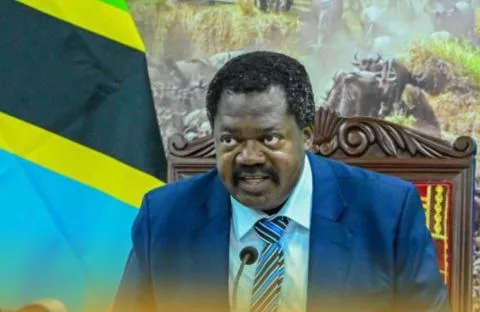
Tanzania’s Vice President Emmanuel Nchimbi Resigns

Published

on

Tanzania’s Vice President, Dr Emmanuel John Nchimbi, has announced his decision to resign from office and retire entirely from public service and active politics, effective September 4, 2026.
In an official public notice dated August 25, 2026, issued from the Office of the Vice President in Dodoma, Dr Nchimbi revealed that he had formally tendered his resignation letter to President Samia Suluhu Hassan.
Dr Nchimbi cited constitutional provisions under Article 50(2)(c) read together with Article 149(2) of the Constitution of the United Republic of Tanzania as the basis for stepping down to allow President Hassan to appoint a new Vice President.
Reflecting on his tenure, Dr Nchimbi referenced a commitment he made to the Head of State a year earlier, stating that he pledged to serve faithfully to the nation and step aside whenever a change was desired.
“On August 27, 2025, I promised Her Excellency President Dr Samia Suluhu Hassan that I would assist her and our country to the best of my ability and with utter faithfulness,” Dr Nchimbi stated.
“I also assured her that whenever she sees the need for another Vice President, I will vacate the position. I am fully satisfied, without any doubt, that Her Excellency the President desires change, and thus I have decided to fulfil my promise.”
Dr Nchimbi expressed gratitude to President Hassan and the ruling party, Chama Cha Mapinduzi (CCM), for their confidence in his leadership.
He also thanked Tanzanians for their support during his time in public office, reassuring the nation that he would remain a patriotic citizen.
Nchimbi’s journey as a seasoned Tanzanian statesman

Born on December 24, 1971, in the Mbeya Region, Dr Emmanuel John Nchimbi grew up in a family rooted in public service. His father, Mzee John Nchimbi, hailing from Songea District, served as an Assistant Commissioner of Police (ACP) and Regional Police Commander for Mtwara.

Beyond his law enforcement career, the elder Nchimbi was actively involved in politics, serving two terms as a National Executive Committee (NEC) member for Chama Cha Mapinduzi (CCM) through the armed forces wing and later as a CCM regional secretary.

Dr Nchimbi began his primary education at Oysterbay Primary School in Dar es Salaam from 1980 to 1986. He pursued his O-Level studies at Uru Secondary School (Form I to III) from 1987 to 1989 before transferring to Sangu Secondary School, where he completed Form IV in 1990.

He then moved to Forest Hill Secondary School in Mbeya for his A-Level education between 1991 and 1993.

Advancing to higher education, Dr Nchimbi earned an Advanced Diploma in Administration from the Institute of Development Management (IDM) Mzumbe in Morogoro between 1994 and 1997.

Upon graduating, his political trajectory accelerated rapidly: he was elected as a member of CCM’s National Executive Committee (NEC), and by 1998, he was elected Chairman of the CCM Youth Wing (Umoja wa Vijana wa Chama cha Mapinduzi – UVCCM).

Alongside his rising political responsibilities, Dr Nchimbi built a professional background in public service and academia. He worked at the National Environment Management Council (NEMC) from 1998 to 2003.

During this period, he pursued further studies, obtaining a Master of Business Administration (MBA) specialising in Banking and Finance from Mzumbe University between 2001 and 2003. He was later appointed District Commissioner for Bunda (2003–2005) and went on to complete a Doctorate (PhD) at Mzumbe University between 2008 and 2011.

Dr Nchimbi launched his parliamentary ambitions in his home region of Songea Town.
In the 2005 General Election, backed by a strong CCM grassroots network, he secured the Songea Town parliamentary seat with 67.6 per cent of the vote against his main rival, Edson Mbogoro of CHADEMA, who garnered 30.5 percent.
Following his election to Parliament, President Jakaya Kikwete appointed him Deputy Minister for Information, Culture, and Sports in January 2006.

He served in that capacity until October 2006, when he was reshuffled to serve as Deputy Minister for Labour, Employment, and Youth Development until February 2008. He subsequently served as Deputy Minister for Defence and National Service until November 2010.

Source: The Star

Continue Reading

Headlines

Tinubu Orders Arrest, Suspension of Three Perm Secs As ICPC Uncovers Another Fake Govt Agency

Published

on

President Bola Tinubu on Friday ordered the immediate arrest and suspension of three federal Permanent Secretaries over their alleged involvement in the operation of another fake agency uncovered by the Independent Corrupt Practices and Other Related Offences Commission (ICPC).

ICPC Chairman, Dr Musa Adamu Aliyu, who disclosed this to newsmen after briefing President Tinubu on the latest findings from the commission’s ongoing investigation into fictitious agencies and weaknesses in public sector processes named the affected Permanent Secretaries to include M S Danjuma, Engr Nadungu Gagare, and Richard Pheelangwah.

The Commision’s latest discovery is coming barely few weeks after exposing the fictitious Presidential Foreign Intervention Promotion Council (PFIPC).

According to Aliyu, the newly uncovered entity, operating as National Brands Development and Made-in-Nigeria Special Project Office, had allegedly secured office accommodation within the premises of the Office of the Secretary to the Government of the Federation (OSGF) without authorisation from the President.

The discovery, he said, was made during the broader investigation into the PFIPC, which President Tinubu had directed the ICPC to undertake.

The fake agency, according to ICPC boss, was promoted by Prince George Buchi Nwabueze, who allegedly operated under several variations of his name, including George Nathan Nwabueze, Honourable George Buchi Nwabueze, Prince George Buchi Nwabueze and George Buchi Nwabueze.

Aliyu disclosed that the commission was engaging relevant officials in the Office of the Secretary to the Government of the Federation to establish how the purported agency came to operate from government premises and to obtain other vital information required for the investigation.
“I have briefed Mr President comprehensively on these new developments. ICPC will continue with its investigation,” he said.

Following the fresh findings, Aliyu said President Tinubu had directed the immediate arrest of Prince George Buchi Nwabueze, as well as the immediate suspension of the three named permanent secretaries.

The commission is expected to establish the roles played by the suspended officials and other individuals in the emergence and operation of the purported agency.

Aliyu said the latest discovery underscored the need for tighter controls and greater scrutiny of government institutions and internal administrative processes.

He commended President Tinubu for ordering a wider policy audit of federal agencies and government processes, describing the initiative as a proactive measure to strengthen the governance system.

His said: “President Bola Tinubu must be commended for the proactive step of directing the policy audit of MDAs and internal government processes towards strengthening government governance system.”

The latest development has widened the scope of the ICPC’s investigation into the proliferation of fictitious government entities and alleged exploitation of official structures by individuals seeking to create the impression of government authority.
The commission’s investigation into the PFIPC was initiated after the purported agency came under scrutiny, with the President subsequently directing the ICPC to unravel those behind its operations and determine whether public officials facilitated its activities.

With the discovery of another purported agency operating from government premises, the ICPC probe is now expected to examine broader institutional weaknesses that may have enabled unauthorised entities to gain access to federal government facilities and present themselves as legitimate government bodies.

Continue Reading

Headlines

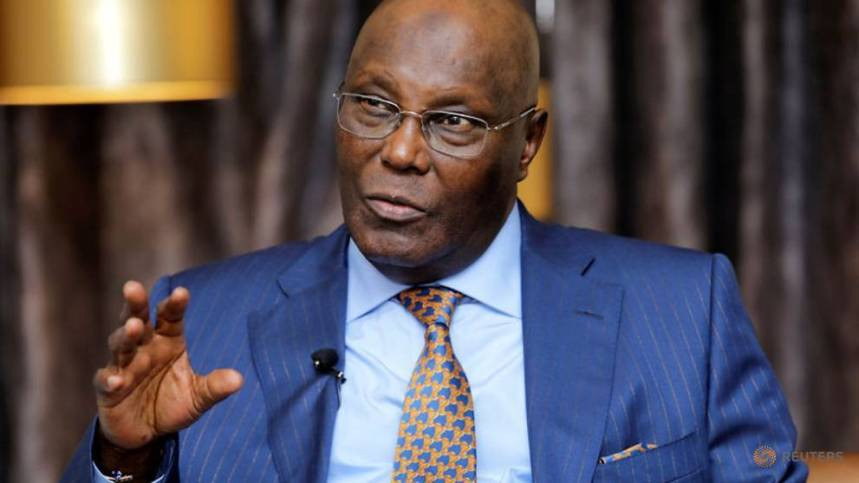
2027: Atiku Promises to Restore Fuel Subsidy If Elected President

Published

on

The African Democratic Congress (ADC) presidential candidate, Atiku Abubakar, has promised to restore the petrol subsidy if he wins the 2027 presidential election.

Atiku made the pledge during an interview on Wednesday while questioning the use of funds he said were saved following the removal of the subsidy.

He said the policy could have been beneficial to Nigerians if the savings had been properly accounted for and invested in areas such as poverty reduction and education.

“I did not oppose the removal of the oil subsidy, but where is the money? Where did it go? It was intended to reduce poverty and help children attend school. Where is the money now? It seems they are just stealing it,” Atiku said in Hausa.

“If elected, I will bring back the oil subsidy, and whoever stole the money must refund it.”

The former vice president said he would also consider the removal of the subsidy if the funds generated from the policy were transparently used to address the country’s development challenges.

“The government successfully removed the subsidy, but we do not know where the money went. If they had used the money for development, to solve security problems, for education, and to create opportunities for the youth, it would be different. If elected, I can remove the subsidy and use the money to do all these properly.”

President Bola Tinubu announced the removal of the petrol subsidy during his inaugural address on May 29, 2023, before assuming office.

Continue Reading